
Little Rock Look Back: First Pulaski Heights Council Meeting

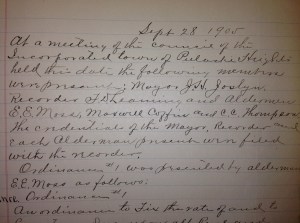
Pul Heights CC minutesOn September 28, 1905, the first meeting of the Pulaski Heights City Council took place.  The newly elected Mayor was J. H. Joslyn, the Recorder was F. D. Leaming, and new Alderman present were E. E. Moss, Maxwell Coffin and C. C. Thompson.  Pulaski Heights had been incorporated on August 1, 1905.  At that time its population was estimated at between 300 and 400.

The first ordinance, which was offered by E. E. Moss, was to set a tax rate and give the City the ability to levy taxes.  Next was a motion to establish a committee to establish rules and procedures for the council. The final business before the Council was to allow the Recorder to order stationary, a seal and a record book (that record book is now in the vault at Little Rock City Hall).

The next meeting would be October 28.  At that meeting, two other Aldermen are mentioned in the minutes (Fauble and Paul) but were absent from that meeting as well.  Mr. C. M. Fauble was present at the third meeting.  Mr. R. O. Paul did not appear until the fifth meeting (December 13, 1905).

Interestingly the Recorder had a vote in the Council meetings (which was not a practice in the City of Little Rock at the time).

The Council did not have a permanent meeting place until the third meeting.  At that point in time, they used space in the offices of Dr. Hockersmith.  They later met in a building which is now part of the Pulaski Heights Baptist Church campus.

Pulaski Heights was a separate City until January 1916.  On January 4, 1916, Little Rock voters approved the annexation of Pulaski Heights by a ten-to-one margin, and the suburb became the city’s ninth ward. This established a couple of precedents for the City of Little Rock which are in effect to this day.  The first is that Little Rock would not be a central city surrounded by a variety of small incorporated towns (in the manner that St. Louis and other cities are).  It was this thought process which has led the City to continue to annex properties.

In addition, this move to annex Pulaski Heights was the first time that the City grew toward the west.  Previous growth had been to the south.  By emphasizing western expansion, this has allowed Little Rock to continue to grow.
Little Rock Look Back: Charles Taylor, LR’s 42nd Mayor

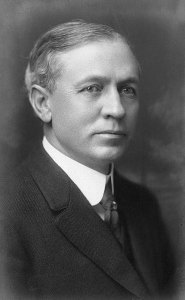
Mayor TaylorOn September 15, 1868, future Little Rock Mayor Charles E. Taylor was born in Austin, Mississippi.  After locating to eastern Arkansas, his family moved to Little Rock around 1880.
Taylor graduated from Scott Street High School in Little Rock and proceeded to work for various hardware stores and other businesses.  In 1895 he married Belle Blackwood, with whom he would have four children.

In 1910, Taylor announced his intention to run for Mayor of Little Rock.  Though he had never held elective office, he had been involved in several civic organizations.  Taylor was the main challenger to Alderman John Tuohey.  Seen as a reformer, Taylor initially lost to Tuohey.  But after an investigation of voter fraud and a subsequent runoff, Taylor was elected Mayor.

Upon taking office in August 1911, Mayor Taylor focused on improving health conditions in the city, upgrading the fire department and enhancing the overall moral tone of the city.

As a progressive of the era, he fought against gambling, drinking and prostitution.  He created a Health Department and enhanced the City Hospital.  His efforts led to a decrease in the death rate in Little Rock.  As Mayor, Taylor introduced motorized vehicles to the Fire Department.  He also led the City Council to establish building and electrical codes.  Mayor Taylor also oversaw the construction of the 1913 Beaux Arts Central Fire Stations (which today serves as the City Hall West Wing).

Under his leadership, the City of Little Rock annexed Pulaski Heights. One of the selling points to Pulaski Heights residents was Mayor Taylor’s ability to provide modern services such as paved streets, water mains, fire hydrants and street lights.

Though neither his 1911 Parks Master Plan nor his dreams for a civic auditorium came to fruition, they paved the way for future successes in both of those areas.

Funding for projects continued to be a problem throughout Mayor Taylor’s four terms in office.  He believed that one obstacle to city funding was the prohibition by the state constitution against cities issuing bonds.  Though that ban has since been lifted, Taylor tried three times unsuccessfully to get it changed while he was Mayor.

In April 1919, Taylor left office after having served eight years.  He was the longest serving Mayor of Little Rock until Jim Dailey served in the 1990s and 2000s.  Following several business ventures, Taylor moved to Pine Bluff and led their chamber of commerce from 1923 through 1930.

Mayor Charles E. Taylor died in Pine Bluff in 1932. He was buried at Oakland Cemetery in Little Rock.

During his time in office, Mayor Taylor was presented with an unofficial flag of Little Rock by a group of citizens.  During Mayor Dailey’s tenure, that flag was restored by some private citizens and presented to the City.  It is framed on the 2nd Floor of Little Rock City Hall.

Heritage Month – Albert Retan House

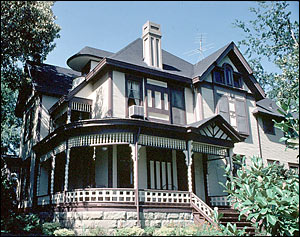
Albert Retan HouseHistoric homes in Little Rock are certainly not limited to downtown.  Today’s is the Albert Retan House, built in 1893 in what would become Pulaski Heights.

Due to geography, by the late 1800s, the land west of Little Rock stood as the only logical direction for the city to expand.  A group of Michigan investors saw the potential of this area of rolling hills and pine forests as sound investment property and conceived the development of Pulaski Heights, Little Rock’s first planned suburb.  In 1891 this investment syndicate organized the Pulaski Heights Land Company and proceeded to purchase 800 acres located three miles west of Little Rock.  Eight of the investors, including Albert Retan, brought their families to Arkansas to settle in the new suburb.

Retan built his house in 1893 and it remains an important symbol of the founding, growth and success of the Pulaski Heights community.  Architecturally, the structure represents a transitional style incorporating the fluent decorative woodwork of the Queen Anne in its sweeping porch with spindle frieze and the stately lines of the Colonial Revival mode in its hip roofs with projecting cross gables and its Palladian windows.  The suburb attracted professionals and businessmen who desired an alternative to living in the central area of the city without forfeiting convenient access to their places of business in downtown Little Rock.

Once established as a popular neighborhood, Pulaski Heights grew steadily.  As a result, it was incorporated as a town in 1905 and soon after, in 1916 the “Heights” was annexed to the city of Little Rock.  Never having suffered the decay that has threatened many of Little Rock’s other older neighborhoods, Pulaski Heights remains a prominent residential area in Little Rock with the Albert Retan House surviving as an important reminder of the origins and history of the city’s first planned suburb.

It was added to the National Register of Historic Places on December 3, 1980.

Little Rock Look Back: Pulaski Heights Annexed into Little Rock

On January 4, 1916, voters in Little Rock and Pulaski Heights voted overwhelmingly to annex the latter into the former.

First platted in 1890, Pulaski Heights had been incorporated as a city in August 1905.  By 1915, Pulaski Heights was booming.  It was growing so fast, that its infrastructure and public safety needs were far outpacing the city’s ability to pay for them.  Though there was a ribbon of commercial businesses along Prospect Avenue (now Kavanaugh Boulevard), it did not produce enough sales tax revenue to pay for City services. Then, as now, property taxes were also an important part of city revenue sources but not sufficient without sales taxes.

The City of Little Rock, likewise, was looking for ways to grow physically. At the time, the City was hemmed in by a river to the north and low, marshy land to the east. Current development was to the south, but even that presented limits in the foreseeable future. The best option was to grow to the west, but Pulaski Heights was in the way.  In 1915, Little Rock Mayor Charles Taylor (after failing in a previous attempt to re-annex North Little Rock into Little Rock), approached Pulaski Heights leadership about the possibility of annexation.

In November 1915, there were public meetings in Little Rock and Pulaski Heights to discuss the issue.  As a part of the annexation, Little Rock promised to build a fire station in the area and to install traffic lights, sidewalks and pave more streets.

On January 4, 1916, Little Rock voters approved the annexation of Pulaski Heights by a ten-to-one margin. The majority of Pulaski Heights residents also approved the deal.  The suburb became the city’s ninth ward.

Another special election was held in January 1916 to select the first two aldermen from the 9th Ward.  L. H. Bradley, John P. Streepey and Tom Reaves ran for the two slots. Bradley and Streepey were the top two vote recipients.  Streepey served until April 1921 and Bradley served until April 1928.

This established a couple of precedents for the City of Little Rock which are in effect to this day.  The first is that Little Rock would not be a central city surrounded by a variety of small incorporated towns (in the manner that St. Louis and other cities are).  It was this thought process which has led the City to continue to annex properties.


Little Rock Look Back: Warren E. Lenon – LR’s 39th Mayor and Father of City Hall

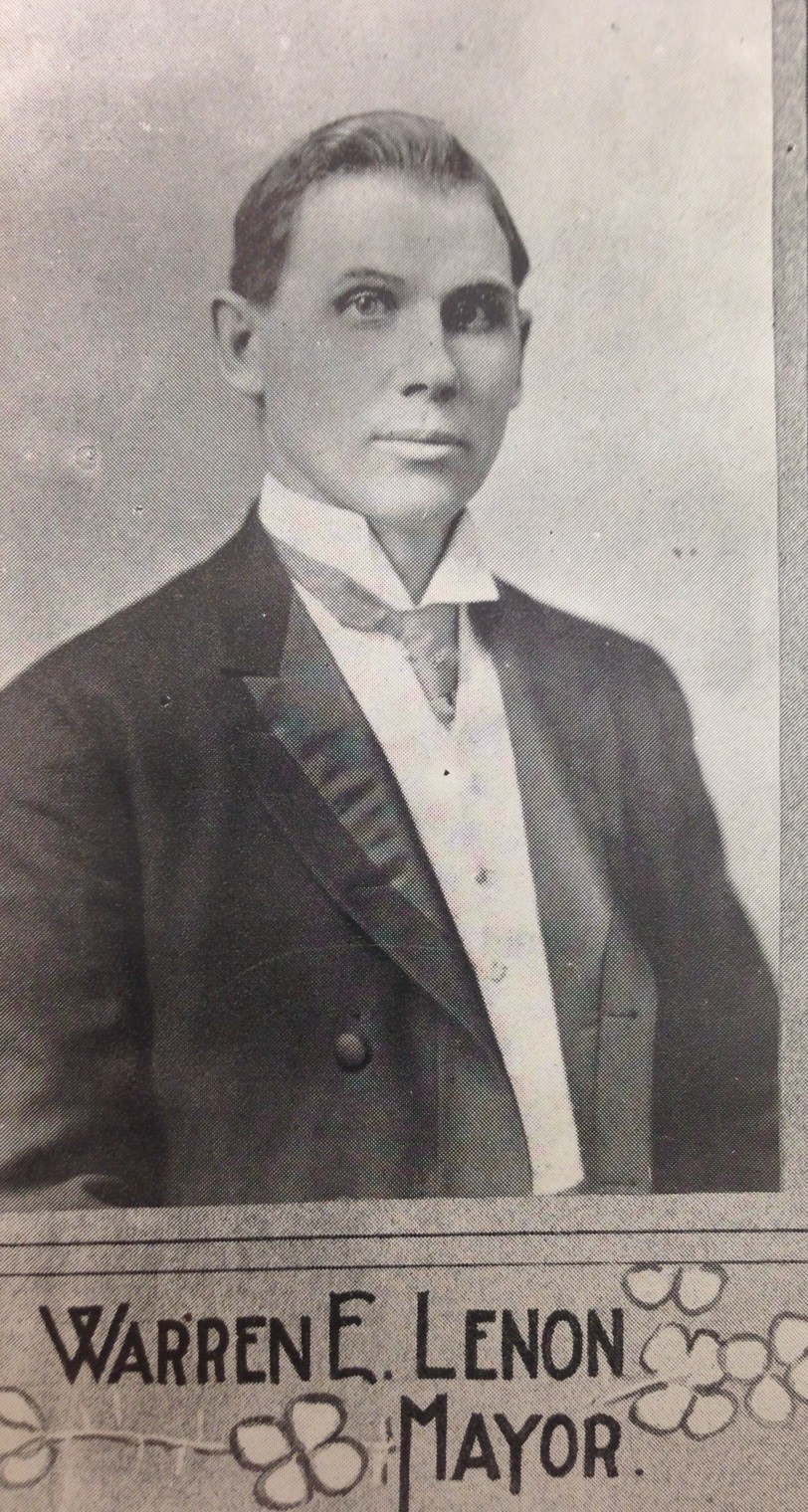
OMayor Lenonn October 8, 1867 in Panora, Iowa, future Little Rock Mayor Warren E. Lenon was born.  He was one of eleven children of John D. and Margaret M. Long Lenon.

Lenon came to LIttle Rock in 1888 after finishing his schooling in Iowa.  He helped set up an abstract company shortly after his arrival.  In 1902 he organized the Peoples Savings Bank.  Among his other business interests were the City Realty Company, the Factory Land Company, the Mountain Park Land Company, and the Pulaski Heights Land Company.

From 1895 to 1903, he was a Little Rock alderman, and in 1903, he was elected Mayor of the city. A progressive Mayor, he championed the construction of a new City Hall which opened in 1908.  At the first meeting of the City Council in that building, Mayor Lenon tendered his resignation.  His duties in his various business interests were taking up too much of his time.

Mayor Lenon had been a champion for the establishment of a municipal auditorium. He had wanted to include one in the new City Hall complex. But a court deemed it not permissible under Arkansas finance laws at the time.  He also worked to help establish the first Carnegie Library in Little Rock which opened in 1912.

Mayor Lenon continued to serve in a variety of public capacities after leaving office.  In the 1920s, he briefly chaired a public facilities board for an auditorium district. It appeared he would see his dream fulfilled of a municipal auditorium.  Unfortunately the Arkansas Supreme Court declared the enabling legislation invalid.

In 1889, he married Clara M. Mercer.  The couple had three children, two of whom survived him.  A son W. E. Lenon Jr., and a daughter Vivian Mercer Lenon Brewer.  She was married to Joseph Brewer, a nephew of Joseph Taylor Robinson, after whom the City’s eventual municipal auditorium would be named.  Mrs. Brewer was also a leader of the Women’s Emergency Committee.

Mayor Lenon died June 25, 1946 and is buried at Roselawn Cemetery.  Lenon Drive just off University Avenue is named after Mayor Lenon.

Little Rock Look Back: First meeting of Pulaski Heights City Council

Pul Heights CC minutesOn September 28, 1905, the first meeting of the Pulaski Heights City Council took place.  The newly elected Mayor was J. H. Joslyn, the Recorder was F. D. Leaming, and new Alderman present were E. E. Moss, Maxwell Coffir and C. C. Thompson.  Pulaski Heights had been incorporated on August 1, 1905.  At that time its population was estimated at between 300 and 400.

The first ordinance, which was offered by E. E. Moss, was to set a tax rate and give the City the ability to levy taxes.  Next was a motion to establish a committee to establish rules and procedures for the council. The final business before the Council was to allow the Recorder to order stationary, a seal and a record book (that record book is now in the vault at Little Rock City Hall).

The next meeting would be October 28.  At that meeting, two other Aldermen are mentioned in the minutes (Fauble and Paul) but were absent from that meeting as well.  Mr. C. M. Fauble was present at the third meeting.  Mr. R. O. Paul did not appear until the fifth meeting (December 13, 1905).

Interestingly the Recorder had a vote in the Council meetings (which was not a practice in the City of Little Rock at the time).

The Council did not have a permanent meeting place until the third meeting.  At that point in time, they used space in the offices of Dr. Hockersmith.  They later met in a building which is now part of the Pulaski Heights Baptist Church campus.

Pulaski Heights was a separate City until January 1916.  On January 4, 1916, Little Rock voters approved the annexation of Pulaski Heights by a ten-to-one margin, and the suburb became the city’s ninth ward. This established a couple of precedents for the City of Little Rock which are in effect to this day.  The first is that Little Rock would not be a central city surrounded by a variety of small incorporated towns (in the manner that St. Louis and other cities are).  It was this thought process which has led the City to continue to annex properties.

In addition, this move to annex Pulaski Heights was the first time that the City grew toward the west.  Previous growth had been to the south.  By emphasizing western expansion, this has allowed Little Rock to continue to grow.

Little Rock Look Back: Charles E. Taylor, LR’s 42nd Mayor

Mayor TaylorOn September 15, 1868, future Little Rock Mayor Charles E. Taylor was born in Austin, Mississippi.  After locating to eastern Arkansas, his family moved to Little Rock around 1880.

Taylor graduated from Scott Street High School in Little Rock and proceeded to work for various hardware stores and other businesses.  In 1895 he married Belle Blackwood, with whom he would have four children.

In 1910, Taylor announced his intention to run for Mayor of Little Rock.  Though he had never held elective office, he had been involved in several civic organizations.  Taylor was the main challenger to Alderman John Tuohey.  Seen as a reformer, Taylor initially lost to Tuohey.  But after an investigation of voter fraud and a subsequent runoff, Taylor was elected Mayor.

Upon taking office in August 1911, Mayor Taylor focused on improving health conditions in the city, upgrading the fire department and enhancing the overall moral tone of the city.

As a progressive of the era, he fought against gambling, drinking and prostitution.  He created a Health Department and enhanced the City Hospital.  His efforts led to a decrease in the death rate in Little Rock.  As Mayor, Taylor introduced motorized vehicles to the Fire Department.  He also led the City Council to establish building and electrical codes.  Mayor Taylor also oversaw the construction of the 1913 Beaux Arts Central Fire Stations (which today serves as the City Hall West Wing).

Under his leadership, the City of Little Rock annexed Pulaski Heights. One of the selling points to Pulaski Heights residents was Mayor Taylor’s ability to provide modern services such as paved streets, water mains, fire hydrants and street lights.

Though neither his 1911 Parks Master Plan nor his dreams for a civic auditorium came to fruition, they paved the way for future successes in both of those areas.

Funding for projects continued to be a problem throughout Mayor Taylor’s four terms in office.  He believed that one obstacle to city funding was the prohibition by the state constitution against cities issuing bonds.  Though that ban has since been lifted, Taylor tried three times unsuccessfully to get it changed while he was Mayor.

In April 1919, Taylor left office after having served eight years.  He was the longest serving Mayor of Little Rock until Jim Dailey served in the 1990s and 2000s.  Following several business ventures, Taylor moved to Pine Bluff and led their chamber of commerce from 1923 through 1930.

Mayor Charles E. Taylor died in Pine Bluff in 1932. He was buried at Oakland Cemetery in Little Rock.

During his time in office, Mayor Taylor was presented with an unofficial flag of Little Rock by a group of citizens.  During Mayor Dailey’s tenure, that flag was restored by some private citizens and presented to the City.  It is framed on the 2nd Floor of Little Rock City Hall.