
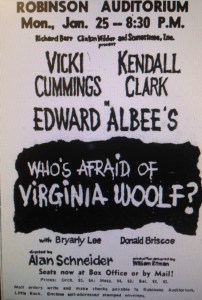
 As April winds down, today’s featured play did not actually win the Pulitzer Prize for Drama. In 1963, Edward Albee’s Who’s Afraid of Virginia Woolf? was the choice of the Pulitzer Drama Jury to receive the award. However, each Pulitzer category’s jury can be overruled by the Pulitzer Board. In 1963, they chose not to award the Pulitzer in Drama.
Though the Pulitzer board is notoriously tight-lipped about their decisions, the reason for their rejection of the Albee play is known. At the time, the Pulitzer rules contained language (written originally by Mr. Pulitzer in setting up the prizes) that stated the prize winners must be uplifting and represent high moral values. With its frank depiction of a fractured marriage and use of vulgarities, the Pulitzer board did not feel that Who’s Afraid of Virginia Woolf? met that criteria.
The resulting outcry over the exclusion of Albee’s play contributed to the removal of the clause. Albee did subsequently win for his plays A Delicate Balance, Seascape, and Three Tall Women.
The national tour of Who’s Afraid of Virginia Woolf? came to Little Rock in January 1965. The tour starred Vicki Cummings and Kendall Clark. Bryerly Lee and Donald Briscoe played the younger couple. The production was directed by Alan Schneider (who had won the Tony Award for directing the play on Broadway).
Little Rock native Ben Piazza was a close friend of Edward Albee. When Albee was working on the play, Piazza participated in the first read-through of it. He did not appear in the original Broadway cast, but ended up playing the part of Nick on Broadway for most of the show’s run. He still holds the record of appearing in Who’s Afraid of Virginia Woolf? in a Broadway run longer than any other actor.
2018 marks the 100th anniversary of the first Pulitzer Prize for Drama being given. To pay tribute to 100 years of the Pulitzer for Drama, twenty-nine days this month a different Little Rock production of a Pulitzer Prize winning play was highlighted. Many of these titles have been produced numerous times. This look veered from high school to national tours in an attempt to give a glimpse into Little Rock’s breadth and depth of theatrical history.
 In December 1947, Tennessee Williams’ A Streetcar Named Desire opened on Broadway. Two years later, in December 1949, the national tour of the play came to Robinson Auditorium.
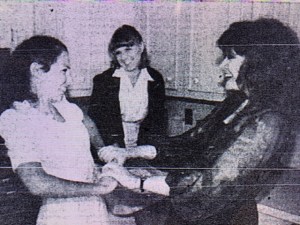 Since at least Chekov, playwrights have been fascinated with a trio of women at the center of a play. Southerner Beth Henley put her own twist on this concept with her 1981 Pulitzer Prize winner Crimes of the Heart.
 It is not often that an Oscar winner has appeared in a play on a Little Rock stage. But in the spring of 1986, Mercedes McCambridge starred in Marsha Norman’s ‘night, Mother at Arkansas Repertory Theatre.
 In 2016, the Studio Theatre presented John Patrick Shanley’s Pulitzer Prize winning Doubt. It was not the first theatre in Little Rock to present the play in the 12 years since it had debuted. But the taut, riveting, and somewhat ambiguous story is one that offers audiences plenty of reasons to return to it.
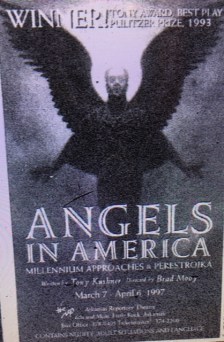 Twenty-five years ago (1993), Tony Kushner’s Angels in America: Millennium Approaches won the Pulitzer Prize for Drama. It was joined on Broadway in late 1993 with its second half Angels in America: Perestroika.
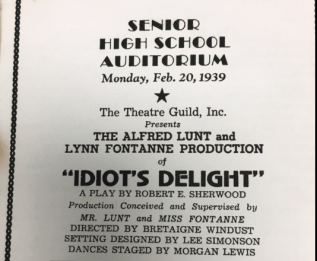 In 1939, Alfred Lunt and Lynn Fontanne were undertaking two near-simultaneous national tours. This brought them to Little Rock twice in less than a month. The first, on February 20, 1939, was for Robert E. Sherwood’s Pulitzer Prize winning Idiot’s Delight.
 Little Rock Culture Vulture