
Pulitzers Play Little Rock: PROOF at Arkansas Rep

Proof RepFourteen years after graduating from Little Rock Hall High School, David Auburn received the 2001 Pulitzer Prize in Drama for his play Proof.  In September 2002, Arkansas Repertory Theatre produced Proof while the original Broadway run was in its final months.

The production at Arkansas Rep was directed by Producing Artistic Director Robert Hupp.  The cast featured Amy Tribbey, Scott Barrow, Jessica Henson and Curt Karibalis.  (Barrow met his future wife, the former Amy Sabin, while in Little Rock during the run of this show.)

The set, a very realistic craftsman house back porch, was designed by Mike Nichols.  On opening night he was lauded because the production marked his 20th anniversary with the Rep. (In 2018, Nichols is still serving as Technical Director and Resident Scenic Designer for the Rep.)

Auburn was unable to come to Little Rock to see the production. His wife was set to give birth to a child during the run of the show.

2018 marks the 100th anniversary of the first Pulitzer Prize for Drama being given. To pay tribute to 100 years of the Pulitzer for Drama, each day this month a different Little Rock production of a Pulitzer Prize winning play will be highlighted.  Many of these titles have been produced numerous times.  This look will veer from high school to national tours in an attempt to give a glimpse into Little Rock’s breadth and depth of theatrical history.

Putting the LIT in Pulitzer

two_medalsThe 2018 Pulitzer Prizes are announced later today.  Over the years, there have been several Pulitzer winners with connections to Little Rock.
In 1939,  Little Rock native John Gould Fletcher, a scion of a politically prominent family, won the Pulitzer Prize in Poetry for his work Selected Poems.  He appears to be the first Pulitzer Prize winner with Little Rock connections.

The 1950 Pulitzer Prize for Drama went to South Pacific. With a leading lady who is from Little Rock, this Richard Rodgers, Oscar Hammerstein II, and Joshua Logan musical explores race against the backdrop of World War II.  It is based on James Michener’s Tales of the South Pacific, which won the 1948 Pulitzer for Fiction. (Because it was a collection of interrelated short stories, the category was changed from Novel to Fiction from that year onward.)  But in the Michener book, Forbush is not from Little Rock.  In fact, she is not even from Arkansas, but hails from Alabama.

The Arkansas Gazette made Pulitzer history in 1958 by winning both the Public Service and Editorial prizes in the same year. This was the first time that one organization had received both awards in the same year.  These were for the coverage of and response to the 1957 integration of Central High School by the Little Rock Nine.  J. N. Heiskell was the paper’s owner and editor, while Harry Ashmore led the editorial page.  Relman Morin of the Associated Press received the Pulitzer for National Reporting for his coverage of the events at Central.  Apparently Will Counts of the Arkansas Democrat was the jurors’ choice to receive the Pulitzer for Photography. But the Board opted to give the prize to another photographer.  Some speculate that the Pulitzer Board did not want to give four prizes in the same year for the same story.

Current Little Rock resident Paul Greenberg won the 1969 Pulitzer for Editorial Writing.  at the time, he worked for the Pine Bluff Commercial.   In 1986, he was a finalist in the same category.  Greenberg moved to Little Rock to join the staff of the Arkansas Democrat-Gazette in 1992.  While no longer the Editorial Page Editor, Greenberg continues to write columns for the newspaper.

Former Little Rock resident Richard Ford received the 1996 Pulitzer for Fiction for his novel Independence Day.  As a young boy of eight, and for several years after, Ford spent much time at Little Rock’s Marion Hotel with his grandparents.  In making the presentation, the Pulitzer Board noted it was, “A visionary account of American life, Independence Day reveals a man and country with unflinching comedy and the specter of hope and even permanence…”

The Pulitzer Prize for Drama in 2001 went to David Auburn.  A 1987 graduate of Hall High School, Auburn was recognized for his play Proof.  The Pulitzer Board described Proof thus: “This poignant drama about love and reconciliation unfolds on the back porch of a house settled in a suburban university town, that is, like David Auburn’s writing, both simple and elegant.”  Auburn also served as a 2014 juror for the Pulitzer Prize for Drama.  While a student in Little Rock, Auburn participated in theatre at the Arkansas Arts Center.

Pulitzers Play Little Rock: A CHORUS LINE on the UALR stage

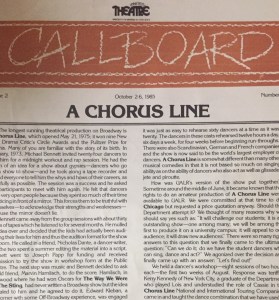
IMG_0274In April 1975 A Chorus Line premiered Off Broadway before transferring to Broadway in July 1975. In 1976, it became only the fifth musical to win the Pulitzer Prize for Drama.
Whereas the composer of the first musical to win the Pulitzer was not honored (apparently because he only wrote music, not actual words), with A Chorus Line’s citation, the Pulitzers recognized not only librettists James Kirkwood and Nicholas Dante, lyricist Edward Kleban, and composer Marvin Hamlisch, but also Michael Bennett who conceived the project and steered its development.

In October 1985, the University of Arkansas at Little Rock became one of the first non-professional organizations to ever perform  A Chorus Line.  The theatre department was planning on producing Chicago, but dropped that show when rights for A Chorus Line became available.  (Chicago was on Broadway at the same time as A Chorus Line and was often overshadowed by it.)

In preparation for the show, UALR (as it was then known) conducted a dance workshop in August 1985 conducted by alum Kerry Kennedy, who had appeared in the national and international tours of the show.  After the workshop, auditions were held and the rehearsal process started.

Many familiar names in the Little Rock theatre scene from the 1970s to the present were involved in A Chorus Line.  The production was directed by Carolyn Curry, choreographed by Dot Callanen, and music directed by Lori Loree.  Jay Jagim provided the scenic and lighting design, while Joy Breckenridge was costume designer.

The cast was led by Tom Crone as Zach, the director of the show within the show, and Janet Ford as Cassie.  Other performers included Lee Borchert, Sara Cole, Missy Cook, Greg Donaldson, Jo Bocage Few, Dennis Glasscock, Leslie Hall (who joined the cast two weeks before opening), John Hartman, William R Holloway, Shawn Lynnette Jackson, Traci Presley, Joey Stocks, Allison Streepey, Joe Terry, Kevin Trippe, and Scarlet White.

Rounding out the company were Paula A. Barr, Kelly Bascue, Melanie Cameron, Caran Curry, Leigh Anne Embrey, James Finch, Tijuana McKnight, Leah McSpadden, Rick Riley, Karissa Rushing, and Curtis B. Tate.

2018 marks the 100th anniversary of the first Pulitzer Prize for Drama being given. To pay tribute to 100 years of the Pulitzer for Drama, each day this month a different Little Rock production of a Pulitzer Prize winning play will be highlighted.  Many of these titles have been produced numerous times.  This look will veer from high school to national tours in an attempt to give a glimpse into Little Rock’s breadth and depth of theatrical history.

Pulitzers Play Little Rock: RABBIT HOLE at Weekend Theater

RabbitHoleTWTThe announcement that the 2007 Pulitzer Prize for Drama went to David Lindsay-Abaire for Rabbit Hole was a bit of surprise.  The play had actually opened on Broadway the prior season.  (While now the Pulitzer year equals the calendar year, at that time, the Pulitzer calendar went from Autumn to Autumn.)
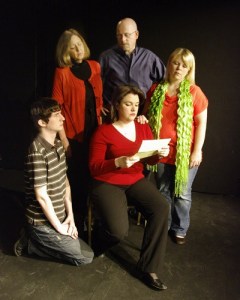
Lindsay-Abaire’s play tells the tale of a family coming to grips with the accidental death of a four year old son.  The Weekend Theatre brought the play to life on a Little Rock stage in 2009.  Andy Hall directed the production (duties he has performed for the current Weekend Theatre production of Assassins).

Patti Airoldi took on the central role of the aggrieved mother.  Duane Jackson played her husband, Patti German played her mother, and Regi Ott was her somewhat unconventional sister.  William Moon rounded out the cast.

Though the play veers to the edge of maudlin, it never gets there.  The script presents how different people cope with grief and guilt without becoming a “Very Special Episode” of After School Special.

2018 marks the 100th anniversary of the first Pulitzer Prize for Drama being given. To pay tribute to 100 years of the Pulitzer for Drama, each day this month a different Little Rock production of a Pulitzer Prize winning play will be highlighted.  Many of these titles have been produced numerous times.  This look will veer from high school to national tours in an attempt to give a glimpse into Little Rock’s breadth and depth of theatrical history.

Pulitzers Play Little Rock: Talley’s Folly

TalleyLanford Wilson’s two person play Talley’s Folly has one of the smallest casts of a Pulitzer Prize winning play.  It is a prequel to Wilson’s Fifth of July giving a backstory that is only touched upon the earlier play.

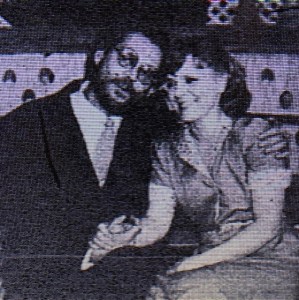
In January 1985, the Arkansas Rep staged this seemingly simple play in Little Rock.  A quiet, romantic story, it reveals much in the layered story and nuanced characters.  Directed by Rep favorite Terry Sneed, the two-hander starred Ronald J. Aulgur and Cathey Crowell Sawyer.  The former was a frequent actor in Rep productions.  The latter was making her Rep acting debut, though she was on the Rep staff as Associate Director.

In his Arkansas Gazette review, Bill Lewis singled out Mike Nichols for his set (Nichols is still designing and building sets for the Rep in 2018) and James Hunter for his lighting.

2018 marks the 100th anniversary of the first Pulitzer Prize for Drama being given. To pay tribute to 100 years of the Pulitzer for Drama, each day this month a different Little Rock production of a Pulitzer Prize winning play will be highlighted.  Many of these titles have been produced numerous times.  This look will veer from high school to national tours in an attempt to give a glimpse into Little Rock’s breadth and depth of theatrical history.

Pulitzers Play Little Rock: FIORELLO!

IMG_3737Winner of the 1960 Pulitzer Prize for Drama, Fiorello! has been described as the best musical you’ve never heard of.

Based on the life of New York politician Fiorello H. LaGuardia, it was a surprise winner of the Pulitzer.  Produced by Robert Griffith and Harold Prince, it featured a book by Jerome Weidman and George Abbott (who also directed) and a score by Jerry Bock and Sheldon Harnick.

In 1961, the national tour played in Little Rock at Robinson Auditorium.   The production used the original Broadway direction and choreography (by Peter Gennaro) and design (sets, costumes and lighting by the duo of William and Jean Eckert).

The cast was led by Bob Carroll as LaGuardia (taking on a role created by Tom Bosley).  Others in the cast were Rudy Bond, Charlotte Fairchild, Paul Lipson, Jen Nelson, Zeme North and Clint Young.

It does not appear to have been produced in Little Rock since then.

Pulitzer plays Little Rock: GLENGARRY GLEN ROSS

GGR PrecipiceDavid Mamet’s scalding comedy Glengarry Glen Ross focuses on small-time, cutthroat real estate salesmen trying to grind out a living by pushing plots of land on reluctant buyers, in a never-ending scramble for their share of the American dream.

With cutting language and well-developed characters, Glengarry Glen Ross has been popular among theatres since it debuted.  In January 2018, Precipice Theatre brought this play back to the Little Rock stage.

Directed by Heather Norris, the cast included Ricco Ardemagni, Larry Lapaglia, James Norris, Paul Seminara, Neil Gillespie, Scott Minor, Terry D. Norris, and Anthony Nguyen.

2018 marks the 100th anniversary of the first Pulitzer Prize for Drama being given. To pay tribute to 100 years of the Pulitzer for Drama, each day this month a different Little Rock production of a Pulitzer Prize winning play will be highlighted.  Many of these titles have been produced numerous times.  This look will veer from high school to national tours in an attempt to give a glimpse into Little Rock’s breadth and depth of theatrical history.