Rock the Oscars: James Earl Jones

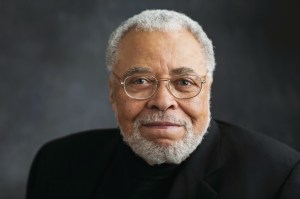
Actor James Earl Jones has made several appearances in Central Arkansas over the years.  He has appeared at Robinson Center with the Arkansas Symphony Orchestra.  On February 12, 1999, he narrated Aaron Copland’s “Lincoln Portrait” and Alexander Miller’s “Let Freedom Ring” with the Symphony in a concert at Robinson Center.  (It was the 190th birthday for Lincoln.)

Born in Mississippi, he spent most of his childhood in Michigan.  After service in the Army during the Korean War, he moved to New York to study theatre.  In the late 1950s he started alternating between Broadway (where he often played a servant) and Off Broadway (where he played leading roles).  His first film appearance was in Dr. Strangelove….  From the 1960s onward he has alternated between stage, film and TV.  In the 1980s, he added voice work to his repertoire.

In 1969 and in 1987, he won Tony Awards for Actor in a Play (The Great White Hope and Fences, respectively).  His other Tony nominations have been for revivals of On Golden Pond and The Best Man.  He was nominated for an Oscar in 1970 for reprising The Great White Hope on film.  He received two Emmy Awards in 1991 – the only actor to ever win two in the same year.

In 2008, he won the Screen Actors Guild Lifetime Achievement Award, and in 2011 he was given an Honorary Oscar.  In 2002, he was a Kennedy Center Honors recipient.

He is probably best loved for his work as the voice of Darth Vader in many of the Star Wars films as well as his voicework in The Lion King.

Rock the Oscars: Loretta Lynn

Loretta Lynn and Sissy Spacek during 53rd Annual Academy Awards’ Governor’s Ball at Beverly Hilton Hotel in Beverly Hills, California, United States. (Photo by Ron Galella/WireImage)

The spate of 1980s musical biopics can be traced to the success of 1980’s Coal Miner’s Daughter.  Nominated for seven Oscars, it captured a Best Actress statuette for Sissy Spacek, who played the title character.

Loretta Lynn, has never been nominated for an Oscar (yet) but wrote the book and lived the life on which the film was based.  (Arkansan Levon Helm was robbed of a nomination for playing Lynn’s father in the film.)

Over her career, Lynn has made numerous appearances in Little Rock, gradually moving up the billing until she was the star attraction.  Among her most recent appearances were a 2007 concert at Robinson Center (with three generations of Lynns and Webbs–the latter being her maiden name), and a 1997 concert at Wildwood Park.

While musical biopics were quite popular in the 1930s through 1950s, by the 1960s and 1970s, they had fallen out of favor.  But the success of Coal Miner’s Daughter led to numerous (countless?) on the big screen and TV.  Spacek ably captured Lynn’s grit, warmth, and talent in a well-deserved Oscar turn.

Rock the Oscars: William Grant Still

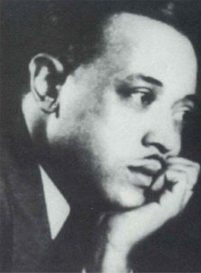
Long known as the Dean of African American composers, Dr. William Grant Still was a legend in his own lifetime.  As a prolific composer and arranger, his work was featured in numerous movies in the 1930s and 1940s including Oscar winning films The Awful Truth and Lost Horizon.
Dr. Still, who wrote more than 150 compositions ranging from operas to arrangements of folk themes, is best known as a pioneer. He was the first African-American in the United States to have a symphonic composition performed by a major orchestra. He was the first to conduct a major symphony orchestra in the US; the first to conduct a major symphony in the south; first to conduct a white radio orchestra in New York City; first to have an opera produced by a major company. Dr. Still was also the first African-American to have an opera televised over a national network

Dr. Still was born May 11, 1895 in Woodville, Mississippi to parents who were teachers and musicians. When Dr. Still was only a few months old, his father died and his mother took him to Little Rock. Inspired by RCA Red Seal operatic recordings, his musical education began with violin lessons.  He graduated from Gibbs High School in Little Rock.

After his studies at Wilberforce University and the Oberlin Conservatory of Music, he played in orchestras and orchestrated for various employers including the great W. C. Handy. For several years he arranged and conducted the “Deep River Hour” over CBS and WOR.  He also played in the orchestra for the 1921 musical Shuffle Along, which was the first Broadway musical to feature an all African-American cast and writing team.

In the 1920’s, Still made his first appearances as a serious composer in New York. Several fellowships and commissions followed. In 1994, his “Festive Overture” captured the Jubilee prize of the Cincinnati Symphony orchestra. In 1953, he won a Freedoms Foundation Award for “To You, America!” which honored West Point’s Sesquicentennial Celebration. In 1961, he received honors for this orchestral work, “The Peaceful Land”. Dr. Still also received numerous honorary degrees from various colleges and universities, as well as various awards and a citation from Arkansas Governor Dale Bumpers in 1972.

In 1939, Dr. Still married journalist and concert pianist Verna Avery, who became his principal collaborator. They remained together until Dr. Still’s death in 1978.  In a proclamation marking the centennial of Dr. Still’s birth, President Bill Clinton praised the composer for creating “works of such beauty and passion that they pierced the artificial barriers of race, nationality and time.”

In 1995, Dr. Still was posthumously inducted into the Arkansas Black Hall of Fame.  In 2016, the ballroom at Robinson Center was named in his honor.

Rock the Oscars: Maureen O’Hara

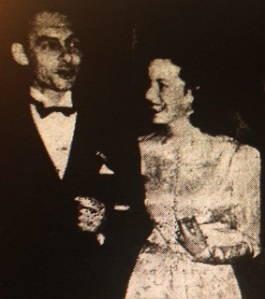
Mayor J V Satterfield escorting actress Maureen O’Hara at the Movie Ball (photo from Arkansas Democrat)

Oscar winner Maureen O’Hara lived until she was 95.  In February 1940, a nineteen year old Miss O’Hara turned many heads and set off a frenzy of autograph seekers when she came to Little Rock to attend a series of events.

In conjunction with a meeting of film executives and movie theatre owners sponsored by Robb and Rowley Theaters (which later became the United Artists theatre chain), several Hollywood actors were in Little Rock and headlined a Movie Ball. While in Little Rock, Maureen O’Hara, Phyllis Brooks, Arleen Whelan, Tim Holt and Gene Autry had also made a variety of public appearances.

At the time of the event, Miss O’Hara had recently completed her starring turn as Esmerald opposite Charles Laughton in The Hunchback of Notre Dame.  She had already filmed A Bill of Divorcement (which was the first movie for which she received star billing) but it was not released until May 1940.

On the evening of February 1, 1940, Robb and Rowley hosted the Movie Ball in the lower level of Robinson Auditorium. So many of the attendees crowded around for autographs that the evening’s grand march could not take place (a newspaper headline in the Democrat innocently used the word “orgy” to describe the crowd). After two attempts, Little Rock Mayor J. V. Satterfield (who was escorting Miss O’Hara) and the other members of the Little Rock host delegation led the Hollywood stars to their reserved table. For quite a while that evening, the table was besieged by autograph seekers.

Though it is unknown as to whether he sought an autograph, photos from the evening showed a very satisfied Mayor Satterfield with Miss O’Hara on his arm. Satterfield family lore joked that Mrs. Satterfield (who had stayed home that night to tend to a sick son) was not a fan of Miss O’Hara’s films after that evening.

The Movie Ball showed Little Rock citizens the value of Robinson Auditorium even before it had been officially dedicated. The film industry meetings had taken place at the Albert Pike Hotel which did not feature a ballroom large enough to host the ball. Without the auditorium’s availability for the gala, organizers might not have chosen Little Rock for the meeting.

Rock the Oscars: Carol Channing

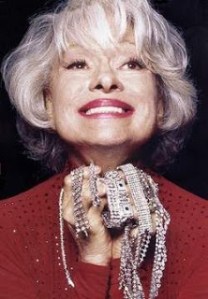
On January 31, 1921, future “Little Girl from Little Rock” and Oscar nominee Carol Channing was born. Alas it was in Seattle.
After gaining the notice of New York critics and audiences in the musical revue, Lend an Ear, Channing achieved Broadway stardom playing fictional Little Rock native Lorelei Lee (the creation of Anita Loos) in Gentlemen Prefer Blondes.  In this show, which opened in December 1949, she introduced the Leo Robin-Jule Styne songs “Little Girl from Little Rock” and “Diamonds Are a Girl’s Best Friend.”   In 1964, she won the Actress in a Musical Tony for her second signature role playing the title character in Hello, Dolly!  Channing also earned a special Tony in 1968 for Dolly when it became the longest-running Broadway musical.

On November 15, 1966, Carol Channing opened a six day stint in HELLO, DOLLY! at Robinson Auditorium.  She would play 8 sold out shows over those six days.  She had just wrapped filming THOROUGHLY MODERN MILLIE (for which she would receive an Oscar nomination). She had specifically requested that Little Rock be added to the tour.

While in Little Rock, Channing was entertained at the Arkansas Governor’s Mansion and feted at parties.  She was made an honorary citizen of Little Rock, as well.  But she was here to perform. And perform she did. She was rarely known to miss a performance and always gave her utmost.  Bill Lewis, in his review in the ARKANSAS GAZETTE, stated “To hear Channing sing ‘Hello, Dolly!’ Is one of the great experiences of all musical theater to date…”

In 1993, she spent her birthday in Washington DC at a White House dinner for the National Governors’ Association.  This was the Clintons’ first official White House dinner after moving in to the residence eleven days prior.  President Bill Clinton led the crowd in singing “Happy Birthday” to her.  She remarked to the President that she was Christian Scientist and didn’t celebrate birthdays, which meant she didn’t get any older.  He replied that it meant the night was her first birthday (it was her 72nd in actuality).

Rock the Oscars: THE STORY OF DR. WASSELL

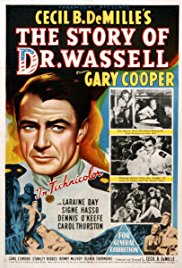
Dr WassellFrom April 24 to 26, 1944, future Oscar winner Cecil B. DeMille was in Little Rock for the world premiere screening of The Story of Dr. Wassell.  This 1944 Paramount Pictures Technicolor release told the story of wartime hero Dr. Corydon Wassell.  It would be nominated for the Oscar for Best Special Effects.
Why was Little Rock chosen?  It was the hometown of Dr. Wassell.  His paternal grandfather, John Wassell, was Little Rock’s 27th mayor.  His first cousin, Sam Wassell, was serving on the City Council at the time of the film’s release and would become Little Rock’s 51st mayor.

Based on a book by James Hilton, it was inspired by the heroic efforts of Dr. Wassell, a naval officer, as he led the evacuation of several sailors (and treated their wounds) in Java in February 1942.  President Roosevelt highlighted Dr. Wassell in his May 26, 1942, fireside chat.

Little Rock rolled out the red carpet (literally and figuratively) for DeMille and a contingency from Hollywood.  Dr. and Mrs. Wassell also returned to Little Rock for the festivities.  Unfortunately, Gary Cooper (who played Wassell in the film) was unable to attend due to illness.  His costar, Laraine Day, was making another film and could not attend either.    Those in attendance with DeMille (and Mrs. DeMille) included actresses Signe Hasso and Carol Thurston, and actor Melvin Francis.  The latter played himself; he had actually been one of the sailors saved by Dr. Wassell.

On April 24, 1944, DeMille and Dr. Wassell appeared on a radio program broadcast live from the music hall of Robinson Auditorium.  The next day, the troupe toured Camp Robinson and spoke to the soldiers there.  Later that day, Miss Hasso and Miss Thurston sold war bonds at Pfeiffers and M.M. Cohn’s.

April 26, 1944, was a full day for the DeMilles, the Wassells, and the others.  It started with a luncheon at the Hotel Marion, hosted by the Lions Club and Little Rock Chamber of Commerce.  Governor Homer Adkins presented DeMille with an Arkansas Traveler certificate.  DeMille, in return, presented Governor Adkins with a copy of the script.

When it was Dr. Wassell’s time to speak, he praised Little Rock’s efforts on the home front.  He also asked for a standing tribute to longtime Little Rock school superintendent R.C. Hall, who had died the day before.  Dr. Wassell had taught with Mr. Hall decades earlier.

Following the lunch, there was a parade on Main Street.  It started at 10th and Main and proceeded to Markham before ending at the War Memorial Building (now the Old State House Museum).  Newspaper accounts said that it was four miles long and featured many military units and marching bands.

Dinner that evening was at the Lafayette Hotel before screenings of the movie at the Capitol and Arkansas Theatres. Both screenings were sold out.  On April 27, 1944, a regular run of the movie started at the Capitol Theatre.  It would be released nationally on July 4, 1944, which also happened to be Dr. Wassell’s birthday.

Rock the Oscars: Mikhail Baryshnikov

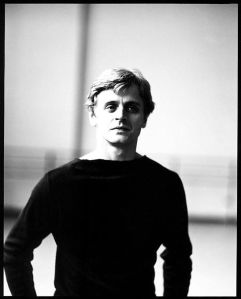
On July 24, 1983, Mikhail Baryshnikov danced on the stage of Robinson Center under the auspices of Ballet Arkansas.   Nearing the end of his dancing career with American Ballet Theatre, he was leading a summer tour of the Southeast and Midwest US.

In the early spring of 1983, Ballet Arkansas was contacted to see if they would be interested in having him perform in Little Rock.  (The $60,000 sponsorship was paid completely by the ARKANSAS DEMOCRAT.) The performance was announced in April with tickets going on sale shortly thereafter.

Following Baryshnikov’s performance, he and his fellow dancers attended a reception at the Old State House Museum which was hosted by Governor and Mrs. Bill Clinton.

After dancing with the Mariinsky Ballet for several years, he defected to Canada while the ballet was performing there in 1974. He later came to the US to dance with American Ballet Theatre and later New York City Ballet. He returned to ABT in 1980 to take on the role of Artistic Director and continue dancing.  It was in this capacity that he visited Little Rock.

He received a 1977 Oscar nomination for Best Supporting Actor for his role in the ballet-themed film The Turning Point.

Baryshnikov would later be welcomed by the Clintons to the White House when he received a 2000 Kennedy Center Honors.