Women’s History Month Throw Back Thursday: Mount Holly Cemetery Association

Mt Holly ProfileThe Mount Holly Cemetery is a treasure trove of history, architecture and horticulture on the edge of downtown Little Rock.

It was established in 1843 when Chester Ashley and Roswell Beebe donated the land to the city of Little Rock. Feeling the town fathers were not giving the cemetery the attention it deserved, a group of Little Rock businessmen formed a cemetery commission on March 20, 1877. Charter members of the commission were J. H. Haney, Fay Hempstead, James Austin Henry, Philo O. Hooper, and Frederick Kramer. However the private group of men did no better in maintaining the cemetery.

In 1914, a contingent of the town’s women became critical of the cemetery’s unkempt appearance and took over the reins from the men. Following adoption of City Ordinance No. 2199 in June 1915, the ladies’ Mount Holly Cemetery Association was incorporated on July 20, 1915. (It should be noted this action by the women came at a time when women did not have the right to vote.)

The Mount Holly Cemetery Association grew out of a meeting which took place on June 9, 1914 at the home of Mrs. A. H. Scott. Thirty-six women gathered for the purpose of improving the cemetery.

An executive committee was formed, and the women started working on improvements to the cemetery. Though first viewed by some men as an auxiliary to the Cemetery Commission, it quickly became apparent that the women were in no mood to take a back seat in matters pertaining to Mount Holly.

The first executive board (from June 1914 to July 1915) included Mrs. A. H. Scott, Mrs. B. S. Johnson, Mrs. George Thornburgh, Mrs. Moorhead Wright, Mrs. H. M. Bennett, Mrs. George Worthen, Mrs. W. E. Green, Mrs. George Stratman, Miss Louise Gibson and Miss Clara Hotze.

The July 1915 incorporators were Mrs. Scott as well as Julia E. Bennett, Eva C. Shields, Rosa M. Miller, Ruby P. Ratcliffe and Marguerite R. English. Mrs. Bennett, known affectionately as “Scrap” would serve as the first president, and Miss Miller was the first secretary.

Over the years the Association has undertaken countless projects large (construction of a mausoleum) and small (signs on the lanes) to improve Mount Holly Cemetery for its residents and for visitors.

In 1993, the Association published a history of the first 150 years of the cemetery.  More recently, they launched the annual RIP (Rest in Perpetuity) picnic held the last Sunday in April on the grounds.  They have also published a cookbook–Recipes in Perpetuity.

Today, the Mount Holly Cemetery Association is still going strong!
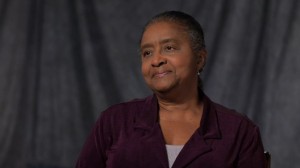
LR Cultural Touchstone: Dr. Sybil Jordan Hampton

sybilDr. Sybil Jordan Hampton made history as the first African American student to attend each high school year at and graduate from Little Rock Central High School.  But her impact on history exceeds that and extends into classrooms throughout Arkansas.

After a career which took her from elementary classrooms to corporate boardrooms, Dr. Hampton returned to Little Rock in 1996 to become the Executive Director of the Winthrop Rockefeller Foundation.  In that capacity, she oversaw many opportunities to broaden the ways the arts and humanities were used in classrooms and outside of classrooms.  Dr. Hampton led the WRF until her retirement in 2006.  Through her vision and leadership, many tens of thousands of dollars of support went to cultural institutions and organizations during her decade at the helm.

Following the untimely death of the Arkansas Symphony Orchestra’s executive director, Dr. Hampton served as acting executive director of the ASO while a national search could be conducted.  She had long been a supporter of the ASO and other cultural institutions as a patron.

Currently serving on the State Ethics Commission and the LR CENT Committee, Dr. Hampton continues to be involved with Little Rock’s cultural life through her involvement in the Mount Holly Cemetery Association. She is a tireless advocate for this living museum of Little Rock’s past.

Six Pioneers, Other Leaders honored by National Park Service Tonight

NPSLRCHTomorrow, September 25, marks the 56th anniversary of the desegregation of Little Rock Central High School.  Each year the school and the National Park Service schedule a series of events to commemorate this.

This year, commemoration activities start this evening.  At 6pm at Philander Smith College, there will be a panel to discuss the Six Pioneers. These were the first six African-American students to desegregate the University of Arkansas at Fayetteville (U of A) School of Law.  The descendants of the Six Pioneers will discuss the role of moral courage and the change that occurred in the hills of northern Arkansas over 65 years ago.  George Haley, the sole living pioneer will give remarks as well.

Their footsteps on the foothills of conviction cleared a path for the desegregation of Hoxie Elementary in 1955 and Little Rock Central High School in 1957. The U of A School of Law was the first southern white university to accept African-American students since Reconstruction.

The Six Pioneers, The Honorable Rodney Slater, Attorney John W. Walker, Sr., Judge Wiley A. Branton, Jr., Sanford Tollette IV, Dr. Sybil Jordan Hampton and Robin Woods Loucks will all be recipients of the Soul of Humanity Award given in recognition of outstanding commitment and service to social justice and lifelong action in the struggle for civil rights.

The evening will close with remarks from Reena Denise Evers-Everette, daughter of civil rights activist and martyr Medgar Evers.

The event will take place at the Kendall Science and Health Mission Center on the Philander Smith College campus.