
The 2014-2015 season for the Weekend Theater

WeekendTheaterThe Weekend Theater has announced its 2014-2015 season.  It will kick off next month with the Tony-nominated musical Caroline, or Change.  The season includes classic plays and musicals as well as more recent shows.

Caroline, or Change

Book and Lyrics by Tony Kushner
Score by Jeanine Tesori
June 6, 7, 8, 13, 14, 15, 20, 21, 22, 2014
Directed by Matthew Mentgen
Music Direction by Lori Isner

Winner of the Laurence Olivier Award and the Lucille Lortel Award for Best New Musical, Caroline, or Change centers its action on the Gellman family and their African-American maid, Caroline. It is 1963 in sleepy Lake Charles, Louisiana. Caroline is drifting through her life as a single mother of four working in a service job to a white family. A fragile, yet beautiful friendship develops between the young Gellman son, Noah (who has lost his mother), and Caroline. Noah’s stepmother Rose, unable to give Caroline a raise, tells Caroline that she may keep the money Noah leaves in his pockets. Caroline balks, and refuses to take money from a child, but her own children desperately need food, clothing and shoes. Regardless of the circumstances, whether it is the death of President Kennedy, her daughter’s growing activism and misunderstood dismissal of what she perceives to be Caroline’s choice to remain a maid, her son’s enlistment in Vietnam, a fight with a newly college-bound friend, or a spin with the dryer, Caroline remains unflappable.


Next To Normal

Book and Lyrics by Brian Yorkey
Music by Tom Kitt
July 11, 12, 13, 18, 19, 20, 25, 26, 27, 2014
Directed by Ralph Hyman
Music Direction by Lori Isner

Winner of the Pulitzer Prize, Next To Normal tells the story of a mother, Diane Goodman, who struggles with bipolar disorder and the effect that her illness has on her family. This contemporary musical is an emotional powerhouse that addresses such issues as grieving a loss, ethics in modern psychiatry, and suburban life. With provocative lyrics and a thrilling score, this musical shows how far two parents will go to keep themselves sane and their family’s world intact.


The Beauty Queen of Leenane

By Martin McDonagh
August 22, 23, 29, 30, September 5, 6, 2014
Directed by Deb Lewis

Co-winner of the 1998 Lucille Lortel Award for outstanding play and set in the mountains of Connemara County, Galway, Ireland, The Beauty Queen of Leenane tells the darkly comic tale of Maureen Folan, a plain and lonely woman in her early forties, and Mag, her manipulative aging mother, whose interference in Maureen’s first and possibly final chance of a loving relationship sets in motion a train of events that leads inexorably towards the play’s terrifying dénouement.


A Quiet End

By Robin Swados
September 26, 27, October 3, 4, 10, 11, 2014
Directed by Ryan Whitfield

Written in 1985, A Quiet End was one of the earliest dramas to deal with the AIDS crisis in the United States. Three men, a teacher, an aspiring jazz pianist and an unemployed actor, are in a rundown Manhattan apartment. All have lost their jobs and are shunned by their families; they have AIDS. Their interaction with a psychiatrist heard but not seen throughout the play and the entrance of an ex-lover healthy yet unsure of his future provide a forum for exploring the meaning of friendship, loyalty and love. By celebrating the lives of men who, in the face of death, become fearlessly life embracing, the play explores the human side of the AIDS crisis.


Topdog/Underdog

By Suzan-Lori Parks
October 31, November 1, 7, 8, 14, 15, 2014
Directed by Jermaine McClure

Winner of the 2002 Pulitzer Prize for Drama, Topdog/Underdog, a darkly comic fable of brotherly love and family identity, is Suzan-Lori Parks’ latest riff on the way we are defined by history. The play tells the story of Lincoln and Booth, two African American brothers whose names were given to them as a joke, foretelling a lifetime of sibling rivalry and resentment. Haunted by the past, the brothers are forced to confront the shattering reality of their future. Vibrating with the clamor of big ideas, audaciously and exuberantly expressed, this play considers nothing less than the existential traps of being African-American and male in the United States, the masks that wear the men as well as vice versa.


Other Desert Cities

By Jon Robin Baitz
December 5, 6, 12, 13, 19, 20, 2014
Directed by Ralph Hyman

A finalist for the 2012 Pulitzer Prize for Drama, Other Desert Cities involves a family with differing political views and a long-held family secret. Brooke Wyeth returns home to Palm Springs after a six-year absence to celebrate Christmas with her parents, her brother, and her aunt. Brooke announces that she is about to publish a memoir dredging up a pivotal and tragic event in the family’s history—a wound they don’t want reopened. In effect, she draws a line in the sand and dares them all to cross it.


No Exit

By Jean-Paul Sartre
Adapted from the French by Paul Bowles
January 16, 17, 23, 24, 30, 31, 2015
Directed by Tommie Tinker

In No Exit, winner of the Nobel Prize in Literature, Jean-Paul Sartre tells his story of two women and one man, who are locked up together for eternity in one hideous room in hell. The windows are bricked up; there are no mirrors; the electric lights can never be turned off; and there is no exit. The irony of this hell is that its torture is not of the rack and fire, but of the burning humiliation of each soul as it is stripped of its pretenses by the cruel curiosity of the damned. Here the soul is shorn of secrecy, and even the blackest deeds are mercilessly exposed to the fierce light of hell. It is an eternal torment.


The Sound of Music

Music by Richard Rodgers, Lyrics by Oscar Hammerstein II,
Book by Howard Lindsay and Russel Crouse, based on the memoir of Maria von Trapp

February 13, 14, 15, 20, 21, 22, 27, 28, March 1, 2015
Directed by Elizabeth Reha
Music Direction by Lisa Petursson

Winner of five Tony Awards, including Best Musical, this final collaboration between Rodgers & Hammerstein was destined to become the world’s most beloved musical. When a postulant proves too high-spirited for the religious life, she is dispatched to serve as governess for the seven children of a widowed naval Captain. Her growing rapport with the youngsters, coupled with her generosity of spirit, gradually captures the heart of the stern Captain, and they marry. Upon returning from their honeymoon they discover that Austria has been invaded by the Nazis, who demand the Captain’s immediate service in their navy. The family’s narrow escape over the mountains to Switzerland on the eve of World War II provides one of the most thrilling and inspirational finales ever presented in the theatre. The motion picture version of The Sound of Music remains the most popular movie musical of all time.


Last Summer at Bluefish Cove

By Jane Chambers
March 13, 14, 20, 21, 27, 28, 2015
Directed by Lana Hallmark

Winner of the Los Angeles Drama Critics Circle Award and seven Hollywood Drama-Logue Awards, Last Summer at Bluefish Cove is the story of a dissatisfied straight woman who leaves her husband to spend some quiet time by herself and who unwittingly and naively wanders into the midst of a group of seven lesbians at the beginning of their annual beachside vacation. She falls in love with the charming leading character who, unknown to her, is dying of cancer. The friendships, the laughter, the love, the fears of being outed, the difficulties of being gay and how it affects relationships with family, children, parents and careers, the demonstrations of what the painful price could be for a gay life 30 years ago in everyday America, had never before been told with such respect. Chambers’ comedic dialogue, sensitivity to human nature and tender treatment of her characters help the play transcend preconceptions and show the universality of these women’s journeys, whether straight or gay.


Karski’s Message

By Phillip McMath
April 10, 11, 17, 18, 24, 25, 2015
Directed by Ralph Hyman

A World Premier of local playwright, lawyer and historian Phillip McMath’s well-crafted story of how no one listened or helped when the genocide of the Jews was happening, Karski’s Message is the story of Jan Karski, a Polish World War II resistance movement fighter and later professor at Georgetown University. In 1942 and 1943, Karski reported to the Polish government in exile and the Western Allies, Britain and the United States, on the situation in German-occupied Poland, especially the destruction of the Warsaw Ghetto, and the secretive German-Nazi extermination camps. Karski personally met with President Roosevelt in the Oval Office, telling him about the situation in Poland and becoming the first eyewitness to tell him about the Jewish Holocaust. During their meeting Roosevelt asked about the condition of horses in Poland. Roosevelt did not ask one question about the Jews.


The Member of the Wedding

By Carson McCullers
May 15, 16, 22, 23, 29, 30, 2015
Directed by Margaret Pierson Bates

Winner of the 1950 Critics’ Circle Award as the best play, Carson McCullers’ report of a harum-scarum adolescent girl in Georgia is wonderfully—almost painfully—perceptive; and her associated sketches of a Negro mammy and a busy little boy are masterly pieces of writing. This is a study of loneliness is felt, observed and phrased with exceptional sensitivity. The Member of the Wedding deals with the torturing dreams, the hungry egotism, and the heartbreak of childhood in a manner as rare as it is welcome.

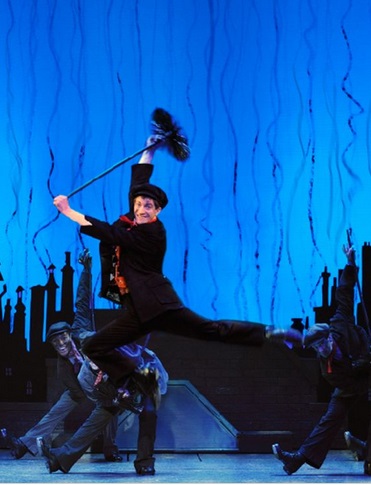
ROCKing the Tonys – Case Dillard

Rock the Tonys

Photo by Deen Van Meer

Photo by Deen Van Meer

Case Dillard

Little Rock connection – Little Rock native; grew up appearing at Arkansas Arts Center Children’s Theatre and Weekend Theater

 Tony Awards connection – Was in original Broadway cast of Mary Poppins and appeared on Tony Awards segment

Case has appeared on Broadway and the national tour of Mary Poppins as well as dancing with Ballet Arkansas and acting at the Arkansas Repertory Theatre.  He is currently back in Little Rock. He has recently appeared in Baby at Community Theatre of Little Rock and The Water Children at Weekend Theater.

TUESDAYS WITH MORRIE playing Weekends in April

TWT MorrieThe Weekend Theater opens its next production tonight. It is the stage adaptation of Tuesdays with Morrie.

Written by Jeffrey Hatcher and Mitch Albom (based on Albom’s best-selling book), Tuesdays with Morrie is the autobiographical story of Mitch Albom, an accomplished journalist driven solely by his career, and Morrie Schwartz, his former college professor. Sixteen years after graduation, Mitch happens to catch Morrie’s appearance on a television news program and learns that his old professor is battling Lou Gehrig’s Disease. Mitch is reunited with Morrie, and what starts as a simple visit turns into a weekly pilgrimage and a last class in the meaning of life.  The production is directed by Andy Hall.

TICKETS & TIMES:

$16 — Adults
$12 — Students/Seniors

April 4, 5, 11, 12, 13 (Added), 18, 19

Friday and Saturday night curtain time is 7:30 pm.
Sunday afternoon curtain time is 2:30 pm.

The Box Office (and the theater) opens one (1) hour prior to curtain.
The House opens 30 minutes prior to curtain.


CURTAIN CALL CABARET NIGHTS:

Join us on Fridays after the show on April 4th and again on April 11th, for “A Little Morrie Music,” a part of our new, Curtain Call Cabaret Series!

After the Tuesdays with Morrie curtain call, you’ll be entertained by a variety of Weekend Theater talent, singing some of your favorite show tunes and standards.

Fri, April 4, 9:30pm
Fri, April 11, 9:30pm

$7 — If you bought a Tuesdays with Morrie ticket
$10 — If you’re just coming for the Cabaret

Simply pay at the door. No reservations required.

Final Weekend of JOE TURNER’S COME AND GONE at Weekend Theater

Joe Turner’s Come and Gone at Little Rock's The Weekend TheaterThis weekend affords the final three times to see August Wilson’s powerful award winning play Joe Turner’s Come and Gone at the Weekend Theater.  The show is playing tonight, Saturday night, and a Sunday afternoon matinee has been added as well!

Directed by Meredith Bagby Fettes, this post-Civil War era play depicts the migration of African-Americans, from the rural South to the urban North, as they meet in a 1911 Pittsburgh boardinghouse. Joe Turner’s Come and Gone, by the author of The Piano Lesson, Seven Guitars and Fences, is an installment in the author’s series chronicling black life in each decade of this century.

The play uses realistic language and dialogue representative of the day, with each denizen of the boardinghouse owning a specific rhythm and speech pattern and carrying a different relationship to a past of slavery as well as to an urban present.

The characters include the proprietors, an eccentric clairvoyant with a penchant for old country voodoo, a young homeboy up from the South and a mysterious stranger who is searching for his wife. The Weekend Theater production cast includes seasoned alums, as well is newcomers to the stage.

The cast includes Margaret Pierson-Bates Herald, Jeremiah Herman, Charles Holloway, Diondre’ Wright, London Jones, Shanika Thompson, Paul Person, Drew Ellis, Pamela Reed, Candrice Jones and Ebon Jones

Curtain time is 7:30 pm. The Box Office (and the theater) opens one (1) hour prior to curtain. The House opens 30 minutes prior to curtain.

There will be a brief talk-back with the cast after each Saturday performance. This plays contains some simulated violence and adult language.

Little Rock Look Back: HAIR comes to LR in 1972

Ad for the original production of HAIR in Little Rock. Note the ticket prices. And that they could be purchased at Moses Music Shops.

Ad for the original production of HAIR in Little Rock. Note the ticket prices, and that they could be purchased at Moses Melody Shops.

It seems fitting that a touring production of Hair is the final Broadway show at Robinson Center Music Hall before it is closed for a two year renovation. The first time the show played at Robinson, it caused quite a stir. To be fair, the actual production in January 1972 did not cause a stir, it was the process leading up to it that was the source of much ado.

In February 1971, a young Little Rock attorney named Phil Kaplan petitioned the Little Rock Board of Censors to see if it would allow a production of Hair to play in the city. He was asking on behalf of a client who was interested in bringing a national tour to Arkansas’ capital city. The show, which had opened on Broadway to great acclaim in April 1968 after an Off Broadway run in 1967, was known for containing a nude scene as well for a script which was fairly liberally sprinkled with four-letter words. The Censors stated they could not offer an opinion without having seen a production.

By July 1971, Kaplan and his client (who by then had been identified as local promoter Jim Porter and his company Southwest Productions) were seeking permission for a January 1972 booking of Hair from the City’s Auditorium Commission which was charged with overseeing operations at Robinson Auditorium. At its July meeting, the Commissioners voted against allowing Hair because of its “brief nude scene” and “bawdy language.”

Kaplan decried the decision. He stated that the body couldn’t “sit in censorship of legitimate theatrical productions.” He noted courts had held that Hair could be produced and that the Auditorium Commission, as an agent for the State, “clearly can’t exercise prior censorship.” He proffered that if the production was obscene it would be a matter for law enforcement not the Auditorium Commission.

The Commission countered that they had an opinion from City Attorney Joseph Kemp stating they had the authority. One of the Commissioners, Mrs. Grady Miller (sister-in-law of the building’s namesake the late Senator Robinson who had served on the Commission since 1939), expressed her concern that allowing Hair would open the door to other productions such as Oh! Calcutta!

On July 26, 1971, Southwest Productions filed suit against the Auditorium Commission. Four days later there was a hearing before Judge G. Thomas Eisele. At that hearing, Auditorium Commission member Lee Rogers read aloud excerpts from the script he found objectionable. Under questioning from Kaplan, a recent touring production of Neil Simon’s Plaza Suite was discussed. That play has adultery as a central theme of one of its acts. Rogers admitted he found the play funny, and that since the adultery did not take place on stage, he did not object to it. Among those testifying in favor of it was Robert Reddington, who was director of performing arts at the Arkansas Arts Center.

Judge Eisele offered a ruling on August 11 which compelled the Auditorium Commission to allow Hair to be performed. Prior to the ruling, some of the Auditorium Commissioners had publicly stated that if they had to allow Hair they would close it after the first performance on the grounds of obscenity. To combat this, Judge Eisele stated that the Commission had to allow Hair to perform the entire six day engagement it sought.

Upon hearing of the Judge’s ruling, Commissioner Miller offered a succinct, two word response. “Oh, Dear!”

In the end, the production of Hair at Robinson would not be the first performance in the state.  The tour came through Fayetteville for two performances in October 1971. It played Barnhill Arena.

On January 18, 1972, Hair played the first of its 8 performances over 6 days at Robinson Auditorium.  In his review the next day, the Arkansas Gazette’s Bill Lewis noted that Hair “threw out all it had to offer” and that Little Rock had survived.

The ads promoting the production carried the tagline “Arkansas will never be the same.”  Tickets (from $2 all the way up to $8.50) could be purchased at Moses Melody Shops both downtown and in “The Mall” (meaning Park Plaza). That business is gone from downtown, but the scion of that family, Jimmy Moses, is actively involved in building downtown through countless projects. His sons are carrying on the family tradition too.

Little Rock was by no means unique in trying to stop productions of Hair.  St. Louis, Birmingham, Los Angeles, Tallahassee, Boston, Atlanta, Charlotte NC, West Palm Beach, Oklahoma City, Mobile and Chattanooga all tried unsuccessfully to stop performances in their public auditoriums.  Despite Judge Eisele’s ruling against the City of Little Rock, members of the Fort Smith City Council also tried to stop a production later in 1972 in that city. This was despite warnings from City staff that there was not legal standing.

Within a few years, the Board of Censors of the City of Little Rock would be dissolved (as similar bodies also were disappearing across the US). Likewise, the Auditorium Commission was discontinued before Hair even opened with its duties being taken over by the Advertising and Promotion Commission and the Convention & Visitors Bureau staff.  This was not connected to the Hair decision; it was, instead, related to expanding convention facilities in Robinson and the new adjacent hotel.  Regardless of the reasons for their demise, both bygone bodies were vestiges of earlier, simpler and differently focused days in Little Rock.

Over the years, Hair has returned to the Little Rock stage.  UALR has produced it at least twice.  The Weekend Theater has also mounted a production. By 2014, Hair is a period piece. For some, a wistful look at their long-gone youth while for others a romanticized time when disparate spirits could band together and change the world.

Banned Books Week Kicks Off with CLOCKWORK DOLL

ALA Freadom Slide 2013 (2)Banned Books Week started in 1982 because a librarian remembered being a twelve-year-old caught reading with a flashlight under her covers, and her mother telling her to turn the light on while she was reading so she wouldn’t hurt her eyes.

The Central Arkansas Library System (CALS) will celebrate the freedom to read, the importance of First Amendment rights, and the power of literature with special events and displays during Banned Books Week, September 22-28. CALS’s celebration of Banned Books Week is sponsored by the Fred K. Darragh Jr. Foundation, and will include the Arkansas Literary Festival’s collaboration with The Weekend Theater of Clockwork Doll on Sunday, September 22, at 6:30 p.m. at The Weekend Theater, 1001 W. 7th Street.

This one-night only collage features scenes from two plays: Nora, an adaptation of Henrik Ibsen’s A Doll’s House; and a stage version of the dystopian novella A Clockwork Orange by Anthony Burgess. Both works of literature have been banned or challenged, and are part of The Weekend Theater’s fall season. A brief reception will follow the presentation, which is free and open to the public. Seating is open and reservations are requested, but not required, at pedwards@cals.org or 918-3009. There are a limited number of seats, so patrons are urged to arrive early. For more information on Clockwork Doll visit www.arkansasliteraryfestival.org or call (501) 918-3098.  

Banned Books Week stresses the importance of ensuring the availability of all viewpoints, even those which may be unorthodox or unpopular, for all who wish to read and access them; and recognizes the danger that exists when restraints are imposed on the availability of information in a free society. Each year, many books are challenged and/or banned in communities across the United States. In a majority of cases the books are not banned, thanks to the efforts of librarians, teachers, booksellers, and members of the community to retain the books in the library collections.

A challenge is an attempt to remove or restrict materials, based upon the objections of a person or group; a ban is the removal of challenged materials. Often challenges are motivated by a desire to protect children and youth from ideas and information that may be difficult for them to understand. Although this is a commendable motivation, the Library Bill of Rights states that, “Librarians and governing bodies should maintain that parents-and only parents-have the right and the  responsibility to restrict the access of their children-and only their children-to library resources.”


About the Arkansas Literary Festival

The Arkansas Literary Festival, the state’s premier gathering of readers and writers, will feature more than 80 bestselling and emerging authors April 24-27, 2014. The eleventh annual event will feature a stimulating mix of sessions, panels, workshops, activities, performances, special events, and book signings.


About The Weekend Theater

The Weekend Theater, a non-profit theatrical community that produces socially significant plays for the Central Arkansas community, will produce both full length plays in the fall. Performance dates for Nora are October 4, 5, 11, 12, 18, and 19; and A Clockwork Orange runs November 1, 2, 8, 9, 15, and 16. For information about the full productions or to purchase tickets visit www.weekendtheater.org or call (501) 374-3761.

About CALS

CALS libraries in Little Rock include: Main Library, 100 Rock Street; Hillary Rodham Clinton Children’s Library and Learning Center, 4800 W. 10th Street; Dee Brown Library, 6325 Baseline Road; Fletcher Library, 823 North Buchanan Street; Oley E. Rooker Library, 11 Otter Creek Court; Terry Library, 2015 Napa Valley Drive; Thompson Library, 38 Rahling Circle; Williams Library, 1800 Chester Street; and McMath Library, 2100 John Barrow Road. CALS libraries in surrounding communities include: Millie M. Brooks Library, 13024 Hwy. 365, Wrightsville; Maumelle Library, 10 Lake Pointe Drive, Maumelle; Max Milam Library, 609 Aplin Avenue, Perryville; Esther D. Nixon Library, 703 W. Main Street, Jacksonville; and Amy Sanders Library, 31 Shelby Drive, Sherwood.

For more information, contact 918-3000.

100 SAINTS YOU SHOULD KNOW at Weekend Theater

WeekendTheaterThe search for faith is joyous, messy, confounding … that is, unless you think like some who will proclaim (and rather loudly, at that) that God can be contained in a very particular box.

Kate Fodor has chosen the more difficult, but perhaps more rewarding, path for the characters she created for her play 100 Saints You Should Know, opened last night at the Weekend Theater, Seventh and Chester streets in downtown Little Rock.

Showtimes are 7:30 p.m. Fridays and Saturdays through Sept. 21; tickets are $16 for general adult admission and $12 for students and seniors. To purchase, visit www.weekendtheater.org; tickets will also be available at the door. For information only, call the theater at (501) 374-3761.  The production runs Friday and Saturday nights through September 21.

Director Alan Douglas first saw “100 Saints” in New York about 5 years ago, and describes it as “a beautiful little play.”

“I knew it was something special by the way it got to me, as if it whispered to me, very gently and very deeply,” Douglas says.

Matthew (Ryan Whitfield), a priest in his 30s, is on the verge of abandoning his calling after an indiscretion has prompted his higher-ups to “suggest” he take a break. And so he is staying with his mother, Colleen (Patti German), a traditional Catholic confident in her faith.

Meanwhile, Theresa (Julie Atkins), a single mother who has been the cleaning woman at Matthew’s rectory, has begun to realize that her youthful rebellion against her strict educator parents has not led to the “something bigger than herself” that she so desired. So, she finds herself drawn toward a traditional expression of faith.

Then there are the two teenagers, both questioning their place in the world. Abby (Emily Shull), is Theresa’s daughter, and clashes with her mother about everything. And Garrett (Nicholas Ryan Abel) is confused about his own sexual identity.

The paths of these searching souls intersect in one fateful night – but don’t expect tidy little answers wrapped up in a neat little package.

“In a way, it’s about the search for connection, whether it’s God, or spirit, or each other – reaching out for something more than you,” Atkins says.

Some of us may be a trifle impatient with all the blathering about religion these days – what is it for, what’s the point? But still, the various factions keep on keeping on, and giving some comfort, it seems.

“My favorite people in the world have always been the ones who either struggle to understand God or are really at peace with God or, even better, who feel called to be their best selves in answer to what they hear God trying to tell them,” Douglas says.

That very human fumbling along a path with few definitive markers is at the heart of “100 Saints You Should Know.” But wherever it leads, the point is to open up your soul, not chain it down.

As one of those saints, Therese de Lisieux, is quoted: “For me, prayer is a surge of the heart; it is a simple look turned toward heaven, it is a cry of recognition and of love, embracing both trial and joy.”