
 Dr. Sybil Jordan Hampton made history as the first African American student to attend each high school year at and graduate from Little Rock Central High School. But her impact on history exceeds that and extends into classrooms throughout Arkansas.
After a career which took her from elementary classrooms to corporate boardrooms, Dr. Hampton returned to Little Rock in 1996 to become the President of the Winthrop Rockefeller Foundation. In that capacity, she oversaw many opportunities to broaden the ways the arts and humanities were used in classrooms and outside of classrooms. Dr. Hampton led the WRF until her retirement in 2006. Through her vision and leadership, many tens of thousands of dollars of support went to cultural institutions and organizations during her decade at the helm.
Following the untimely death of the Arkansas Symphony Orchestra’s executive director, Dr. Hampton served as acting executive director of the ASO while a national search could be conducted. She had long been a supporter of the ASO and other cultural institutions as a patron.
During the Central High Integration 60th Anniversary, Dr. Hampton served as emcee of the Commemoration Ceremony. She continues to be involved with Little Rock’s cultural life through her involvement in the Mount Holly Cemetery Association. She is a tireless advocate for this living museum of Little Rock’s past.
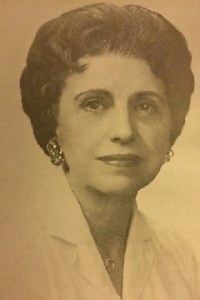 Nancy Pearl Johnson Hall was married to longtime Arkansas Secretary of State C. G. “Crip” Hall. Following his death, Mrs. Hall was appointed to succeed him as Secretary of State. With this appointment, she became the first woman to serve as a Constitutional Officer in Arkansas. As an appointee to that office, she could not run for it in the following election.
 Janis Kearney is the only person to have held the title of U.S. Presidential Diarist. In 1995 she was appointed to that position by President Bill Clinton.
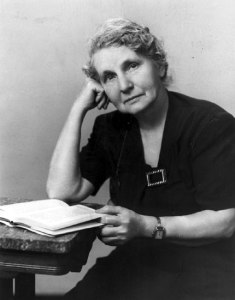 Julia Burnelle “Bernie” Smade Babcock was an author and museum founder. When her husband died, leaving her with five children, she starting writing for money. She published several temperance novels and later wrote for the Arkansas Democrat. She also published a magazine, wrote plays which were performed in New York, and authored a poetry anthology. She later became recognized as an expert on Abraham Lincoln and wrote several books about him, as well as other historical figures. For her writing skills, she became the first Arkansas woman to be included in Who’s Who in America.
 Last month, Raye J. Montague, RPE was recognized on “Good Morning America” for her work as a pioneering scientist. She was not only the first woman to design a U.S. Naval ship using a computer, or the first African American to do so, she was the first PERSON to do so.
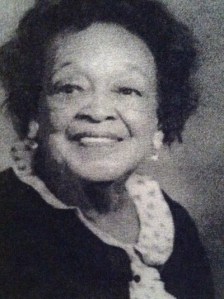 Sue Cowan Williams was an educator who fought for fair treatment.
 Charlie May Simon is known today for being the eponym of a children’s literature award. But during her lifetime she was a prolific author for children and for adults.
 Little Rock Culture Vulture