Michael Bearden of Ballet Arkansas is featured at Clinton School today at noon

Michael-Bearden-Arkansan-of-the-Year-220x300Today at noon, Ballet Arkansas artistic director Michael Bearden, will discuss the upcoming performance by that company at the Clinton School.

Under the artistic direction of Michael Bearden, Ballet Arkansas will be performing its annual spring mixed repertory show April 17-19, 2015 at the Arkansas Repertory Theater. The show is entitled “Who Cares?” after the finale piece created by world-renowned choreographer George Balanchine with music by George Gershwin.  The entire evening has a line-up of five works.

This show will be groundbreaking for Ballet Arkansas in two ways: Hilary Wolfley, the winner of Ballet Arkansas’s first annual Visions Choreographic Competition will debut the full length version of her award-winning piece and this will be the first time an Arkansas entity will be performing an official Balanchine work.

Bearden will give a presentation on George Balanchine and his impact on the world of dance and what it means in the greater dance world that Ballet Arkansas was authorized by the Balanchine Trust to perform a piece of his work.

Bearden is in his second season as Ballet Arkansas‘ Artistic Director and is currently a Visiting Assistant Professor at the University of Utah Department of Ballet. A native of Searcy, Arkansas, he received his training at the Academy of Ballet Arkansas and went on to have a fourteen year career with Ballet West, in Salt Lake City. As a Principal Dancer at Ballet West, Michael performed leading roles in ballets by some of the world’s greatest choreographers including Balanchine, Ashton, Tudor, Forsythe, Stevenson, Welch, Dove, Tetley, Tharp, Kylian and Christopher Bruce.

With a strong interest in project management, in May 2005, Michael led a team of Ballet West dancers in organizing a special performance to benefit Utah Cancer Foundation. The event, “A Dance for Life” raised more than $20,000. In 2007, he was the project manager for Ballet West‘s 2007 calendar, which highlighted the Artists of Ballet West in some of Utah’s most memorable settings. As a choreographer, Mr. Bearden has created or staged his works for Ballet West, the University of Utah, Brigham Young University, the University of Cincinnati, Belhaven University and Texas Christian University. Michael is grateful for the continued opportunity to give back to the community by helping to guide Ballet Arkansas to new heights.

“Where We Learn Matters” is topic of tonight’s Architecture & Design Network talk given by former LR resident Anisa Baldwin Metzger

anisaLittle Rock native Anisa Baldwin Metzger will headline an Architecture and Design Network discussion tonight entitled “Where We Learn Matters.”  The program starts at 6pm in the lecture hall at the Arkansas Arts Center. A reception will precede it starting at 5:30.

As School District Sustainability Manager for Green Schools at the U.S. Green Building Council (USGBC), headquartered in Washington, D.C., Anisa Baldwin Metzger, oversees a  national effort that  provides guidance and support for the Council’s state subsidiaries and their sustainability efforts. Here in Arkansas, the state USGBC hosts the Arkansas Green Challenge (AGC), a program that pairs mentors – architects and engineers among them – with students and staff to find ways of greening their schools. Now in its fourth year, the Arkansas AGC has reached  eighty schools and more than forty thousand students, helping them understand the influence of school facilities design on matters relating to learning, health and the environment. 

Ms. Baldwin Metzger, who grew up in Little Rock, received a B.S degree in architecture from Washington University, St Louis and earned an M.Arch from the University of Washington, Seattle. Following the devastation of Hurricanes Katrina and Rita, she worked in New Orleans, helping schools rebuild in ways that reflected their commitment to USGBC’s  principles of greening.   Drawing on her own experience, she asserts that “the pursuit of environmental sustainability requires that we utilize design thinking to deal with many complex problems our world faces.” In her talk, she will share strategies for working with schools and school districts throughout the country to develop ways of insuring sustainability.
Growing up in Little Rock, Anisa rode to kindergarten on the back of her dad’s bike. She was raised by parents (Jim Metzger and Deborah Baldwin) who made it second nature to try to waste less, and so she understands the importance of raising sustainability natives—children and adults who act to benefit the earth without needing to be asked.
 
The Arkansas chapter of the USGBC is the co-sponsor of Ms. Baldwin Metzger’s talk.  Supporters of Architecture and Design Network (ADN) include the Arkansas Arts Center, the UA Fay Jones School of Architecture, the Central Arkansas Section of the Arkansas Chapter of the American Institute of Architecture and friends in the community. 
 
All ADN lectures are free and open to the public

Marking 150th anniversary of 13th Amendment – CALS will “Let Freedom Ring”

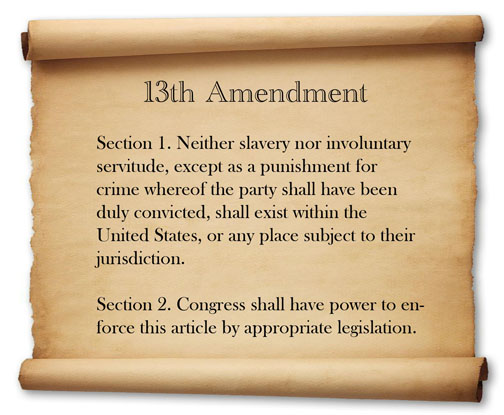
2014-06-21-13thAmendmentIn honor of the 150th anniversary of the 13th Amendment, which abolished slavery, the Central Arkansas Library System (CALS) will join the Arkansas Civil War Commission in “Let Freedom Ring,” a ringing of bells 13 times at 13:00 (1 p.m.) on Tuesday, April 14. Staff and volunteers will ring bells and read the 13th Amendment.

Locations

  • Main Library, 100 Rock Street
  • Butler Center for Arkansas Studies, 401 President Clinton Avenue
  • McMath Library, 2100 John Barrow Road
  • Dee Brown Library, 6325 Baseline Drive

“Let Freedom Ring” honors the 150th anniversary of the amendment, and is a statewide initiative sponsored by the Arkansas Civil War Sesquicentennial Commission’s commemoration of the 150th anniversary of the Civil War.

The 13th Amendment reads as follows:

“Neither slavery nor involuntary servitude, except as a punishment for crime whereof the party shall have been duly convicted, shall exist within the United States, or any place subject to their jurisdiction. Congress shall have power to enforce this article by appropriate legislation.”

The Arkansas Civil War Sesquicentennial Commission is part of the Arkansas Historic Preservation Program, an agency of the Department of Arkansas Heritage. The Arkansas Historic Preservation Program is responsible for identifying, evaluating, registering and preserving the state’s cultural resources.

Little Rock Look Back: Thomas Jefferson

220px-Thomas_Jefferson_by_Rembrandt_Peale_1805_croppedOn April 13, 1743, Thomas Jefferson was born in Virginia.  Along with Benjamin Franklin, he was one of the first American multi-hyphenate Renaissance men.  Author, musician, inventor, diplomat, epicurean, architect, educator, and President. Certainly his writing of the Declaration of Independence was of paramount importance to the US, even if he had never served as President.

It was during his Presidency that Thomas Jefferson actively pursued the Louisiana Purchase which brought what is now Arkansas into the United States.  While he never visited the area, he did send explorers to chart out the Louisiana Purchase.  The subusequent surveying which took place during the Madison presidency was based on standards developed by Jefferson for the surveying of Ohio.

In Little Rock, Jefferson is remembered with Jefferson Elementary and Jefferson Street. He is also the eponym for Bill Clinton’s middle name.

“The Golden Hour: Africa’s Rise and the Challenge for American Diplomacy” is topic of Todd Moss talk at Clinton School today at noon

As Africa’s prominence on the global stage increases, it offers challenges and opportunities for the US.  Todd Moss will examine this today at noon in a Clinton School address.

Todd Moss is chief operating officer and senior fellow at the Center for Global Development. Moss also serves as vice president for programs and secretary of the board. In addition to his institutional and fundraising responsibilities, his work focuses on U.S.-Africa relations and financial issues facing sub-Saharan Africa, including policies that affect private investment, debt, and aid. Moss directs the Emerging Africa Project and is currently working on energy in Africa, cash transfers in new oil economies, and new ideas for upgrading US development policy. In the past he led the Center’s work on Nigerian debt, Zimbabwe, the future of the World Bank’s IDA, and the African Development Bank.

Moss served as Deputy Assistant Secretary in the Bureau of African Affairs at the U.S. Department of State from May 2007 to October 2008 while on leave from CGD. He originally joined the Center in July 2003 from the World Bank where he served as a consultant and advisor to the Chief Economist in the Africa Region. Prior to joining the Bank, he was a Lecturer at the London School of Economics (LSE) in the postgraduate Development Studies Institute. Previously, Moss has worked as an Analyst for the Economist Intelligence Unit (EIU) and was Assistant Director of U.S. Policy Programs at the Overseas Development Council (ODC). Moss is an Adjunct Professor at Georgetown University and the author of numerous articles and books, including Adventure Capitalism: Globalization and the Political Economy of Stock Markets in Africa (Palgrave Macmillan, 2003) and African Development: Making Sense of the Issues and Actors (Lynne Rienner, 2nd ed., 2011).

Moss is also the author of The Golden Hour  (Penguin/Putnam, 2014), a thriller about American diplomacy and infighting after a coup in West Africa. The novel’s sequel Minute Zero will be released in 2015.

Little Rock Look Back: First proposal for a municipal auditorium

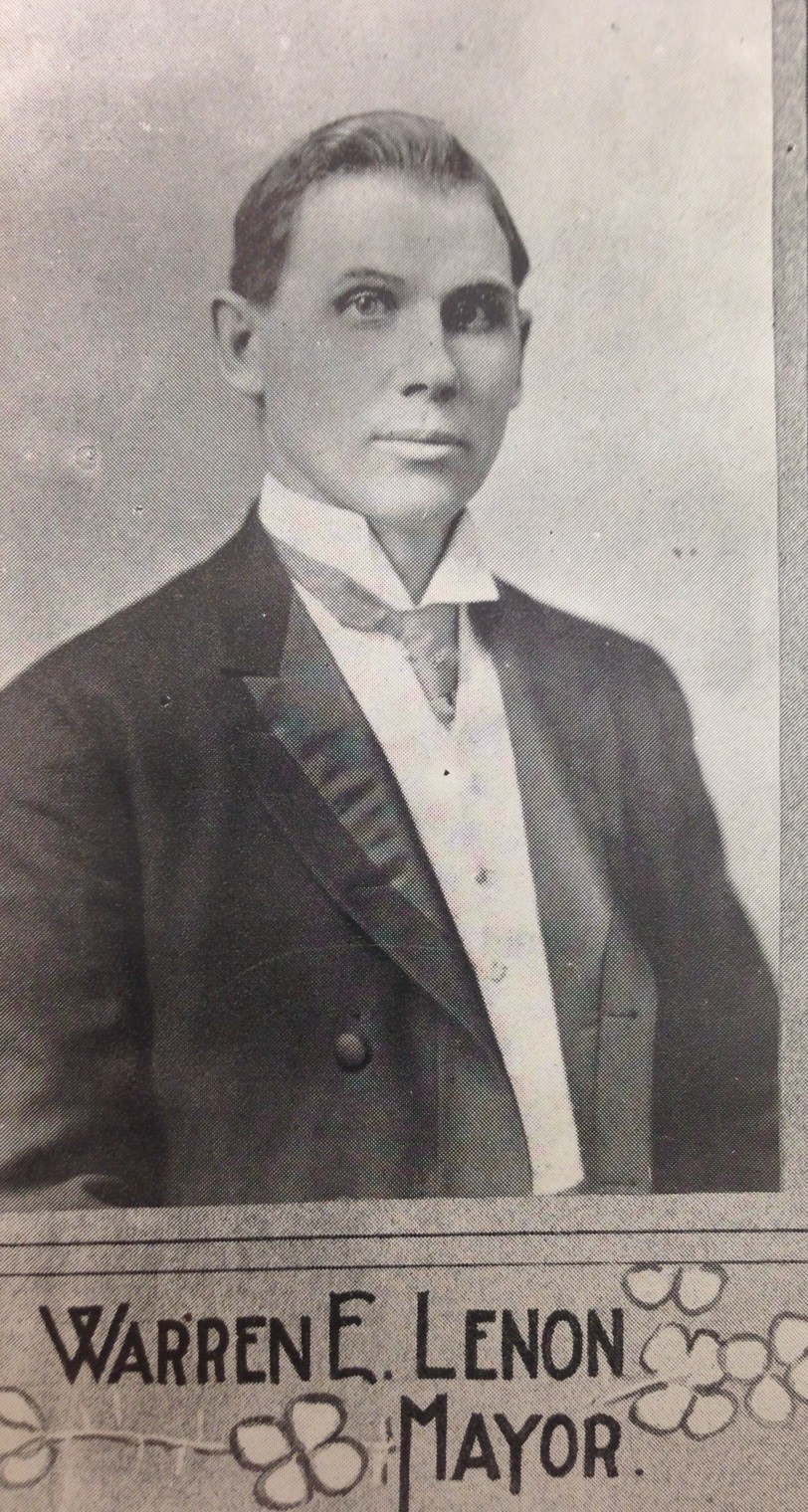
On April 12, 1904, Mayor W. E. Lenon made what was the first official proposal for a municipal auditorium in Little Rock.  Little did he know at the time that it would take from April 1904 until February 1940 to make this dream a reality.

Elected as a progressive, Lenon was focused on not just providing city services, but also had an interest in initiatives which would move the city forward.  With that background it is not surprising that Mayor Lenon would be a champion for the construction of both a new city hall as well as a municipal auditorium building.  During his first annual address to the City Council in April 1904 he noted:

Recently a number of our citizens have taken an active interest in building an auditorium in our city.  This being a project of such worthy consideration should not go unnoticed by us.  Apparently this is one of the greatest needs.  Our business, social, commercial and financial interests, in fact, our entire city, would be benefitted by the building of same.  It has therefore occurred to me that an auditorium might be built in conjunction with a new city hall.

The mayor further discussed that these new structures could either be built on the site of the current City Hall or at a new location.  He also touched on possible financing options including the collection of a one percent assessment.

The mayor would bring this up again in his 1905 annual address.  It would not be until December 1905 that the City Council would officially take any action on the plan.


Pulaski County Historical Society tours the Holtzman-Vinsonhaler House this afternoon

VinsonhalerWhile often the Pulaski County Historical Society hears presentations at its meetings, today the meeting focuses on a tour of a historic Little Rock residence. Refreshments start at 2pm with the tour commencing at 2:30pm.

The Holtzman-Vinsonhaler House stands on the northeast comer of Ninth and Commerce Streets, in Little Rock. This large brick home was constructed about 1898 by William D. Holtzman, a contractor.  Holtzman also built the house two doors to the east, the Holtzman-Vinsonhaler-Vogler House, designed in the Queen Anne Revival style and constructed in the early 1890s (note the stained glass window on its porch) and the W. D. Holtzman house three doors to the east, constructed about 1905 and designed in the Colonial Revival style.  The extended Holtzman family built and/or occupied almost the entire 500 block of East Ninth Street at various times from the 1850s through the 1930s.

Join the PCHS for this wonderful tour to learn the full rich history of one of Little Rock’s most prominent residences.

The Pulaski County Historical Society is dedicated to the following:


  • Documenting the history of Pulaski County from the earliest known period to the present.
  • Promoting interest in locating, collecting and preserving historical information on the county’s history.
  • Identifying the contributions of individuals and institutions to the broader community.
  • Popularizing stories of the county’s citizens, its business life and its institutions.
  • Recognizing the relationship of Pulaski County history with that of Arkansas and the South
  • Stimulating research and its presentation.
  • Publishing information about the county’s history.
  • Marking historic places.