Little Rock Look Back: LR Mayor Donald Mehlburger

Mayor D L MehlburgerOn October 19, 1937, future Little Rock Mayor Donald Lee Mehlburger was born in Little Rock.  His parents were Max A. Mehlburger and Mary Lou Covey Mehlburger who also had another son Max C. Mehlburger.

Mehlburger’s first run for the City Board of Directors was in November 1968 when there was an open seat.  At the time he was 30, the youngest one could be and be elected to the City Board.  He lost that race, but eight years later ran again.  This time Mehlburger won the race.  At his first meeting on the City Board, Mehlburger was selected as Mayor of Little Rock by his colleagues.

Prior to running for the City Board the second time, Mehlburger had been appointed to the Planning Commission.  Planning and growth were two important emphases for Mayor Mehlburger, in addition to public safety.  He stressed the importance of quality growth in the edges of the city and a push for a revitalized downtown.  Mayor Mehlburger was also an advocate for public mass transit.

Due to business interests taking up too much of his time, he resigned from the City Board a few months before his term was up.  But he remained engaged in civic affairs.  Historic preservation was important to Mehlburger.  In addition to owning historic properties, he was a founding board member of the Historic Preservation Alliance of Arkansas.  He had graduated from the University of Arkansas and was a member of Trinity Episcopal Cathedral.  He had also been active with the Junior Chamber of Commerce (Jaycees) and Rotary Club 99.

Mehlburger died on May 25, 1992 and was buried at Mount Holly Cemetery.  His grave marker features an engraved sextant which pays tribute to his career as an engineer.  It also notes that he was Mayor of Little Rock.  Mayor Mehlburger was survived by his wife Susan and his three children – Donald Lee Jr., Harry and Katherine.

Challenges of Democracy & Leadership in South topic of Clinton School noontime talk

Today at noon, the Clinton School Speaker Series will feature a program on democracy and leadership in the South.
In “Uniting Mississippi,” Eric Thomas Weber, associate professor of public policy leadership at the University of Mississippi and executive director of the Society of Philosophers in America, applies a new, philosophically informed theory of democratic leadership to Mississippi’s challenges.  These challenges could also be applied to Arkansas and most Southern states.

the book begins with an examination of Mississippi’s apparent Catch-22, namely the difficulty of addressing problems of poverty without fixing issues in education first, and vice versa. These difficulties can be overcome if we look at their common roots, argues Eric Thomas Weber, and if we practice virtuous democratic leadership. Since the approach to addressing poverty has for so long been unsuccessful, Weber reframes the problem.

The challenges of educational failure reveal the extent to which there is a caste system of schooling. Certain groups of people are trapped in schools that are underfunded and failing. The ideals of democracy reject hierarchies of citizenship, and thus, the author contends, these ideals are truly tested in Mississippi. Weber offers theories of effective leadership in general and of democratic leadership in particular to show how Mississippi’s challenges could be addressed with the guidance of common values.

The book draws on insights from classical and contemporary philosophical outlooks on leadership, which highlight four key social virtues: wisdom, courage, moderation, and justice. Weber brings to bear each of the virtues of democratic leadership on particular problems, with some overarching lessons and values to advance.


Creative Class of 2015: Matt McLeod

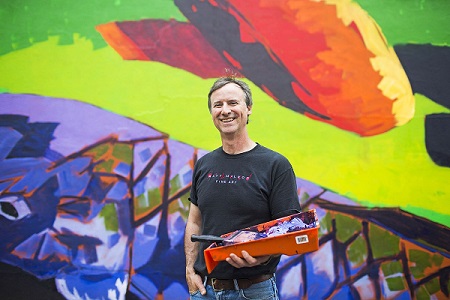
McLeodMuralMatt McLeod is a painter, sculp­tor and mural­ist, spe­cial­iz­ing in fine art for res­i­den­tial, com­mer­cial and pub­lic art projects. His art hangs in many homes and businesses throughout Central Arkansas and beyond. Arguably his most visible work is the new mural at the corner of 6th and Main in the Creative Corridor.

After grad­u­at­ing from South­ern Methodist Uni­ver­sity in 1987, Matt spent a fifteen-year career in adver­tis­ing, before becom­ing a full-time artist. Matt spent the last eleven years in fine art, devel­op­ing paint­ings into his bold, vibrant style — what he calls Ener­getic Color.

Matt’s Ener­getic Color is included in sev­eral pri­vate and cor­po­rate col­lec­tions across the US and has brought sig­nif­i­cant recog­ni­tion, includ­ing pieces in the Delta Exhi­bi­tion at The Arkansas Arts Cen­ter and a paint­ing on the front cover of the first Arkansas Artists Cal­en­dar, cre­ated by The Arkansas Governor’s Man­sion Asso­ci­a­tion.

In 2011, Matt was the fea­tured artist for River­fest music fes­ti­val. Matt was the fea­tured artist for MusicFest El Dorado, in 2012. In 2013, Matt was the fea­tured artist for The Thea Foundation’s Annual Spring Fine Arts Fes­ti­val. This month, Matt opened a gallery in down­town Lit­tle Rock, spe­cial­iz­ing in highly col­lectible regional artists and res­i­den­tial and com­mer­cial commissions.

Little Rock Look Back: Little Rock becomes the Capital of Arkansas

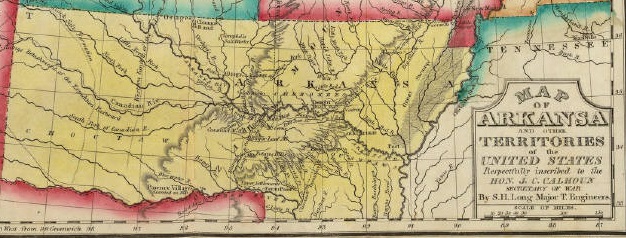
Arkansas TerritoryOn October 18, 1820, Territorial Governor James Miller signed legislation designating Little Rock as the new capital for Arkansas.  This was a mere 10 months after the first permanent settlement was established in Little Rock.

While Little Rock became the Capital, technically it was not the Capital City, since it would not be incorporated as a City until 1835. It wasn’t even incorporated as a town until 1831.

The Act provided that after June 1, 1821, the sessions of the Legislature and the Superior Court would be held at Little Rock.  This caused Arkansas Post, the first territorial capital, to fade from prominence.

The move was made based on the lobbying of Amos Wheeler, Chester Ashley and William Russell.  These men all owned land in the Little Rock area and would benefit from the move of the Capital to Little Rock. The official reason given was Little Rock’s geographical center to the Arkansas Territory and that it was elevated land less prone to flooding.

But as important, Messrs. Wheeler, Ashley and Russell promised to donate land for a capitol building and a guarantee of $20,000 for construction of a suitable building. (That would be the equivalent of $408,000 today.)

Around the time the legislation was approved, several members of the Territorial legislature purchased land around Little Rock.  When a subsequent effort to relocate the Capital upstream was launched, it failed due to the financial ties of these legislators to land in Little Rock.

Little Rock Look Back: LR City Flag Adopted

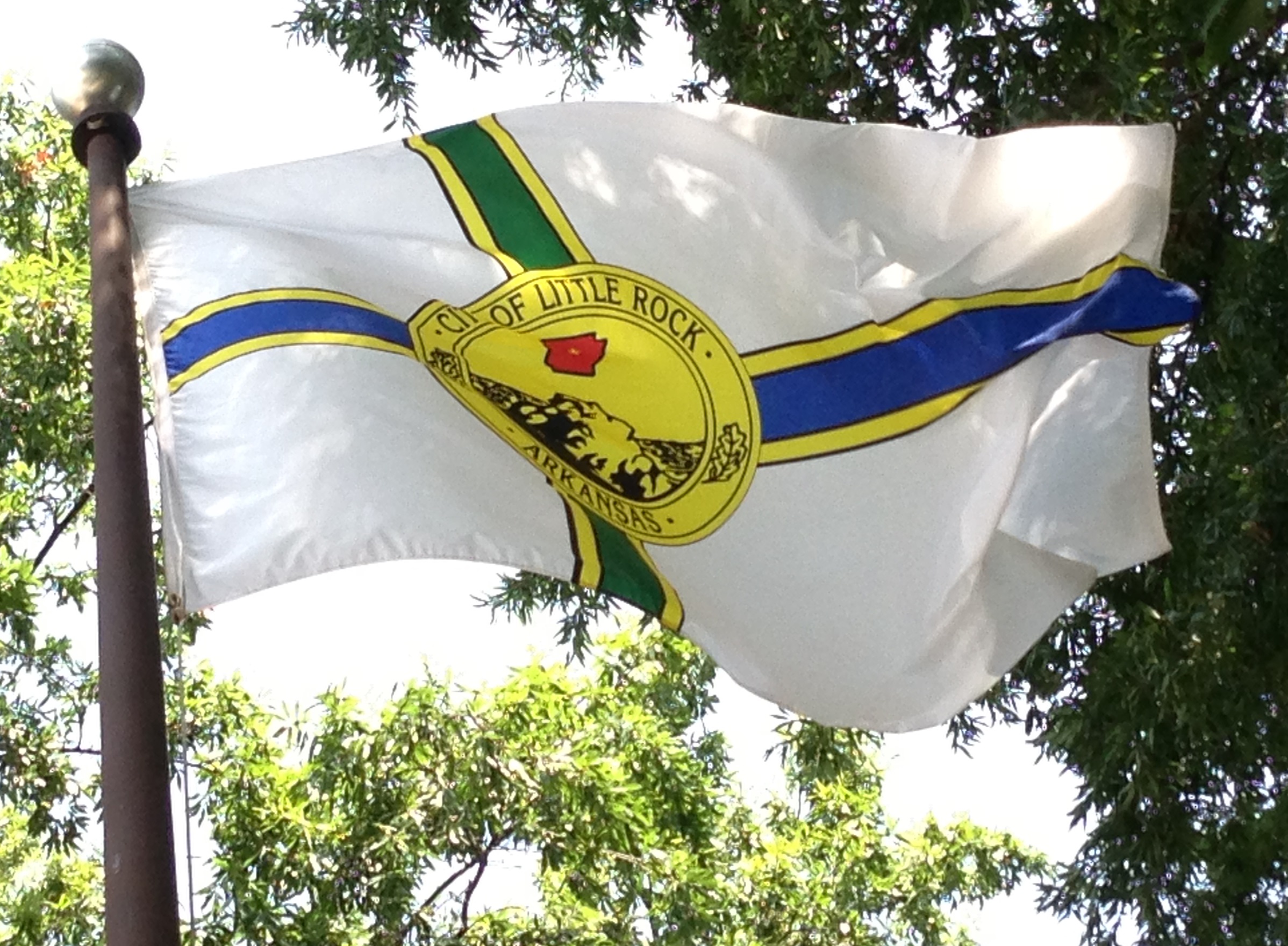
City FlagOn October 18, 1988, the City of Little Rock Board of Directors adopted the first official flag for the City of Little Rock.

The adoption of Ordinance No. 15,566 was the culmination of a design competition which had been spearheaded by Little Rock City Director Sharon Priest (later Little Rock Mayor, Arkansas Secretary of State and Executive Director of the Downtown Little Rock Partnership).

Prior to the Official Board of Directors meeting that day, a press conference was held in the Little Rock City Board Chambers for presentation of the City’s flag.  The City Beautiful Commission, a commission of the Department of  Parks and Recreation, sponsored a the contest which received a total of fifteen flag designs.

The flags were judged October 12, 1988, by City Directors and City Beautiful Commission Members. Director Sharon Priest presented the winning flag and introduced David Wilson, a law clerk at the Mitchell Law Firm, who designed the flag chosen for the $1,000 first prize. The second-place winner was Craig Rains, who received $500; and the third-place recipient was David Tullis, who received $250.

The flag was adopted by the City Board that night by a 6-0 vote; former mayor and current director Charles Bussey was absent.  Those voting to adopt the flag were Mayor Lottie Shackelford and directors Sharon Priest, Tom Prince, Buddy Villines, Buddy Benafield and Tom Milton.  Priest would be a future mayor while Prince, Villines and Benafield had all served as mayor.

The official description of the flag is as follows:

As the official flag of the City of Little Rock, its symbolism is described as follows: A clean white background of the banner represents the optimism and open potential that the city has to offer. The royal blue horizontal broad stripe symbolizes the Arkansas River which borders Little Rock, and has served as an economical and historical emblem since the city’s beginning. The forest green stripe runs vertical to the royal blue stripe, creating a cross which symbolizes the location and statute of Little Rock—a city serving not only as the crossroads of Arkansas, but a crossroad of the mid-southern United States as well.

The strong forest green color depicts the fields, parks and forests which contribute to the natural beauty of the city. The seal of the flag is a modernized adaptation of the current Little Rock seal. The razorback red silhouette of the great State of Arkansas shows her capitol, the City of Little Rock, represented by the centered star. The star rises directly above “The Little Rock”—the protruding cliff along the Arkansas River, which was discovered in 1722 by French explorer La Harpe, when the city was given the name. The Arkansas River behind the rock and the symmetrical oak leaves in the border of the seal are a stylized illustration of what the flag’s stripes represent—the natural beauty of the city. Finally, the gold color of the seal and bordering stripes symbolize the superior economic history, and the future economic potential that is available in the City of Little Rock, Arkansas.

Creative Class of 2015: Warren McCullough

warren mcActor,  acting teacher and photographer, Warren McCullough spent his early career in Los Angeles where he starred in national TV commercials such as Jaguar, Bud Light, Natural Light, Zicam and GoodYear. He has worked alongside stars such as Jennifer Lopez, Molly Sims and Steve Carell.

He has acted in over twenty films, dozens of plays and has appeared on The Chelsea Handler Show and on the pages of Glamour, Blender and People magazines. He worked on television sets such as E.R., Entourage, Crossing Jordan, and The Young & The Restless and also movie sets such as He’s Just Not That Into You and Yes, Man.

Warren was recently nominated for Best Actor for his leading role in the film “The God Particle” which was one of only twenty films to be selected to the prestigious Louisiana Film Prize Film Festival.

Warren grew up in Thayer, MO, and Salem, AR, and graduated with a Bachelor of Arts degree in theater from Lyon College in Batesville, AR .

THE LOOK OF SILENCE tonight at the CALS Ron Robinson Theater

RRT Look SilenceTonight at 8pm at the CALS Ron Robinson Theatre, The Look of Silence will be shown.  The film is Joshua Oppenheimer’s powerful companion piece to the Oscar®-nominated The Act Of Killing.

Through Oppenheimer’s footage of perpetrators of the 1965 Indonesian genocide, a family of survivors discovers how their son was murdered, as well as the identities of the killers. The documentary focuses on the youngest son, an optometrist named Adi, who decides to break the suffocating spell of submission and terror by doing something unimaginable in a society where the murderers remain in power: he confronts the men who killed his brother and, while testing their eyesight, asks them to accept responsibility for their actions. This unprecedented film initiates and bears witness to the collapse of fifty years of silence.

The film is rated PG-13. Admission is $5.