Four other musicals join THE LION KING in 2017-2018 Celebrity Attractions lineup

lion-king-ca-logoIn 2016, it was announced that Celebrity Attractions would bring The Lion King to Little Rock’s Robinson Center Performance Hall during the 2017-2018 season.

Now the dates for that show have been announced, as have the names and dates for four other musicals.

The Lion King, winner of the 1998 Tony Award for Best Musical, will play in Little Rock from April 18 through May 6, 2018.

The season will kick off with Kinky Boots, which won the 2013 Tony Award for Best Musical (playing October 13-15, 2017).  The 1987 Tony winning Best Musical Les Miserables returns to Little Rock from November 29 through December 3, 2017.

The stage version of Dirty Dancing will not be put in a corner, but it will be put on Robinson’s stage from March 16 to 18, 2018.  The season will conclude with Tony winning Beautiful: The Carole King Musical.  It will play from May 29 through June 3, 2018.

The remaining shows of the 2016-2017 are The Phantom of the OperaRiverdance, and Motown-The Musical.  Phantom, the 1988 Tony winner for Best Musical, plays March 8 through 19.  Riverdance‘s 20th anniversary tour plays in Little Rock from April 14 through 16.  Motown will rock Little Rock from June 21 through 25.

Women’s History Month – Lillian Dees McDermott

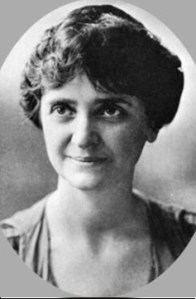
glass-mcdermottLillian Dees McDermott served on the Little Rock School Board from 1922 to 1946.

Not only was she the first woman to be elected to the School Board, she was also one of the longest-serving members of the board.  She was elected several times to serve as President of the School Board, becoming the first woman to have that title.  During one of her terms, plans to construct Little Rock High School (now Central) and Dunbar High School (now Dunbar Middle School) were finalized.

In her capacity as President, she had to sign contracts. She became the first woman in the country to sign a multi-million dollar contract for a public building project.  McDermott Elementary is named in her memory.

Little Rock Look Back: Creation of the Arkansas Territory

Arkansas TerritoryOn March 2, 1819, the Arkansas Territory was authorized by an act of Congress, to take effect  on July 4, 1819.

The Arkansas Territory was created from the portion of the Missouri Territory. It originally encompassed all of what is now Arkansas and much of what is now Oklahoma. The westernmost portion of the territory was removed on November 15, 1824, a second westernmost portion was removed on May 6, 1828, reducing the territory to the extent of the present state of Arkansas.

The Territorial capital was Arkansas Post from July 1819 until June 1821. At that point in time it was moved to Little Rock. In 1819, there was no permanent settlement in Little Rock. It would my be until early 1820 that a permanent settlement would be established.  On 1818, the Quapaw Treaty had anticipated a future settlement in Little Rock.

Women’s History Month – Erle Chambers, first woman sworn-in to Arkansas House of Representatives

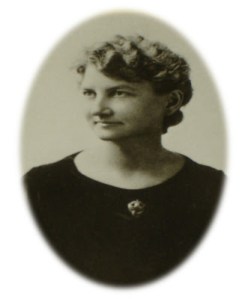
rep-erle-chambersFirst woman sworn in as a member of the Arkansas General Assembly: Erle Chambers

Miss Chambers of Little Rock was elected in 1922 at the same time as Frances Hunt of Pine Bluff. But because members were sworn in based on their last names, she was actually sworn in first.

She had trained as an attorney at both the University of Arkansas and the University of Chicago, but never practiced law.  She served as Pulaski County probation officer from 1913 until 1917. At that time, she went to work for the Tuberculosis Association, where she would work until her death in 1941.

Miss Chambers served in the Arkansas General Assembly from 1923 until 1926.

Black History Month – Aretha Franklin and Robinson Center

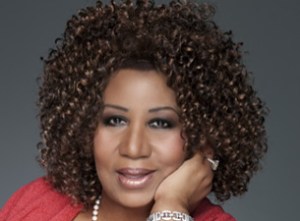
wjc-arethaTwo days before the Clinton Presidential Center opened, at Robinson Center Music Hall, patrons were warmed by the musical talents of Aretha Franklin.

She shared the Robinson stage with the Arkansas Symphony Orchestra.  The ASO brough Miss Franklin to town as part of the festivities surrounding the opening of the presidential library.  Long a favorite of the Clintons, Miss Franklin sang at his 1993 inaugural festivities the night before he took the oath of office.

Resplendent in a series of white dresses, Miss Franklin was in top form feeding off the love from the audience.  While backstage she may have been dealing with back and knee issues (which the Culture Vulture saw first hand), when she stepped on to the stage she was giving her all as she rolled through hit after hit from her starry career.  She sang, she played the piano, she entertained!

It was a sold out house and her voice and energy reached the last row of the balcony.

Born in Memphis, she moved to Detroit before age five and grew up singing at church.  After gaining some fame singing gospel songs, at 18 she switched to more secular music.  After initially singing for Columbia Records, she moved to Atlantic Records, later to Arista, and now has her own label.

Among her hits are “Respect,” “You Make Me Feel Like a Natural Woman,” “Chain of Fools,” “Think,” “Share Your love with Me,” “Bridge Over Troubled Water,” “Spanish Harlem,” “Break It to Me Gently,” “Jump to It,” “Get It Right,” and “Freeway of Love.”

Franklin received a star on the Hollywood Walk of Fame in 1979 and became the first woman inducted into the Rock and Roll Hall of Fame in 1987. NARAS awarded her a Grammy Legend Award in 1991, then the Grammy Lifetime Achievement Award in 1994, the same year she was a Kennedy Center Honoree in 1994.  In 1999, she received the National Medal of Arts from Bill Clinton.  George W. Bush bestowed her the Presidential Medal of Freedom in 2005.  She has 17 Grammy Awards and 14 additional nominations.

Congratulations to the Arkansas Arts Center on being re-accredited by the American Alliance of Museums

arkartsThe Arkansas Arts Center (AAC), the state’s leader in international, visual and performing arts, has again achieved accreditation by the American Alliance of Museums, the highest national recognition afforded the nation’s museums.

“Accredited museums are a community of institutions that have chosen to hold themselves publicly accountable to excellence,” said Laura L. Lott, Alliance president and CEO. “Accreditation is clearly a significant achievement, of which both the institutions and the communities they serve can be extremely proud.”

Alliance Accreditation brings national recognition to a museum for its commitment to excellence, accountability, high professional standards and continued institutional improvement. Developed and sustained by museum professionals for over 45 years, the Alliance’s museum accreditation program is the field’s primary vehicle for quality assurance, self-regulation and public accountability. It strengthens the museum profession by promoting practices that enable leaders to make informed decisions, allocate resources wisely, and remain financially and ethically accountable in order to provide the best possible service to the public.

“Earning accreditation is a milestone for any institution,” said Todd Herman, Executive Director at the AAC. “It’s a very detailed and in-depth process. I am proud of our entire staff and teams whose hard work led us to achieving reaccreditation.”

All museums must undergo a reaccreditation review at least every 10 years to maintain accredited status. Of the nation’s estimated 35,000 museums, more than 1000 are currently accredited. The AAC is one of only five accredited museums in Arkansas. Accreditation signifies excellence to the museum community, to governments, funders, outside agencies, and to the museum-going public.

Accreditation is a very rigorous process that examines all aspects of a museum’s operations. To earn accreditation, a museum first must conduct a year of self-study, and then undergo a site visit by a team of peer reviewers. AAM’s Accreditation Commission, an independent and autonomous body of museum professionals, considers the self-study and visiting committee report to determine whether a museum should receive accreditation.

“We commend the Arts Center for expanding its outreach locally and statewide; this has clearly led to widespread community support and acclaim,” said Burt Logan, chair of the AAM Accreditation Commission and Executive Director and CEO of the Ohio History Commission. “Your accomplishments in fundraising, aligning resources and strengthening your relationship with the City of Little Rock demonstrate the Art Center’s leadership and positive impact on those it serves.”

The peer reviewers reported that management and storage of the AAC permanent collection was impeccable, and the significant gift of 290 drawings and watercolors by the American Modernist John Marin clearly demonstrated the institutional strength of the AAC and will serve as a further catalyst for a planned expansion. The gift makes the AAC the second largest holder of Marin works in the world.

The peer reviewers also found the AAC’s educational outreach programs to be impressive, with many constituents’ initial contact with the AAC through its award-winning Children’s Theatre, the Museum School or statewide travelling education programs, including traveling theatre and the Artmobile. These outreach programs see more than 300,000 visitors per year on average. Combined with the AAC’s more than 300,000 onsite visitors, and the result is an impressive annual attendance of more than 600,000. The peer reviewers stated that for an institution of this size, staffing and level of funding, these statistics were exemplary.

The AAM Accreditation Commission found that with the AAC Foundation’s impressive support, the consistent giving of the AAC Board of Trustees, the growing generosity of the City of Little Rock, and the expression of support recently made by the voters of Little Rock, the AAC appears poised to take the next important step in its institutional life.

“They also have put the museum back on solid footing with its peer institutions, and turned the AAC into a catalyst for community pride and economic redevelopment in downtown Little Rock. It is an impressive turnaround.”

Black History Month – Marian Anderson and Robinson Center

marian-anderson-9184422-1-402Marian Anderson was likely the first African American to perform on the stage of Robinson Auditorium shortly after it opened in 1940.

Born on February 27, 1897, in Philadelphia, much of her singing career was spent performing in concert and recital in major music venues and with famous orchestras throughout the United States and Europe between 1925 and 1965.

In 1939, the Daughters of the American Revolution (DAR) refused permission for Anderson to sing to an integrated audience in Constitution Hall. The incident placed Anderson into the spotlight of the international community on a level unusual for a classical musician.  First Lady Eleanor Roosevelt resigned her membership in the DAR in protest and arranged for Anderson to perform an open-air concert on Easter Sunday in 1939.   She sang before a crowd of more than 75,000 people and a radio audience in the millions. Two of the pieces she sang in that recital were by Little Rock native Florence Price.

When Anderson performed at Robinson Auditorium in 1940, two pieces by Price were part of that concert as well.

She received the Presidential Medal of Freedom in 1963, the Kennedy Center Honors in 1978, and the National Medal of Arts in 1986.  Two years before her 1993 death, she received a Grammy Lifetime Achievement Award.