
LR Women Making History – Mollie Irvin

Mollie Irvin spent her life serving others.  She was a wife, mother, and grandmother. She was a volunteer in her church and her children’s schools.  She helped her friends.  She may have never seen herself as someone who would start spending every Tuesday night at Little Rock City Hall.

But she did.

Miss Mollie, as she came to be known at City Hall, had long been active in the Cloverhill/Pennbrook Neighborhood.  For many years, she served as president of the neighborhood association where she organized crime watches, police night outs and 4th of July celebrations.

When a young lady was injured crossing John Barrow in front of Henderson Middle School, Miss Mollie sprang into action.  She felt there needed to be a stoplight on the street.  She launched a campaign to have a stoplight installed at John Barrow Road and Cloverhill Road.  At the time the City did not have the money for the necessary widening and installation of the light, but was expecting it after the 2003 passage of capital bond improvements.  To make sure the City did not forget her request, Miss Mollie would come to every meeting. Sometimes she would be by herself, other times she would have guests. She was always polite and forceful with grace and humor when she made her plea.

Finally, the effort paid off.  She was actually tasked with flipping the switch to turn on the traffic signal.

Her goal met, Miss Mollie did not stop coming to City Hall.  After sitting through all those meetings, she had found herself interested in a variety of issues. She would attend the City Board meetings, neighborhood meetings, public budget meetings, and just about any other City meeting as a way to learn more. She was contacted by others for advice on how to lobby.   Her efforts were recognized nationally when the Cloverhill/Pennbrook Neighborhood was named Neighborhood of the Year by Neighborhoods USA.

Miss Mollie was as much a fixture at City Hall as city staff and elected officials.  When the holidays rolled around, Miss Mollie would show up at City Hall with individually prepared baggies full of baked goods for City officials.  She was also a fixture at Henderson Middle School as a volunteer.

Throughout her new career in civic engagement, she continued to be devoted to her family, her church, and her friends.  (She would regularly meet with friends she had known since elementary school.)

Following a brief illness, Miss Mollie died in 2016.  But her legacy lives on in the lives she touched and in a stoplight at John Barrow Road and Cloverhill Road.

LR Women Making History – Stephanie S. Streett

Stephanie S. Streett is the executive director of the Clinton Foundation. In this role she oversees the day-to-day operations of the Clinton Presidential Center, including the development and implementation of its educational programs, special events, exhibits, and services as well as staff management. She establishes and cultivates strategic partnerships and cooperative arrangements with state and local governments, the non-profit and private sector, community groups and other organizations. Stephanie also serves as the corporate secretary for the Clinton Foundation Board of Directors.

Stephanie has used her position to broaden culture in Little Rock through the wide variety of exhibits which the Clinton Center has hosted. A wide variety of styles of visual arts, design, contemporary craft, sports, science and history have been showcased in exhibits at the Clinton Center.  She also was instrumental in planning the special events in conjunction with the Clinton Center 10th Anniversary in 2014 and the 2017 celebration of the 25th anniversary of President Clinton’s election.

In addition, she has been active in promoting partnerships with the Kennedy Center for the Performing Arts. Together with Kaki Hockersmith, she has facilitated several seminars which have brought key Kennedy Center leaders to Little Rock.  Together they lead the effort known as Fusion: Arts + Humanities Arkansas. Now in its second year, Fusion promotes heritage and culture and celebrates human achievement by weaving the arts and humanities together.

She has been the president of the University of Arkansas Alumni Association National Board of Directors and is co-chair of the Board of Directors for City Year Little Rock. She also serves on the Board of Directors for the Downtown Partnership of Little Rock and is a member of the International Women’s Forum Arkansas.  In April, she will be honored with the 2018 City Year Little Rock Lifetime of Service Award at the Red Jacket Ball.

LR Women Making History: Rev. Dr. Peggy S. Bosmyer

In 1977, Peggy S. Bosmyer was ordained an Episcopal priest at Little Rock’s Trinity Cathedral.  Not only was she the first woman in Arkansas to be ordained to a full priesthood in the Episcopal Church, she was the first woman south of the Mason-Dixon line.

Born in Helena, she was a graduate of the University of Arkansas and Virginia Theological Seminary.  She served as a deacon at Grace Episcopal in Pine Bluff before serving as a curate at Little Rock’s St. Mark’s Episcopal.  In 1976, the Episcopal Church approved the ordination of women to the priesthood. It was after that she was able to be ordained in 1977.  Her ordination was front page news in the Arkansas Gazette.

Following ordination, she was appointed Vicar of Little Rock’s St. Michael’s Episcopal Church, then a part-time position. She also served as a program director for the Diocese of Arkansas, which included oversight of Camp Mitchell.  In 1985, Rev. Bosmyer was appointed full-time Vicar of St. Michael’s.  Nine years later, she left Little Rock to be a professor on the faculty of the School of Theology at the University of the South.  While there she served as Co-Vicar of St. James at Sewanee. She also received her Doctor of Divinity from the University of the South in 1999.

Rev. Dr. Bosmyer returned to Little Rock in 2001 to be Vicar of St. Margaret’s Episcopal Church.  She held that position until her death in December 2008 from pancreatic cancer.  She is interred at the columbarium of St. Margaret’s.  She was survived by her husband of 24 years, Reverend Dr. Dennis Campbell, and four children.

She was not only one of the first female Episcopal priests in the U.S, she was on the forefront of women serving as ordained priests and preachers in mainline denominations.  Certainly her ordination was not without controversy. There are still those who disagree with women serving as priests (though likely few remain within the Episcopal church).  The legacy of Rev. Dr. Bosmyer continues today with the women serving as rectors, vicars, priests in charge, and associate rectors throughout the state of Arkansas.  While Arkansas has not had a woman serve as Bishop, Rev. Dr. Katherine Jefferts Schori served as Presiding Bishop of the Episcopal Church from 2006 to 2015.

LR Women Making History: Stella Boyle Smith

When Stella Boyle Smith died at the age of 100 in 1994, she was well known for her love of music and philanthropy.  It is a lasting connection of her to a building in which she spent so many hours as an arts patron.
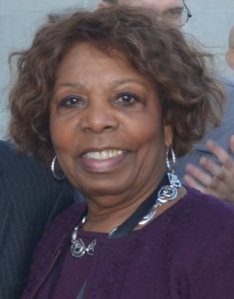
Smith was a Little Rock philanthropist and founder of the Arkansas Symphony Orchestra. She lived to be 100, but ensured that her legacy would continue.  In her lifetime, she donated more than $2.5 million to organizations in the music and medical fields.  Since her death, the Stella Boyle Smith Trust has donated more than $5 million.  One of its most recent gifts was the sculpture In the Wings which graces the front of Robinson Center.

She was born in Farmington, Mo., into a large, musically inclined family, which moved to Arkansas when she was two. She began singing at the age of three and graduated from high school at 14. In 1922, she moved to Little Rock with her first husband, Dandridge Perry Compton, who died in 1935. Her second husband, George Smith, held various business interests and extensive farms in Woodruff and Arkansas counties, which allowed them to engage in philanthropy. Mr. Smith died in 1946.

In 1923, Smith’s love for music inspired her to start The Musical Group in her living room of her residence at 102 Ridgeway Drive in Little Rock, where she lived until she died. Through several iterations, the group eventually became the Arkansas Symphony Orchestra in 1966. Her initial objective was to establish the symphony as an educational tool for children, and, in 1968, she helped establish the Youth Orchestra. In 1972, the symphony board of directors named her an honorary life member. Smith established a trust fund for the symphony’s permanent endowment in 1985. A loyal friend of music and the symphony, she attended nearly every performance and most rehearsals.

Smith was also a pianist. In 1988, she gave UALR a grand piano as well as an endowed trust of $500,000. When she purchased the grand piano for UALR, a Steinway, she later on the same day purchased a Steinway for herself.  She remains the only individual to purchase two Steinway grand pianos in the same day. UALR renamed its concert hall the Stella Boyle Smith Concert Hall as a tribute to her. That year the university also gave her an honorary doctor of humane letters degree. Interest from the trust provides scholarships each year for music students studying string instruments, piano or voice.  After she died, her personal Steinway was given to UALR.  The music faculty and students now lovingly refer to the two pianos as Stella and George (after her and her husband).

Smith enabled many students around the state to attend college through the more than 200 scholarships that she financed.

Other organizations that have benefited from her generosity include Arkansas Arts Center and Historic Arkansas Museum as well as the University of Arkansas.

LR Women Making History: Lottie Shackelford

Lottie Shackelford has been a trailblazer throughout her career in public service.
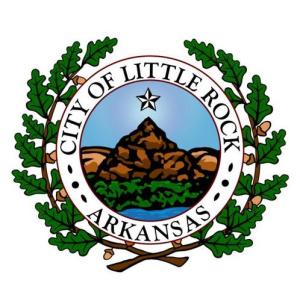
Active in community activities and politics, she ran for the City Board in 1974 and lost.  But she was appointed to the Little Rock City Board in September 1978 to fill a vacancy.  This made her the first African American woman to serve on he City Board, and indeed on any governing board for the City (during Reconstruction, there were at least three African Americans on the City Council, but they were all men.) She was subsequently elected to a full-term on the City Board in 1980 winning 55% of the vote over three male candidates.

She was subsequently re-elected in 1984 (unopposed) and in 1988 (with 60% of the vote).

In January 1987, Shackelford became the first female mayor of Little Rock when she was chosen by her colleagues on the City Board to serve in that position. She was Mayor until December 1988.

From 1982 until 1992, she served as Executive Director of the Arkansas Regional Minority Purchasing Council.  She left that position to serve as Deputy Campaign Manager of Clinton for President.  She subsequently served on the Clinton/Gore transition team. She later served on the Overseas Private Investment Corporation from 1993 to 2003. She was the first African American to be in that position.

A graduate of Philander Smith College, she has also studied at the Arkansas Institute of Politics at Hendrix College and the Kennedy School of Government at Harvard University.

In recognition of all of her achievements, she has been included in the Arkansas Civil Rights Heritage Trail, the Arkansas Black Hall of Fame, and the Arkansas Women’s Hall of Fame.

Little Rock Look Back: First Class status granted City of Little Rock

On March 9, 1875, the City of Little Rock became a City of the First Class in Arkansas. It was the first city in the state to receive this designation.
This was in conjunction with the adoption of the Arkansas Constitution of 1874 which created this status.  The Constitution defines them as: “All cities, which at the last federal census had, or now have, a population exceeding two thousand five hundred (2,500) inhabitants shall be deemed cities of the first class.”

March 9 is just one of several dates Little Rock could celebrate as a birthday.

  • January 6, 1866 – Little Rock government resumes operations following the Civil War
  • November 2, 1835 – Little Rock is incorporated as a City
  • November 7, 1831 – Little Rock is incorporated as a Town
  • October 27, 1825 – Little Rock given the right to elect a governing board of trustees
  • June 1, 1821 – Little Rock officially becomes capital of Arkansas
  • April 9, 1722 – Jean Batiste Benard de La Harpe sees Le Petite Roche

There could also be the dates in 1812 when William Lewis built the first home in Little Rock (a shack) or in February 1820 when the first permanent settlement was established.  But neither of those have exact dates that are remembered.

Little Rock Look Back: Suit filed calling for integration of LR public facilities

Attorney Wiley Branton, who filed the law suit.

On March 8, 1962, 22 members of the Council on Community Affairs filed a lawsuit in U.S. District Court against the city Board of Directors for the desegregation of “public parks, recreational facilities, Joseph T. Robinson Auditorium and all other public facilities.”  The members included journalists, dentists, attorneys, school teachers and other members of Little Rock’s African American professional class.  Attorney Wiley Branton, Sr., filed the suit.

Though the City’s Auditorium Commission was mentioned in the suit, they were not served with papers. So when media contacted them, they made no comment.

Historian John A. Kirk has written, “Members of the City Board were willing to admit that the desegregation of public facilities was ‘a foregone conclusion’ if the case went to court, but they remained committed to fighting the lawsuit if only to buy time to devise other methods to avoid desegregation.”

The decision was rendered in February 1963 that the City must integrate its public facilities.

In 1951, the City’s library facilities had been integrated followed by the bus system in 1956. Both of these had been accomplished without incident.  Of course the same was not said for the integration of the public schools in 1957.

In 1961, there had been attempts to have Robinson Auditorium integrated after Duke Ellington threatened to cancel a concert rather than play to a segregated crowd.  The Auditorium Commission refused to change its policy, and Ellington did not play the concert.

Based on efforts of the Council of Community Affairs working with white business leaders, downtown lunch counters and businesses were integrated starting in January 1963.  The efforts of the Council of Community Affairs and the white business leaders are commemorated in the Arkansas Civil Rights Heritage Trail with medallions in front of the Little Rock Regional Chamber building.