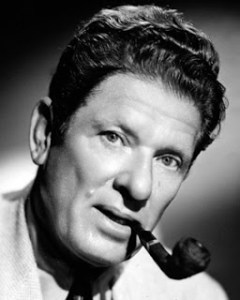
Rock the Oscars 2019: Leo Robin and Jule Styne

Lyricist Leo Robin with composer Jule Styne working together on the score of Gentlemen Prefer Blondes at the time of the original production in 1949.

Lyricist Leo Robin with composer Jule Styne working together on the score of Gentlemen Prefer Blondes at the time of the original production in 1949.

Perhaps the most famous song about Little Rock is “(I’m Just a) Little Girl from Little Rock.”  Written by Leo Robin and Jule Styne, it first appeared on Broadway in Gentlemen Prefer Blondes where it was sung by Carol Channing.  When the title was made into a movie, it was sung by Marilyn Monroe and Jane Russell.

Because it was not written for the screen, the song was not eligible for an Oscar.  However, the duo who wrote it had their fair share of Oscar nominations and wins.

Robin, earned ten nominations between 1934 and 1953.  As a lyricist, he collaborated with seven different composers in earning these nominations. His one Oscar came for “Thanks for the Memory” from The Big Broadcast of 1938.  In the film it was sung by Bob Hope and Shirley Ross.  It would be associated with Hope the rest of his life.

Styne also earned ten nominations; his were between 1940 and 1968.  Seven of the nominations were for collaborations with Sammy Cahn.  (There were three other partners with whom he shared nominations, too.)  His win came for “Three Coins in the Fountain” from the film of the same name.  In the movie it was sung by an uncredited Frank Sinatra during the opening title sequence. During the closing credits, an unnamed chorus repeated the song.

Gentlemen Prefer Blondes received no Oscar nominations, though Charles Lederer did receive a Writers Guild of America nomination for screenplay of an American Musical.  Though Jane Russell introduced an Oscar winning Best Song in Paleface (“Buttons and Bows”) and Oscar nominated Best Song in Son of Paleface (“Am I in Love”) she never received an Oscar nomination.  Monroe never received one either.  Only co-star Charles Coburn had any luck with Oscar.  He received three nominations, winning once.
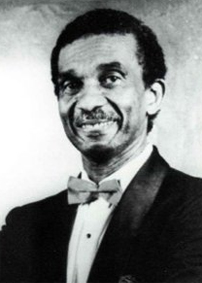
A Celebration of Art Porter Sr. tonight at the Ron Robinson Theater

Arthur Lee (Art) Porter Sr. was a pianist, composer, conductor, and music teacher. His musical interest spanned from jazz to classical and spirituals.

Tonight at the CALS Ron Robinson Theatre, Arkansas Sounds is hosting a special presentation of rare video and audio clips and photographs, as well as a panel discussion celebrating the continued legacy and eighty-fifth birthday of Arkansas pianist, composer, conductor, and music teacher Art Porter Sr. This event is co-sponsored by AETN.

Admission is free, but reservations are suggested. They can be made here.

Born on February 8, 1934 in Little Rock, he began his music education at home. He played in church at age eight; played his first recital at twelve; and, by fourteen, hosted a half-hour classical music radio program on KLRA-AM. He earned a bachelor’s degree in music from Arkansas AM&N College (now UAPB) in May 1954.

He began his teaching career at Mississippi Valley State University in 1954.  When he was drafted into the Army, his musical talents were responsible for him being assigned as a chaplain’s assistant in New York.  In the late 1950s he returned to Little Rock and taught at Horace Mann High School, Parkview High School and Philander Smith College.

He also started playing piano jazz in the evenings. This led to the creation of the Art Porter Trio, which became THE music group for events.  Many musicians who came to Arkansas to perform in Little Rock or Hot Springs would often stop by and join in with Porter as he played.  From 1971 to 1981 he hosted The Minor Key musical showcase on AETN.  His Porterhouse Cuts program was shown in 13 states.

Often encouraged to tour, he instead chose to stay based in Arkansas.  He did, from time time, perform at jazz or music festivals.   He also performed classical piano with the Arkansas Symphony Orchestra, founded the Art Porter Singers, and created a music group featuring his four oldest children.  Though Porter received many honors and awards, he found particular satisfaction in the “Art Porter Bill” enacted by the state legislature, which allowed minors to perform in clubs while under adult supervision. Porter’s children thus were able to perform with him throughout the state. Governor Bill Clinton, at the time a huge fan and friend of Porter, often joined Porter’s group on his saxophone.

In January 1993, Porter and his son Art Porter, Jr., performed at festivities in Washington DC for the Presidential Inauguration of his friend Bill Clinton.  In July 1993, he died of lung cancer.  Today his legacy lives on in the Art Porter Music Education Fund as well as in the lives of the many musicians and fans he touched.  He was posthumously inducted into the Arkansas Black Hall of Fame in 1994.

Ron Robinson Silver on Silver film: PULP FICTION

Pulp Fiction PosterLast week John Travolta from the 1970s was on the CALS Ron Robinson screen.  This week, a 1990s version of Travolta takes the screen.
Twenty-five years ago, PULP FICTION was released. In honor of its silver anniversary, the CALS Ron Robinson Theatre is showing the movie tonight.  The lives of two mob hitmen, a boxer, a gangster’s wife, and a pair of diner bandits intertwine in four tales of violence and redemption.

The film starred Travolta, Uma Thurman, Samuel L. Jackson, Bruce Willis, Tim Roth, Amanda Plummer, Frank Whaley, Ving Rhames, Eric Stoltz, and Rosanna Arquette.

The movie was nominated for eight Oscars and took home the statue for Original Screenplay (Quentin Tarantino and Roger Avary).

The showing starts at 6:30.  Admission is $5.00.

Rock the Oscars 2019: Broncho Billy Anderson

At the 1958 Oscars, Gilbert M. “Broncho Billy” Anderson received an Honorary Oscar as a motion picture pioneer.  The citation praised  his contributions to the development of motion pictures as entertainment.

Born in Little Rock in March 1880, he was the son of Esther and Henry Aronson. Both were originally from New York.  Her parents were German-Jewish immigrants and his parents were Russian-Jewish immigrants.

After working as a photographer’s assistant and model, Anderson eventually found his way to vaudeville as a performer and writer.  In 1903, he appeared in the early seminal film The Great Train Robbery in several roles.  He created the western persona of Broncho Billy in front of the cameras.  Behind the scenes, he was a studio owner and director.  Over his career, he directed over 400 films.  By the early 1920s, he retired as an actor and director and devoted himself to owning a Broadway theatre and producing stage shows.

He made occasional film appearances beginning in the 1940s.  In 1958, he appeared in a documentary about Westerns for the TV show “Wide, Wide World.”  Also featured in that special were Little Rock actors Ben Piazza and Gail Davis.  His final screen appearance was in 1965’s The Bounty Killer.  He died in 1971 at the age of 90. He had been married to his wife for sixty years at the time of his death.

Free tickets to Arkansas Symphony weekend concerts for Federal Employees.

No photo description available.

The Arkansas Symphony Orchestra is offering free tickets to federal government employees (with valid ID) who want to attend this weekend’s concert “Chopin & Mendelssohn” on Jan. 26th & 27th.  The concerts are at Robinson Center Performance Hall.

Please call 501-666-1761 ext. 100 or email tickets@arkansassymphony.org to order.

Little Rock Look Back: A 1956 attempt at integrating LR schools

Arkansas Democrat photo by staff photographer Mr. Bisgood

Arkansas Democrat photo by staff photographer Mr. Bisgood

On Monday, January 23, 1956, twenty-seven African American students attempted to integrate four Little Rock schools.  By the end of the day, all four school principals had refused entry and some of the students had met with LRSD Superintendent Virgil Blossom.

Eight girls who were students at Horace Mann High School arrived at Central High at 9:30 am accompanied by Daisy Bates and Frank W. Smith both of the NAACP.  One male student attempted to integrate Little Rock Technical High School.  Four students arrived at Forest Heights Junior High (accompanied by three adults) and fourteen students attempted to integrate Forest Park Elementary (accompanied by four adults).  Neither the Arkansas Gazette nor the Arkansas Democrat broke down the age or gender of the junior high and elementary students.

Though all were referred to meet with Mr. Blossom, only the young women from Horace Mann visited with him.  After the conversation both he and Mrs. Bates declared the conversation had been friendly.   Mr. Blossom, in denying the request, noted that the Little Rock School District had a plan for integration. To allow them to integrate immediately would have been going against the plan.  The integration plan was connected to the completion of the new high school.  If it were ready to open in the fall of 1957, then integration at the high schools would start then.  The newspapers noted that there was no timeline for when it would extend down to the junior high and elementary levels.

That evening, Rev. J. C. Crenchaw, the president of the Little Rock NAACP, issued a statement.  In it he expressed frustration that the LRSD was vague on its timeline for integration.  He noted that the students lived near the schools which they tried to integrate and were therefore forced to travel several extra miles each day to attend school.  He also commented that the young man who attempted to enroll at Tech was not afforded the training available there at his current school.

The Arkansas Democrat ran a photo of the meeting with Mr. Blossom.  It identified the seven students who were pictured.  No mention was made as to whether the eighth student was present but not photographed, or if she did not attend the meeting.  As was the practice at the time, the addresses of the students were listed by their names.  Based on those addresses, the students lived between 0.4 and 0.9 miles from Central High School and were between 2.1 and 3.2 miles away from Horace Mann High School.  Of the seven students in the photo, two were seniors, three were juniors, and three were sophomores.  None of the students named became part of the Little Rock Nine who did integrate Central High twenty-one months later.

On January 24, the Gazette editorial writer opined they were glad for the amicable nature of the conversations. They hoped it did not affect the good race relations in Little Rock.  The writer concluded by saying they did not want it to incite extremists (but did not specify if they viewed the extremists as being for or against integration.)

Rock the Oscars 2019: Arkansan and Oscar Host Bob Burns

Bob Burns was a well-known national radio and film personality during the 1930s and 1940s. He was known such as “The Arkansas Traveler” and “The Arkansas Philosopher” because he wove tales of life in the Arkansas hills with his musical performances.

On March 10, 1938, he hosted the tenth Oscar ceremony, becoming the first Arkansan to do so.  At that ceremony the big winner was The Life of Emile Zola. The first version of A Star Is Born became the first color motion picture nominated for Best Picture. It was also the first time the Irving Thalberg Award was presented.  At the time, Burns had made a few movies and was ruling the airwaves as a popular radio star.  Since the Oscars were broadcast on the radio, he was an appropriate choice to host the awards.

He earned his nickname, “Bazooka,” from an instrument he invented and named as a young man in a plumbing shop.  The instrument, which was a simple device made of spare gas fittings and a whiskey funnel, eventually lent its name to the World War II anti-tank weapon due to its similar looks and Burns’ popularity among the troops who employed it in combat.

Burns was born in Arkansas (there are conflicting sources as to where) and grew up in Van Buren. As a youth, he started playing in bands. Among the instruments he played was his Bazooka invention. Eventually he came to the attention of a radio program in California. His originally non-paying assignment as a radio comic eventually led to appearances on Paul Whiteman’s coast-to-coast radio program and regular appearances on Rudy Vallee’s shows.

He eventually starred on NBC’s Kraft Music Hall radio program with Bing Crosby while also making more movies. From 1941 to 1947 he starred in his own radio show – The Arkansas Traveler which eventually became The Bob Burns Show.  During the same time period, he wrote a column for Esquire and syndicated newspaper column.

He was feted several times when he returned to Arkansas in the 1930s and 1940s.  In 1956, Burns died of cancer and is buried in California.