
As part of M2 Gallery’s May Sessions at South on Main: Neal Harrington’s art and the music of Black Sabbatical

Sessions :: Neal Harrington + Black SabbaticalM2 Gallery is curating May Sessions at South on Main by highlighting connections between music and visual art. For the fourth Wednesday in May, they invite you to experience the music & art of Neal Harrington and Black Sabbatical.

Tickets for this event are $7 in advance or $10 at the door. Music begins at 8 pm. You may reserve a table for dinner by calling (501) 244-9660.

ABOUT BLACK SABBATICAL

Black Sabbatical is comprised of four college professors who cannot agree on anything except ROCK and ROLL!

ABOUT NEAL HARRINGTON

Neal Harrington was born in Rapid City, South Dakota in 1973.  He graduated from the University of South Dakota with a Bachelor of Fine Arts degree (emphasis in painting) in 1998.  Mr. Harrington then recently married, followed his wife to graduate school in Wichita, Kansas.  He graduated in 2001 with a Master of Fine Arts degree (emphasis in printmaking) from Wichita State University.  Currently Neal, Tammy and their two children live in Russellville, Arkansas.

ARTIST STATEMENT

Printmaking, in particular relief, is my primary means of exploration in the visual arts.  The content of my work fuses the rich tradition of Greek/Roman mythologies with an American Roots Music perspective.  These visual ballads sing out in their symbolism, narrative, and energetic atmospheres.  My work balances a multifaceted investigation of independence and mystical narratives.  These themes can be found in The Bootlegger’s Ballad series and the pulp novel/comic pinup imagery of The American Goddesses series.  The bold and graphic marks of the woodcut/relief technique reiterate the tension and energy of the figures in these works.  In my Bootlegger series, I create an intensified atmosphere and an amplified dramatic sense of light with the addition of India ink washes.  The shades of gray either softens the focus or strengthens the focal point and contributes to the dreamlike quality of the piece.

ABOUT M2 GALLERY

M2 Gallery is located in SOMA and offers a large selection of original artwork from both established and emerging artists. With a wide range of style and price, M2 Gallery is sure to fill your art needs. M2 also works with a large network of galleries throughout the country so that we can make sure to find exactly what our clients are looking for. Gallery director Mac Murphy has over 15 years experience, and has been the driving force behind M2 Gallery winning the Platinum Service Award for several years.

Little Rock Look Back: Plans for Arkansas Arts Center unveiled on May 22, 1961

In a dinner at the Hotel Sam Peck, plans for the new Arkansas Arts Center were unveiled on Monday, May 22, 1961.

It was estimated the project would cost $600,000. A total of $646,000 (the equivalent of $5.5 million in 2019) had been raised by the Junior League of Little Rock, Fine Arts Club, and the Board of the Museum of Fine Arts.

At the time the project was getting underway, it was one of the first types of multidisciplinary arts facilities in the United States.

Ground was broken in August 1961 and the building would open officially in May 1963 (though parts of it were already in use by December 1962).

The firm of Ginocchio, Cromwell, Carter & Neyland did the architectural design.  Pickens-Bond Construction Company was the general contractor.

The May 1961 plans featured a slight expansion of existing gallery space (which was the 1937 Museum of Fine Arts building). It included the addition of a theatre, classrooms, administrative offices, a library, and more gallery space.  While the original entrance would be kept, the main focus of the building would be shifted from 9th Street into MacArthur Park with a new south entrance.

Over the years, the building underwent several additions.  These were tacked on to the existing edifice without truly linking it into one building.  On July 1, 2019, the facility will be closed to begin the work on the re-imaging and renovation. That process will unite the existing and new spaces into one seamless structure.

Kari Faux at CALS Ron Robinson Theater tonight presented by Arkansas Sounds

Tonight (May 22), CALS Arkansas Sounds presents Kari Faux
Arkansas’s biggest hip-hop artist returns to her hometown of Little Rock for a special performance, making a stop on her Help Wanted tour to celebrate the release of her new EP Cry 4 Help. The tour takes her from coast to coast.

Since 2011, the rapper, singer, and record producer has released her debut album, four mixtapes, and two EPs, working with artists such as Donald Glover (Childish Gambino), bLAck pARty, the Internet, Chloe x Halle, and Issa Rae and being featured on NPR and in SpinVogueThe FaderXXLVibe, and Rolling Stone

THIS EVENT IS ADULTS ONLY: AGES 18 & UP  Tickets are $15 day of show, all general admission seating. The doors open at 7:00 pm, and the concert starts at 8:00 pm.

Presented by CALS Arkansas Sounds.

Sponsored by Friends of the Central Arkansas Library System (FOCAL), Acansa Arts Festival, FM 89.1 KUAR, Dr. Elizabeth Fletcher Dishongh Charitable Trust and David Austin at The Charlotte John Company.

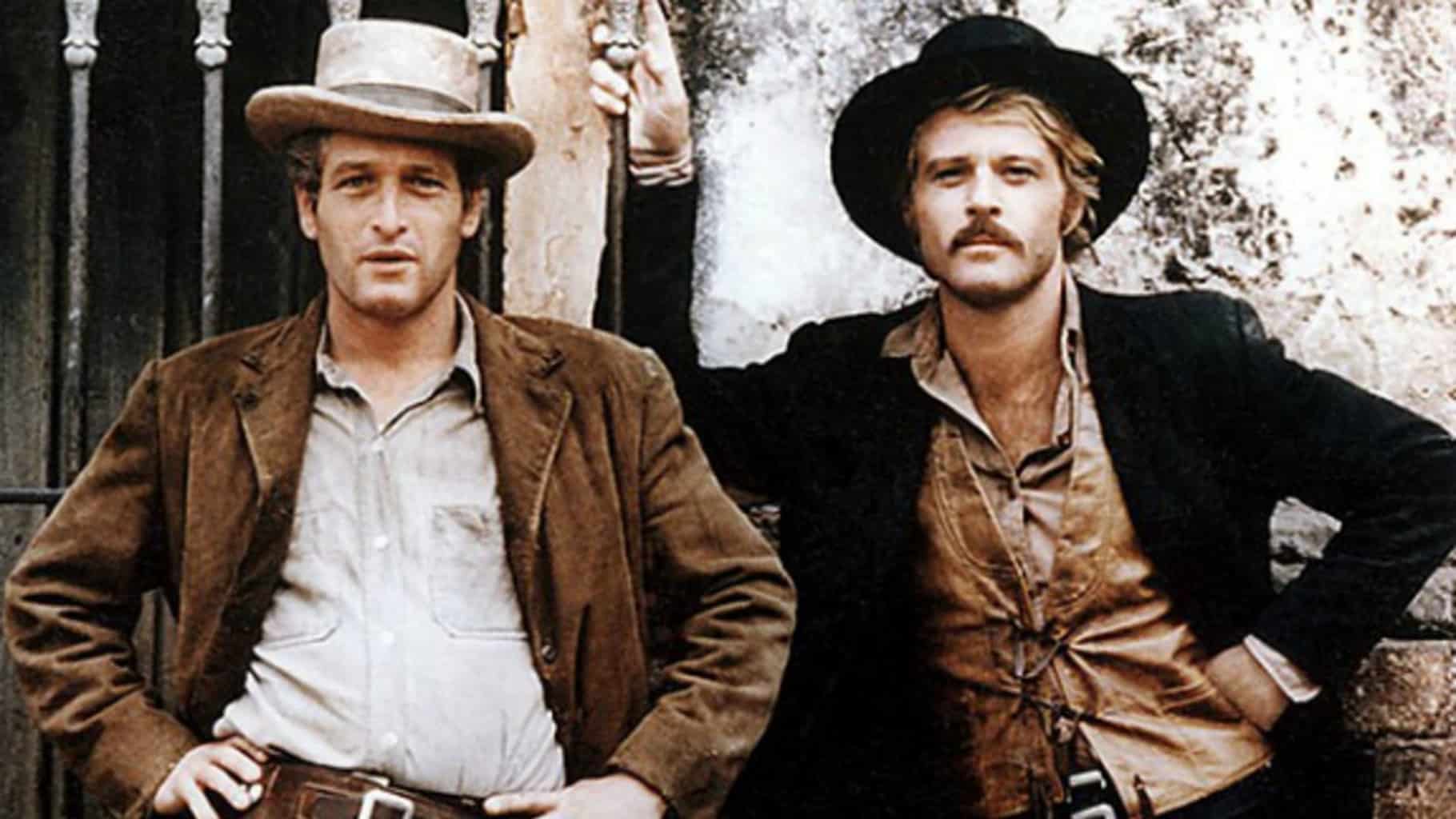
Redford, Newman and Ross light up CALS Ron Robinson Theater screen tonight with BUTCH CASSIDY AND THE SUNDANCE KID

Butch Cassidy & the Sundance Kid

As part of the CALS Ron Robinson Theater’s series of films that turn 50 in 2019, tonight (May 21) they are showing Butch Cassidy and the Sundance Kid.

Nominated for seven Oscars (and winner of four), this is the true story of fast-draws and wild rides, battles with posses, train and bank robberies, a torrid love affair and a new lease on outlaw life in far away Bolivia. It is also a character study of a remarkable friendship between Butch – possibly the most likable outlaw in frontier history – and his closest associate, the fabled, ever-dangerous Sundance Kid.

Directed by George Roy Hill, it paired Paul Newman and Robert Redford as the title characters.  Katharine Ross also starred in a cast that included Strother Martin, Henry Jones, Cloris Leachman, George Furth, Jeff Corey, and Kenneth Mars.  The screenplay was written by William Goldman.

The four Academy Awards were for Goldman’s Screenplay, Cinematography by Conrad L. Hall, Musical Score by Burt Bacharach, and Best Song by Bacharach and Hal David. The song was “Raindrops Keep Fallin’ on My Head.”

The movie starts tonight at the CALS Ron Robinson Theater at 7pm.  Admission is $5.

(In 1969, the cost to see it was probably $1.50. With inflation, that would be close to $10 today. So a $5 movie ticket is like seeing it for half price in 1969.)

176 years of Mount Holly Cemetery

Mount Holly Cemetery in January 2013.

2019 marks the 176th year of Mount Holly Cemetery in Little Rock.

The land was donated by Roswell Beebe and Chester Ashley in February 1843.  From March through October 1843, the Little Rock City Council would pass a variety of ordinances and resolutions governing the cemetery and making other provisions for it.

Though the opening day sale of lots and picnic would not take place until May 1843, the first burial appears to have been on April 8, 1843.  William Cummins was buried will full Masonic orders on that day.  The service was conducted by Little Rock’s second mayor, Rev. W. W. Stevenson.

On May 1, 1843, it became illegal to bury persons in Little Rock any location other than Mount Holly.  This ordinance had been adopted on March 7, 1843.

The prior cemetery had been at Capitol and Gaines Streets (on which a portion of the Federal Courthouse now stands). Skeletal remains have also been found at Seventh and Rock Streets, in what was probably a family burial plot.  Other small plots were in existence until action in 1834 by the Little Rock Town Council which prohibited private cemeteries.

During the Civil War and years following it, the City would establish other cemeteries and allow additional cemeteries to be created.  But the creation of Mount Holly marked another step in Little Rock’s development as a city.

From 1843 until 1877, Mount Holly was governed by a City Council Committee.  Upset by the lack of attention given to the cemetery, a group of civic leaders asked the City Council to create a separate Commission to govern the cemetery. This was done on March 20, 1877.  It was possibly the first City Board or Commission composed of non-elected officials.

By 1914, the cemetery was once again being neglected.  This time a group of Little Rock’s leading women decided it was time to band together to address it.  In June 1915, the Little Rock City Council disbanded the Cemetery Commission for Mount Holly and designated the Mount Holly Cemetery Association as the governing body.  103 years later, the ladies of the Mount Holly Cemetery Association continue this outstanding work.

Little Rock Look Back: Dan Sprick

Future Little Rock Mayor Dan T. Sprick was born on May 19, 1902.  He served three terms on the Little Rock City Council (from 1935 to 1941).  In 1945, he was elected Mayor of Little Rock and served one term. During his tenure on the City Council, he was the sole vote against locating Robinson Auditorium at Markham and Broadway.  He had favored another location.

He was not alone, however, in being held in contempt of court and spending part of the day in jail.  On Monday, December 4, a dozen of Little Rock’s aldermen (which included Sprick) reported to the county jail to serve sentences for contempt of court. The previous Monday, the twelve council members had voted against an ordinance which had been ordered by the judge in an improvement district matter. The other aldermen had either voted in the affirmative or had been absent. Because the twelve had refused to change their votes since that meeting, the judge ordered them jailed.  After the aldermen changed their votes later in the day, they were freed.

His tenure as Mayor was relatively quiet. He took office the same month that World War II ended. While in office, the Sprick administration was marked by growth in the city budget and in city positions. As a part of that growth, there were many more new purchases taking place which had prompted extra scrutiny of the City’s purchasing procedures. A thorough investigation toward the end of his tenure found no malfeasance or misfeasance, it did note that the city needed to do a better job of anticipating cash flow. Much of the City’s focus during the Sprick tenure was on growth and keeping up infrastructure needs.

Sprick later served for ten years in the Arkansas State Senate (from 1961 to 1970).  During his tenure in the Senate, Sprick was closely aligned with Gov. Orval Faubus.  When the Little Rock high schools had been closed a year to ensure segregation, Sprick had served on the board of a private school set up by some of the leaders of the segregation movement.

His time in the Senate was also marked by controversy.  He was one of three Senators to opposed Muhammad Ali’s speaking at the University of Arkansas at Fayetteville.  After an Arkansas Gazette editorial lambasted him, Sprick sued the paper for libel. The Gazette settled with him out of court because his health was poor.

One of the landmark pieces of legislation he guided through the Arkansas General Assembly allowed cities to collect advertising and promotion taxes.  The 1972 and 1973 upgrades to Robinson Center were funded by this tax (as have some subsequent upgrades). So the building he voted against while on the LR City Council benefited from legislation he championed while in the General Assembly.

Sprick died in January 1972.

The Natural State Brass Band in concert today

Image may contain: textThe Natural State Brass Band presents its pre-Memorial Day concert on May 19 at 3 p.m. at Pulaski Heights United Methodist Church, 4823 Woodlawn, in Little Rock.

Admission is free.

Selections will include “American Overture,” “A Sinatra Salute!,” “Joshua Swings the Battle,” “Under the Boardwalk,” “John Williams: Epic Themes,” “Armed Forces Salute,” “America, the Beautiful,” and “The Stars and Stripes Forever.”