Flag Day with QQA at Curran Hall tonight

american-flag-wavy.jpgTonight at 5pm, bring the family, meet Uncle Sam and visit Historic Curran Hall for a southern picnic to celebrate Flag Day. The Little Rock Visitor Foundation recently acquired the original 1859 square grand piano that belonged to the Woodruff family and sat in Curran Hall from the 1860s to the 1990s. Come take a look and listen to Arkansas music from the past 150 years.  

This is part of the Quapaw Quarter Association’s Summer Suppers program.

MENU: BBQ, traditional summer side dishes, beer, and ice cream

HOSTS: (Little Rock Visitor Foundation and Board of Directors): Aaron Ruby, Lauren Bridges, Joanne Hinson, Shannon Treece, Larry Carpenter, Brendan Monaghen, Jim Montgomery, Jim Rule, Barry Travis, Carolynn Coleman, Cherry Light, Jason Campbell

LR Look Back: The Rice Family and LR Auditorums

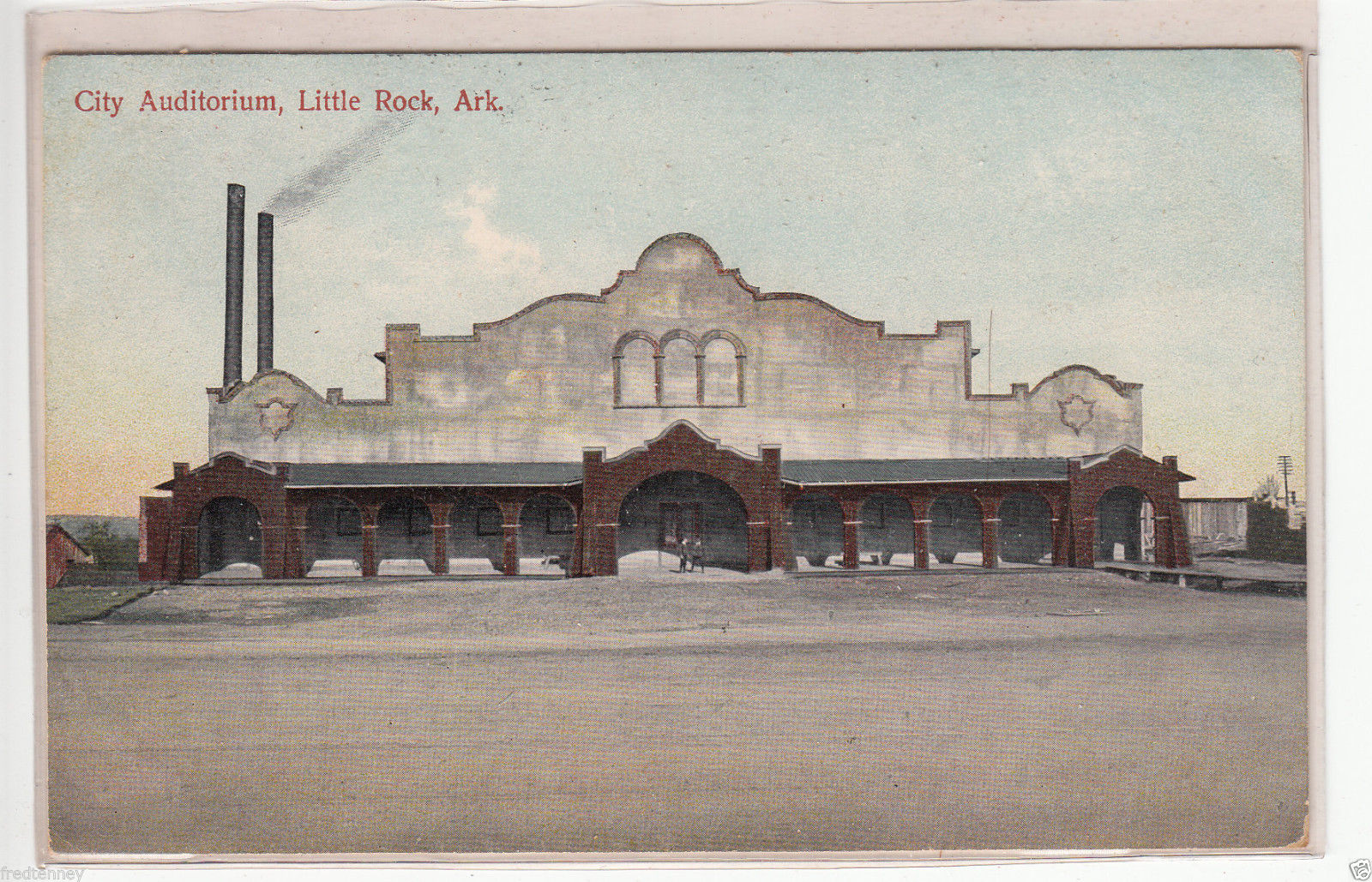
1906 LR auditoriumOn June 7, 1920, the Little Rock City Council finally authorized the demolition of Little Rock’s 1906 temporary auditorium.  The structure had originally been built as a skating rink which, when chairs were added, could be used for public meetings.  Since the mid 1910’s, the City Council had discussed tearing it down over safety concerns.  But since Little Rock had no other structure as a substitute, the Council kept delaying the decision.

J Rice 1920In 1920, though there was not alternative space available, the Council decided that the structure had to come down.  So City Engineer James H. Rice was authorized to have the building removed.

JimRice RobinsonToday, Rice’s grandson, also known as Jim Rice is the COO of the Little Rock Convention & Visitors Bureau.  In that capacity he is overseeing the renovation of Little Rock’s 1940 municipal auditorium – Robinson Center Music Hall.

Sandwich in History today at St. Edward’s Catholic Church

St. Edward Catholic Church_tour_tnThe monthly architectural history program “Sandwiching in History” visits St. Edward Catholic Church, lodated at 801 Sherman Street.

In 1883 Bishop Edward Fitzgerald sanctioned the creation of St. Edward parish to accommodate the growing number of German Catholics in Little Rock. The current church, dedicated in 1905, was designed by Charles L. Thompson in the Gothic Revival style.

Sandwiching in History is a program of the Arkansas Historic Preservation Program, an agency of the Department of Arkansas Heritage.

Little Rock Look Back: Cornice placed on Robinson Auditorium

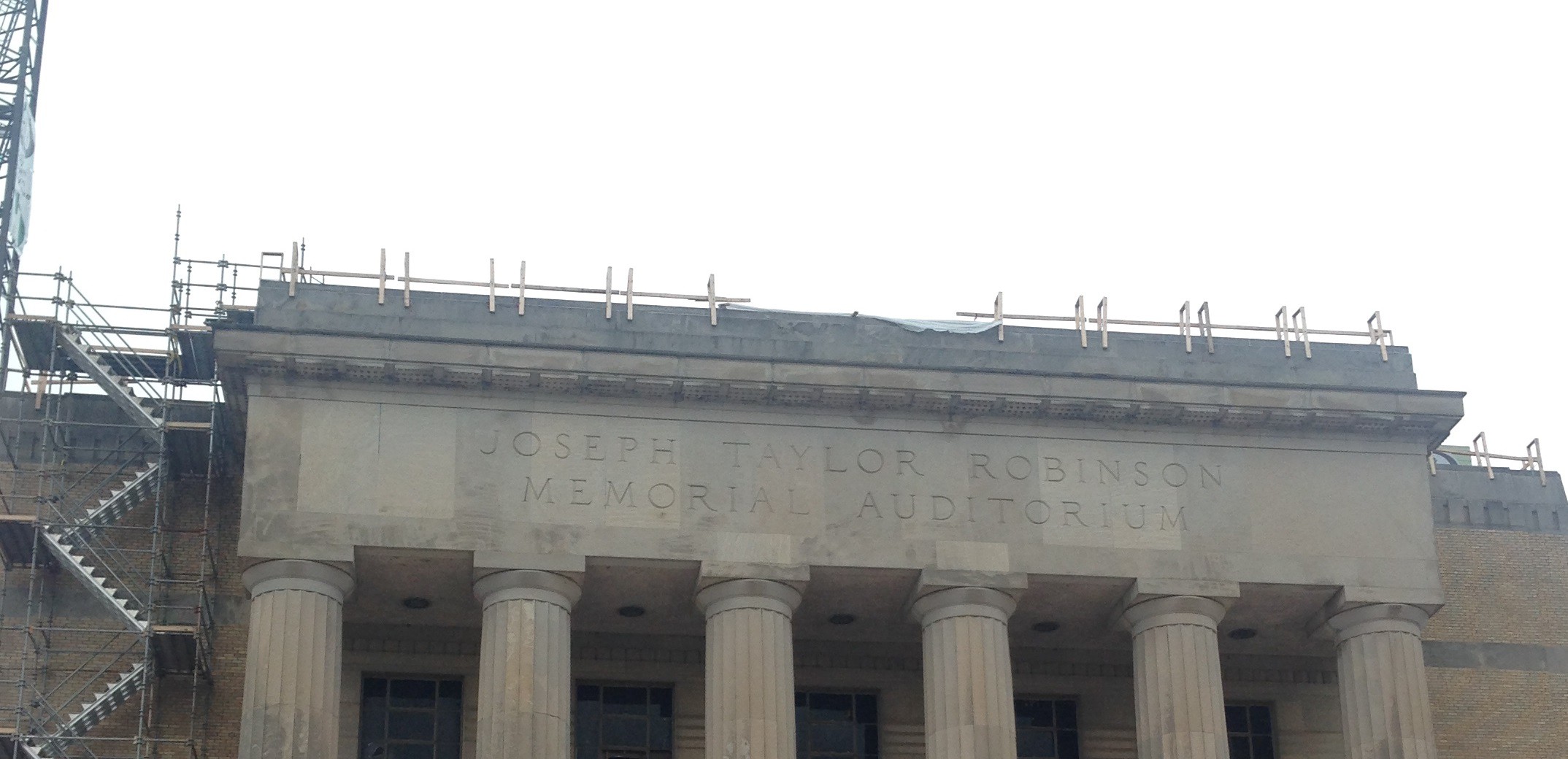
JTR CorniceOn June 1, 1939, the cornice was installed on Robinson Auditorium.  This granite slab noted the name of the building as the Joseph Taylor Robinson Memorial Auditorium.  (It is interesting to note that it used the more modern “u” instead of the classical “v” which was often used in buildings during prior decades – as evidenced by the Pvlaski Covnty Covrt Hovse across the street.)

This was a milestone marking the completion of the front facade of the structure.  Much work would continue on the interior of the structure.  This step in the construction was considered major enough that the Arkansas Gazette mentioned it in a news article.

Today the cornice is again surrounded by construction materials and braces. The front lobby, the cornice and columns are pretty much the only parts of the building not currently under construction as Robinson Center is readied for its second act.  It is scheduled to open in November 2016.

Heritage Month – Federal Building

Federal BuildingThe newest property to be added to the National Register of Historic Places closes out the month.  The Federal Building’s inclusion on this list was announced earlier this month.

The seven-story Federal Building at 700 West Capitol Avenue  was constructed in 1959-61.  It was designed in a modern style, featuring a uniform exterior grid of spandrel and plate glass framed by rows of aluminum bands and columns of white stone.

“The Little Rock Federal Building is a good example of the commercial work of two noted Arkansas architecture firms, Swaim & Allen & Associates and Ginocchio, Cromwell & Associates,” according to the National Register nomination. “The building’s design is consistent with modern high-rise office facilities in the late 1950s and early 1960s. Its uniformly packaged facades, defined by a grid of glass, aluminum, and stone, reflected a growing trend in which Federal buildings began to more closely resemble their commercial counterparts.”

The vertical bands mimic the neoclassical columns of the adjacent 1930s Federal Courthouse. While both structures are unique and representative of their architectural styles, a harmony exists based on the strong vertical lines and the use of the white and grey based primary color scheme.


Heritage Month – Paul Laurence Dunbar High School

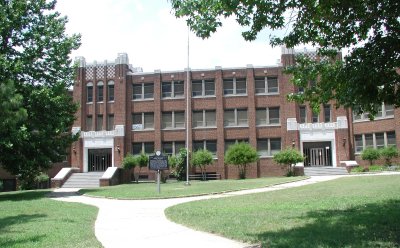
dunbarNow known as Dunbar Middle School, this building originally house students from junior high to junior college.  For years the Paul Laurence Dunbar High School was known throughout Arkansas and the south as an outstanding school for African American students.

From 1929 until 1955, Dunbar High School provided a high-quality education for African American students, not only within Little Rock but also from far-reaching corners of the state.   Today the National Dunbar Alumni Association is a well-organized network of former students with active chapters throughout the United States. 

The school is located in a residential area south of downtown Little Rock. George H. Wittenburg and Lawson L. Delony designed the edifice, built on a southeast-northwest axis. Both architects contributed to the design of Little Rock Central High School (1927; listed on the National Register in 1977), which is nine blocks west of Dunbar.

Dunbar was designed to accommodate an academic curriculum as well as the more traditional vocational programs often considered the limit of education for blacks. In 1980, Dunbar Junior and Senior High School and Junior College was listed on the National Register.

The significance of Dunbar Junior High School derives both from the unique place it occupies in the history of education in Arkansas and from the modern architectural concepts with which it was designed. Dunbar was a center of quality education for black Arkansans in the state’s segregated public school system, functioning as a junior high school, high school, and junior college until its last high-school and junior-college classes graduated in 1955.

It had further distinction as one of only two industrial arts schools in the south to attain junior college rating, also in 1931-1932, as well as the recognition and acceptance of the Dunbar curriculum as the basis for admission to colleges and universities throughout the United States. In 1943 the school was involved in a controversy concerning equal pay for black and white teachers in the Little Rock School System, which was resolved in Morris v. Williams, 149 F. 2d 703, heard before the 8th U.S. Circuit Court of Appeals. This was a landmark case in establishing the principle of “equal pay based on professional qualifications and services rendered.”

The architects’ achievement in designing an architecturally eminent setting for this progressive passage in Arkansas history is also noteworthy. With an eye toward form following function, the plan of the building promotes maximum use of space and expedient circulation. Aesthetically, the building is decidedly modern, with decorative brick and stone work and striking towers reflecting an interest in the Art Deco style of the period.

Heritage Month – White-Baucum House

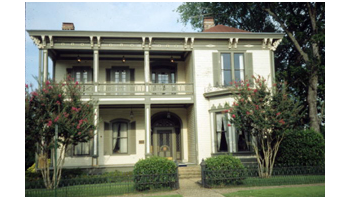
ahpp_nom_whitebaucumhouse_largeThe White-Baucum House is an architecturally significant structure with important historical. associations. The building, with its strong principal entrance, dominant porches and careful detailing, is one of the earliest and best examples of Italianate architecture in the state.

The home was constructed in 1869-1870 for Robert J. T. White, who was then Arkansas Secretary of State. In 1876 the building was sold to George F. Baucum, who entered business in Little Rock after distinguished service in the Civil War. Baucum operated a wholesale grocery business, was a cotton broker, was president of the Bank of Little Rock for a time and was one of the founders of the Board of Trade of the city. The Baucum family lived in the how until the mid-1920s. Lora B. Busick occupied the place from 1935 to 1957.

After being left vacant for four years, the house was adapted to new uses, It served as the home of two restaurants, an interior design studio, a nightclub, an advertising agency, and later an engineering firm.  For several years it sat vacant and fell into disrepair.  It has since been restored.

It was added to the National Register of Historic Places on Leap Day (February 29) in 1980.