Sandwich in History Friday at Emmett W. Jenkins House

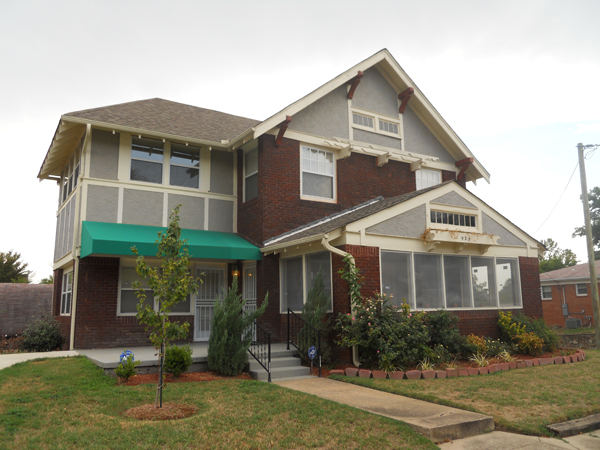
Emmett W. Jenkins House (photo courtesy of Arkansas Historic Preservation Program)

Emmett W. Jenkins House (photo courtesy of Arkansas Historic Preservation Program)

On Friday, August 2 at 12 noon, the Arkansas Historic Preservation Program’s monthly “Sandwiching in History” program will visit the Emmett W. Jenkins house.

Located at 923 W. 24th St. in the Governor’s Mansion Historic District, the Emmett W. Jenkins House was built about 1920.  It was constructed in the Craftsman style with exposed rafter tails, a front porch supported by square, brick columns, and mixed exterior materials.

The house was initially occupied by Emmett W. Jenkins, a contractor, and his wife, Sallie M. Jenkins. The home sustained considerable damage during the 1999 tornado that swept through downtown Little Rock. It was rehabilitated in 2009 and now serves as headquarters for the Ivy Foundation of Little Rock, which financially supports the community through the Beta Pi Omega Chapter of Alpha Kappa Alpha Sorority.

The “Sandwiching in History” program is a series of tours that seeks to familiarize people who live and work in central Arkansas with the historic structures and sites around us. The tours take place on Fridays at noon, last less than an hour, and participants are encouraged to bring their lunches so that they can eat while listening to a brief lecture about the property and its history before proceeding on a short tour. A representative from the property is encouraged to attend also and address the group.

The tours are organized by the Arkansas Historic Preservation Program, an agency of the Department of Arkansas Heritage. All tours are free and open to the public.

McKuin Receives National Certification in Historic Real Estate Development

Vanessa_McKuinEarlier this month, Vanessa Norton McKuin, executive director of the Historic Preservation Alliance of Arkansas (HPAA) received certification as a Historic Real Estate Development Finance Professional (HHDFP) from the National Development Council (NDC).

HPAA is Arkansas’s only statewide historic preservation organization.

HHDFP Certification is a professional credential given to individuals who successfully complete the NDC’s intensive historic real estate development finance training series. The training provides individuals working in the field of community development with instruction in housing development finance, rental housing development finance including problem solving and deal structuring, and the creation and implementation of development programs.

The National Development Council was established in 1969 and is a non-profit organization specializing in economic and housing development training and technical assistance for community development.

Vanessa McKuin is an Arkansas native with family ties in South Arkansas and in the Ozark Mountains. As the Executive Director of the Historic Preservation Alliance of Arkansas, Mrs. McKuin promotes historic preservation as a community development and revitalization too. Ms. McKuin oversees operations, development, advocacy and outreach for the organization. As the director of the Alliance, Mrs. McKuin served as the lead advocate for the Arkansas Historic Rehabilitation Tax Credit (Act 498 of 2009), which created a 25% credit for the rehabilitation of historic structures, providing an incentive that leverages private investment for preservation. Mrs. McKuin also serves as the Arkansas Coordinator for Preservation Action, a national non-profit that promotes preservation legislation.

Before joining the Alliance in 2008, Mrs. McKuin managed programs and operations at the New York Preservation Archive Project, a non-profit historic preservation group in New York City. Mrs. McKuin holds a B.A. degree in Art from Hendrix College in Conway and a M.S. degree in Historic Preservation from Pratt Institute in New York City.

The Historic Preservation Alliance of Arkansas is the statewide non-profit organization dedicated to promoting preservation and continued use of historic and culturally significant places in Arkansas. Through public programs, advocacy and education, the Alliance works to assist owners of historic properties with the means and expertise to preserve and restore important structures. More than just saving old buildings, historic preservation creates and maintains vital, sustainable communities and offers unique quality of life benefits.

For more information about the Alliance visit PreserveArkansas.org.

Sandwiching in History: Villa Marre

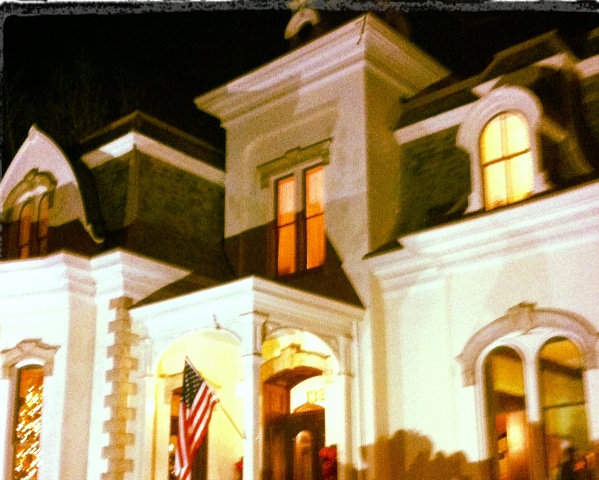
villamarreToday at 12 noon, the Arkansas Historic Preservation Program’s monthly “Sandwiching in History” program will visit the Villa Marre.

The Villa Marre is located at 1321 Scott Street. The Second Empire-style Villa Marre was built in 1881 by Italian immigrant and Little Rock saloonkeeper Angelo Marre, who also served on the Little Rock City Council.

The distinctive home features a mansard roof covered in patterned slate, a central tower topped by wrought-iron cresting, and hood molding above the doors and windows. Marre died in 1889, and his widow, Jennie, remained in the house until about 1900. Arkansas Governor Jeff Davis rented the house for a few years, and in 1905, the home was purchased by E. B. Kinsworthy, former state senator and attorney general of Arkansas.

It is probably most famous today for being the outdoor exterior of Sugarbakers design firm in the CBS sitcom “Designing Women.”  For several years, it was the home of the Quapaw Quarter Association. It later returned to a private residence.  Currently it is a rentable venue for weddings and other events.

The “Sandwiching In History” program is a series of tours that seeks to familiarize people who live and work in central Arkansas with the historic structures and sites around us. The tours take place on Fridays at noon, last less than an hour, and participants are encouraged to bring their lunches so that they can eat while listening to a brief lecture about the property and its history before proceeding on a short tour. A representative from the property is encouraged to attend also and address the group.

The tours are organized by the Arkansas Historic Preservation Program, an agency of the Department of Arkansas Heritage. All tours are free and open to the public.


June 27 Architeaser: Stephens Game & Fish Nature Center

IMG_6042Last week featured a pair of friezes from the original Arkansas Game & Fish Commission building on the State Capitol grounds.  Today’s Architeaser is the Game & Fish Commission’s Witt Stephens Jr. Central Arkansas Nature Center in downtown Little Rock.

The Witt Stephens Jr. Central Arkansas Nature Center opened December 17, 2008. The 16,232 square foot building on 3.4 acres in Little Rock, overlooks the Arkansas River and is within the Julius Breckling Riverfront Park.

The Center is located at park level which is, at that point, approximately one story below the President Clinton Avenue street level.  The photo depicts the walkway and the stairs which lead down to the Center’s exhibit space. The sharp angles of the stairs and rooflines are reminiscent of cabins and lodges which are often found in nature.  Just like with this building, such facilities in the wild often are built to span ravines or to take advantage of unique landscapes.  The exposed beams are associated with the Arts and Crafts movement which espoused an appreciation of nature and natural surroundings in architecture.

The center focuses on the wide variety of outdoor recreational opportunities that our state’s fish and wildlife resources provide. Exhibits highlight the role of fish and wildlife management and many of the projects conducted throughout the history of the Arkansas Game and Fish Commission. The location along the Arkansas River allows many watchable wildlife activities within an urban area. Basking water turtles, butterflies and migrating pelicans are common sights. A portion of the Arkansas River Trail crosses the site, offering more options for exploration. The grounds of the center include beds of native plants found throughout the state, while the main building includes an exhibit hall, aquariums, gift shop, theater and special educational programs.

June 25 Architeaser: War Memorial Stadium

IMG_6008Today’s architeaser is the main entrance on the eastern side of War Memorial Stadium.  It is one of the few parts of the stadium that closely resembles what was built and dedicated in 1948.

The stadium was designed by architect Bruce R. Anderson and was constructed for a cost of $1.2 million.  The original seating capacity of 31,075 was expanded in 1967 and 2010. It is now more than 54,000.

The three panels depict football players. The one on the left depicts a player (ostensibly a quarterback) throwing a football. The middle panel shows two defensive players running into a rusher. The third panel shows a kicker after having punted a ball.

War Memorial Stadium is owned by the State of Arkansas and administered by the War Memorial Stadium Commission.


June 20 Architeaser: Old Game & Fish Building

IMG_5758
Today’s architeaser features two friezes from the old Arkansas Game and Fish Commission Building behind (to the west) of the Arkansas State Capitol.

Originally built to house the Game and Fish Commission offices, the building has been subsumed by the One Capitol Mall complex (aka Big Mac). The Game and Fish Commission offices are now out in west Little Rock near I-430.

One frieze depicts a woman feeding a deer, a family of deer, and a bow hunter. The other frieze depicts a modern fisherman with rod and reel and an 19th century boy sitting along a river bank with a cane pole.
IMG_5760

June 18 Architeaser: Arkansas Education Building

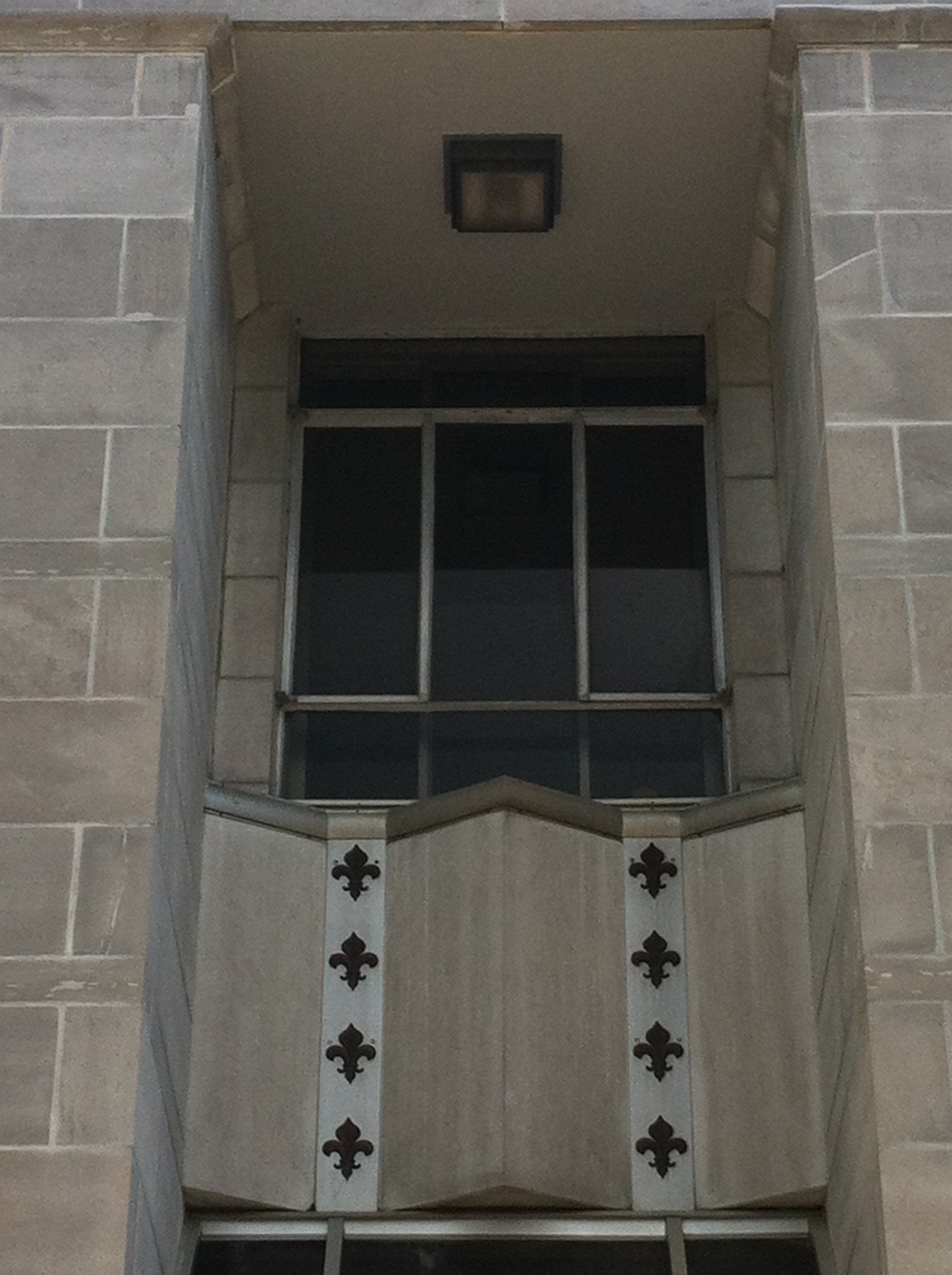
fleurdelis

Today’s Architeaser is one of a series of decorative panels above the doors of the old Department of Education Building to the west of the Arkansas State Capitol.  Across the front facade of this rather utiltarian WPA era structure,  there are several of these panels each containng 8 fleur de lis.

While one could suppose that they are a tribute to the French heritage of both Arkansas and Little Rock, there do not appear to be records to confirm this.

The building still contains offices of the Arkansas Department of Education. But today, the offices have also expanded to a nearby building. These two adjoining buildings are now linked and the entire complex is known as the Arch Ford Education Building.