
Brooks Robinson at Lamar Porter Field Tonight

brooksrobinsonLittle Rock native Brooks Robinson, who was inducted into the Major League Baseball Hall of Fame in 1983, returns to his hometown on Saturday, June 15, to lead the birthday festivities for the field where he first honed his playing skills.

Lamar Porter Field, at the corner of 7th and Johnson Streets in the Stifft Station neighborhood, will mark its 77th year, making it the oldest actively-used baseball stadium in the state of Arkansas. The complex also includes the Billy Mitchell Boys and Girls Club.

Robinson, who played his entire 23-year major league career with the Baltimore Orioles, will help kick off a multi-million dollar effort to restore the facilities and grounds to better serve the city’s youth.

The program will take place from 5:30 to 7:30 p.m. at Lamar Porter Field (3200 West 7th Street). Tickets are $10 each and are available at Sportstop (10720 Rodney Parham Road). Each ticket includes admission to the event, a hot dog, soft drink and popcorn. Robinson will be available to sign autographs as well. All proceeds will benefit the campaign to restore the Lamar Porter Field and complex
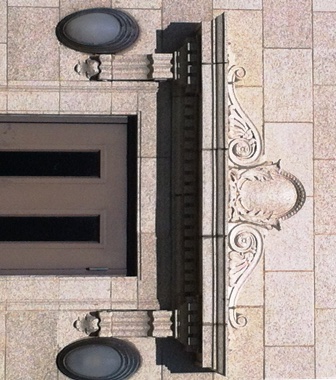
June 13 Architeaser: Capitol Hill Apartments

IMG_5779Today’s Architeaser features the unique lights on the west side of the Capitol Hill building.

In the 1960s the state purchased a building known as “The Rackensack Apartments,” north of the Capitol building, backing up to 3rd Street. Built in the 1920s, the structure, now called Capitol Hill, continues to provide legislators’ housing and overflow office space.  The lobby is a popular place for receptions and meals for legislators.


History of State Capitol is topic of noon talk today

irreverant_overview

The State of Arkansas turns 177 later this week.  A good way to mark this is to contemplate the building which has been the seat of government for over 100 of those years.

ad conclusio, per aspera; or, Two Architects, Six Governors, Dozens of Contractors, One Jailed Senator, Fifteen Years, and 2.23 Million Dollars Lead to What? is the name of a noontime conversation being hosted by the Central Arkansas Library System today, June 12.

The program, which will take place in the Arkansas State Capitol building in Room 272, will feature State Capitol historian David Ware.

It is being billed as “an irreverent overview of how the Capitol project survived.”  Construction of the Arkansas Capitol began in 1899 and stalled early due to problems with financing and failed deadlines.

With the support and vision from the project’s most emphatic backer, then-Governor George Donaghey, members of the Arkansas Legislature met for the first time in the chambers of the still-unfinished Capitol on January 9, 1911. Donaghey declared the building was “done enough” to accommodate the solons and state officers.

Bottled water and cookies will be provided; guests are invited to bring their own lunch.

June 11 Architeaser: Arkansas State Capitol

IMG_5768The dome of the Arkansas State Capitol Building is generally thought to be smooth – but as this photo shows, there are quite a few flourishes and architectural touches on the dome.   Built over 16 years (from 1899 to 1915) it had two architects of record (George R. Mann and Cass Gilbert) and was both championed and reviled by various Arkansas governors during the design and construction.

The cornerstone was laid on November 27, 1900. Since this was to be a “pay as you go” project, that slowed progress considerably.  When completed, it measured 440 feet along its north-south axis, and just over 195 feet from east to west.  From the ground to the top of the dome is 213 feet.  The building has nearly 287,000 square feet of offices.

The majority of the exterior of the Capitol is made of Batesville limestone.  The curved portions of the dome, however, are made of softer Indiana limestone.  Total construction cost was $2.2 million with today’s value of the building being $320 million.  The cupola is covered in 24 karat gold leaf.

Tomorrow there will be a lecture on the construction of the building.  More information on this will be in another entry.


QQA Preservation Conversation tonight

The Quapaw Quarter Association’s monthly award-winning Preservation Conversation series continues tonight.

QQA

The program takes place this evening at Curran Hall, 615 East Capitol Avenue. From 5 to 5:30 a reception will take place. The program will run from 5:30 to 6:30

This month Rachel Miller and Anita Reddig will discuss ASU’s Heritage Sites Program.  The program will focus on Arkansas State University’s four Arkansas Heritage Sites: Hemingway-Pfeiffer Museum in Piggott, the Historic Dyess Colony: the Boyhood Home of Johnny Cash, the Southern Tenant Farmers Museum in Tyronza, and the Lakeport Plantation in Lake Village.

Each site reflects the rich heritage and cultural diversity of the Arkansas Delta.  Rachel and Anita will discuss the historical and cultural significance and the development of each site, as well as the many educational opportunities these sites offer to the public.

The Quapaw Quarter Association’s mission is to promote the preservation of Little Rock’s architectural heritage through advocacy, marketing and education. Incorporated in 1968, the QQA grew out of an effort to identify and protect significant historic structures in Little Rock during the urban renewal projects of the early 1960s. Throughout its existence, the QQA has been a driving force behind historic preservation in Greater Little Rock.

June 6 Architeaser: Justice Building West Wing

IMG_5750In April 2001, a 49,000 square foot addition was made to the Justice Building on the State Capitol grounds.  This addition, formally called the Justice Building West Wing, actually created a new entrance to the building and changed the look of the facility.

Built in the neo-classical style, it cost $7.6 million.  It houses offices for the justices of the Arkansas Supreme Court, the clerk’s offices as well as other offices for attorney services.

The front of the building is flanked by a series of ionic, fluted columns, which are pictured above.

June 4 Architeaser: Justice Building Rotunda

IMG_5749Today’s photo features the rotunda of the 1976 annex of the Justice Building on the State Capitol grounds. This section was dedicated in January 1976 and was designed by Noland Blass. The circular building houses the Supreme Court chambers. It is surrounded by a hallway which wraps around the chamber and is sheathed by panels of glass .  Notice how the glass reflects the surroundings but also allows for a clear view through to the sculpture on the interior wall.

The original portion of the Justice Building was dedicated on June 10, 1958.  Before the Court Room was built, the Supreme Court held court in a temporary (for nearly 18 years) court room in the south end of the Justice Building.

On a personal note, it was in this building in 1986 that I served as Chief Judge of the Court of Appeals at Arkansas Boys State.  I don’t remember the “case” we heard or how we ruled.  But I do remember getting to wear a black judge robe over by Boys State T-shirt.