235 years of Dr. Matthew Cunningham, a founding father of Little Rock

Future Little Rock Mayor Dr. Matthew Cunningham was born on July 5, 1782, in Pennsylvania. After receiving his medical degree from the University of Pennsylvania, he ended up in New York City.  He also served in the Army during the War of 1812.

It was there he met and married a young widow, Eliza Wilson Bertrand. After a brief stint in St. Louis, Dr. Cunningham was one of the first settlers of Little Rock in February 1820. With his arrival, he became the first physician in Little Rock.

In September 1820, Mrs. Cunningham and her children joined him. She became the first female in the Little Rock settlement. Dr. and Mrs. Cunningham had a son, Chester, who was the first white baby born in Little Rock. (Though not supported by any public records, there is some unsubstantiated thought that one of the African-American slaves they had gave birth to a child before Chester was born.) The Cunninghams had several other children.  One daughter, Matilda, would marry Little Rock businessman Peter Hanger.  (The Hanger Hill neighborhood is named after Peter Hanger.)

In 1831, Dr. Cunningham was elected the first Mayor of Little Rock. He won the race 23 to 15 over Rev. W. W. Stevenson. The first City Council meeting took place at the Cunningham house on the block which is the southwest corner of what is now 3rd and Main Streets. Records are incomplete as to where on the block the Cunningham house was located, but a plaque is on 3rd Street near Main on the side of the Fulk Building which CJRW now calls home.

Dr. Cunningham served one year as Mayor. He lived until June 15, 1851, and is buried at Mount Holly Cemetery. His wife, son, and the Hanger family are buried next to him.  Because he lived for two decades after serving as mayor, he was able to see Little Rock continue to grow.

His stepson – Charles P. Bertrand – also served as Mayor of Little Rock.  While there have not been any Little Rock father-son combinations serve as mayor, Dr. Cunningham and Mr. Bertrand certainly shared a kinship.

Through Matilda Hanger and also the Bertrands, descendants of Dr. Cunningham still reside in Little Rock.
Happy 90th to former LR Mayor Buddy Benafield

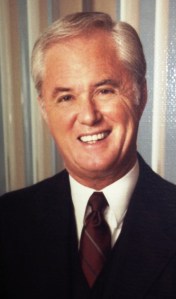
Future Little Rock Mayor James Weldon “Buddy” Benafield was born on July 5, 1927 in Coy, Arkansas.  As a child he spent part of his time chopping cotton.  He graduated from England High School and then served in the U.S. Navy.  Following his stint in the military, he enrolled in Arkansas State Teachers College (now the University of Central Arkansas).
After college he returned to England.  From 1967 to 1974 he served as Mayor of England.  While in England, he also worked to establish a hospital there. While he was Mayor, Benafield also served as a legislative aide to Governor Dale Bumpers.

After moving to Little Rock, Benafield served as legislative aide to Governor Frank White.  He had been a donor to former Governor Bill Clinton, who had been defeated by White. Though a staunch Democrat, he remarked to the media at the time that he had been a friend of White’s and never declined a Governor’s request for help.

Long active in Democratic politics, he had served as Secretary of the State Democratic Party.  (One of his daughters, Dawne Benafield Vandiver has carried on the family tradition serving in several leadership positions in the State Democratic Party.  Most recently she was Executive Director of the party.)

In January 1982, Benafield was appointed to fill a vacancy on the Little Rock City Board of Directors. He ran for election to a full term in November 1982 and was reelected in November 1986.  From January 1983 to December 1984, Benafield served as Mayor of Little Rock.

After leaving the Little Rock City Board in January 1991, he has remained engaged in civic matters.  He served a term on the Arkansas Highway and Transportation Commission.  He was first appointed in January 1993 by Gov. Jim Guy Tucker to fill out the remainder of Rodney Slater’s term. Slater had resigned to to take a job in the Clinton Administration in Washington DC.  In 1995, he was reappointed, this time to a full ten year term.  This was only the second time a member of the Highway Commission had been reappointed.

Buddy Benafield is the only Little Rock Mayor to have also been a mayor of another Arkansas city.  He continues to be involved in farming and a variety of business ventures and has maintained his interest in politics.

Little Rock Look Back: Robinson Center closes for renovation

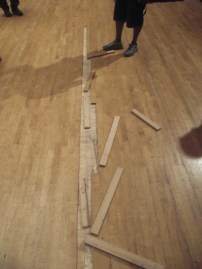
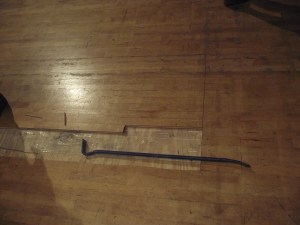
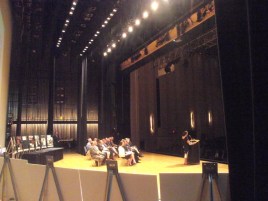
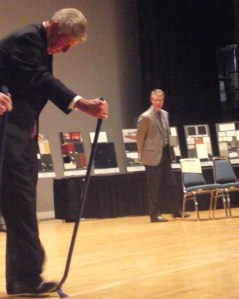
On July 1, 2014, Robinson Center Music Hall closed so that renovations could commence.  Instead of having a groundbreaking ceremony, Gretchen Hall and LRCVB arranged for a “stage breaking.”  Slats from the stage flooring were pried up with crowbars.

Twenty-eight months later, Robinson Center reopened on-time and on-budget.

(As a side note:  the Culture Vulture announced the countdown before Governor Mike Beebe and various Little Rock leaders used their crowbars for the first breaking of the stage flooring.)

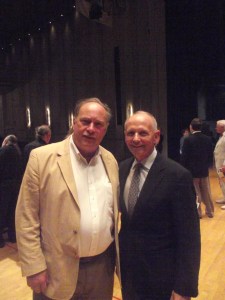
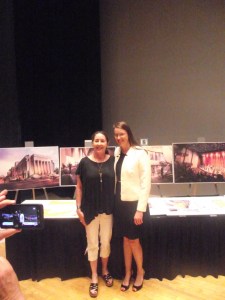
Here are some photos from that ceremony.

Ark @ CLXXXI

Arkansas181One hundred and eighty-one years ago today, Arkansas was admitted to the Union.  Happy Birthday Arkansas!
Little Rock Look Back: President Truman dedicates War Memorial Park

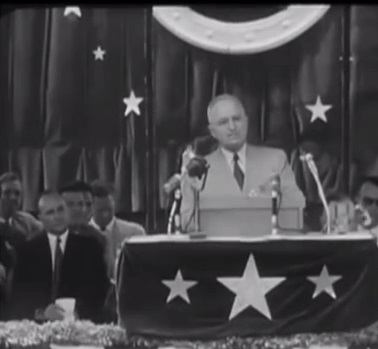
HST in LR2Though President Truman was in Little Rock for a military reunion, he did conduct some official business while here.  In his Presidential role, he spoke at the dedication of War Memorial Park on June 11.  (It is sometimes erroneously reported that he dedicated the stadium.  That took place at a Razorback game with former Razorback player and future Lt. Governor Maurice “Footsie” Britt delivering the keynote.)
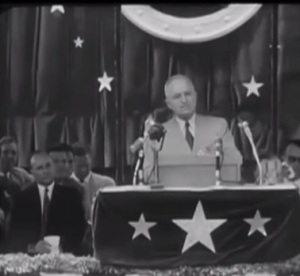
President Truman’s address took place inside War Memorial Stadium at 2:30 p.m..   It was not a brief dedicatory speech, but instead was a lengthy treatise on foreign affairs.  The address was carried on nationwide radio.  The text of his address can be found here.

The stadium was by no means full.  A major reason for that was that many thousand individuals had turned out to witness a parade downtown in which President Truman marched along side Governor Sid McMath.  The parade was in conjunction with the military reunion.  Given the June heat in Arkansas (in which parade spectators had been standing for several hours) and the difficulty of getting from the parade route to the stadium, most (if not all) parade spectators opted for skipping the presidential address.

Before the parade, President Truman (who was still riding high from his upset victory in the 1948 election) was asked by a local reporter if he would run in 1952. He refused to answer stating that the national media would think he had planted the question with a local member of the press.

Prior to the name War Memorial Park, the land had been known as Fair Park.  It was a former location of the State Fair.  In the 1930s, it had briefly been known as Overman Park in honor of then-Mayor R. E. Overman.  The City Council had named it for him as a tribute to his work on a variety of projects. When he displeased them, they reversed their decision and renamed it to Fair Park.


Little Rock Look Back: HST in LR

HST in LR2On June 10 and 11, 1949, President Harry S. Truman visited Little Rock.  He was here to participate in activities connected to the reunion of the 35th Division Association.  He had served in that division during World War I.
While he was in Little Rock, President Truman spoke several times.  He generally was accompanied by Governor Sid McMath and Mayor Sam Wassell.

On June 10, he spoke at Robinson Auditorium as part of a welcome ceremony, at a reception at the Hotel Marion and at a ball held at Robinson Auditorium.  His first address was at 3:48 pm and his final one was at 10:15 pm.  The next day he spoke at a breakfast and at a luncheon at the Hotel Marion.  He took pains at these times to stress he was here as a member of the 35th Division.  He also participated in a parade.

In his Presidential role, he spoke at the dedication of War Memorial Park on June 11.  His address took place inside War Memorial Stadium, which had been opened a few months earlier.  It was not a brief dedicatory speech, but instead was a lengthy treatise on foreign affairs.  The address was carried on nationwide radio.  The text of his address can be found here.

President Truman would return to Little Rock in July 1952.  He was in the state to speak at the dedication of Bull Shoals Dam. He did not make any formal remarks in Little Rock while in the city for that visit.

Open Studios Little Rock today

oslr_logo_goldred_ac-lineThe City of Little Rock Arts+Culture Commission is thrilled to announce its first-ever Open Studios Little Rock.

From 10 a.m. to 5 p.m. on Saturday, June 10, gain exclusive access to 30 artist studios and cultural institutions that will open their doors and give you a firsthand look at their creative process. The lineup of studios visits includes artists working in the visual and performing arts, plus cultural institutions that will open their respective studios for guided tours and demonstrations.

Referred to as a city-wide exhibition, Open Studios gives you unparalleled access to artists living and working in Little Rock. Studio visits are free and open to the public.
To plan your Open Studio visits:

  • Download the Open Studios map (click here)
  • Visit the Open Studios Welcome Booth in the Creative Corridor the day of the event. Complimentary coffee and doughnuts will be provided, plus the opportunity to tour two participating studios – Matt McCleod Fine Art and Arkansas Repertory Theatre’s Education Annex. The Welcome Booth will be located in front of Matt McLeod Fine Art, 108 West 6th Street, 72201.

Artists who are unable to welcome the public into their studios will showcase their work at the Alternative Space hosted at the West Central Community Center, 8616 Colonel Glenn Road, 72204.

During Open Studios, the colorful “Open Studio” signs will alert you to Open Studio spaces.

SALES

Sales are handled by each artist and we do not take a percentage. You may sell prints, other artistic projects and commission customized work for the future. It is suggested that you are equipped to accept credit cards.

Participating Artists (as of 5.15.2017)

  • Adrian Quintanar Pottery
  • Catherine Rodgers Contemporary Art
  • Co-Op Art
  • Elizabeth Weber
  • Felice Farrell
  • Gary Cawood
  • Glenda McCune
  • Ike Garlington
  • Jeff Horton
  • Jennifer Cox Coleman
  • Jennifer Perren
  • Jerry Phillips’ Studio
  • Jimmy Parks
  • Linda Ferstl Watercolors
  • Little Rock Violin Shop
  • Marisa Cook
  • Maritza and Terry Bean Artists
  • Mary Pat Tate
  • Matt McLeod Fine Art
  • MichaelWardArt
  • Michael Warrick
  • New Deal Studios and Gallery, featuring the work of Jeff Waddle
  • Ruth Pasquine
  • Sandy Furrer, Certified Scottish Country Dance Teacher
  • Sandra Sell

Participating Cultural Institutions:

  • Arkansas Arts Center
  • Arkansas Repertory Theatre’s Education Annex
  • Mosaic Templars Cultural Center featuring the work of Nina Robinson