Little Rock Look Back: Senator William Marmaduke Kavanaugh

CLR KavanaughOn March 3, 1866, William Marmaduke Kavanaugh was born in Alabama. He later moved with his family to Kentucky before coming to Little Rock as a newspaper reporter.

Kavanaugh served as editor and manager of the Arkansas Gazette before entering politics.  From 1896 until 1900, he served as Pulaski County Sheriff, which at the time also included the duties of tax collector.  From 1900 until 1904, he was County Judge of Pulaski County.  In that capacity he helped wrangle several cities, railroads and trolley lines to create a compromise which lead to the completion of the Third Street Viaduct which connected Little Rock with Pulaski Heights. It is still in use today.

After leaving his post as County Judge, he had a varied career in banking and business interests.

When Senator Jeff Davis died in early January 1913, he left the last few weeks of his term incomplete as well as the new term he was set to start in March 1913.  There was much interest in who would fill the remainder of Davis’ current term, because that person might be the frontrunner to also fill out the new term.  (This was at the time that the U.S. Senators were still selected by state legislatures.) Defeated Governor George Donaghey appointed J. N. Heiskell to fill out the term. But once the Arkansas General Assembly convened in mid-January, they overrode Donaghey’s appointment and replaced Heiskell with Kavanaugh.

Kavanaugh served in the Senate from January 29, 1913 until March 3, 1913.  He was succeeded by Joseph T. Robinson who had only recently taken office as Governor.  Speculation was that Kavanaugh would not want the full six year term, so that he was acceptable choice to all of the politicians jockeying for the full appointment.  From 1912 until 1915, he was an Arkansas member of the Democratic National Committee.

Another interest of Kavanaugh’s was baseball.  He served as president of the Southern Association minor league starting in 1903.  The baseball field in Little Rock situated at West End Park was named Kavanaugh Field in his honor.  It stood until the 1930s when it was replaced by what is now known as Quigley Stadium.  (In 1927, Little Rock High School had opened on the land which had been West End Park.)

Kavanaugh died on February 2, 1915 at the age of 48.  He is buried in Oakland Cemetery.

Prospect Road was renamed Kavanaugh Boulevard in his memory.

Women’s History Month – Carolyn Conner, first woman on LR City Council

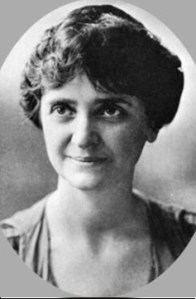
glass-connerCarolyn Conner was elected to the Little Rock City Council in April 1931. She was initially elected to fill out the remaining year of her husband’s term on the Little Rock City Council. She received 551 votes, or 61.6% besting two male candidates.

She was not the first woman to run for City Council.  In 1924, Mrs. George M. Waller challenged Charles M. Connor (no relation to Carolyn Conner).

In 1932, Carolyn Conner was reelected and would continue to serve on the council until April 1942, winning a total of six elections.  Mrs. Conner was the first woman to be elected to any City of Little Rock office.  She was also the first to chair a council committee, leading the Civic Affairs Committee from 1933 to 1935. On October 16, 1933, she was chosen as Acting Mayor becoming the first woman to lead the City of Little Rock and preside at a council meeting.

In December 1939, she also became the first female alderman to be arrested for contempt of court along with eleven of her male colleagues.  The judge did not send her to jail, though he did the male aldermen.  At the end of the day their sentences were suspended.

In April 1941, Mildred Craig joined Mrs. Conner on the Council after being elected to finish out her husband’s term.  Their service marked the first time there were two women on the City Council.

Women’s History Month – Lillian Dees McDermott

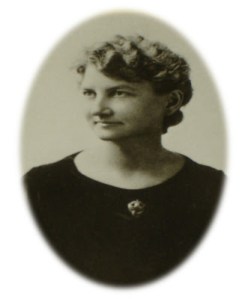
glass-mcdermottLillian Dees McDermott served on the Little Rock School Board from 1922 to 1946.

Not only was she the first woman to be elected to the School Board, she was also one of the longest-serving members of the board.  She was elected several times to serve as President of the School Board, becoming the first woman to have that title.  During one of her terms, plans to construct Little Rock High School (now Central) and Dunbar High School (now Dunbar Middle School) were finalized.

In her capacity as President, she had to sign contracts. She became the first woman in the country to sign a multi-million dollar contract for a public building project.  McDermott Elementary is named in her memory.

Little Rock Look Back: Creation of the Arkansas Territory

Arkansas TerritoryOn March 2, 1819, the Arkansas Territory was authorized by an act of Congress, to take effect  on July 4, 1819.

The Arkansas Territory was created from the portion of the Missouri Territory. It originally encompassed all of what is now Arkansas and much of what is now Oklahoma. The westernmost portion of the territory was removed on November 15, 1824, a second westernmost portion was removed on May 6, 1828, reducing the territory to the extent of the present state of Arkansas.

The Territorial capital was Arkansas Post from July 1819 until June 1821. At that point in time it was moved to Little Rock. In 1819, there was no permanent settlement in Little Rock. It would my be until early 1820 that a permanent settlement would be established.  On 1818, the Quapaw Treaty had anticipated a future settlement in Little Rock.

Women’s History Month – Erle Chambers, first woman sworn-in to Arkansas House of Representatives

rep-erle-chambersFirst woman sworn in as a member of the Arkansas General Assembly: Erle Chambers

Miss Chambers of Little Rock was elected in 1922 at the same time as Frances Hunt of Pine Bluff. But because members were sworn in based on their last names, she was actually sworn in first.

She had trained as an attorney at both the University of Arkansas and the University of Chicago, but never practiced law.  She served as Pulaski County probation officer from 1913 until 1917. At that time, she went to work for the Tuberculosis Association, where she would work until her death in 1941.

Miss Chambers served in the Arkansas General Assembly from 1923 until 1926.

Congratulations to the Arkansas Arts Center on being re-accredited by the American Alliance of Museums

arkartsThe Arkansas Arts Center (AAC), the state’s leader in international, visual and performing arts, has again achieved accreditation by the American Alliance of Museums, the highest national recognition afforded the nation’s museums.

“Accredited museums are a community of institutions that have chosen to hold themselves publicly accountable to excellence,” said Laura L. Lott, Alliance president and CEO. “Accreditation is clearly a significant achievement, of which both the institutions and the communities they serve can be extremely proud.”

Alliance Accreditation brings national recognition to a museum for its commitment to excellence, accountability, high professional standards and continued institutional improvement. Developed and sustained by museum professionals for over 45 years, the Alliance’s museum accreditation program is the field’s primary vehicle for quality assurance, self-regulation and public accountability. It strengthens the museum profession by promoting practices that enable leaders to make informed decisions, allocate resources wisely, and remain financially and ethically accountable in order to provide the best possible service to the public.

“Earning accreditation is a milestone for any institution,” said Todd Herman, Executive Director at the AAC. “It’s a very detailed and in-depth process. I am proud of our entire staff and teams whose hard work led us to achieving reaccreditation.”

All museums must undergo a reaccreditation review at least every 10 years to maintain accredited status. Of the nation’s estimated 35,000 museums, more than 1000 are currently accredited. The AAC is one of only five accredited museums in Arkansas. Accreditation signifies excellence to the museum community, to governments, funders, outside agencies, and to the museum-going public.

Accreditation is a very rigorous process that examines all aspects of a museum’s operations. To earn accreditation, a museum first must conduct a year of self-study, and then undergo a site visit by a team of peer reviewers. AAM’s Accreditation Commission, an independent and autonomous body of museum professionals, considers the self-study and visiting committee report to determine whether a museum should receive accreditation.

“We commend the Arts Center for expanding its outreach locally and statewide; this has clearly led to widespread community support and acclaim,” said Burt Logan, chair of the AAM Accreditation Commission and Executive Director and CEO of the Ohio History Commission. “Your accomplishments in fundraising, aligning resources and strengthening your relationship with the City of Little Rock demonstrate the Art Center’s leadership and positive impact on those it serves.”

The peer reviewers reported that management and storage of the AAC permanent collection was impeccable, and the significant gift of 290 drawings and watercolors by the American Modernist John Marin clearly demonstrated the institutional strength of the AAC and will serve as a further catalyst for a planned expansion. The gift makes the AAC the second largest holder of Marin works in the world.

The peer reviewers also found the AAC’s educational outreach programs to be impressive, with many constituents’ initial contact with the AAC through its award-winning Children’s Theatre, the Museum School or statewide travelling education programs, including traveling theatre and the Artmobile. These outreach programs see more than 300,000 visitors per year on average. Combined with the AAC’s more than 300,000 onsite visitors, and the result is an impressive annual attendance of more than 600,000. The peer reviewers stated that for an institution of this size, staffing and level of funding, these statistics were exemplary.

The AAM Accreditation Commission found that with the AAC Foundation’s impressive support, the consistent giving of the AAC Board of Trustees, the growing generosity of the City of Little Rock, and the expression of support recently made by the voters of Little Rock, the AAC appears poised to take the next important step in its institutional life.

“They also have put the museum back on solid footing with its peer institutions, and turned the AAC into a catalyst for community pride and economic redevelopment in downtown Little Rock. It is an impressive turnaround.”

Little Rock Look Back: And the Oscar goes to…”Nine from Little Rock”

AMPAS Nine from LROn April 5, 1965, the Academy Award for Best Documentary, Short Subject went to the film “Nine from Little Rock.”

Narrated by Jefferson Thomas, Charles Guggenheim’s documentary looks at the nine African-American students who enrolled in Little Rock Central High School in 1957. Thomas, one of the students reflects on the state of race relations in the seven years that had elapsed (up to 1964).  The film also focuses on Ernest Green, Elizabeth Eckford and Thelma Mothershed.

Guggenheim both directed and co-wrote the film. The latter credit was shared with Shelby Storck, who also produced the film.   The film had been commissioned by George Stevens, Jr., for the United State Information Agency.

The Oscar that night was Guggenheim’s first of four.  His others would be for: 1968’s “Robert Kennedy Remembered” (Live Action Short), 1989’s “The Johnstown Flood” (Documentary Short) and 1994’s “A Time for Justice” (Documentary Short).  His son Davis Guggenheim won the Oscar for Documentary, Feature for An Inconvenient Truth.

The film was digitally restored by the Motion Picture Preservation Lab for the 50th anniversary of its win for Best Short Documentary at the 1965 Academy Awards.  It is available for purchase on DVD and can also be viewed in its entirety on YouTube