
Women Making History: Stephanie S. Streett

Stephanie S. Streett is the executive director of the Clinton Foundation. In this role she oversees the day-to-day operations of the Clinton Presidential Center, including the development and implementation of its educational programs, special events, exhibits, and services as well as staff management.

She establishes and cultivates strategic partnerships and cooperative arrangements with state and local governments, the non-profit and private sector, community groups and other organizations. Stephanie also serves as the corporate secretary for the Clinton Foundation Board of Directors.

Stephanie has used her position to broaden culture in Little Rock through the wide variety of exhibits which the Clinton Center has hosted. A wide variety of styles of visual arts, design, contemporary craft, sports, science and history have been showcased in exhibits at the Clinton Center.  She also was instrumental in planning the special events in conjunction with the Clinton Center 10th Anniversary in 2014 and the 2017 celebration of the 25th anniversary of President Clinton’s election.

In addition, she has been active in promoting partnerships with the Kennedy Center for the Performing Arts. Together with Kaki Hockersmith, she has facilitated several seminars which have brought key Kennedy Center leaders to Little Rock.  Together they lead the effort known as Fusion: Arts + Humanities Arkansas. Now in its second year, Fusion promotes heritage and culture and celebrates human achievement by weaving the arts and humanities together.

She has been the president of the University of Arkansas Alumni Association National Board of Directors and is co-chair of the Board of Directors for City Year Little Rock. She also serves on the Board of Directors for the Downtown Partnership of Little Rock and is a member of the International Women’s Forum Arkansas.  In April 2018, she was honored with the 2018 City Year Little Rock Lifetime of Service Award at the Red Jacket Ball.
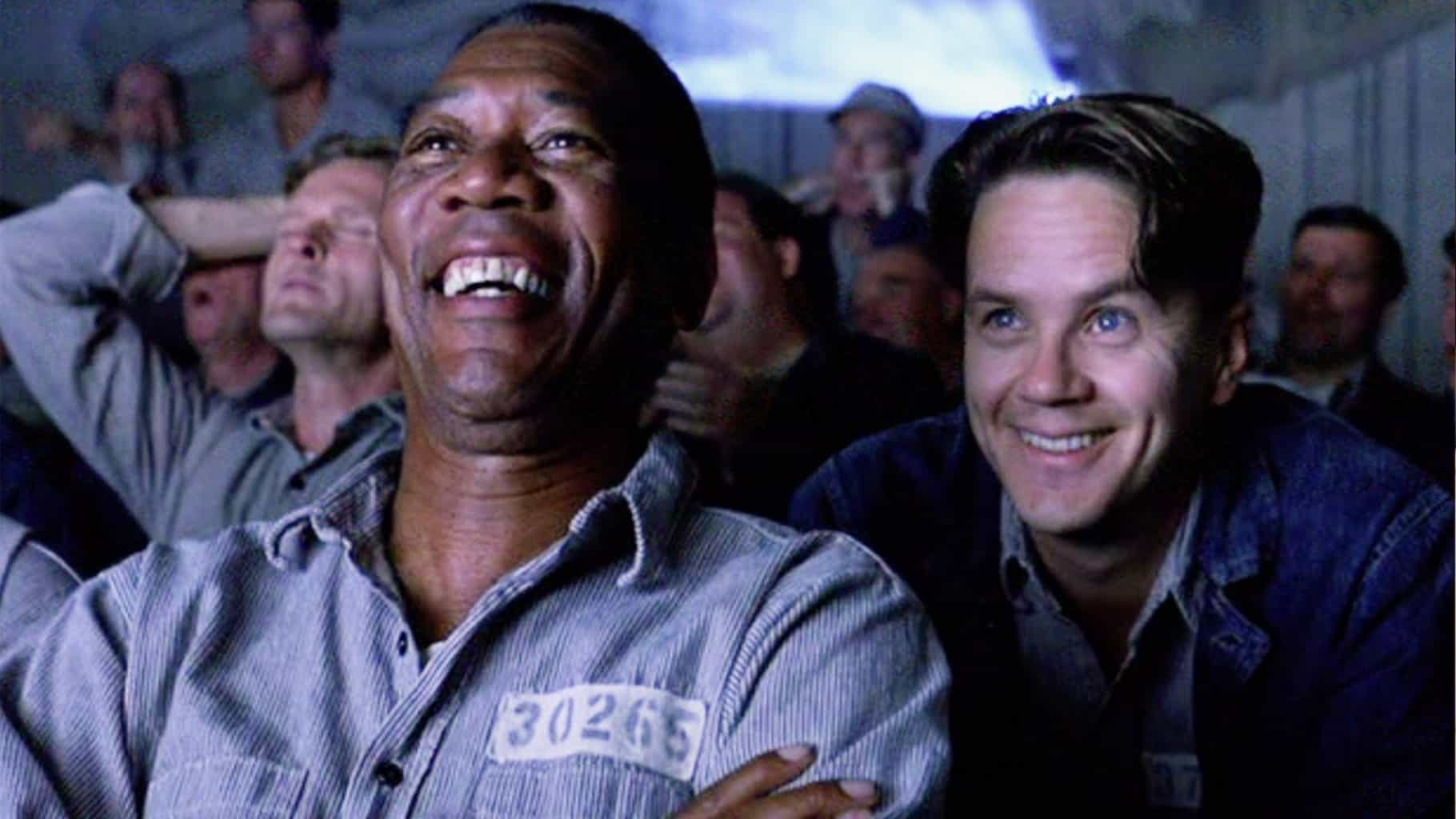
CALS Ron Robinson Theatre: Silver on the Silver Screen – THE SHAWSHANK REDEMPTION

The Shawshank RedemptionJoin the CALS Ron Robinson Theater for Silver Anniversaries on the Silver Screen, as they celebrate films that turn 25 in 2019!

Tonight’s feature is The Shawshank Redemption. A prominent banker (Tim Robbins) unjustly convicted of murder spends many years in the Shawshank prison. He is befriended by a convict who knows the ropes (Morgan Freeman) and helps him to cope with the frightening realities of prison life.

Others in the cast include Bob Gunton, William Sadler, Clancy Brown, Gil Bellows, and James Whitmore.  The film was directed by Frank Darabont, who also adapted the screenplay from a Stephen King short story.  The movie was nominated for seven Oscars, including Best Picture.

The showing starts at 7:00.  Admission is $5.00.

CALS joins with Gov. Hutchinson to announce new effort

Nate Coulter, executive director of Central Arkansas Library System (CALS); Amy Webb, Chief of Communications and Community Engagement, Arkansas Department of Human Services (DHS); and Governor Asa Hutchinson will announce a new effort to keep Arkansans insured.
It will take place today (March 26) at 1:30 p.m. at the Capitol Rotunda, 500 Woodlane Street

Governor Hutchinson will join Coulter and Webb to announce a new partnership between CALS and DHS to help Arkansans get the proper information about Arkansas Works. CALS staff members have received training from DHS to assist people in signing up for Arkansas Works reporting. Staff can help patrons create an account, navigate the portal website, and scan and upload supporting documents.

On some occasions, depending on branch staffing needs, and on the level of assistance that is required, staff may ask patrons to schedule a future appointment rather than providing immediate help. Patrons may also call ahead to schedule an appointment.

Women Making History: Bernie Babcock

Julia Burnelle “Bernie” Smade Babcock was an author and museum founder.  When her husband died, leaving her with five children, she starting writing for money. She published several temperance novels and later wrote for the Arkansas Democrat.  She also published a magazine, wrote plays which were performed in New York, and authored a poetry anthology.

She later became recognized as an expert on Abraham Lincoln and wrote several books about him, as well as other historical figures.  For her writing skills, she became the first Arkansas woman to be included in Who’s Who in America.

In 1927, after professional curmudgeon H. L. Mencken wrote derisively of Arkansas, she decided to start a museum. The Museum of Natural History and Antiquities was first located in a Main Street storefront.  In 1929, she “gave the City of Little Rock a Christmas present” by giving the museum to the city.  It was relocated to the unfinished third floor of City Hall, with her as its employee. After being closed during part of the Great Depression, she relocated the museum to the Arsenal Building and reopened it as the Museum of Natural History.  She was involved in the efforts to rename City Park in honor of Douglas MacArthur (who had been born there) and welcomed him when he came to Little Rock in 1952.

Following her retirement in 1953, she moved to Petit Jean Mountain where she wrote and painted.

After more name changes and a relocation, her museum is now known as the Museum of Discovery and is an anchor in the River Market district.

Little Rock Look Back: MacArthur Returns

MacArthur and Mayor Remmel

General MacArthur and Mayor Remmel

On Sunday, March 23, 1952, General Douglas MacArthur made his only post-infancy visit to Little Rock. He had previously been scheduled to visit Mississippi, and Little Rock Mayor Pratt Remmel had persuaded him to add a visit to Little Rock to the agenda. The fact that Little Rock now had a Republican mayor had apparently piqued the General’s interest.

General MacArthur, accompanied by his wife and son as well as several journalists and members of his military retinue, arrived at Little Rock Airport at 10:40 am. He was met by a delegation of civic leaders including Mayor Remmel. Alderman James Griffey made welcoming remarks on behalf of the city. Then the General and Mayor boarded an open car and led a motorcade from the airport to downtown.

The motorcade’s destination was Christ Episcopal Church at Capitol and Scott streets. It was at this church that MacArthur had been baptized as an infant. The delegation was greeted by the Episcopal Bishop R. Bland Mitchell, Rector J. Hodge Alves, and Rector Emeritus W. P. Witsell. (While he had been Rector, Dr. Witsell had garnered national attention by issuing an Easter blessing to Gen. MacArthur as he had been evacuating the Philippines at the height of World War II.) In order to gain admittance to the church that morning, church members and guests had to have tickets.

Following the worship service, the General and his party went to three events in the park named in his honor. The first was a tour of the Museum of Natural History (now the Museum of Discovery and located in the River Market; the current tenant of the building is the MacArthur Museum of Arkansas Military History), which was located in the building in which the General had been born. After the tour, he spoke at a dedication of a small rose garden adjacent to the museum. It was sponsored by the Little Rock City Beautiful Commission and the Garden Clubs of Greater Little Rock.

Though every stop of the General’s visit had featured crowds, the largest was at the third location in MacArthur Park. A crowd of several thousand greeted the General as he spoke from the Foster Bandshell in the park’s southwest corner. Chamber of Commerce president Richard C. Butler (brother-in-law of Mayor Remmel) was the master of ceremonies. Following an invocation by Methodist Bishop Paul Martin, the only other speaker was the General. In his remarks he spoke of his Southern heritage and of his appreciation for the support of the citizens of Little Rock over the years.

Several gifts were bestowed upon the MacArthurs at the ceremony. The City of Little Rock presented Mrs. MacArthur with an engraved silver serving tray.

Following the events in MacArthur Park, the family retired for a brief respite to the Hotel Marion. They then attended a luncheon buffet in their honor at the home of Howard and Elsie Stebbins on Edgehill Road. The General and Mrs. MacArthur circulated through the house greeting guests and then eschewed a special table in favor of balancing their plates on their laps and sitting in wingback chairs. Meanwhile Arthur MacArthur stayed upstairs and discussed stamp collecting and other hobbies with the Stebbins’ two teenage sons.

Following the luncheon, the MacArthur party went back to the airport and by 4:00pm, the plane was in the air.

Though this visit was coming at the end of a whirlwind of activities, by all accounts, the General and Mrs. MacArthur were very gracious and accommodating. The General was being mentioned as a potential GOP candidate for President, but purposefully steered clear of any political comments in his remarks. He and Mrs. MacArthur dutifully posed for photos not only for the media but also for amateur photographers. At lunch, the General even asked a Gazette photographer to take a photo of him with his Little Rock Police motorcycle escorts so that they could have a souvenir of the visit.

Little Rock Look Back: Robert F. Catterson, who united Little Rock and then divided Arkansas

It is interesting that the same man who brought an end to strife in Little Rock’s divided government in the post-Civil War era would then be active in a major rift in the Arkansas state government only a couple of years later. But that is just what Robert F. Catterson did.

On March 22, 1835, future Little Rock Mayor Robert Francis Catterson was born in Indiana, the son of Irish immigrants.  He studied medicine in Ohio and established a medical practice in Indiana upon completion of his studies.

With the outbreak of the Civil War, he enlisted as a private in the Union Army.  Throughout the war, he was promoted and was eventually mustered out as a brigadier general in 1866.  During his service, he participated in the siege of Vicksburg, the Battle of Chattanooga, the Atlanta Campaign and Sherman’s March to the Sea.

Following his departure from the military, Catterson decided not to return to medical practice.  He moved to Arkansas and worked for a brief time in the cotton commodities field.  He later returned to military service commanding a militia fighting the Ku Klux Klan.  Catterson was appointed US Marshal.

In November 1871, he was elected Mayor of Little Rock. His election ended a tumultuous two-year period where the Little Rock City Council tried unsuccessfully to remove Mayor A. K. Hartman.  Mayor Catterson served a relatively quiet two year term in office until November 1873.

A few months after leaving office, Catterson would return to “military” service as he commanded the troops who were supporting Joseph Brooks as he wrested control for several weeks from Governor Elisha Baxter.

Sometime after order had been restored, along with the return of Governor Baxter to the statehouse, Catterson moved to Minnesota. He later moved to Texas where he died on March 30, 1914 at the age of 79.  He is buried in the San Antonio National Cemetery.

Final weekend to experience Tape and Tunnels at Museum of Discovery

Sunday, March 24 is the last day to explore the Tape and Tunnels exhibit at the Museum of Discovery.

“Tape & Tunnels,” sponsored by 3M, is a series of interconnected tunnels and slides that guests of all ages can explore, climb, crawl and slide through. The tape tunnels are suspension bridges built with a skeleton of steel pipe for support and layers of ordinary, clear packing tape are stretched between them.  How are the tape tunnels able to hold people?  Turns out it is all in the tunnels’ design.  The curve of the tunnel is called a catenary – the same shape used in regular suspension bridges. The tape tunnels can hold more than 500 pounds per linear foot.

“Tape & Tunnels shows off engineering and physics at their best as humans of all sizes are supported by what look like fairly flimsy tunnels made of clear packing tape,” says Kelley Bass, CEO at the Museum of Discovery. “And beyond the STEM principles on display, Tape and Tunnels is flat-out fun, and we know our guests will enjoy the experience of climbing, crawling and sliding through the exhibit.”

Founded in 1927, Museum of Discovery is the state’s oldest museum.  Its mission is to ignite and fuel a passion for science, technology, engineering, arts and math through dynamic and interactive experiences.

The museum is open from 9 to 5 Tuesday through Saturday and 1 to 5 on Sunday.