
175 years of Mount Holly Cemetery

2018 marks the 175th year of Mount Holly Cemetery in Little Rock.

The land was donated by Roswell Beebe and Chester Ashley in February 1843.  From March through October 1843, the Little Rock City Council would pass a variety of ordinances and resolutions governing the cemetery and making other provisions for it.

Though the opening day sale of lots and picnic would not take place until May 1843, the first burial appears to have been on April 8, 1843.  William Cummins was buried will full Masonic orders on that day.  The service was conducted by Little Rock’s second mayor, Rev. W. W. Stevenson.

On May 1, 1843, it became illegal to bury persons in Little Rock any where other than Mount Holly.  This ordinance had been adopted on March 7, 1843.

The prior cemetery had been at Capitol and Gaines Streets (on which a portion of the Federal Courthouse now stands). Skeletal remains have also been found at Seventh and Rock Streets, in what was probably a family burial plot.  Other small plots were in existence until action in 1834 by the Little Rock Town Council which prohibited private cemeteries.

During the Civil War and years following it, the City would establish other cemeteries and allow additional cemeteries to be created.  But the creation of Mount Holly marked another step in Little Rock’s development as a city.

From 1843 until 1877, Mount Holly was governed by a City Council Committee.  Upset by the lack of attention given to the cemetery, a group of civic leaders asked the City Council to create a separate Commission to govern the cemetery. This was done on March 20, 1877.  It was possibly the first City Board or Commission composed of non-elected officials.

By 1914, the cemetery was once again being neglected.  This time a group of Little Rock’s leading women decided it was time to band together to address it.  In June 1915, the Little Rock City Council disbanded the Cemetery Commission for Mount Holly and designated the Mount Holly Cemetery Association as the governing body.  103 years later, the ladies of the Mount Holly Cemetery Association continue this outstanding work.
Little Rock Look Back: Moments in LRFD History

In the Western Christian tradition, today is Pentecost Sunday. It is the day when tongues of flames appeared over the heads of the apostles as they preached in a variety of native languages (granted an oversimplification of the description).

In keeping with the flame reference, today’s entry looks at some moments in the Little Rock Fire Department history.

As early as 1840, the City’s volunteer firefighters had a steam-operated fire engine which had been obtained from New York City. It weighed 5,000 pounds and supposedly required the services of 50 men to pull it to a fire.

There are very few records of any of the fire fighting records from those days.

By the post Civil War era, volunteer fire companies were being created. These were as much about fraternization and politics as they were about public safety.  Most of Little Rock’s political leadership during the 1860s through the 1880s were members of a volunteer fire company.

On May 2, 1867, the Pat Cleburne Steam Fire Company responded to a fire. In the more modern era of record-keeping with the advent of Reconstruction, this is the first recorded response to a fire.  The location was a corner at Markham and Scott Streets where the Fones Tire Shop was on ablaze.  The damage was estimated at $500. (The equivalent to $8,000 today.)  It appears to be the first case of arson in Little Rock history.

In 1893, the Little Rock Fire Department was established as a paid company.  It would hardly be considered professional by today’s standards, but it kept up with the latest technology and firefighting efforts of the day.

By 1910, the first motorized vehicle was incorporated into the fire fleet.  In 1912, the first motorized aerial apparatus was put into commission for the LRFD.

Another notable LRFD response in the month of May took place in 1952.  The Albert Pike Masonic Temple at 8th and Scott caught fire.  10,000 spectators jammed the streets to look at the fire.  30 Marines had to be deployed to help with crowd control so the LRFD could put out the fire, which caused $250,000 worth of damage (the equivalent of $2.35 million today).

Since 2018 marks the 125th year of the full-time Little Rock Fire Department, there will be other entries from time to time throughout the year looking at different aspects of the department.

Armed Forces Day in Little Rock – Birthday of the MacArthur Museum of Arkansas Military History

Today is Armed Forces Day.

The third Saturday of May is designated each year as a day to celebrate the men and women who serve in the various branches of the United States armed forces.

On Saturday, May 19, 2001 (which was Armed Services Day that year), the City of Little Rock opened the MacArthur Museum of Arkansas Military History.  Today, the museum celebrates its 17th birthday.  However, it is temporarily closed to the public for renovations.

Though the museum is only 17 years old, the building in which it is located, is 170 years old.  It is undergoing a much-needed renovation and restoration in order to continue to serve for at least 170 more years.

Visitors to MacArthur Park today can still interact with the various outdoor memorials and monuments which pay tribute to various phases of Arkansas’ military history.

Little Rock Look Back: Dan T. Sprick

Future Little Rock Mayor Dan T. Sprick was born on May 19, 1902.  He served three terms on the Little Rock City Council (from 1935 to 1941).  In 1945, he was elected Mayor of Little Rock and served one term. During his tenure on the City Council, he was the sole vote against locating Robinson Auditorium at Markham and Broadway.  He had favored another location.

He was not alone, however, in being held in contempt of court and spending part of the day in jail.  On Monday, December 4, a dozen of Little Rock’s aldermen (which included Sprick) reported to the county jail to serve sentences for contempt of court. The previous Monday, the twelve council members had voted against an ordinance which had been ordered by the judge in an improvement district matter. The other aldermen had either voted in the affirmative or had been absent. Because the twelve had refused to change their votes since that meeting, the judge ordered them jailed.  After the aldermen changed their votes later in the day, they were freed.

His tenure as Mayor was relatively quiet. He took office the same month that World War II ended. While in office, the Sprick administration was marked by growth in the city budget and in city positions. As a part of that growth, there were many more new purchases taking place which had prompted extra scrutiny of the City’s purchasing procedures. A thorough investigation toward the end of his tenure found no malfeasance or misfeasance, it did note that the city needed to do a better job of anticipating cash flow. Much of the City’s focus during the Sprick tenure was on growth and keeping up infrastructure needs.

Sprick later served for ten years in the Arkansas State Senate (from 1961 to 1970).  During his tenure in the Senate, Sprick was closely aligned with Gov. Orval Faubus.  When the Little Rock high schools had been closed a year to ensure segregation, Sprick had served on the board of a private school set up by some of the leaders of the segregation movement.

His time in the Senate was also marked by controversy.  He was one of three Senators to opposed Muhammad Ali’s speaking at the University of Arkansas at Fayetteville.  After an Arkansas Gazette editorial lambasted him, Sprick sued the paper for libel. The Gazette settled with him out of court because his health was poor.

One of the landmark pieces of legislation he guided through the Arkansas General Assembly allowed cities to collect advertising and promotion taxes.  The 1972 and 1973 upgrades to Robinson Center were funded by this tax (as have some subsequent upgrades). So the building he voted against while on the LR City Council benefited from legislation he championed while in the General Assembly.

Sprick died in January 1972.

Little Rock Look Back: Gov. Baxter returns after end of Brooks-Baxter War

On the morning of May 19, 1874, Joseph Brooks cleaned out his belongings from the gubernatorial office in the 1842 Arkansas State Capitol (now the Old State House) and disappeared to points unknown.
The beginning of the end of his stint claiming to be Arkansas Governor came on May 15 when President US Grant accepted the recommendation of his Attorney General that found Elisha Baxter was the duly elected Governor of Arkansas.

Following Brooks’s departure, the grounds and building were in shambles.  A Gazette reporter noted that barricades had been built on the lawn of the building.  The front and back doors remained, but their facings had been removed to make it easier to roll big weapons and equipment in and out of the building.

Inside, furniture was in disarray and broken.  The bookcases in the state library had been turned on their sides to serve as tables.  The reporter described the smell as composed of “a mixed perfume of sour bacon and human beings.”

In preparation for the return of Gov. Baxter, crews were busy trying to restore order in the building. The Senate Chambers were nearly put back in order that day, but the House Chambers needed more attention.

As another illustration of the disarray in state government between April 15 and May 19, the state treasurer, Henry Page, told the newspaper that he had not cut a single check at the request of the Brooks administration.  He stated that he had not denied the request, he just delayed responding to it.

Finally that day, Governor Baxter arrived at the head of a ceremonial parade of carriages.  Among those who accompanied the governor was Arkansas Gazette founder William Woodruff.  In the next carriage, future US Senator and Attorney General Augustus Garland sat with reporters from the New York Times and Arkansas Gazette.

Upon arriving at the Capitol grounds, Baxter delivered a speech.  101 guns were fired in salute to him.  The cannon on the capitol grounds (nicknamed Old Lady Baxter) was shot off several times.  A retinue of Little Rock’s ladies pulled the lanyard to detonate the cannon.

As part of President Grant’s order to end the Brooks-Baxter War, the ground was laid for a new Arkansas Constitution, the end of Reconstruction, and the re-enfranchisement of Democratic voters.  In short order, the 1874 constitution, under which Arkansas still operates, was adopted.  Many of the Republicans and African American office holders soon found themselves out of power. And African Americans were completely disenfranchised.

It would be 92 years before Arkansas would again elect a Republican to be Governor.  The adoption of the new constitution took the term of governor and other constitutional officers from four years to two years.  In 1874, he retired to Batesville and lived there until his death in 1899.  Brooks remained in Little Rock until his death in 1877.

Little Rock Look Back: Brooks Robinson

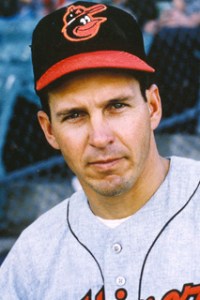
On May 18, 1937, Brooks Calbert Robinson, Jr. was born in Little Rock.  His father worked for Colonial Bakery and later the Little Rock Fire Department.  His mother worked for Sears and later state government.

As a boy, Brooks was a paper boy for the ARKANSAS GAZETTE and sold concessions at Lamar Porter Field.  He also played baseball there in youth leagues.

After graduating from Little Rock Central High School in 1955, he was drafted by the Baltimore Orioles.  He would spend his entire Major League Baseball career with the Orioles.   His primary position was Third Base for the team but also was a powerful batter.

When he retired at the end of the 1977 season, Robinson had amassed many honors including 2 World Series Championships, 1 World Series MVP, 1 American League MVP, 16 Golden Glove Awards, 18 times in the All-Star game.  At the end of his final season, his number 5 was retired by the Orioles.  In 1983, his first year of eligibility, he was selected to the Major League Baseball Hall of Fame.

He spent his career and since retirement engaged in a number of charitable endeavors. Robinson was beloved by teammates and fans, as well as respected by opponents and the media.  There is no telling how many babies in Baltimore were named Brooks or Robinson during and after his 23 season career.

Robinson has also leant his name and time to efforts to restore Lamar Porter Field here in Little Rock.


Little Rock Look Back: Arkansas Arts Center concludes opening festivities with Beaux Arts Ball

Starting at 9:00 p.m. on May 18, 1963, the Beaux Arts Ball capped off the opening weekend festivities for the Arkansas Arts Center.

Chaired by Jeane Hamilton and Jean Gordon (both of whom are still going strong 55 years later!), the Beaux Arts Ball featured the music of Henry King and his Orchestra as well as a performance by jazz legend Dave Brubeck and his Quartet.  King played on the dance floor while Brubeck gave concerts in the theatre at 9:00 p.m., 10:15 p.m., and 11:30 p.m.

Special guests for this black tie event included  Oscar winner Joan Fontaine, cartoonist Charles Addams (creator of The Addams Family), and James Rorimer of the Metropolitan Museum of Art.

The event concluded at 1:00 a.m. as exhausted and exhilarated guests made their way home.