Heritage Month – Beal-Burrow Building

Beal BurrowConstructed in 1920, the Beal-Burrow Dry Goods Company Building is believed to have been designed by the architectural firm of Charles Thompson and Thomas Harding (only mechanical drawings are present in the Thompson Archives).

The original owner and user, the Beal-Burrow Company, was founded in 1913 as a wholesale operation and quickly gained prominence on a regional level.  The location of their office and warehouse facilities near the intersection of Main and Markham Streets served to anchor the northern edge of Little Rock’s commercial district.  By 1926, the firm had begun to manufacture work clothes and several floors of this building were devoted to that industry.

In 1955, the Archer Drug Company purchased the building from Berry Dry Goods Company, another wholesale establishment that had earlier bought out the Beal-Burrow partnership.

It is presently part of the Block 2 Development which consists of commercial space on the first floor and loft apartments on upper floors. The Little Rock Tech Park is operating out of space on the first floor of this building.

It was listed on the National Register of Historic Places on June 26, 1995.

Tonight at Clinton School – Discussion of Thurgood Marshall and 1949 Groveland Boys Case

UACS DevilBefore he was on the Supreme Court, before he supported the Little Rock Nine, before Brown v. Board of Education, Thurgood Marshall was a longtime crusader not just for civil rights, but for human rights.  T

Tonight at the Clinton School, Pulitzer Prize-winning author Gilbert King, Justice Marshall’s son, Thurgood Marshall, Jr., will discuss the 1949 Groveland Boys case.

Gilbert King is the Pulitzer Prize-winning author of Devil in the Grove: Thurgood Marshall, the Groveland Boys and the Dawn of a New America. The book, about four black men falsely accused of raping Norma Lee Padgett, a 17-year-old white woman in Groveland, Fla. in 1949, unearthed a largely forgotten chapter in the long history of racial injustice in the United States, and explored, in painstaking details, the tactics used by Thurgood Marshall, the future Supreme Court Justice, to chip away at the foundations of Jim Crow law.

The program will begin at 6pm at the Clinton School of Public Service.  A book signing will follow.

Little Rock Look Back: STAR WARS comes to Little Rock

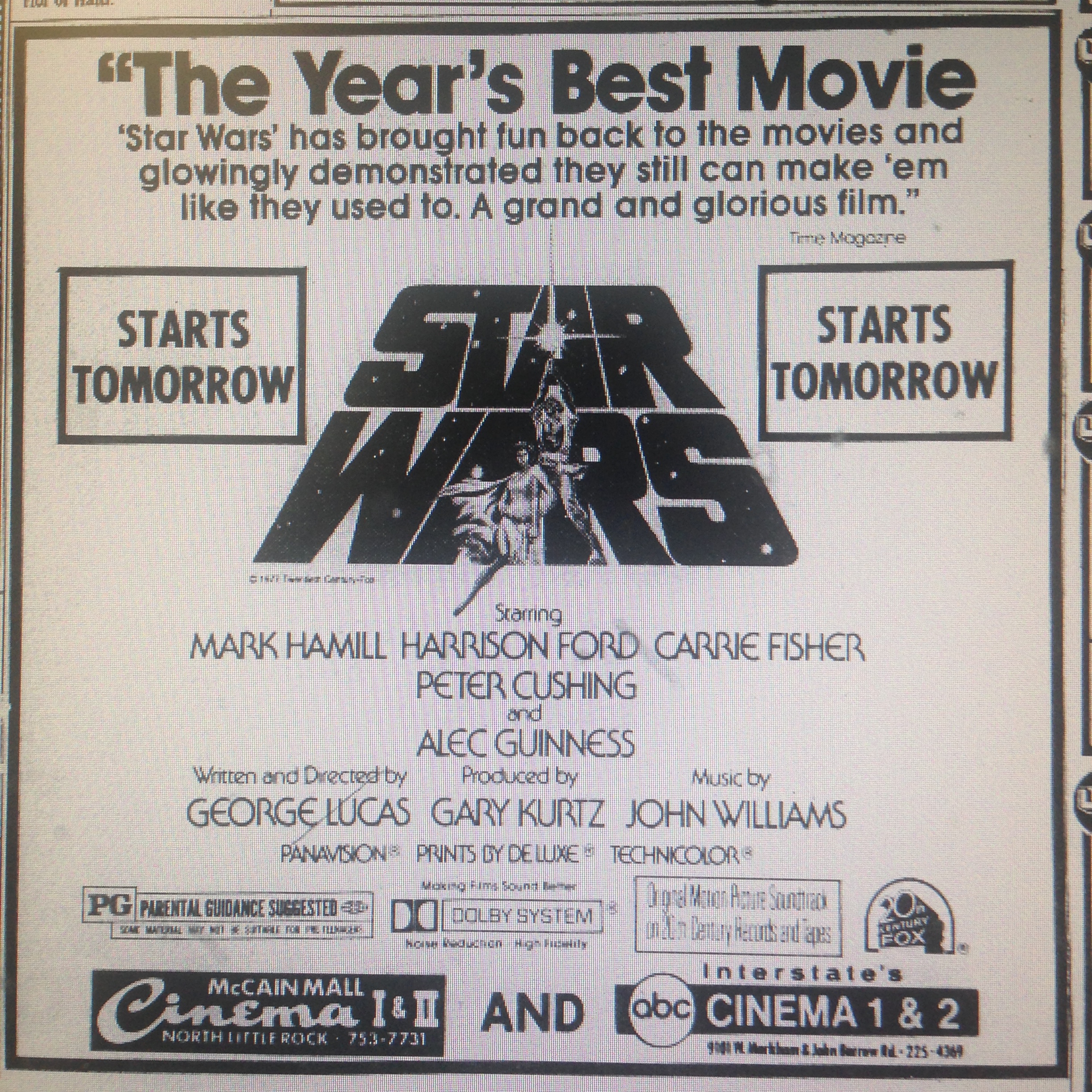
First ad in Arkansas Gazette (June 23, 1977)

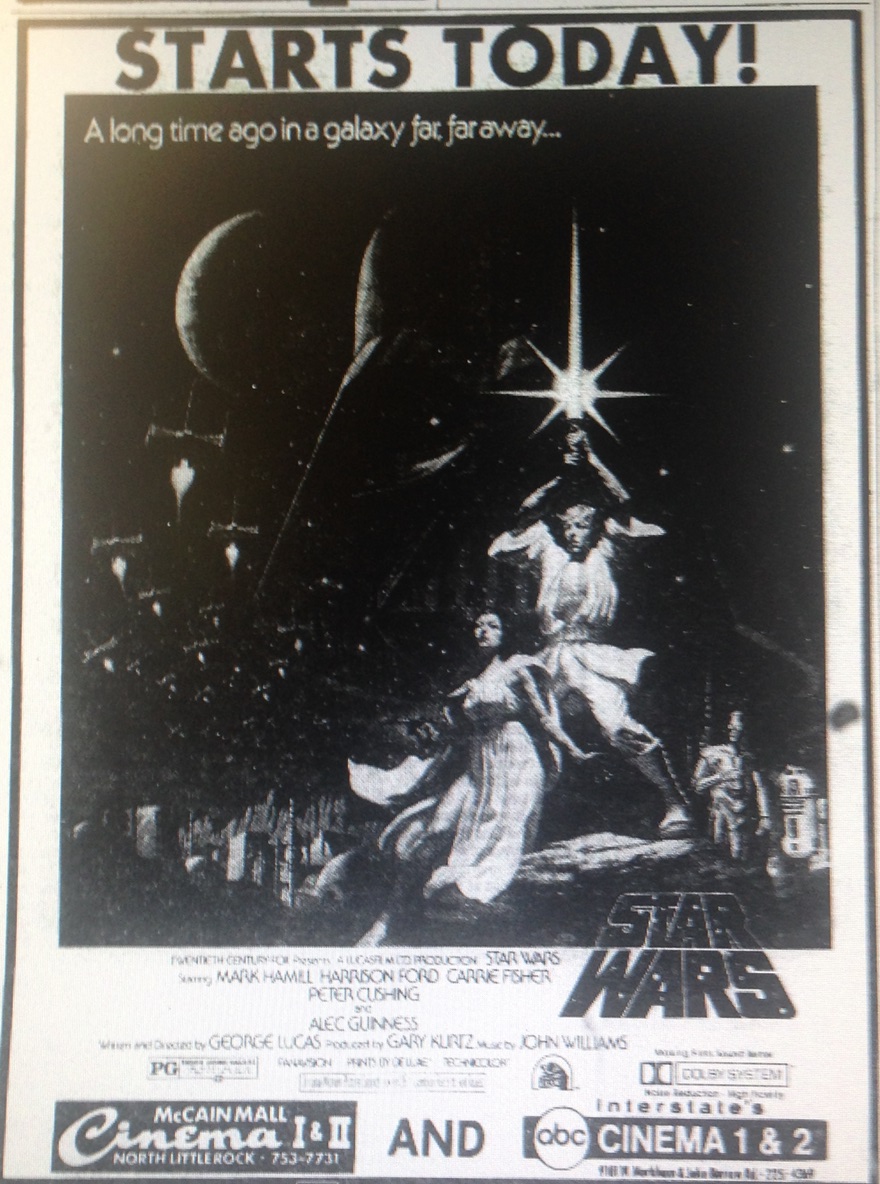
First ad in Arkansas Gazette (June 23, 1977)

Today, May the 4th, is Star Wars Day.

The classic film first opened in May 1977 (though after May 4).  It did not reach Little Rock until June 24, 1977.

Given its status as a sleeper hit, it is no surprise that it came into Little Rock largely unnoticed.  In that day, major films opening on a Friday would be heralded the previous Sunday with a substantial advertisement.  The first Star Wars ad ran on Thursday, June 23, 1977, the day before it opened.  By contrast, Herbie Goes to Monte Carlo, which would play at the same theatre, had a large ad on Sunday, June 19.

While Star Wars would seem like the perfect movie for the great UA Cinema 150, it did not play there.  The film playing at the 150 was A Bridge Too Far, which was, at least an action movie.  Star Wars did not even open at a UA theatre.  It opened at the ABC Cinema 1 & 2 (located at Markham and John Barrow) and at the McCain Mall Cinema.  (The ABC Cinema location is now home to discount cellphone and discount clothing businesses; a cinema has returned to McCain Mall, but now in the location of the former MM Cohn’s store.)

The day it opened, there was a fairly large ad which incorporated the familiar beefcake Luke, Leia in flowing gowns, and Darth Vader mask.  On the Sunday after it opened, there was a slightly smaller ad with the same artwork.  McCain Mall also ran a small add for both Star Wars and Herbie. It noted that Star Wars was a film that management “does not recommend for children.”

IMG_5919

Heritage Month – Baer House

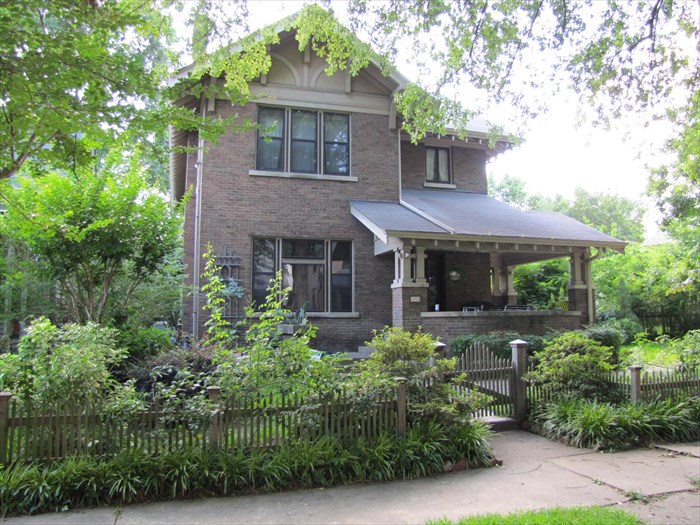
Baer HouseLocated at 1010 Rock Street, the Baer House was designed by the Charles Thompson firm in 1915.

Located in the MacArthur Park Historic District, the house displays a Craftsman Style influence in the abundant use of bracketing and the unusual paired squat box columns resting on brick piers which support the porch, The house has taken an additional historic significance within the district due to the discovery of the original drawings. The Baer House is also an important component of the streetscape and is significant in its representation of the firm’s much used Craftsman design.

It was added to the National Register of Historic Places on June 10, 1975.

Heritage Month – Augustus Garland House

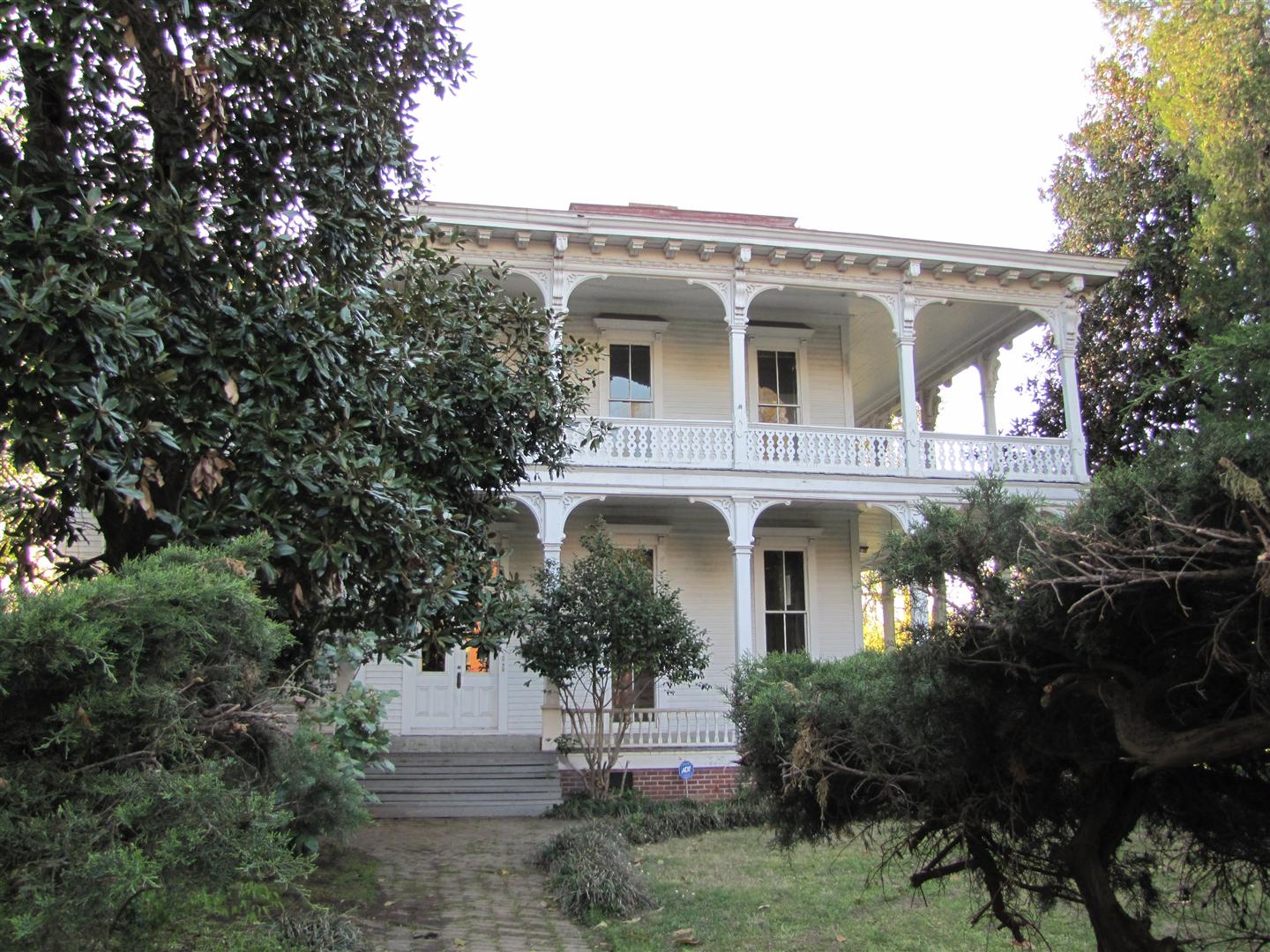
Augustus Garland HouseThe Augustus Garland House, also known as the Garland-Mitchell House, is located at 1404 Scott Street.

Built in 1873, the house has undergone few alterations during the last century. It appears much the same today as when Governor Augustus H. Garland and his family lived there in the 1870’s.  The dominant feature of the house is the two story ell-shaped gallery.

Even though the Garland-Mitchell House has been divided into three separate apartments, the interior still retains its architectural integrity. The wide central hallway which once bisected the entire first floor of the house now terminates at a wall under the stairs which was added in the 1940’s.

Because of the prominent two story porches which are reminiscent of nineteenth century riverboats, the Garland-Mitchell House is locally referred to as “steamboat Gothic” architecture; however, it also has elements of the Italianate Victorian style.

Not only is the building architecturally significant, but as the residence of Augustus Garland, it has other significance.  Augustus Hill Garland was an Arkansas lawyer and politician. He was a senator in both the United States and the Confederate States, served as 11th Governor of Arkansas and as Attorney General under President Cleveland. He was the first Arkansan to serve in the President’s cabinet (and would remain the only one until the Clinton administration). Later, the house served as the residence of Charles Brough while he served as Governor of Arkansas.

It was added to the National Register of Historic Places on June 10, 1975.


Heritage Month – Leiper-Scott House

Leiper ScottMay is Heritage Month in Arkansas.  This month, the Culture Vulture will feature properties on the National Register of Historic Places which are located in Little Rock.  First is the Leiper-Scott House.

The Leiper-Scott House is a one-story structure located at 312 South Pulaski, two blocks east of the State Capitol.

It was built on a lot which slopes abruptly to the rear. Therefore its basement on the rear or west elevation is exposed. The building has a cottage-style plan, combining hip and gable roof form, an asymmetrical front facade, and one floor of usable living space. It is an adaptation of a plan that was popular between 1880 and World War I for modest, low-cost housing.

The Leiper-Scott House is transitional in style, with both Queen Anne and Colonial Revival characteristics. The massing of the building, the steep pitches of the roof and the use of slate infilll in the south elevation pediment are characteristics of the Queen Anne style. Colonial Revival elements include tracery windows, round Roman arches, hipped dormer, Tuscan columns and gable returns.

It was added to the National Register of Historic Places 35 years ago today on May 1, 1980.


Little Rock Look Back: Mayor Lottie Shackelford

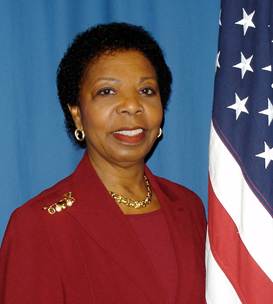
Mayor Lottie_ShackelfordOn April 30, 1941, future Little Rock Mayor Lottie Shackelford was born. Throughout her career in public service she has been a trailblazer.

Active in community activities and politics, she ran for the City Board in 1974 and lost.  But she was appointed to the Little Rock City Board in September 1978 to fill a vacancy.  This made her the first African American woman to serve on he City Board, and indeed on any governing board for the City (during Reconstruction, there were at least three African Americans on the City Council, but they were all men.) She was subsequently elected to a full-term on the City Board in 1980 winning 55% of the vote over three male candidates.

She was subsequently re-elected in 1984 (unopposed) and in 1988 (with 60% of the vote).

In January 1987, Shackelford became the first female mayor of Little Rock when she was chosen by her colleagues on the City Board to serve in that position. She was Mayor until December 1988.

From 1982 until 1992, she served as Executive Director of the Arkansas Regional Minority Purchasing Council.  She left that position to serve as Deputy Campaign Manager of Clinton for President.  She subsequently served on the Clinton/Gore transition team. She later served on the Overseas Private Investment Corporation from 1993 to 2003. She was the first African American to be in that position.

A graduate of Philander Smith College, she has also studied at the Arkansas Institute of Politics at Hendrix College and the Kennedy School of Government at Harvard University.

Mayor Shackelford has also served on numerous boards including the Little Rock Airport Commission, Philander Smith College, Chapman Funds (Maryland) and Medicis Pharmaceutical Corporation (Arizona).  She has been the longest serving Vice-Chair of the Democratic National Committee.

Mayor Shackelford was in the first class of inductees for the Arkansas Black Hall of Fame.