Little Rock Look Back: James Monroe

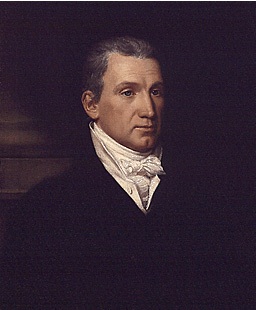
Jamesmonroe-npgalleryOn April 28, 1758, future U.S. President James Monroe was born in Virginia.  It was during his Presidency that Arkansas was surveyed and platted. Little Rock was also officially settled during the Monroe Presidency.  The Quapaw Line was drawn during his presidency. This document was the first official document to use the name “Little Rock” to describe this settlement.
Monroe was the last president who was a Founding Father.  A soldier in the Revolutionary War, he studied law under Thomas Jefferson and served as a delegate in the Continental Congress.  Although he felt the new Constitution gave too much power to a central government, Monroe served in the first US Senate before serving as Governor of Virginia.  As a diplomat, he helped negotiate the Louisiana Purchase.

He was easily elected president in 1816.  During his first term in office, the US acquired Florida from the Spanish and jointly occupied Oregon with the British. He was the first president to preside over land from the Atlantic to the Pacific.  Because of successes abroad (including the Monroe Doctrine) and domestically, the Monroe Presidency was known as the “Era of Good Feeling.”

Following his retirement in 1825, Monroe was plagued by financial difficulties. He died in New York City on July 4, 1831.

Monroe Street in Little Rock is named after him.

Little Rock Look Back: Major Nicholas Peay

LR sealOn April 28, 1784, in Virginia, future Little Rock Alderman (and acting Mayor) Major Nicholas Peay was born the eleventh of at least thirteen children.  (His gravestone lists a May date for his birth, but other records indicate April 28, 1784.) A veteran of the War of 1812 and the Indian Wars, he later moved to Kentucky (where he met and married his wife, Juliet Neill, in 1814) before settling in Arkansas on September 18, 1825.  At the time, they were the ninth family to set up residence in Little Rock.

After arriving in Little Rock, he bought the Little Rock Tavern. This started a fifty year tradition of his family owning taverns and hotels in Little Rock. In 1828, he was appointed Assistant Postmaster of Little Rock.  From 1825 to 1831, Little Rock residents were allowed to elect five Trustees prior to the formal incorporation. Major Peay was one of those who served on the Board of Trustees.

He later served on the Little Rock City Council, and in 1839 served for seven months as Acting Mayor due to the prolonged absence of Mayor Jesse Brown.  In 1841, his friend Gen. Zachary Taylor, paid a visit to Little Rock and stayed with him on the General’s way to Fort Smith.

Nicholas and Juliet Peay had at least eleven children, though only five appeared to have lived until adulthood. One of those, Gordon Neill Peay, served as Little Rock’s 23rd Mayor from 1859 to 1861. Other descendants of Nicholas Peay who followed him into public service include his grandson Ashley Peay, who was an Alderman in the 1920s (son of John Coleman Peay) and great-great-grandson Joseph B. Hurst (a great-grandson of Mayor Peay), who was a City Director from 1967 to 1970. In addition, Hurst’s daughter-in-law, Stacy Hurst served three terms on the City Board from 2003 to 2014; she is now Director of the Department of Arkansas Heritage.

Major Peay’s egg-nog recipe has been passed down for generations. It is the inspiration for the Historic Arkansas Museum yearly Nog-Off.  This past year, museum director Bill Worthen and his daughter were the sixth and seventh generation of the family to make Peay’s egg-nog. The Worthens are descended from Mayor Peay’s son who was also named Gordon Neill Peay.

Major Nicholas Peay is buried with his wife and many other family members in Mount Holly Cemetery.

Little Rock Look Back: Mayor Sam Wassell

S WassellOn this date in 1883, future Little Rock Mayor Sam M. Wassell was born.  His grandfather John W. Wassell had been appointed Mayor of Little Rock in 1868.  He is the only Little Rock Mayor to be a grandson of another Little Rock Mayor.

Sam Wassell served on the Little Rock City Council from 1928 through 1934 and again from 1940 through 1946.  He is one of the few 20th Century Little Rock Mayors who previously served on the City Council.

Wassell was an attorney.  He practiced law privately and also served as an Assistant US Attorney.  In 1930, he ran unsuccessfully for the Democratic nomination for the US Congress representing the 5th Congressional District, which at the time included Little Rock.

Wassell ran for Mayor in 1947 and was unopposed in the general election.  He was unopposed in his bid for re-election in 1949.  During his second term, President Harry S. Truman visited Little Rock.  In 1951, he sought a third term as Mayor.  No Little Rock Mayor had sought a third consecutive term since 1923.  Though he received the Democratic nomination, the Republican party nominated Pratt Remmel who defeated Wassell by a 2 to 1 margin.

With a new USS Little Rock under construction, it is interesting to note that Mrs. Sam Wassell christened the previous USS Little Rock in 1944.  At the time, she was a City Councilor’s wife.

Mayor Wassell died on December 23, 1954 and is buried at Roselawn Cemetery in Little Rock.

Seersucker Social at Old State House Museum tonight

OSH SeersuckerThe Fourth Annual Seersucker Social takes place tonight at the Old State House Museum from 6pm to 9pm.

This year’s edition is sponsored by Little Rock Soiree. The Seersucker Social is the signature event of the Old State House 1836 Club.  The evening promises plenty of lawn games, hors d’oeuvres, mint juleps and live music by the Big Steel River Band.

This year, all proceeds will benefit the School Bus Fund to bring K-12 students from all over Arkansas to the Old State House Museum.

Tickets are $40. 21+ only. For more information, contact brooke@arkansasheritage.org

The Old State House Museum is an agency of the Department of Arkansas Heritage.

Little Rock Look Back: Ulysses S. Grant

US_Grant_f

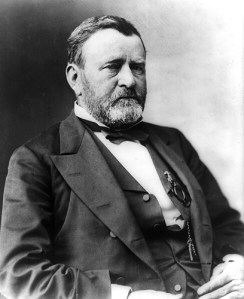
On April 27, 1822, future US President Ulysses S. Grant was born.  His birth name of Hiram Ulysses Grant. There are various stories as to the reason for the change, but was is not in dispute is that as an adult his name was Ulysses Simpson Grant.  Simpson was his mother’s maiden name.

After leadership in the Mexican-American War, Grant retired from the Army. He rejoined after the Civil War broke out.  After success in Kentucky, Tennessee and the Siege of Vicksburg, President Lincoln promoted Grant to Commanding General of the US.  After the war ended, he led the Army’s efforts during Reconstruction.

Elected president in 1868 and reelected in 1872, Grant stabilized the nation during the turbulent Reconstruction period.  As President, he continued Reconstruction efforts as well as oversaw efforts to reduce frontier violence (though the Great Sioux War did take place during his presidency).  He restored relations with Great Britain and avoided war with Spain, but was unsuccessful in annexing the Dominican Republic. While he staved off immediate problems from the Panic of 1873, the country still fell into a five year economic depression.

Out of the White House for four years, he sought a return in 1880. He was not successful in obtaining the GOP nomination.  Likely in an effort to build support for his Presidential quest, he embarked on a nationwide tour.  On April 15, 1880, he spoke in Little Rock. It was his first visit to Arkansas either as a soldier or a politician.  He spoke at Concordia Hall (now part of the CALS campus) and stayed at the Capital Hotel during this visit. Though he had not visited previously, Grant did become the first Republican Presidential candidate to win Arkansas’ electoral votes in 1868; he repeated this feat in 1872. It would be 100 years later, with Nixon’s second term, that Arkansas would cast her electoral votes for the GOP nominee.

General Grant died on July 23, 1885.  Grant Street in Little Rock is named for him.

Robinson Redux – April

RCMH AprilWhile Robinson Center Music Hall is closed for renovations, the Culture Vulture is taking a monthly look at past performances. Today’s entry looks at Aprils from 1940 to 2010 in years that end in a “0” or “5.”

Edward Everett Horton kicked off April 1940 at Robinson Auditorium on the 1st with the comedy Springtime for Henry. The performance was marred by the sound of the new building’s air conditioning system, which was being used for the first time during a performance.  Five years later, on April 1, 1945, the auditorium was home to An Evening of Sigmund Romberg which featured the composer in person with performers singing some of his songs.  April 1945 also saw a performance of Earl Carroll Vanities (the 3rd) and Carmen featuring the Metropolitan Opera singers (the 16th.)

Tenor James Melton performed on April 25, 1950.  In April 1955, the lineup included William Bendix in The Caine Mutiny Court-Martial on the 23rd. The next night the Spring Music Festival took place. It featured school children performing.

On April 25 1960, The Coasters, Bo Diddley, LaVerne Baker and others. The month ended with a youth concert aimed at children. April 1970 included a production of Arthur Miller’s The Price (the 6th), the Southwest Regional Ballet Festival (April 11) and drummer Buddy Rich (April 18).  In April 1975 (the 6th) Hair returned to Robinson for one performance. This time there was no controversy such as had met the first visit a few years earlier.

April 1985 was very busy. On the 13th, there was a Ballet Festival Gala. April 20 & 21 featured an Arkansas Symphony Orchestra classical concert.  A touring production of the musical Gigi performed on the 22nd.  It starred Louis Jourdan (who had appeared in the Oscar winning film, albeit in a different part), Betsey Palmer and Taina Elg. The ASO was back on April 28 with a children’s music concert.

Cathy Rigby flew into Robinson Center with a tour of Peter Pan from April 10 to 12.  On April 4, 1995, the Community Concert Association brought the Russian Seasons Dance Company for a performance.  The Arkansas Symphony Orchestra performed Verdi’s Requiem Mass in Memory of Manzoni on April 8 & 9, 1995. Singer Millie Jackson wrote and appeared in the play Young Man, Older Woman, which played on April 30 of that year.

Several Contemporary Christian music acts performed on April 3. The Arkansas Symphony Orchestra closed their 1999-2000 season on April 8 & 9 with a concert featuring Carolyn Brown on flute. On April 27, 2000, President Clinton headlined a memorial service for civil rights activist Daisy Bates.

April 2005 was full of a variety of performances. Natalie Cole was in concert on April 3 with the Arkansas Symphony Orchestra.  On William Shatner narrated David Itkin’s Exodus with the Arkansas Symphony Orchestra on April 9 & 10, 2005. Arkansan Kyle Dean Massey starred in the tour of 42nd Street which started its performances at Robinson Center on April 18, 2005. In conjunction with an exhibit at the Old State House Museum, a gospel concert featuring the Racy Brothers and the Hunter Brothers closed out April 2005 on the 30th.

David Itkin bid farewell to conducting the Arkansas Symphony Orchestra in April 10 & 11, 2010, with a performance of Mahler’s Resurrection Symphony.  On April 15, the Electrify Your Strings! concert took place. Comedian Gabriel Iglasias and his Fluffy Shop Tour stopped at Robinson on April 24.

Poetry Month: Albert Pike and “Night on the Arkansa”

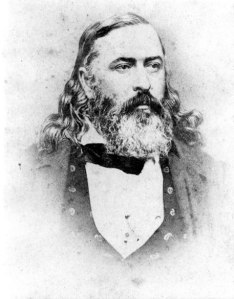
PikeAlbert_fAlbert Pike was a lawyer who played a major role in the development of the early courts of Arkansas and played an active role in the state’s politics during the middle 19th Century.  He was also a soldier, a national leader of masonry, and poet & writer.

Born in Boston in December 1809, he grew up in the greater Boston area.  Pike was admitted to Harvard, but could not afford it. He began teaching school.  In 1831, he left Massachusetts for Mexico. After spending some time in Santa Fe, he headed east and ended up in Fort Smith.  Based on some political writings, he was invited to Little Rock by Charles Bertrand (a future Little Rock mayor).

In Little Rock he flourished as a writer and attorney. He also became involved in military matters first with the Mexican War and then with Confederate army during the Civil War.  He also married and fathered several children.  At the end of the Civil War, Pike moved to New York City, then for a short time to Canada. After receiving an amnesty from President Andrew Johnson on August 30, 1865, he returned for a time to Arkansas and resumed the practice of law. He then moved to Memphis and later Washington DC.

After he ceased practicing law, Pike’s real interest was the Masonic Lodge. He had become a Mason in 1850.  He held several national posts in the Mason organization.  Pike died at the Scottish Rite Temple in Washington DC on April 2, 1891. He was buried in Oak Hill Cemetery there. His Masonic brothers erected a statute to him in 1901 in Washington DC, making him the only former Confederate general to have a monument there.

The house he built in Little Rock still stands, and is known as the Pike-Fletcher-Terry House.  It was the boyhood home of Pulitzer Prize winning poet John Gould Fletcher.  Though he is buried in Washington DC, there is a memorial to him erected in Mount Holly Cemetery.  It can be seen every day, but especially today during the Mount Holly Rest in Perpetuity fundraiser picnic.

Pike began to write poetry as a young man, which he continued to do for the rest of his life.


NIGHT ON THE ARKANSA (1838)

Night comes upon the Arkansa with swift stride, —
Its dark and turbid waters roll along,
Bearing wrecked trees and drift, — deep, red, and wide.
The heavy forests sleeps on either side,
To the water’s edge low-stooping; and among
The patient stars the moon her lamps has hung,
Lit with the spirit of the buried sun.
No blue waves dance the stream’s dark bosom on,
Glittering like beauty’s sparkling starry tears;
No crest of foam, crowning the river dun,
Its misty ridge of frozen light uprears:
One sole relief in the great void appears —
A dark, blue ridge, set sharp against the sky,
Beyond the forest’s utmost boundary.


Not so wast thou, O, brave old Merrimac!
As I remember the; as thou art seen
By the Soul’s eyes, when, dreaming, I go back
To my old home, and see the small boats tack
On thy blue waters, gliding swift between
The old gray rocks that o’er them fondly lean,
Their foreheads scarred with lightning.  There, around
Grim capes the surly waterswhirl and bound;
And here and there grave patriarchal trees
Persuade the grass to clothe the reluctant ground
And frowning banks with green. Still villages
Sleep in the embraces of the cool sea-breeze: —
Ah, brave old stream! – thou seemest to infold
My heart within thy waters, as of old.