Little Rock Look Back: Police Chief George Counts

Little_Rock_PatchThis afternoon at 2pm, a ceremony will be held at Mount Holly Cemetery to commemorate the installation of a grave marker for former Little Rock Police Chief George A. Counts.

Chief Counts died in 1884 at the age of 35 years old.  For 130 years his grave has been unmarked.  Thanks to his Great-Grandson, Jim Counts, LR Chief of Police, Stuart Thomas and the Little Rock Police Department, his grave is now marked.

According to Police Department records, Chief Counts was the first chief of a full-time paid police force in 1874. He only served briefly at that time.  Then, in 1878, he was again elected Police Chief by the City Council.  His name was placed in nomination by City Councilman Isaac Gillam, who was one of Republican African Americans serving on the City Council at the time.  There were three candidates. In addition to Counts, the other two candidates were then-current Chief Joseph Plunkett and a gentleman named Tom Scott.

The first vote was five for Counts, five for Plunkett and one for Scott. This vote total continued for each of the 103 ballots that took place. Finally, on the 104th ballot, Alderman Dick Lewis (who had been the sole vote for Mr. Scott) changed his vote to former Chief Counts. This made Chief Counts again the Police Chief.  He served from 1878 until 1883 when he resigned due to health reasons.

Spring Break Activities continue in LR

For those who stayed in town over Spring Break and may now be hearing “I’M BORED!” or “There’s Nothing to Do,” Little Rock’s cultural institutions offer plenty of activities.

CPC42 SpringbreakThe Clinton Presidential Center is partnering with the Arkansas Symphony Orchestra on an Instrumental Petting Zoo for kids Pre-K through 5th grade. For those in 6th through 12th grades, there is a “Blazing Angels: Squadrons of WWII” video game free play with a tournament on Saturday.  The hours of the Petting Zoo and the Blazing Angels are from 10am to 2pm through Friday.  While at the Clinton Presidential Center, visitors can take in the Presidential Pets exhibit as well as the “Spies, Traitors and Saboteurs: Fear and Freedom in America” exhibit which is in on loan from the International Spy Museum in Washington DC.

BoyWolfThe Arkansas Arts Center galleries are open featuring the exhibits “The Crossroads of Memory: Carroll Cloar and The American South,” “Woodworking Instructors Exhibition,” “Paul Signac Watercolors and Drawings: The James T. Dyke Collection,” “Earthly Delights: Modern and Contemporary Highlights from The Permanent Collection,” “Ties That Bind: Southern Art from the Collection” and “Art In Context.”  In addition, the Arkansas Arts Center Children’s Theatre is presenting The Boy Who Cried Wolf for its final performances today and tomorrow at 2pm.

sid scienceThe Museum of Discovery has partnered with Arkansas Educational Television Network (AETN) to bring Sid the Science kid to the museum on Thursday, March 27, and Friday, March 28. Visitors can meet and have their photo taken with Sid and participate in science experiments seen on the popular science show. Sid will meet visitors both days from 10 a.m. to 4 p.m. The Museum of Discovery is offering spring break visitors the chance to enjoy science demonstrations and animal programs on the museum floor in addition to the 90 hands-on exhibits and the current temporary exhibit, Tech City.


Chris Olsen at QQA Preservation Conversation tonight

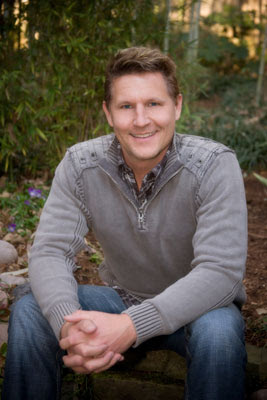
ChrisHOlsenThe Quapaw Quarter Association’s award-winning Preservation Conversation series continues tonight.

The program takes place this evening at Curran Hall, 615 East Capitol Avenue. From 5:30 to 6:00 a reception will take place. The program will run from 6:00 to 7:00.

This evening’s speaker will be Chris H. Olsen, a nationally known home and garden guru, designer, author, TV personality and public speaker. Chris will be speaking on landscaping for historic homes.   Learn more about Chris at http://www.chrisholsen.com/.

Landscape Designer Chris H. Olsen attended Oxford University in England, studying landscape architecture, landscape principals, and philosophy and also graduated from the University of San Diego with a degree in business. Chris has over 25 years of landscape architecture and interior design experience. In partnership with his father, Chris obtained a landscape maintenance company called Doramus and established the Horticare Landscape Company. After only ten years, the company grew into five divisions: chemical, maintenance, landscape, nursery, and irrigation. In 2003, Chris opened his second home and garden store called Botanica Gardens on Rebsamen Park Road. In September of 2005, Chris chose to pursue other endeavors in his life and sold Horticare.  His new book called “Five Seasons with Chris Olsen” was released in December of 2011.

QQA

The Quapaw Quarter Association’s mission is to promote the preservation of Little Rock’s architectural heritage through advocacy, marketing and education. Incorporated in 1968, the QQA grew out of an effort to identify and protect significant historic structures in Little Rock during the urban renewal projects of the early 1960s. Throughout its existence, the QQA has been a driving force behind historic preservation in Greater Little Rock.

Little Rock Look Back: General MacArthur Returns to Little Rock

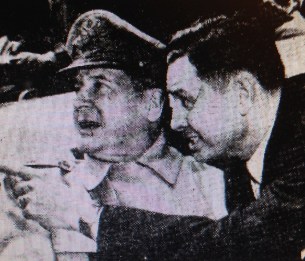
MacArthur and Mayor Remmel

General MacArthur and Mayor Remmel

On Sunday, March 23, 1952, General Douglas MacArthur made his only post-infancy visit to Little Rock. He had previously been scheduled to visit Mississippi, and Little Rock Mayor Pratt Remmel had persuaded him to add a visit to Little Rock to the agenda. The fact that Little Rock now had a Republican mayor had apparently piqued the General’s interest.

General MacArthur, accompanied by his wife and son as well as several journalists and members of his military retinue, arrived at Little Rock Airport at 10:40 am. He was met by a delegation of civic leaders including Mayor Remmel. Alderman James Griffey made welcoming remarks on behalf of the city. Then the General and Mayor boarded an open car and led a motorcade from the airport to downtown.

The motorcade’s destination was Christ Episcopal Church at Capitol and Scott streets. It was at this church that MacArthur had been baptized as an infant. The delegation was greeted by the Episcopal Bishop R. Bland Mitchell, Rector J. Hodge Alves, and Rector Emeritus W. P. Witsell. (While he had been Rector, Dr. Witsell had garnered national attention by issuing an Easter blessing to Gen. MacArthur as he had been evacuating the Philippines at the height of World War II.) In order to gain admittance to the church that morning, church members and guests had to have tickets.

Following the worship service, the General and his party went to three events in the park named in his honor. The first was a tour of the Museum of Natural History (now the Museum of Discovery and located in the River Market; the current tenant of the building is the MacArthur Museum of Arkansas Military History), which was located in the building in which the General had been born. After the tour, he spoke at a dedication of a small rose garden adjacent to the museum. It was sponsored by the Little Rock City Beautiful Commission and the Garden Clubs of Greater Little Rock.

General MacArthur addressing several thousand in MacArthur Park.

General MacArthur addressing several thousand in MacArthur Park.

Though every stop of the General’s visit had featured crowds, the largest was at the third location in MacArthur Park. A crowd of several thousand greeted the General as he spoke from the Foster Bandshell in the park’s southwest corner. Chamber of Commerce president Richard C. Butler (brother-in-law of Mayor Remmel) was the master of ceremonies. Following an invocation by Methodist Bishop Paul Martin, the only other speaker was the General. In his remarks he spoke of his Southern heritage and of his appreciation for the support of the citizens of Little Rock over the years.

Several gifts were bestowed upon the MacArthurs at the ceremony. The City of Little Rock presented Mrs. MacArthur with an engraved silver serving tray.

Following the events in MacArthur Park, the family retired for a brief respite to the Hotel Marion. They then attended a luncheon buffet in their honor at the home of Howard and Elsie Stebbins on Edgehill Road. The General and Mrs. MacArthur circulated through the house greeting guests and then eschewed a special table in favor of balancing their plates on their laps and sitting in wingback chairs. Meanwhile Arthur MacArthur stayed upstairs and discussed stamp collecting and other hobbies with the Stebbins’ two teenage sons.

Following the luncheon, the MacArthur party went back to the airport and by 4:00pm, the plane was in the air.

Though this visit was coming at the end of a whirlwind of activities, by all accounts, the General and Mrs. MacArthur were very gracious and accommodating. The General was being mentioned as a potential GOP candidate for President, but purposefully steered clear of any political comments in his remarks. He and Mrs. MacArthur dutifully posed for photos not only for the media but also for amateur photographers. At lunch, the General even asked a Gazette photographer to take a photo of him with his Little Rock Police motorcycle escorts so that they could have a souvenir of the visit.

Little Rock Look Back: Gen. R. F. Catterson MD, Little Rock’s 30th Mayor

R_F_Catterson_BGen_ACWOn this date in 1835, future Little Rock Mayor Robert Francis Catterson was born in Indiana, the son of Irish immigrants.  He studied medicine in Ohio and established a medical practice in Indiana upon completion of his studies.

With the outbreak of the Civil War, he enlisted as a private in the Union Army.  Throughout the war, he was promoted and was eventually mustered out as a brigadier general in 1866.  During his service, he participated in the siege of Vicksburg, the Battle of Chattanooga, the Atlanta Campaign and Sherman’s March to the Sea.

Following his departure from the military, Catterson decided not to return to medical practice.  He moved to Arkansas and worked for a brief time in the cotton commodities field.  He later returned to military service commanding a militia fighting the Ku Klux Klan.  Catterson was appointed US Marshal and would also command the Brooks troops during the Brooks-Baxter War in Little Rock.

In November 1871, he was elected Mayor of Little Rock. His election ended a tumultuous two-year period where the Little Rock City Council tried unsuccessfully to remove Mayor A. K. Hartman.  Mayor Catterson served a relatively quiet two year term in office until November 1873.

Following the completion of his term, Mayor Catterson moved to Minnesota. He later moved to Texas where he died on March 30, 1914 at the age of 79.  He is buried in the San Antonio National Cemetery.

Architecture critic Mark Lamster featured tonight at Architecture & Design Network

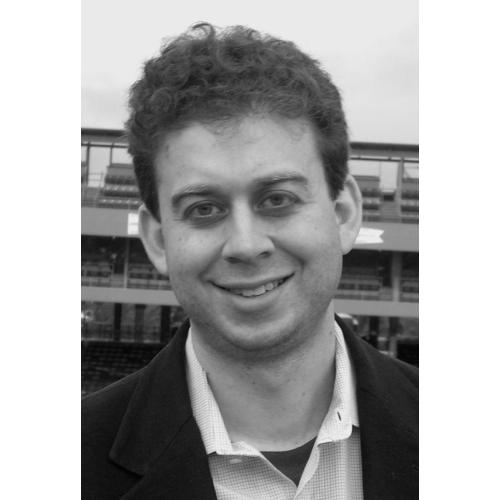
Smark-lamster-presented-dallas-archit-66IZING UP ARCHITECTURE: A Critic’s View

Mark Lamster
Architecture Critic | Dallas Morning News 
Assistant Professor and Dillon Center Fellow | School of Architecture University of Texas Arlington

DATE: Tuesday, March 18, 2014
TIME: 6:00 pm, preceded by a reception at 5:30
PLACE: Arkansas Arts Center lecture hall

Architecture critics are a rare breed in this part of the country. Mark Lamster, a recent arrival at the Dallas Morning News, offers a perspective on the built environment that enables others to see and talk about their surroundings in new and different ways. Lamster, who also teaches a graduate seminar on criticism and critical writing at the University, has, according to the newspaper’s editor, Bob Mong, a “range of interests that rivals those of any architecture critic in the country.” His background in art as well as architecture informs his writing. A contributing editor to Architectural Review and Design Observer, his work has appeared in the New York Times, the Los Angeles Times, the Wall Street Journal and many other national publications. Lamster is currently at work on a definitive new biography of the late architect Philip Johnson who, among his many accomplishments, established the architecture department at New York’s Museum of Modern Art. The book is to be published by Little Brown.

For more than a decade, Lamster served as editor of the Princeton Architecture Press. He is the author of several books including Master of Shadows (2009) a political biography of the painter Peter Paul Rubens. Baseball fans may be familiar with his first book, Spalding’s World Tour, the story of a group of all-star baseball players who circled the globe in the 19th Century. That work was a New York Times Editor’s selection. Lamster, a native of New York City, has a B.A. from Johns Hopkins University and an M.A. from Tufts.

Supporters of the Architecture and Design Network lecture series include the Arkansas Arts Center, the Central Arkansas Chapter of the American Institute of Architecture and the University of Arkansas Fay Jones School of Architecture. All Network lectures are free and open to the public. For further information, contact ardenetwork@icloud.com.

Gardner and historian Todd Longstaffe-Gowan at Clinton School today at noon

todd-portrait-52b41521e74e7Todd Longstaffe-Gowan is an author, historian, gardener, geographer, and landscape architect will be speaking at the Clinton School today at noon.

Since entering into private practice, Longstaffe-Gowan has advised on a number of public and private historic landscapes. He has developed and implemented long-term landscape management plans for the National Trust, English Heritage and consulted on historic landscapes including the Tower of London, Hampton Court Palace, and the Crown Estate. Longstaffe-Gowan will discuss his re-presentation of the pleasure grounds at Kensington Palace to mark the Diamond Jubilee of Her Majesty The Queen. The Kensington Palace Gardens has been a favorite place of residence for various members of the royal family including Queen Victoria, Prince Charles and Princess Diana, and will soon be the London home of Prince William and Princess Catherine.

Longstaffe-Gowan takes on a range of projects in Britain and abroad, many with a conservation slant. ‘My work reflects my interest in the dramatic and sculptural potential of landscape, and is imbued with whimsical, historical eclecticism’, he says. ‘I like to think that my gardens are intelligent as well as beautiful, as they are informed by my training as an architect, landscape architect, geographer and historian.’

Longstaffe-Gowan appears at the Clinton School in partnership with P. Allen Smith.