FREE Admission to ROTHKO exhibit at Ark Arts Center through Dec 31

No. 8, 1949
Oil and mixed media on canvas
90 x 66 in.
The National Gallery of Art, Washington
Gift of The Mark Rothko Foundation, Inc., 1986.43.147
©1998 Kate Rothko Prizel & Christopher Rothko /Artists Rights Society (ARS), New York Image courtesy of the National Gallery of Art, Washington

In the spirit of giving, the Arkansas Arts Center is offering FREE admission to Mark Rothko in the 1940s: The Decisive Decade through Tuesday, December 31.

Mark Rothko in the 1940s: The Decisive Decade is the first exhibition and catalogue to reevaluate Rothko’s work in the context of his thoughts about art from the period. The exhibition brings to light many works not seen before by scholars or the public and highlights a period of his career that is often overlooked.

The 1940s was a decade of tremendous change for the world, for Western art, for New York City’s place in the art world and for Mark Rothko (1903-1970). The most important result was the formation of what became known as The New York School, a collection of artists working in a nexus of artistic approaches, the best known of which were Gesturalism, or Abstract Expressionism and Color Field. What most members of this group shared was a faith in the power of art effectively to address the pressing historical problems of their era writ large in the movies, news reports, and photographs of the war and its uncertain aftermath.

One of the major members of the New York School was Mark Rothko, the most important of the School’s Color Field wing. For Rothko, like many of his colleagues, the 1940s was the critical decade for his development. Mark Rothko in the 1940s is an examination into the artistic maturation—a decade of searching and rapid evolution– of one of the most influential artists of the twentieth century that deserves not only closer attention but also a re-evaluation.

Mark Rothko in the 1940s will be the first exhibition and catalogue to reevaluate this work in the context of Rothko’s thoughts about art from the period. Mark Rothko in the 1940s will bring to light many works not seen before by scholars or the public and highlight a period of his career that is often overlooked.

Mark Rothko in the 1940s: The Decisive Decade is organized by the Arkansas Arts Center, the Columbia Museum of art, the Columbus Museum of Art and the Denver Art Museum, in conjunction with the National Gallery of Art, Washington. The exhibition is funded in part by the Dedalus Foundation and is supported by an indemnity from the Federal Council on the Arts and the Humanities. It is sponsored locally by Harriet and Warren Stephens; Chucki and Curt Bradbury; The Brown Foundation, Inc. of Houston; Mary Ellen and Jason Vangilder and the Capital Hotel.
Little Rock Look Back: Groundbreaking for Robinson Auditorium

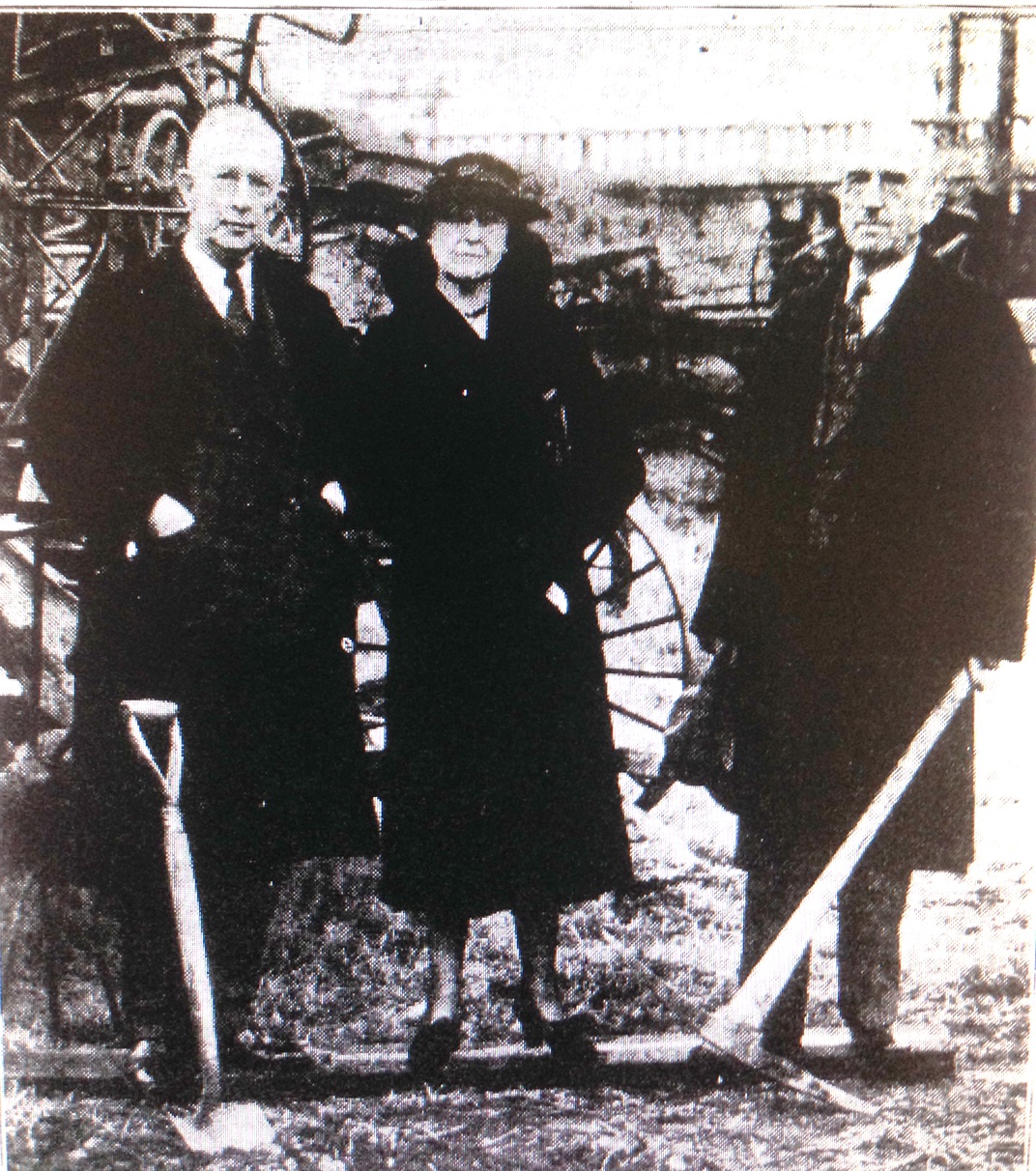
    ARKANSAS DEMOCRAT photo of Mayor Overman, Mrs. Robinson and Mr. Allaire at the groundbreaking. The Broadway Bridge balustrades are visible in the background.

ARKANSAS DEMOCRAT photo of Mayor Overman, Mrs. Robinson and Mr. Allaire at the groundbreaking. The Broadway Bridge balustrades are visible in the background.

On December 24, 1937, at 11:30 a.m., Little Rock Mayor R. E. Overman, Ewilda Gertrude Miller Robinson (the widow of Senator Joseph Taylor Robinson) and  Alexander Allaire of the PWA turned dirt to participate in the brief groundbreaking ceremony for Little Rock’s municipal auditorium.  That morning, the Arkansas Gazette ran a brief story on the upcoming groundbreaking.  The story mentioned that the building would be named in memory of the late beloved Arkansas politician.  This appears to be the first public pronouncement of the Robinson name for this civic structure.

Among others in attendance at the groundbreaking were Mrs. Charles Miller (sister-in-law of Mrs. Robinson), Mr. and Mrs. Grady Miller (brother and sister-in-law of Mrs. Robinson), the mayor’s wife, the three architects (George Wittenberg, Lawson Delony and Eugene John Stern), and D. H. Daugherty and Will Terry of the City’s Board of Public Affairs. 

Construction had to start by January 1, 1938, in order to receive PWA funds.  By breaking ground on December 24, there was over a week to spare.  The site had been selected in late October 1937, and the purchase had not been finalized.  But the PWA did give permission for the City to let a contract for excavation, demolition and filling on the site.

The groundbreaking took place at the corner of Garland and Spring Streets which was on the northeast corner of the block set aside for the auditorium.  Today, Spring Street does not extend north of Markham; the street was closed to make way for the parking structure and what is now the Doubletree Hotel.  Garland Street is basically an alley that runs parallel to Markham north of City Hall, Robinson Auditorium and the Doubletree Hotel.

Approximation of site of Robinson Auditorium groundbreaking

Approximation of site of Robinson Auditorium groundbreaking

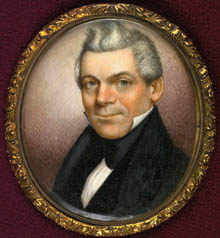
Little Rock Look Back: Roswell Beebe

Mayor BeebeOn December 22, 1795, future Little Rock Mayor Roswell Beebe was born in Hinsdale, New York.  His family were wealthy English immigrants.  At seventeen, Beebe went to New Orleans and fought with Andrew Jackson in the 1815 Battle of New Orleans.  He stayed in the Crescent City for the next two decades building successful lumber and brick businesses.

Due to health concerns, he moved north to a drier climate in 1834.  After first stopping in Fulton, Arkansas, he settled in Little Rock in 1835 at the age of forty.  He stayed at the home of Chester Ashley and married Ashley’s sister-in-law, Clarissa Elliott.  He and Clarissa had two children, Roswell and Cora.

For nearly 30 years, Little Rock had a complicated history of deeds, titles and land ownership.  In 1839, Beebe went to Washington DC and received the original patent from President Martin Van Buren.  He then set about clearing up the land and title issues, as well as drawing up a plan for the city and laying off blocks and streets.  Beebe deeded the streets and alleys to the City for a dollar.  He also donated the land on Markham Street for a new State Capitol building (now home of the Old State House Museum).  Along with his brother-in-law Chester Ashley, he donated the land for the establishment of Mount Holly Cemetery.

In 1848, Beebe was elected to the Little Rock City Council.  The following year, he was elected Mayor.  He served as Mayor of Little Rock from April 1849 to February 1850.

While his primary business focus in the 1840s had been real estate, in the 1850s he focused on railroads.  Beebe was named president of the Cairo and Fulton Railroad Company in 1853.

While on a visit to New York, Beebe died on September 27, 1856.  His body was returned to Little Rock, and Roswell Beebe was buried at Mount Holly Cemetery.  The town of Beebe, Arkansas, is named in his honor.

Little Rock Look Back: Mayor John Josephus McAlmont

McAlmontJohnJ_fFuture Little Rock Mayor John Josephus McAlmont was born on this date in 1821 in New York state. (Various reports give his birth date as December 22 — but the family reports December 19 as the date.)

After studying medicine in Pennsylvania and Ohio, he arrived in Little Rock in March 1850 with his family.  After practicing medicine in nearby Benton, he returned to Little Rock in 1852.  In addition to being a physician, he was a pharmacist.

During the Civil War, he relocated his family out of Little Rock (to a spot where the present day community of McAlmont bears his name).  Following the war, he moved them back to the City.  In 1866 he was elected Mayor of Little Rock, the first elected Mayor since local government resumed following the Civil War.

In October 1879, he and seven other physicians founded the Arkansas Industrial University Medical Department in Little Rock. This institution has grown into the University of Arkansas for Medical Sciences.  He served on the faculty of the medical school for several years.

Dr. McAlmont died in September 1896.  He is buried at Mt. Holly Cemetery.  In addition to the McAlmont community bearing his name, there is a McAlmont street in downtown Little Rock which was named in his memory.

As Part of Entergy Arkansas 100th Birthday, Downtown Bridges Officially Illuminated Tonight

Arkansas River LightsEntergy Arkansas, the City of Little Rock, Pulaski County Facilities Board Authority, the William J. Clinton Foundation, the Little Rock Convention & Visitors Bureau, the City of North Little Rock and the Downtown Little Rock Partnership will be celebrating the official illumination of the Main Street, Junction and Clinton Presidential Park Bridges at First Security Amphitheater.

Event Schedule:

5:00-6:00 PM      Entertainment by the Natural State Brass Band

6:00-6:20 PM      Official Event – Opening remarks followed by the flipping of the switches and the illumination of all three bridges with a festive light show (bridges will remain illuminated)

Following              Entertainment by the Big Dam Horns

8:00 PM                 Event Ends

Ottenheimer Market Hall will be open for this event, so food and beverages will be available. This is a public event and all who want to attend and participate in this historic event will be welcomed – it is sure to be great fun, and an exciting day in our city’s history.

This once-in-a-lifetime event is made possible by a $2 million gift by Entergy Arkansas as part of its 100th anniversary in Arkansas, as well as support from the William J. Clinton Foundation, the Pulaski County Bridge Authority, Philips Lighting, Koontz Electric, the cities of Little Rock and North Little Rock, Little Rock Convention & Visitors Bureau and the North Little Rock Visitors Bureau. Total project cost is $2.4 million.

According to James Jones of Entergy Arkansas:

Entergy Arkansas has much for which to be thankful, and much to celebrate. A century in business is a rare achievement, and we appreciate the opportunity to have been a part of Arkansas’ history since 1913. The utility industry and Arkansas have come a long way in 100 years, and Entergy Arkansas is proud to have played a part in “Helping Build Arkansas,” a phrase founder Harvey Couch said often.

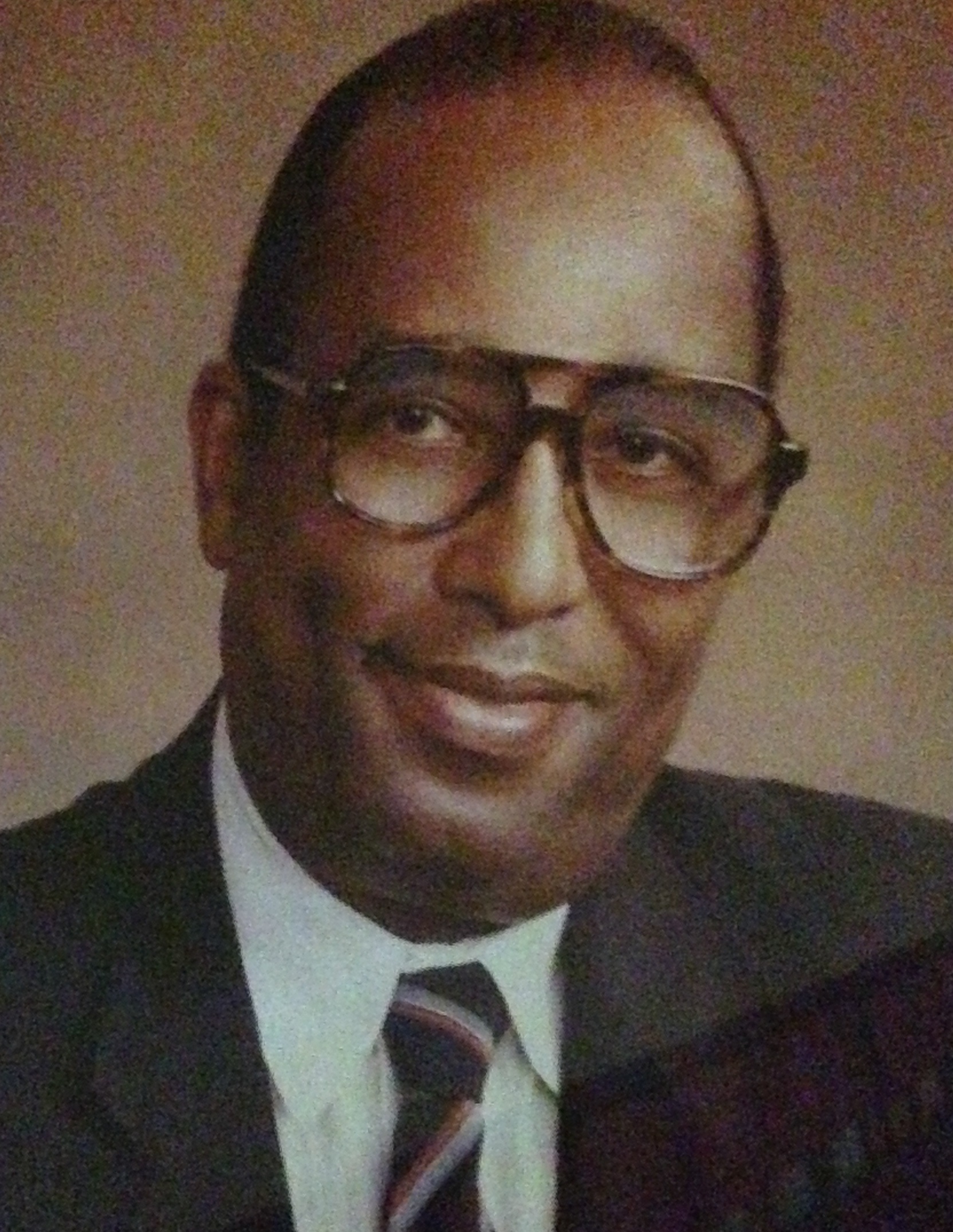
Little Rock Look Back: Mayor Charles Bussey

Mayor BusseyFuture Little Rock Mayor Charles Bussey was born on December 18 in 1918.  Throughout his life he was a trailblazer.  He was the first African American Sheriff’s Deputy in Pulaski County and expanded the Junior Deputy program into the African American community.

In 1968 he became the first African American elected to the Little Rock City Board of Directors. He was not the first African American to run for the City Board, but he was the first to win a race.  Mr. Bussey sought support not just from the African American community, but from all sectors of Little Rock.  He served from 1969-1977 and again from 1979 through 1991.  In 1981 he was selected by his fellow City Directors to serve as Little Rock’s Mayor, which made him the first African American Mayor of Little Rock.  He served as Vice Mayor of Little Rock for a total of 8.5 years which is the longest of anyone in the City’s history.

Throughout his lifetime Mayor Bussey championed youth outreach efforts.  He also was active in the Arkansas Municipal League, National League of Cities, West Little Rock Rotary Club, Elks, Shriners and many other organizations.

In 2006 he was posthumously inducted into the Arkansas Black Hall of Fame.  The previous year, 20th Street in Little Rock was renamed in his honor.

Holiday Events at Old State House Museum today

oldstatehouseHoliday Open House
1:00-3:00PM
The traditions of joyous family holiday celebrations past can be relived at Holiday Open House. Visitors will find the Old State House colorfully decorated for the season. Fun, hands-on activities will be available to children; they can create unique holiday cards and more. Delightful carols will be performed by local music groups. Visitors will also enjoy delicious cookies and punch. Call (501) 324-9685 for more information. Admission is free.

Arkansas Chamber Singers Holiday Concert: Spirit of the Season
3:00PM
The Old State House Museum welcomes the Arkansas Chamber Singers performing their annual holiday concert. The program will include familiar carols and songs of the season featuring new works by Arkansas composers performed in the acoustically rich house chamber of the Old State House Museum for three nights. Admission is free, but seating may be limited, so reserve your seats now at http://www.ar-chambersingers.org/holiday.htm