9th Nog Off, Other Activities at Historic Arkansas Museum tonight and Saturday

9th Ever Nog-off

This Friday
December 13
5 – 8 pm
Free
Plus opening reception for two new exhibits: Dream and Imagery Entailed: Kerrick Hartman and LaToya Hobbs and A Sure Defense: The Bowie Knife in America
Historic Arkansas Museum’s 9th Ever Nog-off is a culinary celebration of a favorite holiday drink, and friendly competition for the best eggnog in town.
 
The Noggers: The Honorable Mark Stodola; David Burnette, South on Main; Darryl Downs, Capital Hotel Bar and Grill; Bridget Fennell Farris; Laurie Harrison, Le Pops; Sally Mengel, Loblolly Creamery; Copper Grill
 
The Celebrity Judges: Darla Huie, Dizzy’s Gypsy Bistro; P. Allen Smith; Amanda Hoelzeman, Arkansas Business
 
Shop for your holiday gifts in the Museum Store. During the Nog-off we’ll have:
Jann Greenland with her jewelry and fused glass stars
Jane F. Hankins signing copies of her book, The Thirty-Foot Elvis
Thomas Hankins making crystal ornaments and jewelry
Kat Robinson signing copies of her book, Ozark Eateries


Dream and Imagery Entailed

Kerrick Hartman and LaToya Hobbs
Trinity Gallery for Arkansas Artists
December 13 through February 9, 2014
 

Stuttgart artist Kerrick Hartman focuses on stone, wood and metal sculpture using the Arkansas landscape as inspiration for his work. He says, “To take a stone or other lifeless, stationary material and convey a sense of spiraling, undulating motion to an object is at its core a testimonial of hope and celebration of life’s design.”

North Little Rock native LaToya Hobbs, printmaker and painter, works with figurative imagery that addresses the ideas of beauty and spirituality. Her work is an investigation of how past influences, expectations and preferences resonate with women of color in the 21st century and are expressed through the canvases of our bodies.


46th Annual Christmas Frolic

This Saturday
December 14
10 am – 4 pm
Frolicking in the  Grog Shop from 1 to 4 pm
Free
 
Keep your family tradition going, or make a new one and join hundreds of others who have danced their first Virginia Reel in the Hinderliter Grog Shop, the oldest house in Little Rock. It’s always fun to watch your kids sashay down the line for the first time, or to brush up on your own steps.

From sack races to stilts, from fiddling to frolicking, this favorite seasonal event charms one and all with old fashioned fun. Bring the whole family out and enjoy live music, crafts, carols, pioneer games and our famous hot cider and ginger cake.

 
*Bowie Knife opening weekend activities happening simultaneously. See below. All free and open to the public.*


A Sure Defense: The Bowie Knife in America

The largest and most important exhibit ever done on America’s iconic contribution to the world of blades
 
Horace C. Cabe Gallery
December 13 through June 22, 2014
Opening reception during the 9th Ever Nog-off
 

A Sure Defense: The Bowie Knife in America will trace the history of this country’s most famous knife from just before its birth in a rough melee on a sandbar above Natchez, Mississippi in 1827, to the skilled craftsmen who keep the classic blade alive to this day in the form of hand crafted reproductions and modernized versions.

The exhibit of more than 200 knives includes knife designs associated with Alamo martyr James Bowie and his less famous brother Rezin, as well as bowie knives once owned by such historic figures as Davy Crockett, Theodore Roosevelt, General Winfield Scott and John Fox “Bowie Knife” Potter. The role of the bowie knife in the Antebellum era is explored along with the Civil War and the opening of the west, and there’s a special focus on the role bowie knives played in the events surrounding the assassination of Abraham Lincoln.


Bowie Knife Symposium on Friday

This Friday
12:30 to 4:30 pm
Museum’s Ottenheimer Theater
Free

12:30    Mark Zalesky, Guest Curator and Editor of Knife World
                “Samuel Bell, The Tiffany of Texas and Tennessee”
1:30        Bill Worthen, Historic Arkansas Museum Director
                “James Black and the Bowie Knife”
2:30        Josh Phillips, Co-Author of Confederate Bowie Knives
                “Identifying Counterfeit Bowie Knives”
3:30        Garry Zalesky, ABKA Life Member and lender to the exhibit
                “Folding Bowie and Folding Dirk Knives”

Bowie Knife Opening Weekend Activities

This Saturday
December 14
Free
 
Bladesmithing in the Blacksmith Shop
With Master Bladesmith Lin Rhea
10 am – Noon; 1 – 4 pm
 
Gallery Talks
With Guest Curator Mark Zalesky and Museum Director Bill Worthen
Throughout the day
 
Jim Bowie Live!
Catch Jack Edmondson’s portrayal of Jim Bowie.
 
Knife Film Festival
In the museum’s Otttenheimer Theater
10 am – The Iron Mistress
12 pm – The Sandbar Duel documentary for Natchez TV
12:30 – The Adventures of Jim Bowie
1:00 – Dirty Work: Arkansas’s Knife Heritage from Bowie to Rambo
1:30 – The Iron Mistress
3:30 – The Sandbar Duel documentary for Natchez TV
 
*Christmas Frolic activities happening simultaneously. See above. All free and open to the public.*


Little Rock Look Back: Mayor Gordon Neill Peay

On this date in 1819 future Little Rock Mayor Gordon Neill Peay was born.  The Peay family arrived in Arkansas from Kentucky in 1825.  They quickly became one of Little Rock’s leading families.  Mayor Peay’s father, Nicholas Peay served on the Little Rock Board of Trustees (which existed before the town was incorporated) and later served on the City Council and was acting mayor.
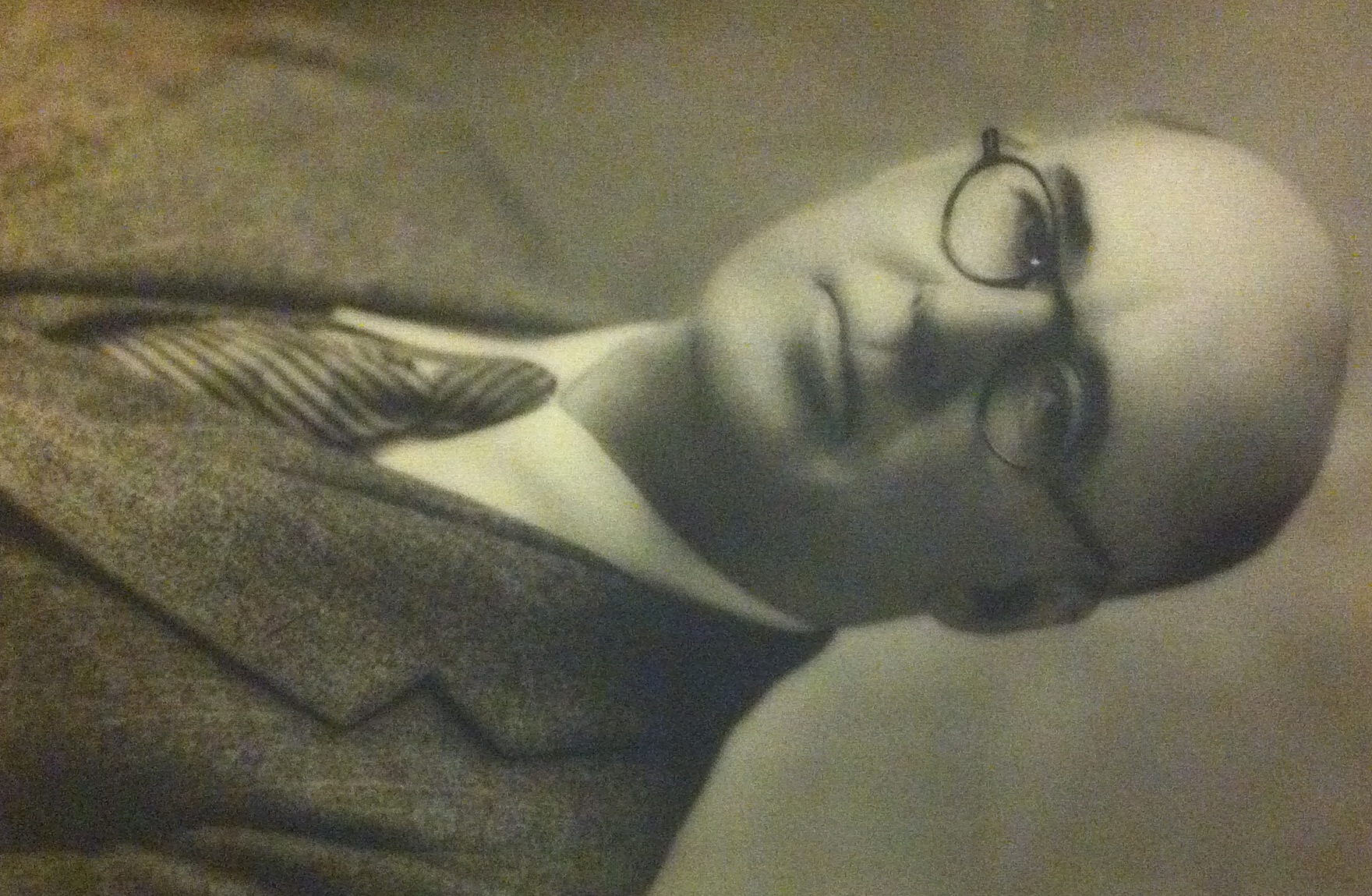
Godon N. Peay served as mayor of Little Rock from 1859 to 1860.  During the Civil War, Peay served as Captain and later Colonel of the Capital Guard.  He later received a pardon from the federal government.

The Peay family owned the Peay Hotel, Little Rock’s first hotel, and were also co-founders of what became Worthen Bank.  They were also a founding family of Christ Episcopal Church. Mayor Peay later served as Pulaski County Chancery Clerk.

He died on December 14, 1876 and is buried at Mt. Holly Cemetery along with many members of his family.  A nephew of his, Ashley Peay, served on the City Council in the 1920s.  Mayor Peay’s great-grandson Joseph Barber Hurst, Sr. served on the Little Rock City Board of Directors from 1967-1971. His great-great-granddaughter-in-law Stacy J. Hurst currently serves on the City Board of Directors.

Architecture and Design Network presents HIGHLIGHTING HILLCREST: History, Architecture and a Sense of Community

HillcrestThe monthly Architecture and Design Network lecture takes place tonight. This month’s topic is “HIGHLIGHTING HILLCREST: History, Architecture and a Sense of Community.”  The program begins at 6pm at the Arkansas Arts Center following a 5:30pm reception.

In 1891 two young  Michigan attorneys purchased 800 acres of land northwest of the city of Little Rock. Within a year, ten blocks were platted on a section of that acreage by the Pulaski Heights Land Company. Other suburban developments, including Hillcrest, followed.

A diversity of housing styles prevailed in those turn-of-the-century neighborhoods. A generous sampling of the area’s homes, including Colonial Revival and Craftsman style dwellings as well as vernacular  “pyramid cottages”, survive. Hillcrest’s historic housing stock includes  a variety of architecturally significant structures, built between 1893-1940. All are part of the Historic Hillcrest District, an area of the city listed on the National Register of Historic Places.

The story of Hillcrest, a popular Little Rock neighborhood, distinguished by its history, its architecture and its unrivaled  community spirit, will be explored by Rachel Silva, Preservation Outreach Coordinator for the Arkansas Historic Preservation Program, Tommy Jameson, an architect whose firm focuses on the restoration, rehabilitation and adaptive reuse of historic buildings, and Jim McKenzie, executive director of Metroplan and a  founder of the Hillcrest Residents  Association.

While demographics may provide information about an area’s population and its proclivities, it is the mindset of people who live in a particular section of town that determines the parameters, both social and physical, of a neighborhood.

Supporters of the Architecture and Design Network include the Arkansas Arts Center, the University of Arkansas Fay Jones School of Architecture and the Central Chapter of the American Institute of Architects.

Little Rock Look Back: Mayor Horace Knowlton

On this date in 1872, future Little Rock Mayor Horace A. Knowlton Jr. was born.

In April 1920, he was elected City Clerk of Little Rock.  He served in that position until April 1931.  That year, he was chosen as the Democratic nominee for Mayor, denying incumbent Mayor Pat L. Robinson a second term.  The primary race against Mayor Robinson was close.  When the results were first announced, it looked as if Mayor Robinson had prevailed.  But after challenging ballots, Mr. Knowlton was declared the winner.  Since Little Rock was primarily a Democratic Party city, unsurprisingly Mr. Knowlton was elected Mayor in April 1931 and served two terms as Mayor.

He oversaw the start of some of President Roosevelt’s New Deal programs in Arkansas during his tenure.  In 1934, he negotiated the purchase of Gillam Park for the City which established the first public park in Little Rock for African Americans.  This was a very forward-thinking action at the time.  One of his final acts as Mayor was to participate in the groundbreaking for the Museum of Fine Arts building in City Park (now a portion of the Arkansas Arts Center building in MacArthur Park).

Following his departure from public office, Mayor Knowlton and his wife (who had been an elementary school teacher) eventually moved to Florida and resided in the Tampa Bay area.  His son and grandson (Horace III and Horace IV) have both been lawyers in the Tampa Bay area.  Mayor Knowlton died on February 14, 1965 and is buried in the Oak Grove cemetery in Conway.

Little Rock Look Back: Mayor Charles Bertrand

Bertra1Two hundred and five years ago today, on November 23, 1808, future Mayor Charles P. Bertrand was born in New York.  He was the son of Pierre and Eliza Wilson Bertrand; his father died in 1809 in an uprising in Haiti and his mother eventually remarried.  With her new husband, Dr. Matthew Cunningham, she and the family moved to Little Rock in 1820.

After apprenticing with family friend William Woodruff at the Arkansas Gazette, Bertrand opened the Arkansas Advocate newspaper.  He later studied law under Robert Crittenden and entered the legal profession.

In 1835-1836, he served as State Treasurer for the Arkansas Territory, and in 1836 as secretary for the first constitutional convention. He was a member of the Arkansas House of Representatives from 1840-1841 and 1844-1849.

Bertrand followed in his stepfather’s footsteps and became Mayor of Little Rock.  (Dr. Cunningham had been the first Little Rock Mayor in 1831.)  He was in office from January 1855 through January 1857, serving two one-year terms.  He later served on the City Council and filled in as acting mayor. (Another influence on his upbringing was studying under future Mayor Jesse Brown who taught at the first school in Little Rock.)

Bertrand, as acting mayor, was involved in the negotiations of the surrender of Little Rock to federal troops in 1863.  He also later corresponded with President Lincoln on behalf of Little Rock citizens.  Though a staunch Confederate, his good will toward the Union soldiers and federal officials is credited with helping to save Little Rock from the destruction which befell many other Southern cities.  He is also credited with delaying the start of the Civil War.  Prior to the attack on Fort Sumner, members of the Arkansas Militia were planning to attack the Federal Arsenal at Little Rock during the absence of Governor Rector.  This would have been viewed as an act of war.  Bertrand was able to dissuade them from the attack.  Had he been unsuccessful, the Civil War would have likely started in Arkansas instead of South Carolina.

He had put his considerable fortune into Confederate money during the war. At the Civil War’s conclusion, the family was financially ruined. Though they had vast land holdings, those would be sold off in parcels to pay for taxes.

Bertrand died August 27, 1865, shortly after the conclusion of the Civil War.  He, like his mother, step-father, and several other relatives is buried in Mt. Holly Cemetery.

EXPECTATIONS on Tuesday night at “Tales from the South”

talesfromsouthThe Tuesday, November 19 edition of  ”Tales from the South” is Expectations. It will feature stories by Bill Worthen, Jennifer Winningham, and Roger Poole. Music is by Brad Williams and blues guitarist Mark Simpson

“Tales From the South” is a radio show created and produced by 2013 Governor’s Arts Award recipient Paula Martin Morell, who is also the show’s host. The show is taped live on Tuesday. The night is a cross between a house concert and a reading/show, with incredible food and great company. Tickets must be purchased before the show, as shows are usually standing-room only.

“Tales from the South” is a showcase of writers reading their own true stories. While the show itself is unrehearsed, the literary memoirs have been worked on for weeks leading up to the readings. Stories range from funny to touching, from everyday occurrences to life-altering tragedies.

The program takes place at Starving Artist Café.  Dinner is served from 5pm to 6:30pm, the show starts at 7pm.  Admission is $7.50, not including dinner.

You MUST purchase your ticket before the show

Previous episodes of “Tales from the South” air on KUAR Public Radio on Thursdays at 7pm.  Tonight’s episode will air on December 5.

Sculpture Vulture: Korean War Memorial Plaza

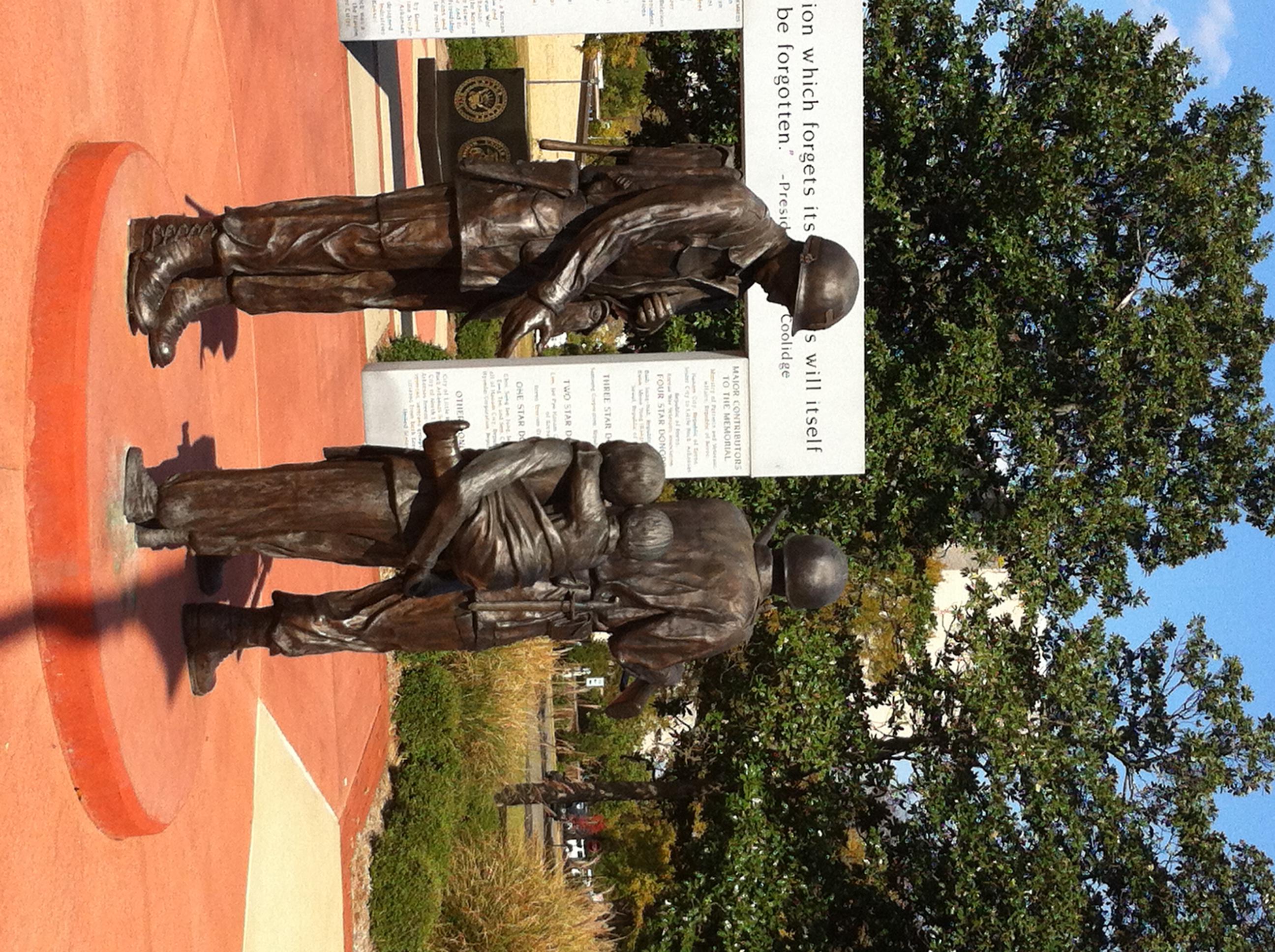
In honor of Veteran’s Day taking place this month, the Sculpture Vulture today features the Korean War Monument in MacArthur Park.

The Arkansas Korean War Veterans Memorial was dedicated on June 25, 2007, the 57th anniversary date of the beginning of the Korean War.  Located in MacArthur Park, the Memorial Plaza features a 3′ tall black granite pentagon bearing the emblems of the five military branches; a nearly 12′ by 12′ frosted gray granite entryway; and three larger than life-size bronze statues stand in the center of the plaza.

Three larger than life-size bronze statues are the central focus of the Arkansas Korean War Veterans Memorial Plaza.  One statue is a combat soldier representing the fighting that took place in South Korea.  The second statue honors the brave sacrifices that Combat Medics and Navy Corpsmen made to save the lives of others during this conflict.  The third statue features two Korean children representing the suffering of the Korean people during the war and the future generations of Koreans that have rebuilt that nation. The statues were designed and constructed by Light and Time Design Studio and Art Foundry located in Royal, Arkansas.

Encircling the statues are eight 3′ wide x 6′ tall black granite tablets. The tablets, weighing in excess of 3,000 pounds each, are engraved with the names of the 461 Arkansas servicemen and women killed in action, a description of Korean War events and a map of Korea.

The memorial plaza stands to the east of the MacArthur Museum of Arkansas Military History in MacArthur Park.  Though not affiliated with the museum directly, they share a common connection to both Douglas MacArthur and the role Arkansans played in the Korean conflict.