Tailgate Party to celebrate VOICES OF THE RAZORBACKS book on Sept 5

bc-purvisFans aren’t the only ones who call the Hogs. Voices of the Razorbacks, which has just been released by Butler Center Books, traces the history of the Razorback broadcasters who many fans grew up hearing. Celebrate the launch of this book at a free book signing and tailgate party in the Main Library’s garden and Darragh Center, 100 Rock Street, at 5:30 p.m. on Thursday, September 5. Author Hoyt Purvis will speak and sign books, which will be available for purchase at the event. This event is free and open to the public. RSVP to kchagnon@cals.org or 918-3033.

Established more than sixty years ago, the Razorback broadcasting network was a pioneering effort in collegiate sports. With announcers such as Bud Campbell and Paul Eells at the microphone, it has become an enduring feature of life in Arkansas. The Razorback network, from its modest beginning to its growth into a major force in sports broadcasting, is the basis of Voices of the Razorbacks.

The Razorback broadcasting network helped build interest in the Razorbacks and a loyal following for them as well as forged strong links among Razorback fans and the broadcasters who became “voices” of the Razorbacks. A sense of kinship developed within the audience, and the broadcasts of Razorback sports became an essential part of the state’s culture.

Although an announcer today may say, This is the Razorback Sports Network from IMG College,” the Arkansas broadcast network is a direct descendant of the Razorback network Bob Cheyne assembled in the early 1950s at the direction of Athletic Director John Barnhill. There had been earlier broadcasts of Razorback sports, including games announced by Bob Fulton in the 1940s, but the Razorback network Cheyne developed help turn broadcasters into cultural icons.

Voices of the Razorbacks traces the history of the broadcasters and the memorable events and highlights over the decades, and it features interviews with many of the key figures in that history. It is hard to find anyone in Arkansas, or Razorback fans anywhere, without special memories of listening to or watching broadcasts of Razorback games. Voices of the Razorbacks brings all those memories back.

Co-author Hoyt Purvis has taught journalism, international relations, and political science at the University of Arkansas (UA) since 1982. He established the first sports journalism course at UA and taught it for twenty-five years. Co-author Stanley Sharp of Booneville, Arkansas, has followed Razorback sports all his life and has a master’s degree in journalism from UA.

Voices of the Razorbacks is available from River Market Books & Gifts, 120 River Market Ave., and from the University of Arkansas Press, Butler Center Books’ distributor. Butler Center Books is a division of the Butler Center for Arkansas Studies, a department of the Central Arkansas Library System (CALS). The Butler Center’s research collections, art galleries, and offices are located in the Arkansas Studies Institute building at 401 President Clinton Ave. on the campus of the CALS Main Library. For more information, contact Rod Lorenzen at (501) 320-5716 or rlorenzen@cals.org.

The Memphis Sound is topic of September Legacies & Lunch today at noon

cals_int_sponsor_butlerCivil rights, the cold war, and the transformation of the plantation economy. It is in light of these historical topics that Jeannie Whayne, University of Arkansas history professor, will frame her talk, “The Memphis Sound and Northeastern Arkansas in the 1950s and 1960s,” at Legacies & Lunch, a free monthly program hosted by the Butler Center for Arkansas Studies, on Wednesday, September 4, at noon in the Main Library’s Darragh Center, 100 Rock Street.

whayne-j-12Whayne will talk about growing up in northeast Arkansas and picking up Memphis radio and television broadcasts. She will address this experience in the context of regional and world events. One example is Sputnik Monroe, a Memphis wrestler who seemed to personify the Russian menace but in fact supported civil rights by promoting matches between black and white wrestlers at a time when the sport was highly segregated.

Legacies & Lunch is free, open to the public, and supported in part by the Arkansas Humanities Council. The program is held from noon – 1 p.m. on the first Wednesday of each month in the Main Library’s Darragh Center. Attendees are invited to bring a sack lunch; drinks and dessert will be provided.

The Butler Center for Arkansas Studies is a department of the Central Arkansas Library System (CALS). It was founded in 1997 to promote the study and appreciation of Arkansas history and culture. The Butler Center’s research collections, art galleries, and offices are located in the Arkansas Studies Institute building at 401 President Clinton Ave. on the campus of the CALS Main Library.

For more information, call 918-3086.

Arkansas Sounds lineup announced

arkansas_sounds_2013There’s something about the Arkansas River that makes free live music sound even better. DeQueen native Collin Raye and a tribute to Delight native Glen Campbell will headline the Arkansas Sounds Music Festival, a free annual event hosted by the Butler Center for Arkansas Studies, a department of the Central Arkansas Library System (CALS). On Friday and Saturday, September 27-28, the festival will feature Arkansas music and musicians both past and present at programs for all age groups at the River Market Pavilions, First Security Amphitheatre, and the Main Library.

Music in a large variety of genres and styles will showcase Arkansans’ love of music.

Friday, September 27 at the River Market Pavilions

Time Band Musical Genre
6 p.m. The Smittle Band jazzy Americana
7:15 p.m. Tav Falco & Panther Burns southern gothic roots/rockabilly
8:30 p.m. Dan Hicks & the Hot Licks gypsy jazz

Saturday – First Security Amphitheatre

Noon The Sound of the Mountain instrumental progressive rock
1 p.m. The 1 oz. Jig funk
2:15 p.m. Messy Sparkles electro-pop one man DJ
3:30 p.m. Big Piph (Epiphany) progressive hip-hop
4:45 p.m. War Chief Americana rock and roll
6 p.m. Mountain Sprout hillbilly bluegrass
7:15 p.m. Bonnie Montgomery country honky tonk
8:30 p.m. Glen Campbell Tribute
9:30 p.m. Collin Raye modern country

Three programs for children and teens are scheduled at the Main Library beginning at 10:30 a.m. on Saturday, September 28.

10:30 a.m. Ages Up to 6 years The Kinders Concert 3rd Floor Youth Services
1 p.m. Ages 7-12 Hip Hop Songwriting and Production workshop Level 4 Teen Center
2 p.m. Ages 13-19 Hip Hop Songwriting and Production workshop Level 4 Teen Center

Additional programs are scheduled during September at different venues in downtown Little Rock.

Friday, Sept. 13 – 5 p.m.
Second Friday Art Night performance by Michael Carenbauer
Butler Center Galleries, 401 President Clinton Avenue

Thursday Sept. 19 6 p.m.
Cocktail party to celebrate the release of Encyclopedia of Arkansas Music
Main Library’s Darragh Center, 100 Rock Street

Monday, Sept. 23  6 p.m.
Songwriters Showcase
Main Library’s Darragh Center, 100 Rock Street

Tuesday, Sept. 24  7 p.m.
Performance honoring Clark Terry
Mosaic Templars Cultural Center, 501 W. 9th Street

Thursday, Sept. 26 6 p.m.
Tav Falco book signing, with the Arkansas Literary Festival
Main Library’s Darragh Center, 100 Rock Street

The Arkansas Sounds Music Festival and all related events are free and open to the public. For a complete schedule, see www.arkansassounds.org. To volunteer for the Arkansas Sounds Music Festival, contact Angela Delaney at adelaney@cals.org or 918-3095. For more information, visit www.cals.org.

Labor Day Museum Monday: Arkansas Arts Center

arkartsThe Arkansas Arts Center is happy to announce that its doors will be open on Labor Day from 10 a.m. – 5 p.m. Enjoy a tasty lunch at Best Impressions restaurant, open from 11 a.m. – 2 p.m. and take a tour through Rembrandt, Van Dyck, Gainsborough: The Treasures of Kenwood House, London. Be sure to check out all the other exhibitions currently on display like Bauhaus twenty-21: An Ongoing Legacy – Photographs by Gordon Watkinson on its final day before it closes. Don’t forget to bring home a one-of-a-kind memento from the Museum Shop!

Remember that military receives free admission into Rembrandt, Van Dyck, Gainsborough: The Treasures of Kenwood House, London through the Blue Star Museums program!

Follow your art by taking advantage of the many benefits that a membership to the Arkansas Arts Center brings like free admission to lectures and Rembrandt, Van Dyck, Gainsborough: The Treasures of Kenwood House, London! Visit the Arkansas Arts Center website to become a member today and start enjoying discounts and exclusive access to parties and receptions.

Labor Day Museum Monday: Historic Arkansas Museum

hamlogoSeveral Little Rock museums are offering a break from the heat on this Labor Day.

Historic Arkansas Museum is kicking off its new touring experiences today from 10am to 4pm.

Someone’s always home.

There’s a brand new way of doing things at Historic Arkansas Museum. Come see what it’s all about on Labor Day, September 2, 10 am – 4 pm.
Self-guided tours at your own pace include more hands-on activities, more pioneer demonstrations and more fun.
Bring a picnic to enjoy on the grounds. HAM will be making lemonade in the kitchen of the historic Brownlee House and we’d love to share!
There’s a brand new way of doing things at Historic Arkansas Museum. Visit the Museum from Wednesdays through Sundays and create your own experience when you visit the historic houses and grounds. Everything is at your pace as you guide yourself through the past. And there’s more going on! More costumes, more cooking, more pioneer demos, more hands-on activities.

Over the past few years, HAM has added a few new things—big things—like a working kitchen, a blacksmith shop and a two-story print shop. They are putting those big things to great use. Some days there are costumed staff working in the kitchen, perhaps pickling or maybe cooking with a Dutch oven. Other days there may have the blacksmith forging nails and chain links in the shop. Or maybe there is someone in the print shop helping visitors seal letters with wax. Or all of those things on one day, along with a rotating cast of 19th century characters who will greet you like it’s 1849 (or ’27, or ’19). Each day will offer different hands-on and interactive experiences, with no two days being exactly the same.

The staff-guided tours are still offered on Mondays and Tuesdays, but even they have changed—they are now offered every half-hour, instead of on the hour (except during the noon lunch hour). We also offer cellphone audio tours, and 360 degree visual tours on your computer or smartphone, every day.

 Historic Arkansas Museum is an agency of the Department of Arkansas Heritage.

Extended Hours, Lecture, Nighttime Dining all at Arkansas Arts Center tonight

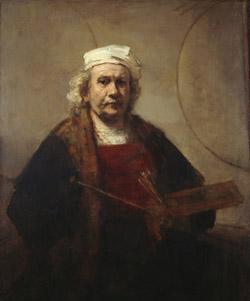
Rembrandt van Rijn Portrait of the Artist, ca. 1665 Oil on canvas Kenwood House, English Heritage, Iveagh Bequest (88028836) Photo courtesy American Federation of Arts

Rembrandt van Rijn
Portrait of the Artist, ca. 1665
Oil on canvas
Kenwood House, English Heritage, Iveagh Bequest (88028836)
Photo courtesy American Federation of Arts

Tonight at the Arkansas Arts Center, there is a lecture in conjunction with the Rembrandt, Van Dyck, Gainsborough: The Treasures of Kenwood House, London exhibit.

The Arkansas Arts Center is presenting “Collecting Rembrandt: Perils and Pleasures One Hundred Years Ago,” a lecture by Catherine B. Scallen. Professor Scallen is Chair of the Department of Art History and Art at Case Western Reserve University.

The program begins at 5:30 p.m. with a reception followed by a 6 p.m. lecture at the Arkansas Arts Center.  The admission is $10 for non-members; free for members and students.

Professor Scallen received her BA from Wellesley College, her MA from the Williams College Graduate Program in the HIstory of Art, and her PhD from Princeton University. After receiving her doctorate, she held a graduate internship in the Paintings Department of the J. Paul Getty Museum in Los Angeles. A specialist on the paintings and prints of Rembrandt van Rijn, her book, Rembrandt, Reputation, and the Practice of Connoisseurship, was published in 2004.  She has been a faculty lecturer on trips to The Netherlands and Belgium for Princeton University and CWRU, and is the author of two courses for The Great Courses Company, Art of the Northern Renaissance and Museum Masterpieces: The National Gallery, London.

Attendees are welcome to stay after the lecture to view Rembrandt, Van Dyck, Gainsborough: The Treasures of Kenwood House, London during the exhibition’s special extended hours.

Best Impressions restaurant will also be open during the extended hours.

Little Rock Look Back: The Quapaw Line

quapawlineOn August 24, 1818, the Quapaw Line was drawn.  Starting at La Petite Roche and heading due south, this line formed the boundary between the Quapaw tribe lands and public lands available for settlement.  Though by 1824, the Quapaw were forced to give up all of their lands, the line continued serve as an important marker.  In the ensuing six years, the first permanent settlement of Little Rock took place and streets were planned.

It is interesting to note that the 1818 treaty referred to La Petite Roche as the Little Rock.  Some have speculated that this is the first official use of “Little Rock” to designate the outcropping.  When the Post Office was established in March 1820, it was given the name Little Rock.

There is a marker commemorating the beginning of the Quapaw Line located at La Petite Roche in Riverfront Park.  The first segment of the line is also noted in the park.  There are also sunken markers (such as the one to the left) place along the line at various points.  In MacArthur Park, at the corner of 9th and Commerce Streets, there is a marker noting that the line passed through at that location.

A good account of walking the Quapaw Line through downtown Little Rock can be found on this website.

Most of what is now called the Quapaw Quarter was located to the west of the Quapaw Line.  However, it did take its name from the fact that the tribe had once lived in that area and was later sequestered to lands near it.  The name for the area was chosen by a committee composed of David D. Terry, Peg Newton Smith, Mrs. Walter Riddick Sr., Dr. John L. Ferguson, and James Hatcher. They had been appointed to a Significant Structures Technical Advisory Committee to advocate for preservation of important structures as a component of the City of Little Rock’s urban renewal efforts.