April 4 Architeaser

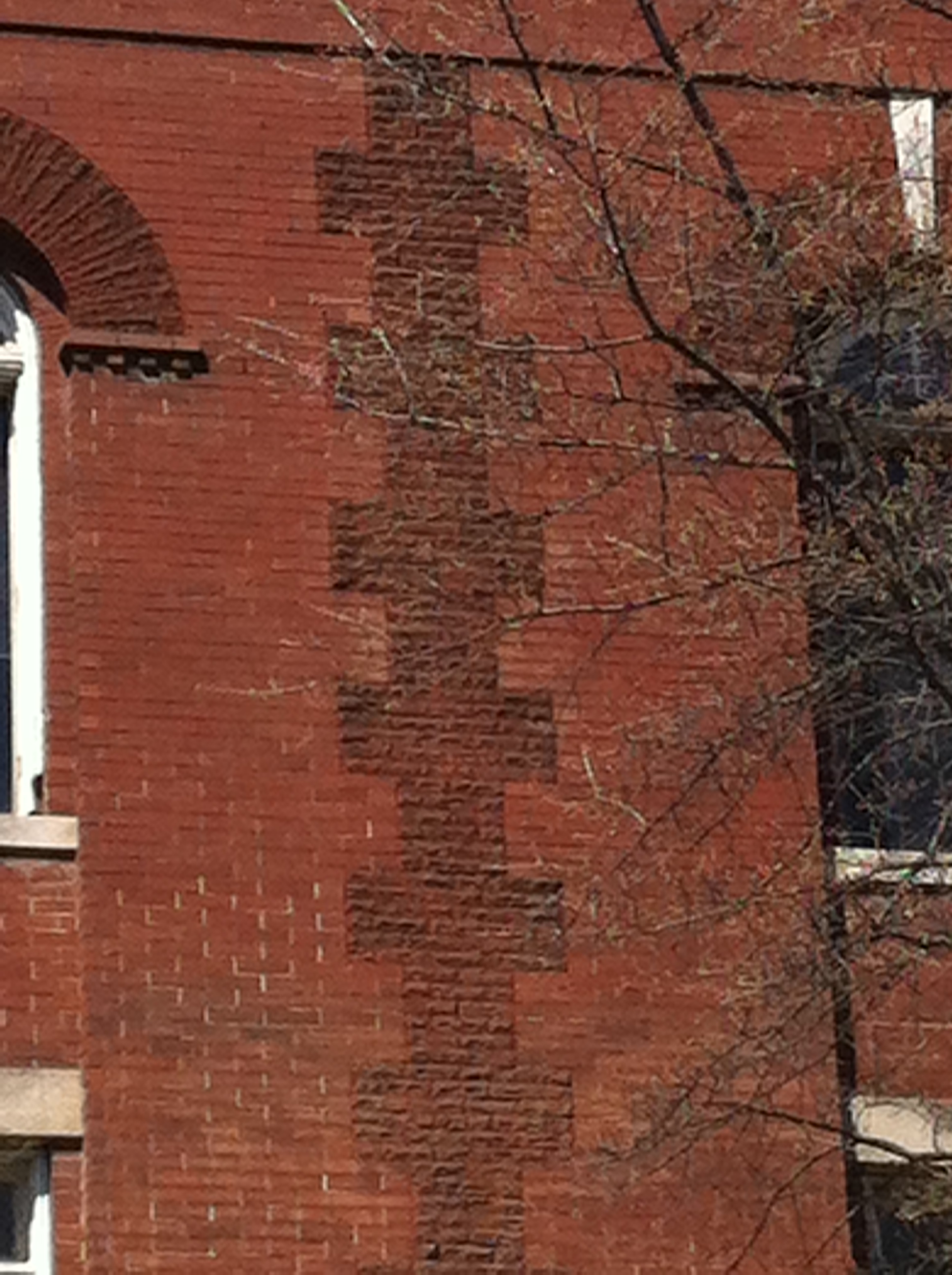
IMG_4699This two-toned and two-surfaced brick work is an early example of using different surfaces to showcase a building in a fairly simple and inexpensive manner.  This is from the Fulk building at 3rd and Main Streets. The building was built after the February 1900 fire which destroyed parts of South Main Street.

The building is on land that once belonged to Dr. Matthew Cunningham. The first Little Rock Council meeting took place at Dr. Cunningham’s house when it was on this property.

This building is one of several being envisioned for new life as part of the Creative Corridor plan along Main Street.

Legacies & Lunch looks at Language

cals“Down in the Holler: A Lesson in Ozarks Folk Speech” is the topic for April’s Legacies & Lunch program.

The words heap, poke, and middlin’ have suprising origins. Learn about the history of the Ozark dialect with Susan Young during the Butler Center for Arkansas Studies’ Legacies and Lunch program on Wednesday, April 3, at noon in the Main Library’s Darragh Center, 100 Rock Street.

Young’s presentation will look at how Ozark dialect was influenced by 16th century England as well as Scotland, Ireland, and Wales. Words used by Chaucer  and Shakespeare are still alive today in the Ozarks. Young serves as Outreach Coordinaor at the Shiloh Museum of Ozark History in Springdale. She is a fifth-generation Ozarker.

The Butler Center’s Legacies & Lunch program is free and open to the public and supported in part by the Arkansas Humanities Council. Attendees are invited to bring a sack lunch; drinks and dessert will be provided.

The Butler Center for Arkansas Studies is a department of the Central Arkansas Library System (CALS). It was founded in 1997 to promote the study and appreciation of Arkansas history and culture. The Butler Center’s research collections, art galleries, and offices are located in the Arkansas Studies Institute building at 401 President Clinton Ave. on the campus of the CALS Main Library.

For more information, call 918-3029.

Little Rock Look Back: Werner C. Knoop

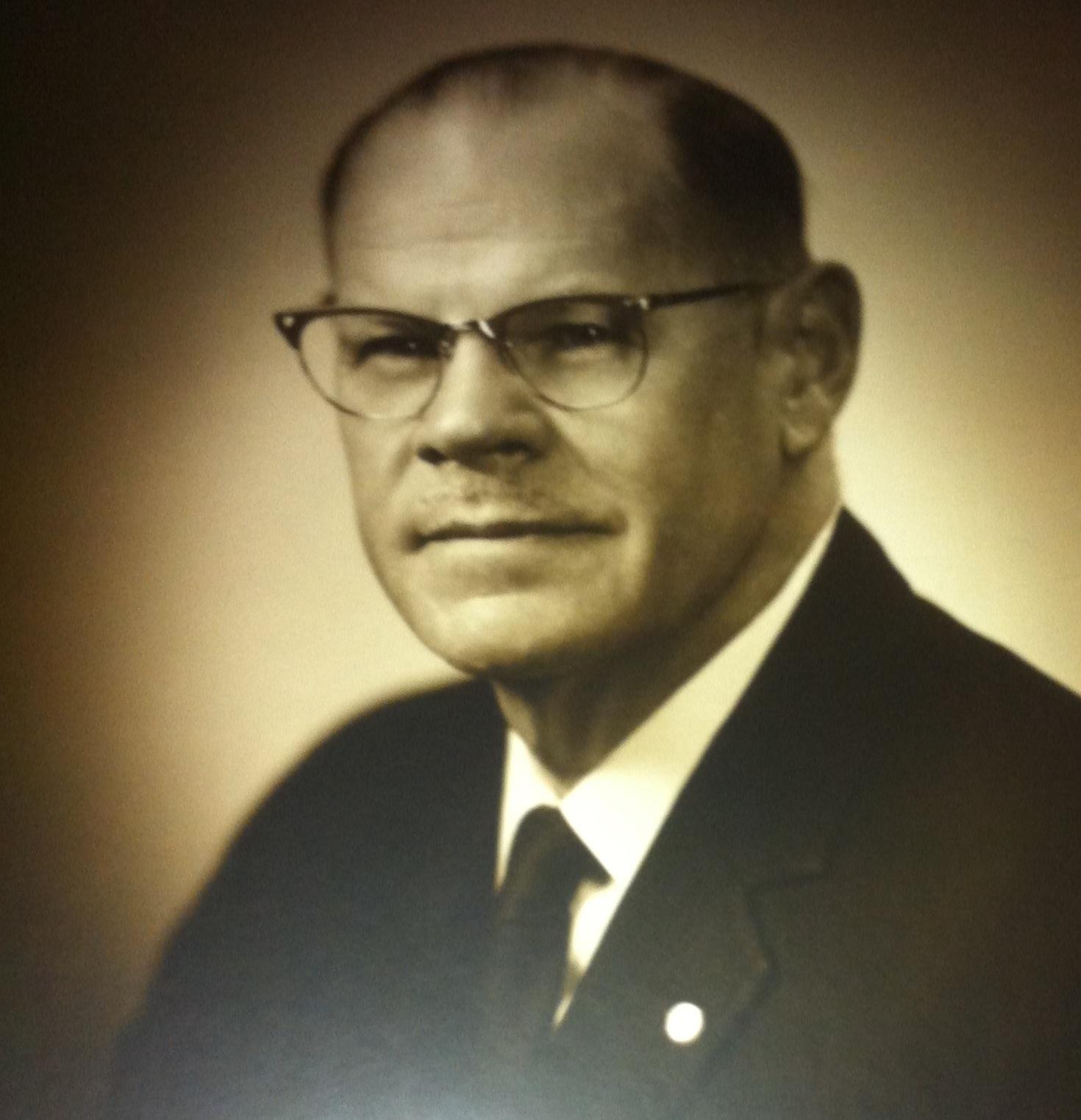
Mayor KnoopTo Little Rock citizens under a certain age, the name Knoop means Knoop Park — a picturesque park tucked away in a pocket of Hillcrest.  There are, however, still many who remember Werner C. Knoop as a business and political leader who helped shape Little Rock as a modern city.

Knoop was born on this date in 1902.

In 1946, Knoop joined with Olen A. Cates and P. W. Baldwin to form Baldwin Construction Company in Little Rock.  Knoop had previously founded Capital Steel Company and established his business reputation there.  From 1945 through 1951, he served on the Little Rock School Board.

Following a series of political scandals, efforts were undertaken for Little Rock to shift from Mayor-Council to City Manager form of government.  Even before the desegregation of Little Rock Central put the city in the eyes of the world, an election for new leaders had been set for November 1957.  Knoop was on a “Good Government” slate and was one of the members elected.

At the first meeting of the new City Board, Werner C. Knoop was chosen by his fellow directors to serve as Little Rock Mayor.  Knoop served as Mayor until December 1962.  For the first several months in office, Little Rock had no City Manager so Knoop oversaw the transition of City staff as the forms of government changed.

Though City Hall generally stayed out of school district matters, that did not mean that the public viewed the two entities separately.  In September 1959, the Baldwin Construction offices were bombed as part of a series of terrorist activities protesting the desegregated reopening of all Little Rock high schools.

After two terms on the City Board, Knoop decided against seeking a third term.  He concluded his elected public service on December 31, 1962.  Following his time on the City Board, Knoop did not retire from Civic Affairs.  In 1970, he served as Chairman of the Little Rock Chamber of Commerce.   The previous year he served as President of the Arkansas Chapter of Associated General Contractors.

Mayor Knoop died in July 1983.  He is buried at Roselawn Memorial Park next to his wife Faith Yingling Knoop.

In the 1930s, Knoop moved into an Art Moderne house on Ozark Point in Hillcrest.  It was adjacent to Little Rock Waterworks property which was developed around the same time.  Eventually much of the land was deeded to the City for creation of a park.  In 1989, it was named in tribute to long-time neighbor Knoop in honor of his lifetime of service to Little Rock.

Mysteries of the Old State House today at 3pm

3goddessesThree goddesses once sat atop the Old State House. Sculptures representing Law, Justice, and Mercy were brought to Little Rock from the Arkansas exhibit at the Philadelphia Centennial of 1876 and later installed on the State House roof.

In 1928, the Little Rock Garden Club had the statues removed. What happened to the three goddesses?

Find out, and hear other Old State House mysteries tomorrow at 3 p.m. This is one of the free programs offered at the Old State House Museum each Saturday.

The Old State House Museum hours are from 9 a.m. to 5 p.m. Monday through Saturday, and 1 p.m. to 5 p.m. on Sunday.

The Old State House is the oldest surviving state capitol building west of the Mississippi River.  In 1947 it was designated as a museum by the Arkansas General Assembly and continues to serve in that capacity.

The Old State House Museum is a museum of the Department of Arkansas Heritage and shares the goal of all seven Department of Arkansas Heritage agencies, that of preserving and enhancing the heritage of the state of Arkansas. The agencies are Arkansas Arts Council, Arkansas Historic Preservation Program, Arkansas Natural Heritage Commission, Delta Cultural Center in Helena, Historic Arkansas Museum, Mosaic Templars Cultural Center, and the Old State House Museum.

Little Rock Look Back: Mayor Robert Francis Catterson

R_F_Catterson_BGen_ACWOn this date in 1835, future Little Rock Mayor Robert Francis Catterson was born in Indiana, the son of Irish immigrants.  He studied medicine in Ohio and established a medical practice in Indiana upon completion of his studies.

With the outbreak of the Civil War, he enlisted as a private in the Union Army.  Throughout the war, he was promoted and was eventually mustered out as a brigadier general in 1866.  During his service, he participated in the siege of Vicksburg, the Battle of Chattanooga, the Atlanta Campaign and Sherman’s March to the Sea.

Following his departure from the military, Catterson decided not to return to medical practice.  He moved to Arkansas and worked for a brief time in the cotton commodities field.  He later returned to military service commanding a militia fighting the Ku Klux Klan.  Catterson was appointed US Marshal and would also command the Brooks troops during the Brooks-Baxter War in Little Rock.

In November 1871, he was elected Mayor of Little Rock. His election ended a tumultuous two-year period where the Little Rock City Council tried unsuccessfully to remove Mayor A. K. Hartman.  Mayor Catterson served a relatively quiet two year term in office until November 1873.

Following the completion of his term, Mayor Catterson moved to Minnesota. He later moved to Texas where he died on March 30, 1914 at the age of 79.  He is buried in the San Antonio National Cemetery.

Little Rock Look Back: Mayor Pat L. Robinson

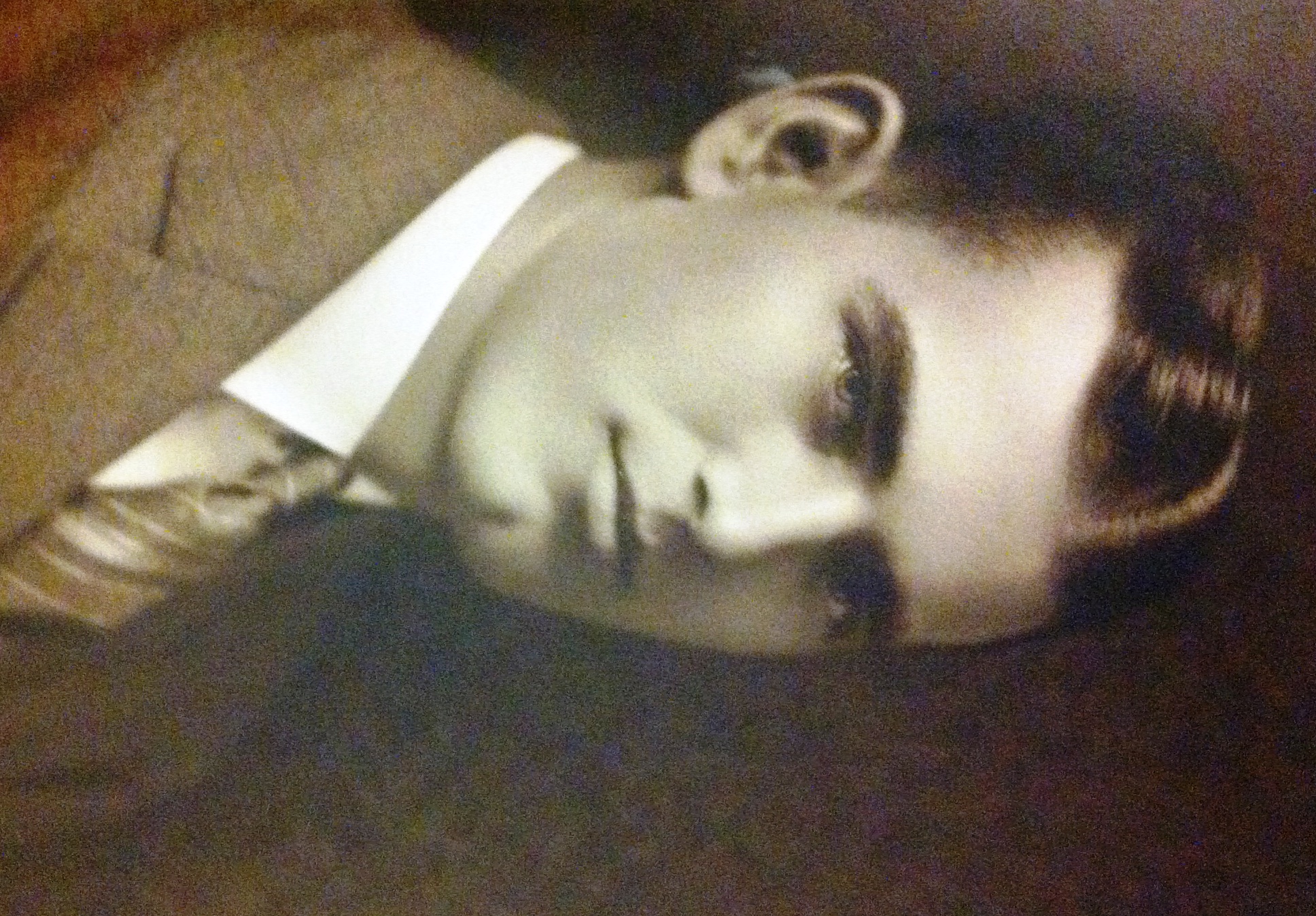
IMG_4517On this date in 1900, future Little Rock Mayor Pat L. Robinson was born.  While I cannot verify that he was indeed named after St. Patrick, it would be fairly reasonable to assume there might be a connection, especially given the fact that he was Catholic.

Robinson was a rising star of Little Rock Democratic politics.  In April 1929, just weeks after his 29th birthday, he was elected Mayor.  He had twice been elected as City Attorney (1926 and 1928) and was one of the youngest to serve in that position.

During Mayor Robinson’s tenure, he announced plans to construct a new airport.  That project led to the creation of what is now the Bill and Hillary Clinton National Airport.  Mayor Robinson was also involved in helping Philander Smith College secure the property where it is now located.  In addition, during his tenure, what is now the Museum of Discovery was folded into the City of Little Rock.

Single at the time he was in office and generally considered good looking, Mayor Robinson was sometimes referred to as the “Jimmy Walker of the Southwest.” Walker was the handsome and charming Mayor of New York City at the time.

Mayor Robinson ran afoul of some of the Democratic party leaders. Records don’t seem to indicate exactly what actions he took or did not take.  One thing that is brought up is that the City went into financial distress during his tenure.  Considering the Wall Street crash happened shortly after he took office, that financial state was not unique to Little Rock.

IMG_4532During this era in Little Rock, it was customary for an incumbent mayor to be given a second term. But City Clerk Horace Knowlton challenged Robinson in the primary.  It was a bitter campaign with Robinson linking Knowlton to disreputable denizens and Knowlton charging Robinson with “an orgy of spending.”  Robinson initially came out 17 votes ahead. But after a review and a lawsuit, it was found that Knowlton ended up with 10 more votes and became the nominee.  At the time, being the Democratic nominee was tantamount to election.

After he left office, Robinson practiced law for a few years in Little Rock and then left the city.  Records do not indicate where he went but he no longer appeared in the City of Little Rock directory by the early 1940s.

MR CHAIRMAN – Wilbur Mills to be discussed tonight at Clinton School

MillsBefore Bill Clinton burst on to the national scene, Arkansas had a triumvirate of leaders in Washington who were revered and feared.  One of those was Congressman Wilbur D. Mills.

The Clinton School of Public Service is hosting author Kay Goss will discuss to discuss her book on Mills.  Mr. Chairman: The Life and Legacy of Wilbur D. Mills chronicles the life and career of the longest continuously serving chairman of the House Ways and Means Committee, Democrat Wilbur D. Mills of Arkansas.

Mills served in the U.S. House of Representatives from 1939 to 1977 and is noted for his role as the “architect” of many policies including Medicare, tax reform, interstate highways and Social Security. Goss is a former associate FEMA director under President Clinton. On the state level, she served 10 years as then-Governor Clinton’s senior assistant for intergovernmental relations.

Goss is speaking this evening from 6pm to 7pm at Sturgis Hall, on the Clinton School campus.  Reserve your seats by emailing publicprograms@clintonschool.uasys.edu, or calling 501-683-5239.