UALR Evenings with History: A Brief History of Human Rights on March 6

The UALR Evenings with History program returns tomorrow night (March 6) with Charles W. Romney’s “A Brief History of Human Rights.”

What are Human Rights? Some claim humans have always had rights that cannot be traded, infringed, or given away. Others argue international organizations and American officials invented the concept of human rights in the 1970s to further various political agendas. In this Evening with History we will discuss the two historical interpretations behind each vision of human rights, assess the relative strength of both ideas of international rights, and explore the political and intellectual stakes in the debate over the origins of Human Rights.

Charles Romney graduated from Pomona College and received his Ph.D. in history from UCLA. He worked in public history for seven years on documentary films and digital history projects, and in the five years before joining UALR taught Asian and African history at Whittier College in California. At UALR he is the Graduate Coordinator of the History Department’s MA program in Public History.  Dr. Romney teaches classes on public history, digital history, African history, and on the United States and the world.  His current research includes a study of law, labor, and the state in modern America and a comparative history of colonial Hawaii.

The Evenings with History take place in the Ottenheimer Auditorium in the Historic Arkansas Museum at 200 E. Third Street. Refreshments are served at 7:00 p.m., and the talk begins at 7:30 p.m.

Corporate sponsors for the 2011-2012 season are Delta Trust, Union Pacific Railroad, the Little Rock School District—Teaching American History Program; the law firms of Friday, Eldredge, & Clark and Wright, Lindsey & Jennings. Also thanks for support and gifts in kind from the Ottenheimer Library; Historic Arkansas Museum, a museum of the Department of Arkansas Heritage; UALR Public Radio–KLRE-KUAR; and Grapevine Spirits
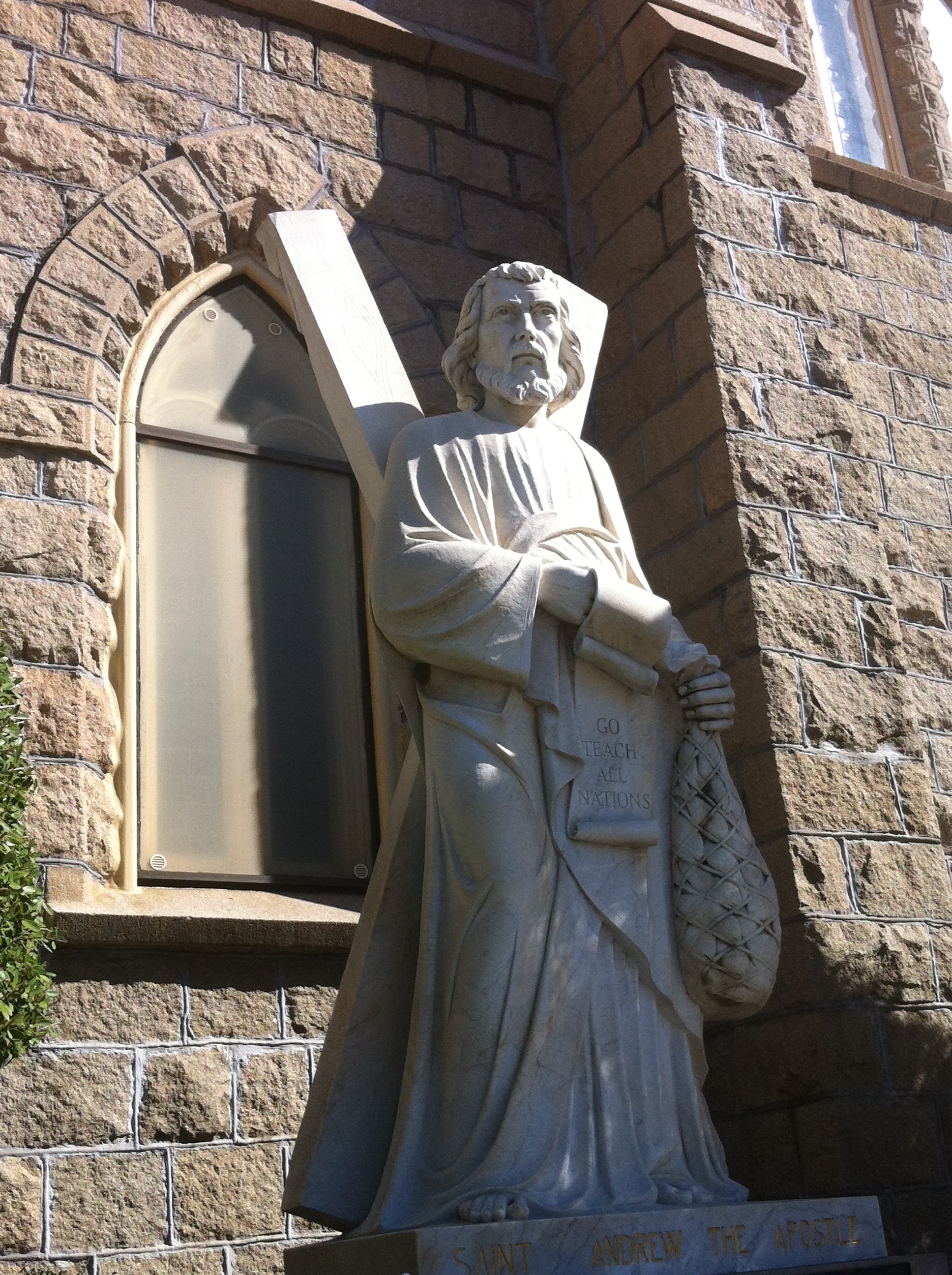
Sculpture Vulture: St. Andrew

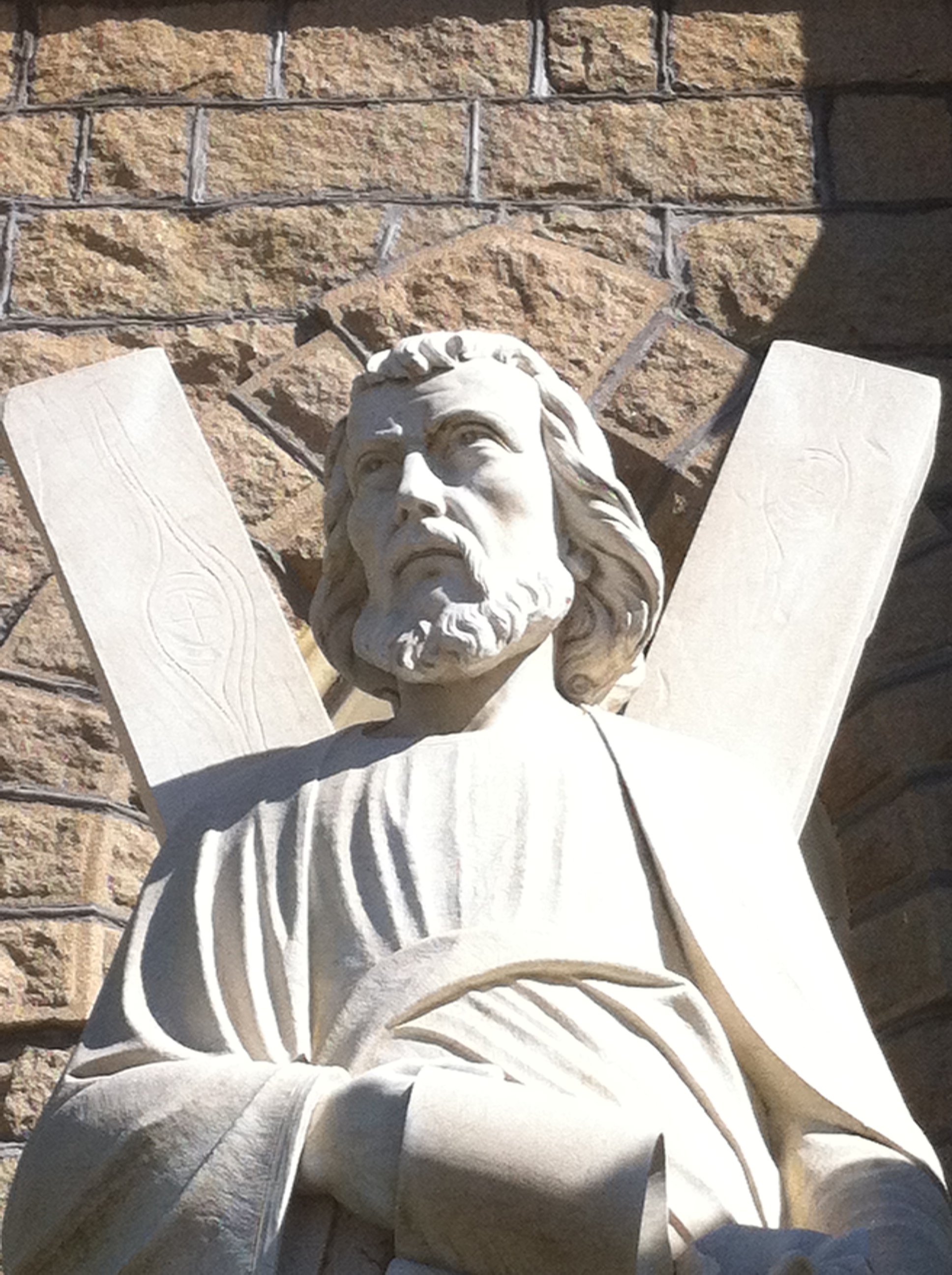
As runners in the Little Rock Marathon raced downtown today, they went past this sculpture of St. Andrew which sits in front of the Cathedral of St. Andrew near the race course.

The sculpture, St. Andrew – Ave Crux (Behold the Cross) was installed in 1979 under the leadership of Bishop Andrew J. McDonald of the Catholic Diocese of Little Rock and Monsignor B. F. McDevitt, Rector of the Cathedral of St. Andrew.

In 1981, the statue was dedicated as a memorial to Monsignor McDevitt.

The statue, by the sculptor Pedrini, is just under 10 feet tall and is carved out of Carrara marble.  It depicts St. Andrew holding a scroll with the words “Go Teach All Nations” as well as a string bag of fish.

These items pay homage to his background as a fisherman and his work as a disciple who taught and traveled as far as Russia, Turkey and Italy — far journeys from the Holy Land in ancient times.

The saltire, or X shaped cross, stands behind him.  Also known as St. Andrews cross, legend has it that he was crucified on a cross of this shape as opposed to the traditional “T” shape.

Sculpture Vulture: TESTAMENT

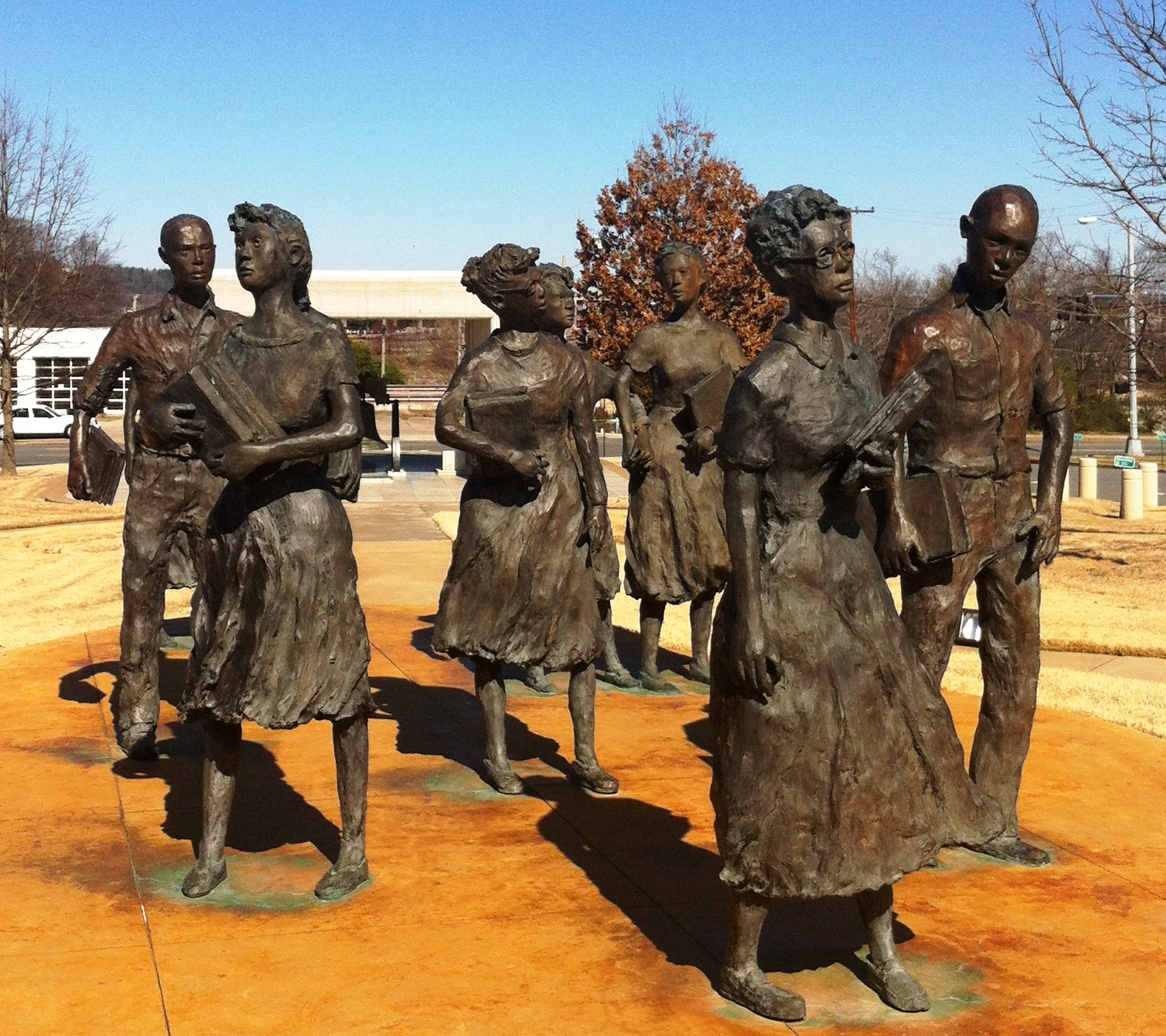
Today’s highlighted sculpture sits on the grounds of the Arkansas State Capitol.  Testament honors the Little Rock Nine who integrated Little Rock Central High School in 1957.

The statues face the Arkansas State Capitol including the Governor’s Office. The irony is that, in 1957, then-Governor Orval Faubus led the efforts to keep Minnijean Brown, Elizabeth Eckford, Ernest Green, Thelma Mothershed, Melba Patillo, Gloria Ray, Terrence Roberts, Jefferson Thomas, and Carlotta Walls from entering the school.

Dedicated in August 2005, Testament was created by John Deering working with Kathy Deering and Steve Scallion.  The project was over seven years in the making from the original concept to the  unveiling.

The bronze sculptures are life-size and depict the students moving forward.  They are dressed in school clothes and carry their books.  Around the perimeter of the sculpture is a series of quotes, one from each of the nine.

(It is appropriate to discuss this sculpture today, since the Oscars are presented tonight (2/26/12). The 1964 Oscar for Best Documentary — Short Subject was awarded for the film Nine from Little Rock.)


Arkansas’ African-American legislators during Reconstruction

On display at the Arkansas State Capitol is a temporary exhibit – Arkansas’s African American Legislators, 1868-1893.  It was created by the Black History Commission of Arkansas and the Arkansas History Commission. It honors the African Americans who made up a significant part of Arkansas’s legislature during the 1860s and early 1870s, and who continued to serve until 1893.

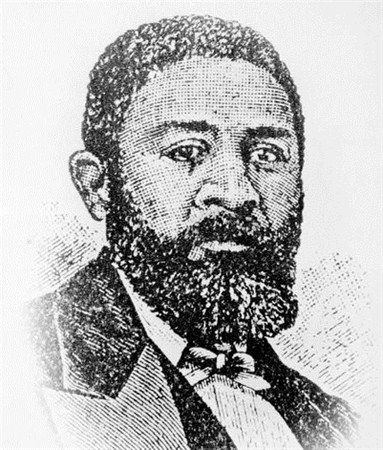
State Rep. William H. Grey, one of first two African Americans to serve in Arkansas legislature

On Tuesday, February 14, 2012, State Representative Fred Allen and Black History Commission chair, Carla Coleman, spoke at the official opening of the exhibit in the lower-level foyer at the Arkansas State Capitol. African Americans participated in Arkansas politics for the first time following the Civil War. After the end of that conflict, the state adopted a new constitution in 1868. Its provisions included the right to vote and hold public office for black males.

Between 1868 and 1893, eighty-five African Americans are known to have served in the Arkansas General Assembly. These legislators included lawyers, merchants, ministers, educators, farmers, and other professionals. The majority served in the House, with nine being chosen for the Senate. Election laws passed by the General Assembly in 1891 and new poll tax regulations in 1893 effectively ended the election of African Americans to the legislature. Blacks did not serve again in the General Assembly until 1973.
Photographs survive for forty-five of the African Americans who served in the Arkansas General Assembly during the nineteenth century and are featured in this exhibit. Forty-three of these are from the holdings of the Arkansas History Commission.

Art of Architecture: William Morris and Arts & Craft Movement

Morris

Tonight at the Arkansas Arts Center, the next installment of the Art of Architecture lecture series takes place.

Dr. Floyd Martin of UALR is discussing William Morris and Arts and Craft Movement. The lecture starts at 6pm in the Lecture Hall at the Arts Center.

William Morris, born in England in 1834, is long recognized as one of the major figures of the Arts and Craft Movement. A designer of textiles, wallpaper, furniture and books, Morris emphasized the importance of natural and organic forms in his work. Seeking inspiration from vernacular architecture and home furnishings, he schooled himself in the techniques and materials used in their construction.

Committed to making “aesthetically pleasing and well crafted things and making them available to as many people as possible”, Morris, had a profound influence on building and design. Though not an architect himself, working in collaboration with with architect Philip Webb, he played a major role in the design of his own home, known as the The Red House, a structure built in 1860 and now part of the British National Trust. Standen, another property with which Morris was associated, is a legacy of the Arts and Crafts movement and, too, part of the Trust.

Martin

Floyd Martin, the speaker, is Professor of Art History at UALR where he has taught since 1982. He has degrees in art history from Carleton College (BA), the University of Iowa (MA), and the University of Illinois at Urbana-Champaign (PhD).

Material for this lecture on William Morris was developed while Martin was on sabbatical from UALR during the spring of 2010, and able to visit the Red House for the first time, and return to Standen, a favorite country house from previous trips. In November he began a three year term as President of the Southeastern College Art Conference, an organization of college and university studio artists, art historians, and art educators, that is the second largest national organization of its type.

John Glenn in Little Rock

Sen. Glenn speaking to kids at the Museum of Discovery

50 years ago today, astronaut Col. John Glenn orbited the Earth.

Seven years and three months ago, as a former U.S. Senator, he visited Little Rock’s Museum of Discovery for a series of events in conjunction with the opening of the William J. Clinton Presidential center.

The Museum opened a new exhibit that week entitled “Space and the Presidency.” While that exhibit is no longer on display at the museum, there are many exciting new exhibits for audiences of all ages.


QQA Preservation Conversations: Urban Farming and Raising Chickens in Little Rock

The Quapaw Quarter Association continues its “Preservation Conversations” series tonight. The topic of the month is: Urban Farming and Raising Chickens in Little Rock. Nao Ueda will lead the discussion.

Preservation Conversations take place the third Monday of each month at historic Curran Hall, which serves as the QQA headquarters in addition to being the Mayor’s Official Reception Hall.

Beginning at 5:00, Curran Hall will be open for patrons to enjoy a glass of wine, programs start at 5:30 p.m. and last for one hour.  After the official program concludes, all are invited to keep the conversation going and enjoy a discounted dinner at nearby Copper Grill, 300 East Third Street.

The Quapaw Quarter Association is a non-profit historic preservation advocacy organization whose mission is to promote the preservation of the historic buildings and neighborhoods of Greater Little Rock. Rhea Roberts is the Executive Director.