 After over a decade of the Beaux Arts Bal (it was spelled the French way with only one “L”), a change was afoot in 1971. Because of the need to raise more money for the Arkansas Arts Center, the Fine Arts Club decided to replace their evening of dining and dancing with an auction event.
While there had undoubtedly been thrift sales and small-scale bidding on items to raise money in Little Rock, this effort would be the first large-scale endeavor to use an auction as part of a fundraiser. In order to maximize the fundraising potential, it was decided this would be a two-night event. The first night (Friday, February 12) would be casual with a silent auction while the second (Saturday, February 13) would be formal.
There were two major reasons the Fine Arts Club needed to raise more money. The National Endowment for the Arts had issued the Arts Center a challenge grant which required a $10,000 match. In addition, the Arkansas Arts Center was trying to build up an endowment for future purchases. (This was less than three years after the facility had been faced with closing its doors.)
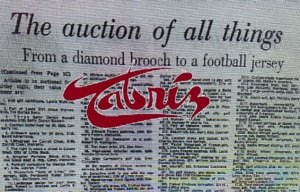
The name Tabriz was chosen because it was the name of a cultural city in the Mideast known for its marketplace. The first edition had the tagline of “A Persian Market of All Things.”
The logo was designed by Jim Johnson of the firm then-known as Cranford/Johnson Associates. The decorations echoed the exotic theme employing palm trees, ferns, ceramic elephants, paisley fabric swaths, and turbans.
Among those working on the first Tabriz were Jane McGehee Wilson, Betty Mitchell, Betty Terry, Frances Cranford, Feetie Hurst, Tina Poe, Annette Connaway, Willie Oates, Phyllis Brandon, Jane Wolfe, and Mary Worthen.
Over 650 people attended the Friday night event. Admission of $5 provided sandwiches (conflicting newspaper accounts indicate either coldcut sandwiches or hot dogs) and beer. Mixed drinks were an additional $1.
Newspaper coverage indicated that men wore “sports outfits,” suits without ties, or colorful parkas. It attracted men with “longhair and beards” and “conventional haircuts.” (Depending on who the writer was, “longhair” could have meant anything over one inch.) The women that Friday favored maxi or midi skirts. There were no mini skirts on hand, but a Gazette reporter noted that some women were wearing hot pants which might make a mini skirt look long.
Music was provided by the trio of Tom, Jerry, and Barbara.
Because a Silent Auction was such a new thing, newspaper coverage pointed out that the rooms were actually quite full of sound as people chatted with each other both about bidding on the items and socializing in general.
To give people a preview of the auction items, the Arts Center galleries had been opened for viewing on the Sunday and Monday prior to the Friday and Saturday events. An auction catalog was also available for pickup in advance of Friday.
Among the items up for bid were tennis and golf lessons, visits to beauty salons, credit at a pharmacy, a tour of the Municipal Courts building and lunch with city prisoners, a tour of the Little Rock Zoo, jewelry, artwork, tickets to Razorback games, a football jersey worn by Lance Alworth, a week in Las Vegas (one of only three items with a minimum bid), and a subscription to an answering service.
When all was said and done, the evening raised $9,500 for the Arkansas Arts Center.

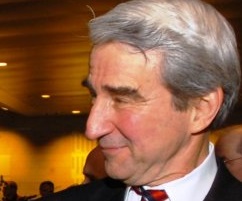 On February 15, 2008, Oscar nominated actor Sam Waterston appeared at the Clinton Presidential Center in a Kumpuris Distinguished Lecture Series program sponsored by the Clinton School for Public Service and the Clinton Foundation.
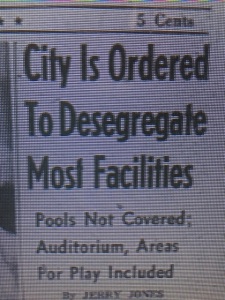 Following the March 1962 lawsuit by twenty-two (22) African Americans seeking the integration of public facilities in Little Rock, Federal Judge J. Smith Henley issued a order on February 15, 1963. Judge Henley ordered the end to segregation in City parks, playgrounds, golf courses, tennis facilities, community centers, and Robinson Auditorium.
 In this month’s Preservation Conversation, the National Register of Historic Places will be discussed. The program, featuring Callie Willliams, begins today (February 14) with a 5:30 reception and a 6:00 lecture. It will be in the Mixing Room at the Old Paint Factory in the East Village (1306 East 6th Street). Preservation Conversations are a program of the Quapaw Quarter Association.
 The National Register of Historic Places is the official list of the Nation’s historic places worthy of preservation. Authorized by the National Historic Preservation Act of 1966, the National Park Service’s National Register of Historic Places is part of a national program to coordinate and support public and private efforts to identify, evaluate, and protect America’s historic and archeological resources. The Arkansas Historic Preservation Program (AHPP) is responsible for National Register implementation in Arkansas. February’s presentation will be on the history and development of the National Register of Historic Places (NRHP) as well as the research and process used to pursue listing in the Register.
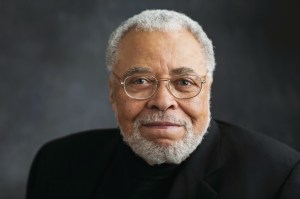 Actor James Earl Jones has made several appearances in Central Arkansas over the years. He has appeared at Robinson Center with the Arkansas Symphony Orchestra. On February 12, 1999, he narrated Aaron Copland’s “Lincoln Portrait” and Alexander Miller’s “Let Freedom Ring” with the Symphony in a concert at Robinson Center. (It was the 190th birthday for Lincoln.)
