
In 1969,  Arkansan Charles Portis’ novel True Grit was made into a movie starring John Wayne and Arkansan Glen Campbell. Kim Darby, Robert Duvall, Dennis Hopper, Jeff Corey and Strother Martin are also in the cast.
The movie was directed by Henry Hathaway, produced by Hal B. Wallis, and written by Marguerite Roberts. Wilford Brimley and Jay Silverheels are uncredited actors in the movie.
Though set in Arkansas and Oklahoma, the movie was filmed in Colorado. Elvis Presley was the first choice for the part Campbell would play. But when his manager demanded top billing (over Wayne), he was bypassed and the part went to Campbell.
The movie was nominated for two Oscars: Wayne for Best Actor and composer Elmer Bernstein and lyricist Don Black for the song “True Grit.” The latter had been sung by Campbell in the movie.
Wayne won the Oscar that night, his only win. He would reprise the character of Rooster Cogburn in the eponymously named sequel in 1975. This film, in which he co-starred with Katharine Hepburn, was his penultimate film.
In 1970, Campbell teamed up with Kim Darby again in a film written by Roberts based on a Portis book. This time it was Norwood. It also starred Joe Namath, Carol Lynley, Meredith MacRae, and Dom DeLuise. It did not repeat the success of the earlier Portis based movie.
In 2010, the Coen Brothers released a new version of Charles Portis’ True Grit. Co-written and co-directed by Ethan and Joel Coen, it starred Jeff Bridges, Matt Damon, Hailee Steinfeld, Josh Brolin, Barry Pepper, Domhnall Gleeson and Elizabeth Marvel. Unlike the original film, which was filmed in Colorado, this film was actually filmed partially in Arkansas, where several scenes takes place. Filming also took place in Texas. Many Arkansas actors appeared in the film, but at the risk of omitting some, there will not be an attempt to name them.
The film received ten Oscar nominations: Best Picture, Adapted Screenplay, Directing, Leading Actor (Bridges), Supporting Actress (Steinfeld), Cinematography, Costume Design, Sound Mixing, Sound Editing, and Art Direction. Sadly, the film went home empty handed.
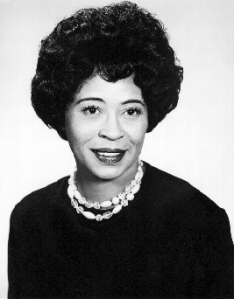 Today is the Daisy Bates Holiday in the State of Arkansas. So it is an appropriate day to pay tribute to Mrs. Bates, who played a leading role in the Little Rock Integration Crisis of 1957.
 On February 17, 1980, a cold and clear Sunday morning, over seven decades of Arkansas history came tumbling down as the Hotel Marion and Grady Manning Hotel were imploded.
 On February 16, 2017, the Arkansas Arts Center announced the selection of Polk Stanley Wilcox Architects as associate architect for its upcoming building project. Polk Stanley Wilcox will work in partnership with Studio Gang Architects on a reimagined Arkansas Arts Center. Studio Gang was selected as design architect for the expansion and renovation in December.
 On February 16, 1940, after three years of planning and construction including several delays due to lack of funding, the Joseph Taylor Robinson Memorial Auditorium officially opened. It was a cold, rainy night, but those in attendance did not care. (The concept of a municipal auditorium for Little Rock had first been raised in 1904, so this evening was truly a long time in the works.)
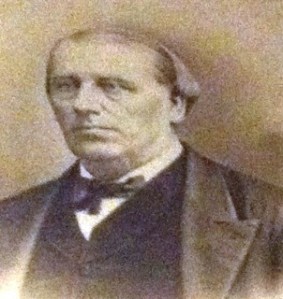 Future Little Rock Mayor John Wassell was born on February 15, 1813 in Kidderminster, England.
