Pulitzers Play Little Rock: PROOF at Arkansas Rep

Proof RepFourteen years after graduating from Little Rock Hall High School, David Auburn received the 2001 Pulitzer Prize in Drama for his play Proof.  In September 2002, Arkansas Repertory Theatre produced Proof while the original Broadway run was in its final months.

The production at Arkansas Rep was directed by Producing Artistic Director Robert Hupp.  The cast featured Amy Tribbey, Scott Barrow, Jessica Henson and Curt Karibalis.  (Barrow met his future wife, the former Amy Sabin, while in Little Rock during the run of this show.)

The set, a very realistic craftsman house back porch, was designed by Mike Nichols.  On opening night he was lauded because the production marked his 20th anniversary with the Rep. (In 2018, Nichols is still serving as Technical Director and Resident Scenic Designer for the Rep.)

Auburn was unable to come to Little Rock to see the production. His wife was set to give birth to a child during the run of the show.

2018 marks the 100th anniversary of the first Pulitzer Prize for Drama being given. To pay tribute to 100 years of the Pulitzer for Drama, each day this month a different Little Rock production of a Pulitzer Prize winning play will be highlighted.  Many of these titles have been produced numerous times.  This look will veer from high school to national tours in an attempt to give a glimpse into Little Rock’s breadth and depth of theatrical history.

Putting the LIT in Pulitzer

two_medalsThe 2018 Pulitzer Prizes are announced later today.  Over the years, there have been several Pulitzer winners with connections to Little Rock.

In 1939,  Little Rock native John Gould Fletcher, a scion of a politically prominent family, won the Pulitzer Prize in Poetry for his work Selected Poems.  He appears to be the first Pulitzer Prize winner with Little Rock connections.

The 1950 Pulitzer Prize for Drama went to South Pacific. With a leading lady who is from Little Rock, this Richard Rodgers, Oscar Hammerstein II, and Joshua Logan musical explores race against the backdrop of World War II.  It is based on James Michener’s Tales of the South Pacific, which won the 1948 Pulitzer for Fiction. (Because it was a collection of interrelated short stories, the category was changed from Novel to Fiction from that year onward.)  But in the Michener book, Forbush is not from Little Rock.  In fact, she is not even from Arkansas, but hails from Alabama.

The Arkansas Gazette made Pulitzer history in 1958 by winning both the Public Service and Editorial prizes in the same year. This was the first time that one organization had received both awards in the same year.  These were for the coverage of and response to the 1957 integration of Central High School by the Little Rock Nine.  J. N. Heiskell was the paper’s owner and editor, while Harry Ashmore led the editorial page.  Relman Morin of the Associated Press received the Pulitzer for National Reporting for his coverage of the events at Central.  Apparently Will Counts of the Arkansas Democrat was the jurors’ choice to receive the Pulitzer for Photography. But the Board opted to give the prize to another photographer.  Some speculate that the Pulitzer Board did not want to give four prizes in the same year for the same story.

Current Little Rock resident Paul Greenberg won the 1969 Pulitzer for Editorial Writing.  at the time, he worked for the Pine Bluff Commercial.   In 1986, he was a finalist in the same category.  Greenberg moved to Little Rock to join the staff of the Arkansas Democrat-Gazette in 1992.  While no longer the Editorial Page Editor, Greenberg continues to write columns for the newspaper.

Former Little Rock resident Richard Ford received the 1996 Pulitzer for Fiction for his novel Independence Day.  As a young boy of eight, and for several years after, Ford spent much time at Little Rock’s Marion Hotel with his grandparents.  In making the presentation, the Pulitzer Board noted it was, “A visionary account of American life, Independence Day reveals a man and country with unflinching comedy and the specter of hope and even permanence…”

The Pulitzer Prize for Drama in 2001 went to David Auburn.  A 1987 graduate of Hall High School, Auburn was recognized for his play Proof.  The Pulitzer Board described Proof thus: “This poignant drama about love and reconciliation unfolds on the back porch of a house settled in a suburban university town, that is, like David Auburn’s writing, both simple and elegant.”  Auburn also served as a 2014 juror for the Pulitzer Prize for Drama.  While a student in Little Rock, Auburn participated in theatre at the Arkansas Arts Center.

Pulitzers play Little Rock – SOUTH PACIFIC at Murry’s Dinner Playhouse in 1981

MDP SoPaIn the summer of 1981, the touring production of The Best Little Whorehouse in Texas was causing controversy by bleeping out “whore” in its radio ads in the Little Rock market.  At the same time, a formerly controversial musical was settling in for a seven week run in the Arkansas capital city at Murry’s Dinner Playhouse.

When Richard Rodgers and Oscar Hammerstein II had originally collaborated with Joshua Logan on South Pacific, the team attracted some complaints for the preachiness of the story as it tackled racism.  It was the look at these social issues which probably prompted the Pulitzer committee to make South Pacific only the second musical to win the prize.  (It was also the first Drama Pulitzer recipient to be based on another Pulitzer recipient – in this case James Michener’s Tales of the South Pacific.)

With a leading character from Little Rock, South Pacific was caught up in anti-Arkansas backlash during and after the Central High integration crisis.  A production on Long Island received boos when the character of Nellie announced she was from Little Rock.  The original national tour had a hard time booking spots in the south due to the themes.  Shifts in attitudes about race and miscegenation had rendered South Pacific a period piece by 1981 – and a non-threatening summer fare for Murry’s.

Directed by Jack Payne, the cast included Mary Winston Smith, Greg Carter, Bruce Rainey, Leslie Hall (now Basham), Dianne Tack, Chip Huddleston, and Beth Buffalo.

2018 marks the 100th anniversary of the first Pulitzer Prize for Drama being given. To pay tribute to 100 years of the Pulitzer for Drama, each day this month a different Little Rock production of a Pulitzer Prize winning play will be highlighted.  Many of these titles have been produced numerous times.  This look will veer from high school to national tours in an attempt to give a glimpse into Little Rock’s breadth and depth of theatrical history.


90 years of Maya Angelou

Though she left this earth physically in 2014, Maya Angelou’s work and legacy continue on in the lives she touched and her writings.   Ninety years ago today, she was born in St. Louis.
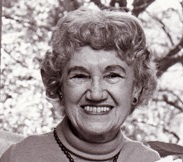
On February 23, 1998, Maya Angelou appeared with the Arkansas Symphony Orchestra in a concert at Robinson Center.  The evening featured Dr. Angelou narrating Joseph Schwantner’s tribute to Dr. Martin Luther King Jr., “New Morning for the World.”

Dr. Angelou, a former resident of Stamps, Arkansas, was not a stranger to Little Rock. She had appeared before at Wildwood Park and would later appear at the Clinton Presidential Center.

A former Poet Laureate of the United States and Tony nominated actor, she won a Grammy Award for her reading of “On the Pulse of the Morning” which had been written for the first inauguration of Bill Clinton as President of the United States.

A poet, author, educator, dancer, singer, actor, and activist, she wrote seven autobiographies. The most notable was arguably I Know Why the Caged Bird Sings.  Born in St. Louis, she spent part of her childhood in Arkansas before moving to California.  She led a peripatetic life both geographically and career-wise ending as a professor at Wake Forest and residing in North Carolina.  It was there that she died in May 2014.

One of the ways her work continues is through the Celebrate Maya project which is led by Janis Kearney.

LR Women Making History – Faith Yingling Knoop

Faith Yingling Knoop was the first Little Rock First Lady during the City Manager era.  Her husband, Werner Knoop, served as Mayor from November 1957 until December 1962.

She was a nationally known author of children’s books.  She also wrote short stories, THE Arkansas History Book which was used for decades in the state, and more than 250 articles.

Viewing her writing as a hobby instead of a career, she nonetheless was a dedicated author who spent hours researching her books. Many of her books were biographies.  One of her most notable one was 1950’s Zebulon Pike, which was reviewed in The New Yorker magazine.

In addition to writing numerous books, Knoop penned many short stories for magazines such as Highlights for ChildrenAmerican GirlWee Wisdom, and American Red Cross.

At the time a school teacher, she wrote Arkansas: Yesterday and Today in 1935 after not finding an adequate Arkansas history textbook.  It was used in classrooms for over twenty-five years.

Among her many accolades were  won first prize in the 1948 National League of American Pen Women’s Contest and being named the 1955 Alumni of the Year Award from Trenton State College.

LR Women Making History – Janis Kearney

Janis Kearney is the only person to have held the title of U.S. Presidential Diarist. In 1995 she was appointed to that position by President Bill Clinton.

After graduating from the University of Arkansas, she was hired by the State of Arkansas as a program manager.  Nine years later, she became managing editor for the Arkansas State Press. She later purchased it from owner Daisy Bates.

In 1992, she took a leave from the paper to work on the Clinton presidential campaign.  Following the election, she worked in the transition office, the White House, and the U.S. Small Business Administration until her appointment as Presidential Diarist.

In 2001, she moved to Chicago and started working on a book, while also having fellowships at Harvard and DePaul.  In 2004, she founded Writing Our World Press and published her first book, Cotton Field of Dreams.  Her Clinton biography, Conversations: William Jefferson Clinton-From Hope to Harlem was published in 2006.  Since then she has also published a novel, a biography of Daisy Bates, and the second part of her memoirs.

She is also active in the Celebrate! Maya Project. This program seeks to honor and promote the inclusive literacy, creativity, and social consciousness of the life and work of artist and activist Maya Angelou.

LR Women Making History: Stella Boyle Smith

When Stella Boyle Smith died at the age of 100 in 1994, she was well known for her love of music and philanthropy.  It is a lasting connection of her to a building in which she spent so many hours as an arts patron.

Smith was a Little Rock philanthropist and founder of the Arkansas Symphony Orchestra. She lived to be 100, but ensured that her legacy would continue.  In her lifetime, she donated more than $2.5 million to organizations in the music and medical fields.  Since her death, the Stella Boyle Smith Trust has donated more than $5 million.  One of its most recent gifts was the sculpture In the Wings which graces the front of Robinson Center.

She was born in Farmington, Mo., into a large, musically inclined family, which moved to Arkansas when she was two. She began singing at the age of three and graduated from high school at 14. In 1922, she moved to Little Rock with her first husband, Dandridge Perry Compton, who died in 1935. Her second husband, George Smith, held various business interests and extensive farms in Woodruff and Arkansas counties, which allowed them to engage in philanthropy. Mr. Smith died in 1946.

In 1923, Smith’s love for music inspired her to start The Musical Group in her living room of her residence at 102 Ridgeway Drive in Little Rock, where she lived until she died. Through several iterations, the group eventually became the Arkansas Symphony Orchestra in 1966. Her initial objective was to establish the symphony as an educational tool for children, and, in 1968, she helped establish the Youth Orchestra. In 1972, the symphony board of directors named her an honorary life member. Smith established a trust fund for the symphony’s permanent endowment in 1985. A loyal friend of music and the symphony, she attended nearly every performance and most rehearsals.

Smith was also a pianist. In 1988, she gave UALR a grand piano as well as an endowed trust of $500,000. When she purchased the grand piano for UALR, a Steinway, she later on the same day purchased a Steinway for herself.  She remains the only individual to purchase two Steinway grand pianos in the same day. UALR renamed its concert hall the Stella Boyle Smith Concert Hall as a tribute to her. That year the university also gave her an honorary doctor of humane letters degree. Interest from the trust provides scholarships each year for music students studying string instruments, piano or voice.  After she died, her personal Steinway was given to UALR.  The music faculty and students now lovingly refer to the two pianos as Stella and George (after her and her husband).

Smith enabled many students around the state to attend college through the more than 200 scholarships that she financed.

Other organizations that have benefited from her generosity include Arkansas Arts Center and Historic Arkansas Museum as well as the University of Arkansas.