Little Rock Look Back: First City Auditorium Approved

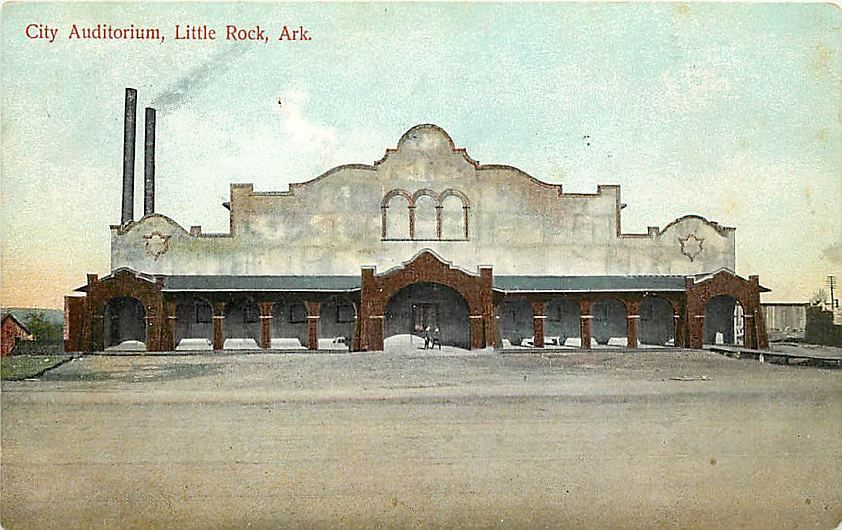
1906 auditoriumOn August 20, 1906, the Little Rock City Council approved plans for the City’s first municipal auditorium.

A week earlier, businessman A. C. Read petitioned the City for the right to construct a skating rink.  The matter was referred to the Street & Fire Committee, the Superintendent of Public Works and Aldermen Louis Volmer and Benjamin S. Thalheimer, who represented the Sixth Ward, in which the structure would be located.

Neither the Gazette nor the Democrat carried a mention of this petition in their coverage of that meeting.  By the next Council meeting a week later, the committee had reported back with a recommendation for approval.  Resolution 288 was adopted giving Mr. Read the right to build the skating rink.  Interestingly, the resolution did not contain the words “skating rink” though the original petition had.  Instead it permitted Mr. Read to construct a building “suitable for purposes as defined” by the City.  The resolution also stated that within three years the building would become property of the City.

Based on photos and postcards, the exterior of the building appears to have been covered in stucco.  It was said to be modeled after San Antonio’s Alamo, but what that really meant was that it was in the Spanish Revival style.  It was shorter and had more entrances than the Texas building did.  The Markham Street façade featured faux windows and a front portico which extended the length of the building only interrupted by three entrance archways. The center one was taller and wider than the eastern and western entrances.  All three, which projected southward from the building, mimicked the outline of the auditorium building.

The building was located on the western half of the City Hall property (and was constructed before City Hall).  In 1912, the new Little Rock Central Fire Station (now the City Hall West Wing) was built between the auditorium and Markham Street.  The auditorium stood until 1920.  During that time it was used as a roller rink, opera house, rifle range, National Guard armory, convention hall, and gymnasium.
Happy Birthday Maureen O’Hara – In 1940 she set off a stampede of fans at Robinson Center

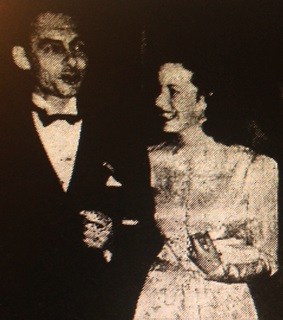
Mayor J V Satterfield escorting actress Maureen O'Hara at the Movie Ball (photo from Arkansas Democrat)

Mayor J V Satterfield escorting actress Maureen O’Hara at the Movie Ball (photo from Arkansas Democrat)

Oscar winner Maureen O’Hara turns 95 today.  With her elegance and beauty, she still turns heads. Seventy-five years ago, in February 1940, a nineteen year old Miss O’Hara turned many heads and set off a frenzy of autograph seekers when she came to Little Rock to attend a series of events.

In conjunction with a meeting of film executives and movie theatre owners sponsored by Robb and Rowley Theaters (which later became the United Artists theatre chain), several Hollywood actors were in Little Rock and headlined a Movie Ball. While in Little Rock, Maureen O’Hara, Phyllis Brooks, Arleen Whelan, Tim Holt and Gene Autry had also made a variety of public appearances.

On the evening of February 1, 1940, Robb and Rowley hosted the Movie Ball in the lower level of Robinson Auditorium. So many of the attendees crowded around for autographs that the evening’s grand march could not take place (a newspaper headline in the Democrat innocently used the word “orgy” to describe the crowd). After two attempts, Little Rock Mayor J. V. Satterfield (who was escorting Miss O’Hara) and the other members of the Little Rock host delegation led the Hollywood stars to their reserved table. For quite a while that evening, the table was besieged by autograph seekers.

Though it is unknown as to whether he sought an autograph, photos from the evening showed a very satisfied Mayor Satterfield with Miss O’Hara on his arm. Satterfield family lore joked that Mrs. Satterfield (who had stayed home that night to tend to a sick son) was not a fan of Miss O’Hara’s films after that evening.

The Movie Ball showed Little Rock citizens the value of Robinson Auditorium even before it had been officially dedicated. The film industry meetings had taken place at the Albert Pike Hotel which did not feature a ballroom large enough to host the ball. Without the auditorium’s availability for the gala, organizers might not have chosen Little Rock for the meeting.

Little Rock Look Back: A (Tom) Prince of a Mayor

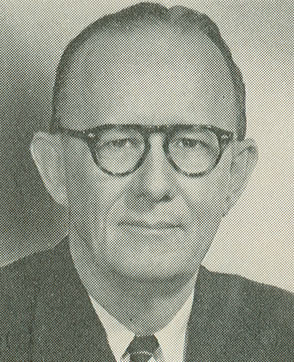
Mayor PrinceFuture Little Rock Mayor Tom Prince was born on August 13, 1949.  After graduating high school in 1967 (where he was on the state championship golf team), he attended the United States Naval Academy.  He later received his law degree from the University of Arkansas at Little Rock and began practicing law in Little Rock.

In 1984 he ran for the City of Little Rock Board of Directors and was elected.  In January 1985, he was selected by his fellow City Directors to serve as Mayor of Little Rock.  He served as Mayor until January 1987.  During his term in office, Arkansas celebrated its Sesquicentennial. Mayor Prince oversaw the City’s participation in the celebratory activities.  As Mayor he was also a strong advocate for expanding the city’s involvement in quality of life issues through enhanced parks and arts while maintaining a commitment to public safety and public works issues. After the completion of his four year term on the City Board, he did not seek a second term.

City of Little Rock races are non-partisan.  After leaving office, he became involved in Democratic Party politics.  In 1992, he campaigned for Bill Clinton’s presidential bid in Iowa and other Midwest states.  When his law partner, Sheffield Nelson, ran for Governor in 1994 as a Republican, Prince resigned from his Democratic Party positions and worked on the Nelson campaign.  In 1997, he was elected chair of the Pulaski County Republican Committee.  In 1998, he ran for the United States Senate as a Republican.

In 1999, Prince experienced a family tragedy and took a sabbatical from practicing law. In 2000, he moved to St. Louis to become general counsel for a securities firm located there.  Following several years with the securities firm, he joined a St. Louis law firm in private practice.  After spending over a decade in St. Louis, Prince returned to Central Arkansas and is managing business interests.

Little Rock Look Back: Judge Eisele rules HAIR must flow at Robinson Auditorium

Ad for the original production of HAIR in Little Rock. Note the ticket prices. And that they could be purchased at Moses Music Shops.

Ad for the original production of HAIR in Little Rock. 

Forty-four years ago today, on August 11, 1971, Nixon appointee Federal Judge G. Thomas Eisele ruled that the musical Hair must be allowed to play in Little Rock in 1972 at Robinson Auditorium.

In February 1971, a young Little Rock attorney named Phil Kaplan petitioned the Little Rock Board of Censors to see if it would allow a production of Hair to play in the city. He was asking on behalf of a client who was interested in bringing a national tour to Arkansas’ capital city. The show, which had opened on Broadway to great acclaim in April 1968 after an Off Broadway run in 1967, was known for containing a nude scene as well for a script which was fairly liberally sprinkled with four-letter words. The Censors stated they could not offer an opinion without having seen a production.

By July 1971, Kaplan and his client (who by then had been identified as local promoter Jim Porter and his company Southwest Productions) were seeking permission for a January 1972 booking of Hair from the City’s Auditorium Commission which was charged with overseeing operations at Robinson Auditorium. At its July meeting, the Commissioners voted against allowing Hair because of its “brief nude scene” and “bawdy language.”

Kaplan decried the decision. He stated that the body couldn’t “sit in censorship of legitimate theatrical productions.” He noted courts had held that Hair could be produced and that the Auditorium Commission, as an agent for the State, “clearly can’t exercise prior censorship.” He proffered that if the production was obscene it would be a matter for law enforcement not the Auditorium Commission.

The Commission countered that they had an opinion from City Attorney Joseph Kemp stating they had the authority. One of the Commissioners, Mrs. Grady Miller (sister-in-law of the building’s eponym, the late Senator Robinson, she had served on the Commission since 1940), expressed her concern that allowing Hair would open the door to other productions such as Oh! Calcutta!

On July 26, 1971, Southwest Productions filed suit against the Auditorium Commission. Four days later there was a hearing before federal Judge G. Thomas Eisele. At that hearing, Auditorium Commission member Lee Rogers read aloud excerpts from the script he found objectionable. Under questioning from Kaplan, a recent touring production of Neil Simon’s Plaza Suite was discussed. That play has adultery as a central theme of one of its acts. Rogers admitted he found the play funny, and that since the adultery did not take place on stage, he did not object to it. Among those testifying in favor of it was Robert Reddington, who was director of performing arts at the Arkansas Arts Center.

Judge Eisele offered a ruling on August 11 which compelled the Auditorium Commission to allow Hair to be performed. Prior to the ruling, some of the Auditorium Commissioners had publicly stated that if they had to allow Hair, they would close it after the first performance on the grounds of obscenity. To combat this, Judge Eisele stated that the Commission had to allow Hair to perform the entire six day engagement it sought.

Upon hearing of the Judge’s ruling, Commissioner Miller offered a succinct, two word response. “Oh, Dear!”

On January 18, 1972, Hair played the first of its 8 performances over 6 days at Robinson Auditorium.  In his review the next day, the Arkansas Gazette’s Bill Lewis noted that Hair “threw out all it had to offer” and that Little Rock had survived.

Little Rock was by no means unique in trying to stop productions of Hair.  St. Louis, Birmingham, Los Angeles, Tallahassee, Boston, Atlanta, Charlotte NC, West Palm Beach, Oklahoma City, Mobile and Chattanooga all tried unsuccessfully to stop performances in their public auditoriums.  Despite Judge Eisele’s ruling against the City of Little Rock, members of the Fort Smith City Council also tried to stop a production later in 1972 in that city. This was despite warnings from City staff that there was not legal standing.

Little Rock Look Back: L. Brooks Hays

BrooksHaysFor many years on a Sunday morning, the Brooks Hays Sunday School Class met at Second Baptist Church in downtown Little Rock.  Named for its longtime leader, the class continued for decades after he had retired to the Washington D.C. area.  Since today is a Sunday, and his birthday, this entry looks back at the life, career and legacy of Brooks Hays.

Lawrence Brooks Hays was born on August 9, 1898, in the Pope County town of London.  He grew up in Russellville and attended the University of Arkansas.  After military service in World War I and law school at George Washington University, he returned to Arkansas and practiced law with his father.  In 1925, he was named an Assistant Attorney General and moved to Little Rock.  A lifelong Southern Baptist, he joined Second Baptist Church.

His first entries into political races were not met with success.  He failed to attain the Democratic nomination for governor in 1928 and 1930. In 1933, he narrowly lost a race for Congress to David D. Terry.  Following that loss, he was appointed General Counsel to the U.S. Department of Agriculture by President Roosevelt.

In 1942, he was elected to Congress to succeed Terry.  Throughout the 1940s and 1950s, he was focused on foreign affairs. He was a leading proponent of religion as a way to fight Communism. His emphasis on faith was also evident when he became elected the President of the Southern Baptist Convention in 1957. He was only the second lay person, and last one to date, to have been selected to this post.

In Congress, Hays had been a proponent of seeking a middle road on issues of segregation. He was not an integrationist, but he did believe that some rights should be afforded to African Americans.  These efforts were met with disdain by both sides.  Hays denounced the Brown v. Board decision in 1954, but three years later was caught up in it.

With Governor Orval Faubus openly defying federal law, there was pressure on President Dwight Eisenhower to uphold the law.  Hays brokered a meeting with Faubus and Eisenhower, which did nothing to break the stalemate.  However, because he had worked to uphold the law, he was a target when he was on the ballot in 1958.  After defeating a segregationist candidate in the Democratic primary, Hays was surprised by a write-in candidate a week before the general election.  Dr. Dale Alford, a member of the Little Rock School Board, pulled an upset and defeated Hays.

Presidents John F. Kennedy and Lyndon B. Johnson appointed Hays to a series of positions following that election.  In 1966, he ran unsuccessfully for the Democratic gubernatorial nomination.  He moved to North Carolina in 1968 to take a position with Wake Forest University. While in that state, he ran unsuccessfully for Congress in 1972.  Shortly thereafter he moved to Chevy Chase, Maryland, which would be his base until his death in 1981.  He is buried in Oakland Cemetery in Russellville.

Among the books he authored were Politics is My Parish, A Hotbed of Tranquility: My Life in Five Worlds, and A Southern Moderate Speaks.

His son, Steele Hays (named for the Congressman’s father) served on the Arkansas Supreme Court from 1981 to 1994. He had previously served on the Court of Appeals and as a Pulaski County Circuit Judge.


Little Rock Look Back: Mayor William Ashley

W E Ashley signature

On August 6, 1823, future Little Rock Mayor William Eliot Ashley was born in Little Rock.  He would go on to become the first Little Rock Mayor to be born in Little Rock.  Ashley was the son of Mary and Chester Ashley; his father would later serve as a U. S. Senator from Arkansas.  He was the second of the couple’s seven children.

Though he was raised in Little Rock, he did receive some schooling out of state. The State History Commission has correspondence between eleven year old William, studying in New York, and his father. Part of the letter is a request for money.

On October 26, 1846, he married Frances Eliza Grafton at Christ Episcopal Church.  They were the first Little Rock residents to be married in that church.  The couple had five children, including triplets.  Only one of the children, Frances (who was one of the triplets) survived to adulthood.

Ashley was first elected Mayor of Little Rock in 1857. After completing a two year term, he was succeeded by Gordon N. Peay (another scion of a prominent Little Rock family).  In 1861, Ashley returned to the office of Mayor.  He was reelected to a third term in 1863.  In September 1863, following the defeat of Confederate troops by the Union forces at the Battle of Little Rock, the City of Little Rock ceased operations.  On September 21, 1863, Little Rock municipal government closed its doors, stopped collection of taxes and disbanded.  Thus Ashley’s third term ended.

In addition to his interest in local government, Ashley was a member of St. John’s College Board and a director of the newly-formed Little Rock Gas Company.

William Eliot Ashley died on August 16, 1868, at the age of 45.  He was buried in Mt. Holly Cemetery (which sat partially on land that had once belonged to his family). His parents, wife and children are all buried in Mt. Holly as well.

Interestingly, for someone who grew up in a prominent family, there does not appear to be a surviving likeness of Mayor Ashley – either in painting or photograph.  Several exist of his parents, but none of him.

Little Rock Look Back: Louis Armstrong

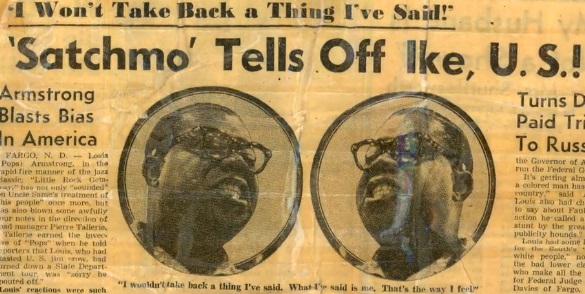
SatchmoLouis Armstrong was born on August 4, 1901 in New Orleans.  As he rose to fame, he would play Little Rock numerous times in a variety of venues.

As the Civil Rights movement started taking hold in the mid-1950s, many African American entertainers were vocal in their support.  Armstrong stayed silent.  Until, that is, September 17, 1957.  That night, in Grand Forks, North Dakota, he blasted President Dwight Eisenhower for his lack of action to make Governor Orval Faubus obey the law.  This was in an interview conducted by a 21 year old University of North Dakota journalism student named Larry Lubenow.

Journalist David Margolick wrote about the incident in The New York Times in September 2007 in conjunction with the 50th anniversary of the integration of Little Rock Central High School.  He recounted how the story, written for the Grand Forks Herald, was picked up all over the country.  The entire Margolick piece can be read here.  Margolick tells that when Armstrong was given the chance to back off the comments, he asserted that he meant all of it.

On September 24, 1957, the night that the 101st Airborne was being mobilized to come into Little Rock, Armstrong sent Eisenhower a telegram again criticizing him for lack of action.  He used colorful language which sarcastically spoofed the “Uncle Tom” moniker which some of his critics had bestowed when they felt he was not doing enough for Civil Rights.  The Eisenhower Presidential Library has a copy of that telegram.  The incident between Satchmo and Ike was the basis for two different plays: Terry Teachout’s Satchmo at the Waldorf and Ishmael Reed’s The C Above C Above High C.

Armstrong would again play a part in Little Rock’s Civil Rights history.  In September 1966, he played the first major concert in Robinson Auditorium that was before a fully integrated audience.  Since the early 1960s, there had been a few sporadic concerts which had been before integrated audiences. But the policy of the Auditorium Commission remained that the building was to be segregated.  Following the approval of the 1964 Civil Rights Act, public facilities had to be integrated. Louis Armstrong played before a full house at Robinson Auditorium that night.