Little Rock Look Back: Mayor Buddy Villines

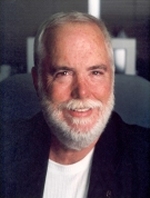
judgebuddyOn this date in 1947, future Little Rock Mayor Floyd G. “Buddy” Villines was born.  A 1969 graduate of Hendrix College, he served in Vietnam in 1970 and 1971. He later graduated from the University of Arkansas at Little Rock Law School.

Villines’ first interaction with Little Rock City Hall was as an employee in the City Manager’s office.  After joining the private sector, he returned to City Hall in 1985 serving on the Little Rock City Board of Directors.  He was re-elected in 1989.

While on the City Board, he was chosen as Vice Mayor for a two year term in 1987 and 1988.  The following year he was selected as Mayor for a two year term.  In 1990, Villines was elected Pulaski County Judge; he resigned from the City Board in December 1990 to take office.

Villines served as Pulaski County Judge for 24 years, from January 1991 until December 2014.  He is the longest serving County Judge in Pulaski County history.

Little Rock Look Back: Founding Fathers of Little Rock

Fathers DayThere are several men who can be considered founding fathers of Little Rock: William Lewis, the first settler, who stayed for a few months in 1814; Roswell Beebe, who acquired most of the land and laid out streets as well as providing land for public buildings and a cemetery; Amos Wheeler, who was the first postmaster and later a land agent; Jesse Brown, who founded the first school and later served as mayor; and William Woodruff, the founder of the Arkansas Gazette.

There are three other men who were not only founding fathers, but also actual fathers to other leaders. They are: Dr. Matthew Cunningham, Major Nicholas Peay and Chester Ashley.

Dr. Cunningham was one of the first residents of Little Rock. He arrived in 1821 and was shortly joined by his family.  Dr. Cunningham would be Little Rock’s first physician. His son Chester was the first child born in Little Rock.  Dr. Cunningham later served as Little Rock’s first mayor from January 1832 to January 1833.  His stepson, Charles P. Bertrand, later served as Mayor of Little Rock from January 1855 to January 1857.  This is the closest Little Rock has ever had to a father and son both serving as Mayor.

Major Nicholas Peay arrived in Little Rock in 1825.  He quickly became engaged in civic affairs and served as a trustee of Little Rock (a precursor to a city council).  In the 1830s, Major Peay served on the Little Rock City Council. In that capacity, he also served as Acting Mayor of Little Rock.  His son, Gordon Neill Peay, would serve as Mayor of Little Rock from 1859 to 1861.  A grandson son, Ashley Peay, was a Little Rock alderman in the 1920s. A great-great-grandson, Joseph B. Hurst, served on the Little Rock City Board from 1967 to 1970.

Chester Ashley never served on the Little Rock council or as mayor.  He was, however, an early leader of Little Rock.  He actually arrived in 1820 and brought his new wife here in late 1821 (a few months after Mrs. Cunningham arrived).  One of Little Rock’s first attorneys, he was instrumental in the settlement of a competing land ownership disputes. In 1844, he was appointed to be one of Arkansas’ U.S. senators. He served in the Senate until his 1848 death.  His son William E. Ashley, served as Little Rock’s mayor from January 1857 to January 1859 and again from January 1861 until September 1863.

With Bertrand, Ashley, Peay and Ashley in the office of Mayor, from January 1855 until September 1863, Little Rock was governed by second generation leaders.

Descendants of the Cunningham and Peay families still reside in Little Rock today.

Little Rock Look Back: Mayor John Widgery

LR sealOn June 17, 1802, future Little Rock Mayor John Widgery was born in Portland ME to Mr. and Mrs. William Widgery.  His father died in 1804.  At the age of 11, John Widgery entered Bowdoin College.  He was the youngest student admitted to the college.

Widgery studied law with his uncle, Nathan Kinsman.  He married Ann L. Woodward, who was from Boston MA.  According to Bowdoin College records, he later “wandered away into the Southwest” spending time “in the Cherokee country.”

Widgery spent most of his adult life in the south. For a time Widgery was clerk of the Mississippi House of Representatives.  He then moved to Little Rock prior to 1840.  By 1840, he was Recorder for the City of Little Rock.

According to media reports at the time, several tradesman groups encouraged Widgery to run for Mayor in January 1841.  He did run but lost to Rev. Samuel H. Webb.  The next year, Widgery ran again and this time was elected Mayor.  He took office in January 1842.  On May 24, 1842 he resigned from office.  He later served as Secretary of the Arkansas Senate (where he made $8 a day when the Senate was in session).

Widgery eventually settled in St. Louis.  He later returned up north.  He died on August 2, 1873 in Portland ME and is buried there.  He and his wife did not have any children.

No known painting or photograph of Mayor Widgery exists.

Little Rock Look Back: FDR in LR

FDR Ark100On June 10, 1936, President Franklin D. Roosevelt visited Little Rock as part of a day-long series of appearances in conjunction with the Arkansas Centennial celebration.  (The actual statehood dates is June 15.)

His day started in Memphis before he journeyed by train to Hot Springs. After events there that morning and lunch at Couchwood (his longtime friend Harvey Couch was chairman of the Centennial celebration).  He then traveled to Rockport and Malvern for appearances before arriving in Little Rock.  He made his remarks at the State Fairgrounds in a structure called “Centennial Stadium.”

Following his remarks, which officially kicked off the six month Arkansas Centennial celebration, he retired to Senator Joseph T. Robinson’s house on South Broadway.  He dined with the Robinsons in the house before departing with the Senator at 8:45 that evening.  The Presidential entourage then journeyed to Texas for the next day.

Little Rock Look Back: Truman visits LR

HST in LR2On June 10 and 11, 1949, President Harry S. Truman visited Little Rock.  He was here to participate in activities connected to the reunion of the 35th Division Association.  He had served in that division during World War I.

While he was in Little Rock, President Truman spoke several times.  He generally was accompanied by Governor Sid McMath and Mayor Sam Wassell.

On June 10, he spoke at Robinson Auditorium as part of a welcome ceremony, at a reception at the Hotel Marion and at a ball held at Robinson Auditorium.  His first address was at 3:48 pm and his final one was at 10:15 pm.  The next day he spoke at a breakfast and at a luncheon at the Hotel Marion.  He took pains at these times to stress he was here as a member of the 35th Division.  He also participated in a parade.

In his Presidential role, he spoke at the dedication of War Memorial Park on June 11.  His address took place inside War Memorial Stadium, which had been opened a few months earlier.  It was not a brief dedicatory speech, but instead was a lengthy treatise on foreign affairs.  The address was carried on nationwide radio.  The text of his address can be found here.

President Truman would return to Little Rock in July 1952.  He was in the state to speak at the dedication of Bull Shoals Dam. He did not make any formal remarks in Little Rock while in the city for that visit.


Little Rock Look Back: Mayor and State Rep. Ben D. Brickhouse

BrickhouseOn June 8, 1873, future Little Rock Mayor Ben D. Brickhouse was born in Virginia.  He moved to Texas as a child before his family settled in Arkansas.

His first job was with the Missouri Pacific Railroad.  He eventually attended law school at the University of Arkansas.  As an attorney, he remained interested in labor relations throughout the rest of his life.

In 1914, Brickhouse was elected to the Little Rock City Council.  He was reelected in 1916.  In 1918, he was appointed Labor Commissioner for the State of Arkansas by Governor Charles Brough.

Brickhouse was elected Mayor of Little Rock in 1919.  He was relected twice (1921 and 1923).  Prior to the change to the City Manager form of government in 1957, other Mayors would seek a third consecutive term, but none would be successful.

Mayor Brickhouse ran for a fourth term as Mayor but was defeated.  In 1923, he had openly opposed the Ku Klux Klan, which was then a major player in Democratic politics in Little Rock, in Arkansas and in the nation. In the next Democratic primary for Mayor, Brickhouse did not secure the nomination.

During Mayor Brickhouse’s tenure the City purchased the land to make Fair Park (now War Memorial Park).  He also served as chair of the State Fairgrounds. Brickhouse remained active in civic affairs, often speaking out in favor or opposition to local issues.

Brickhouse retired from public life in 1925 but returned in 1938 when he was elected to the Arkansas House of Representatives.  He was reelected in 1940.  On June 1, 1941, not long after the conclusion of the legislative session, Brickhouse died.

LR Look Back: The Rice Family and LR Auditorums

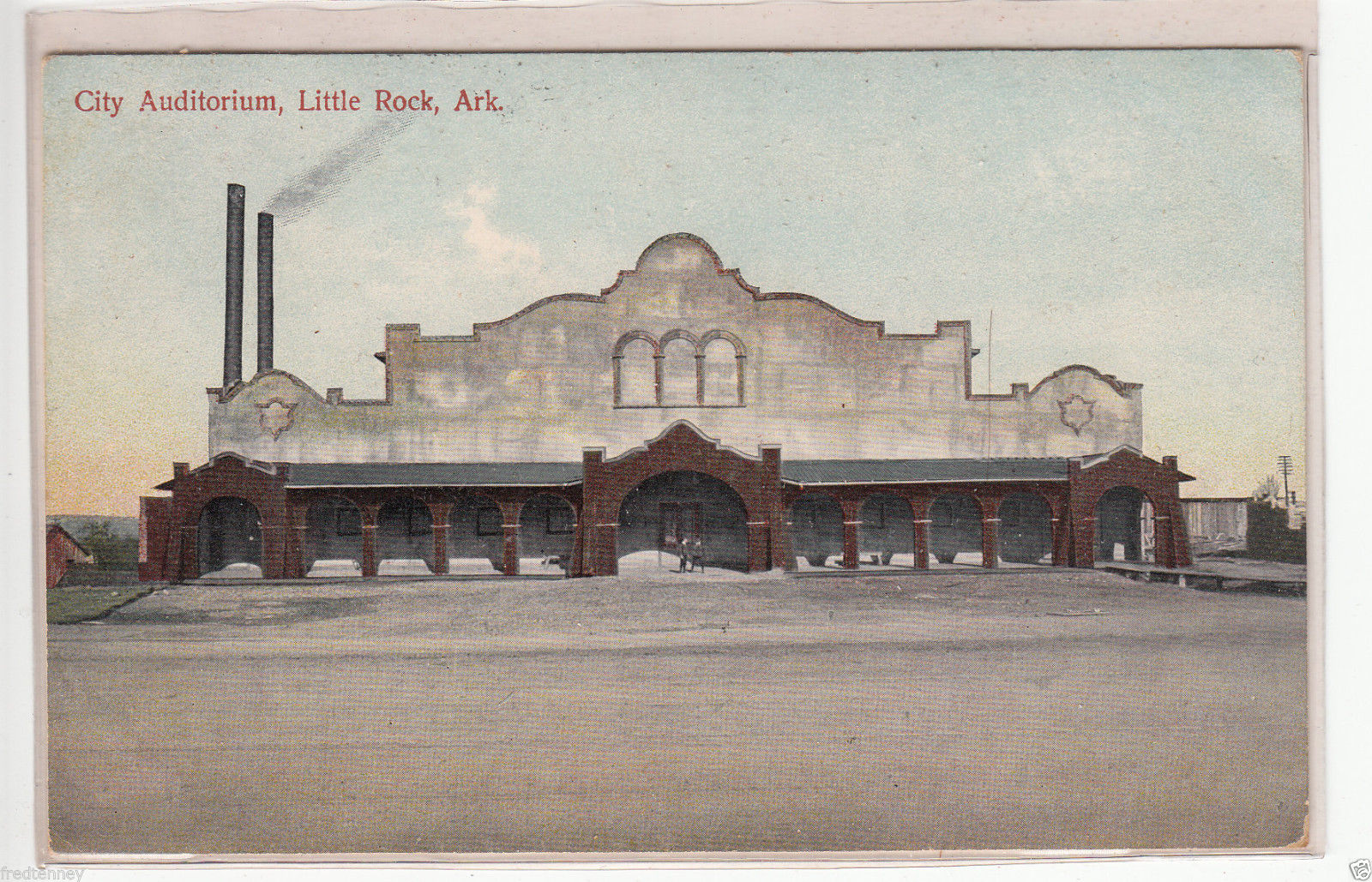
1906 LR auditoriumOn June 7, 1920, the Little Rock City Council finally authorized the demolition of Little Rock’s 1906 temporary auditorium.  The structure had originally been built as a skating rink which, when chairs were added, could be used for public meetings.  Since the mid 1910’s, the City Council had discussed tearing it down over safety concerns.  But since Little Rock had no other structure as a substitute, the Council kept delaying the decision.

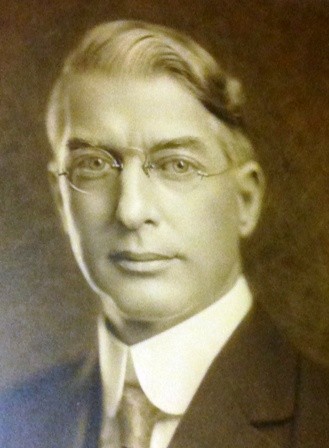
J Rice 1920In 1920, though there was not alternative space available, the Council decided that the structure had to come down.  So City Engineer James H. Rice was authorized to have the building removed.

JimRice RobinsonToday, Rice’s grandson, also known as Jim Rice is the COO of the Little Rock Convention & Visitors Bureau.  In that capacity he is overseeing the renovation of Little Rock’s 1940 municipal auditorium – Robinson Center Music Hall.