Little Rock Look Back: Mayor James A. Woodson

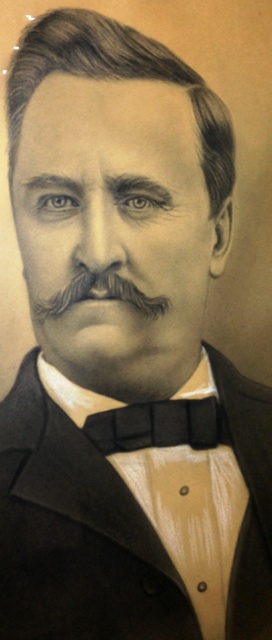
IMG_0298On July 14, 1848, future Little Rock Mayor James Alexander Woodson was born in North Carolina.  The son of two prominent eastern families, he and his parents moved to Pine Bluff in 1849.  His father died within two weeks of the family’s arrival in Arkansas.

With the outbreak of the Civil War, he enlisted as a drummer boy in the Ninth Arkansas infantry but was discharged because of his youth. He worked as a clerk at a general store in Pine Bluff. After the Civil War ended, he attended school in Virginia and Maryland before returning Pine Bluff. Upon his return he worked in the steamboat business and eventually started working in railroads. He was instrumental in putting together one of the forerunners of the Missouri Pacific Railroad and worked for them for 18 years.

Woodson moved to Little Rock in March 1881 and continued working for the railroad until 1891.  Working in the mercantile business allowed him more time to be engaged in civic affairs.  In 1895 he was elected mayor.   He handily defeated former mayor W. G. Whipple who was seeking to return to office.

During Mayor Woodson’s tenure, he oversaw renovations of the 1867 Little Rock City Hall (which was located at the time on the north side of Markham between Main Street and Louisiana Street).  He also championed the construction of a city hospital and the first free bridge across the Arkansas River.  Mayor Woodson was reelected in April 1897 and April 1899.

In April 1890, he resigned to take over the Arkansas and Southwestern Railway.  After restoring it to sound financial footing, he later led the Arkansas Asphalt Company.  That company provided the first asphalt for paving Little Rock city streets.

Woodson served as a director of the Little Rock board of trade (forerunner to the Little Rock Regional Chamber of Commerce), director of the Mercantile Trust Company and president of the state board of trade (forerunner of the Arkansas State Chamber of Commerce).

Woodson married Virginia Lanier in 1868.  They had six children, five of whom lived to adulthood.  Mayor Woodson died on October 19, 1908 and is buried in Mount Holly Cemetery.  His wife lived until 1937 and is buried next to him.  Also buried in Mount Holly are their children James Alexander Woodson, Benjamin Morehead Woodson and Gertrude Woodson Hardeman; each of whom died before their mother.  Mrs. Hardeman’s husband and son are also buried in Mount Holly.

In 2013 and 2014, Mayor Woodson was one of the characters portrayed at the annual Parkview High School “Tales from the Crypt” program at Mount Holly.

Some have noted his resemblance to actor Nick Offerman of the show “Parks and Recreation.”  Here is a Six Degrees game to link the two.

  • James Woodson
  • The Woodson community and Woodson Lateral is named for him
  • Growing up in the area, actor Billy Bob Thornton has been to Woodson Lateral
  • Bruce Willis appeared in BANDITS with Thornton.
  • “Friends” featured Willis and Paul Rudd as multi-episode guest stars
  • Rudd appeared in “Parks & Recreation” as a multi-episode guest star
  • Nick Offerman starred in “Parks & Recreation”

Little Rock Look Back: Miss City Beautiful

Miss City Beautiful 1964 Rita Fern Yoder with two of her princesses

Miss City Beautiful 1964 Rita Fern Yoder with two of her princesses

In the 1950s and 1960s, the City of Little Rock’s City Beautiful Commission sponsored a beauty pageant – Miss City Beautiful.

The commission was created in 1947. In 1950, they started the pageant.  The contest was linked to the annual beautification drive with the winner presiding over a series of events.

Though most of the appearances centered around the beautification drive, they would also appear at other City-related events throughout the year.  One summer, West Point cadet Wesley Clark was greeted at the Little Rock airport by city dignitaries and Miss City Beautiful when returned to make some appearances.

Contestants were usually high school seniors or recent graduates.  There was a preliminary round in which contestants would meet with judges, who would pick finalists. The young women were judged on “attractiveness, poise, personality, and effective speech.”

Usually there would be around eight judges, who would be from other cities in Arkansas or neighboring states.  Sometimes the final day of the pageant would be televised on local TV.

The winners and the finalists would receive prizes.  On at least one occasion the five finalists were given a trip to Washington D.C.  A comprehensive list of the finalists and winners does not currently exist.  But perhaps the most notorious winner was 1952’s Charlotte Moorman, who would later gain national notice as the Topless Cellist.

By the late 1960s, interest in the pageant waned from potential contestants. At the same time, the City Beautiful Commission was undergoing some organizational shifts of its own.  Therefore the pageant was discontinued.

Little Rock Look Back: New City Hall approved in 1906

The 1906 plans for City Hall with the Municipal Auditorium on the left portion.

The 1906 plans for City Hall with the Municipal Auditorium on the left portion.

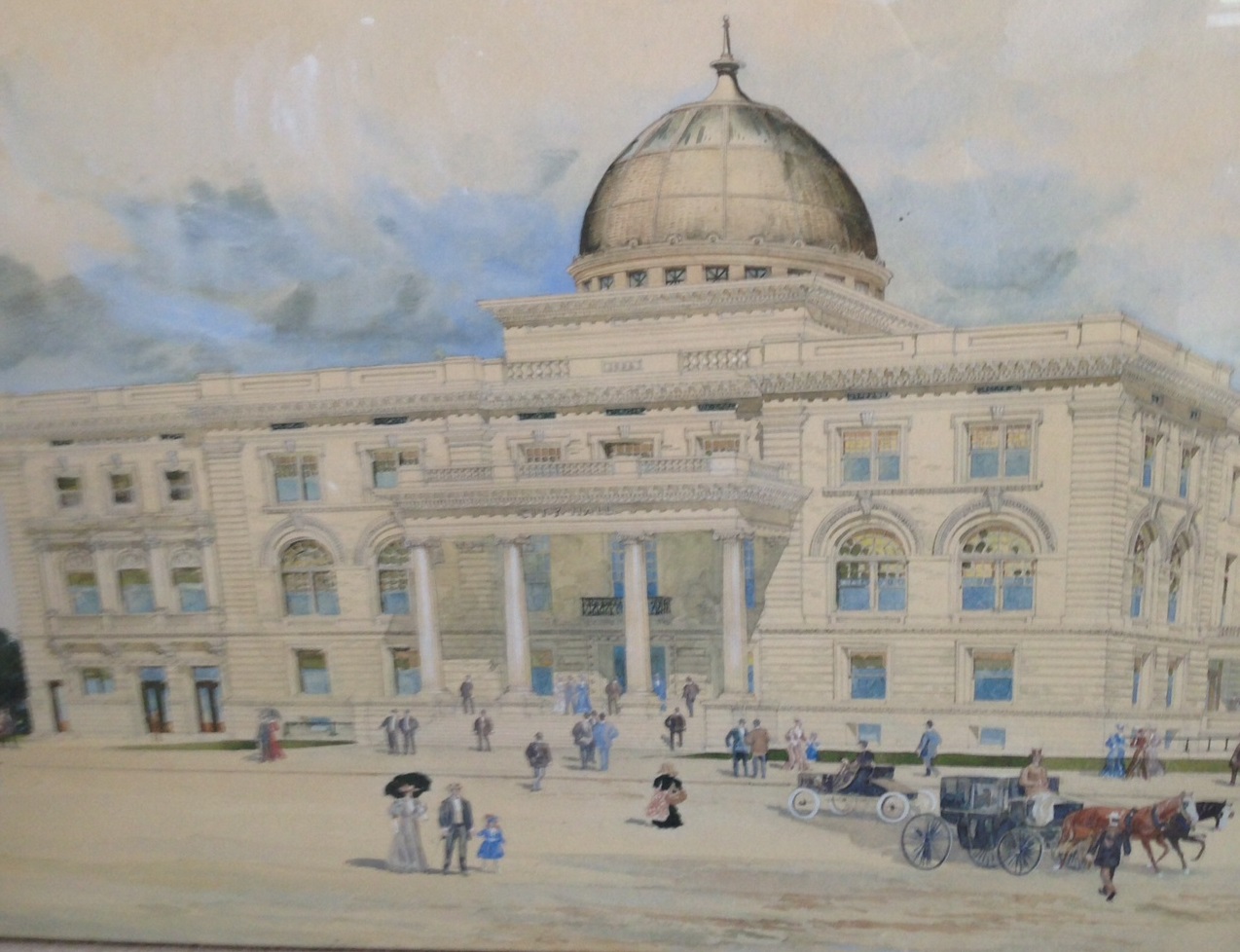
On July 9, 1906, the Little Rock City Council approved Resolution 281 and Ordinance 1,295. These actions approved the plans for a new City Hall complex to be constructed on land at the northwest corner of Markham and Broadway Streets.  A few days later, the contract was awarded for the construction of the new building.

Mayor Warren E. Lenon had first called for a new city hall complex in his annual address in April 1904. He repeated his request in April 1905.   The City Council took up Mayor Lenon’s quest for a new city hall in December of 1905.  The Council appropriated money for the purchase of land for a city hall, jail and auditorium.

In response to this, the Arkansas Gazette daily newspaper ran a story featuring the viewpoints of a few civic leaders weighing in on the need for a new city hall complex which would also include a new jail and a city auditorium.  Two of the respondents, L. B. Leigh and P. Raleigh, stressed the need for paved streets and better sewers instead of a new city hall and auditorium.

The other three businessmen interviewed were more favorable to Mayor Lenon’s proposal.  Morris M. Cohn, a former Little Rock City Attorney, stated “I do not think we can make a better investment than in a fine city hall and auditorium.”  (Mr. Cohn, though an M. M. Cohn, was not related the M. M. Cohn who was the namesake for the longtime Little Rock department store.) County Judge William Marmaduke Kavanaugh offered his satisfaction with the action of the City Council on that matter.  R. E. Walt, a banker, opined that he thought $150,000 was not enough; he suggested $200,000 should be spent.

Later that month the Gazette reported that a site had been selected for the city hall and auditorium complex.  The proposed location was most of a city block located at the corner of Markham and Broadway Streets.  Mayor Lenon was vague as to the details of the deal because negotiations were still underway with the property owners

As 1906 dawned, Mayor Lenon and other city leaders continued to take steps to build the new city hall and auditorium.  They invited three local architects to make presentations for the chance to design the new complex.  The three were Charles L. Thompson, Frank W. Gibb and George R. Mann.  Mr. Thompson was chosen to receive the assignment.

On February 5, 1906, Mayor Lenon announced the creation of a special committee to work on the planning for a future city hall complex.  This committee consisted of Aldermen Louis Walther, A. B. Poe, L. N. Whitcomb, Christopher Ledwidge, and John A. Adams.

Mayor Lenon further stated that the new city hall complex and several private developments would “put us in that march of progress with which nothing can prevent us from having a 100,000 population in a few years.”

The saga to get the building built was just starting.

Little Rock Look Back: Mayor Haco Boyd

BoydOn July 6, 1902, future Little Rock Mayor Haco O. Boyd was born in Leslie, Arkansas.  At the age of four, his family moved to Little Rock; he graduated from the Little Rock public schools.  He attended and graduated from Hendrix College.

In World War II, he was in the Army Air Corps.  He was a very decorated soldier earning two Purple Hearts, a Legion of Merit, and a Bronze star among other designations from the United States.  He also received high military honors from numerous European governments.  Boyd would remain in the Air National Guard and retired with the rank of Colonel in 1964.

As a businessman, he was a founder of Rebsamen Ford and then state manager of Benjamin Moore for Arkansas.  In 1952, he joined Union Life Insurance.  Throughout his career, he received most any recognition and honor and designation that the field of life insurance offered.

In November 1968, he won a three-candidate race for the Little Rock City Board of Directors. One of the candidates he defeated was former (and future) Director and Mayor Byron Morse.  In January 1969, he was selected to serve as Mayor of Little Rock.

One week later, Mayor Boyd and 70 others were on an Eastern Airlines plane headed for a life insurance convention in  Nassau, departing from Miami.  A passenger hijacked it and the plane was diverted to Cuba.   The next morning the passengers were returned to Miami and then sent to Nassau without incident. Once the media found out that one of the passengers was the Mayor of Little Rock, he was interviewed by numerous newspapers.

In other civic involvement, Boyd served on the Little Rock Airport Commission, including a term as chair.  He was also honored for his involvement with the Boy Scouts of America and Easter Seals.

In September 1923, Boyd married Mary Josephine “Polly” Goodrum.  They were married until her death in February 1977.  Haco Boyd died on March 27, 1988.  The couple are buried at Roselawn Cemetery.  They had two children and four grandchildren.

Little Rock Look Back: Mayor Buddy Benafield

BenafieldFuture Little Rock Mayor James Weldon “Buddy” Benafield was born on July 5, 1927 in Coy, Arkansas.  As a child he spent part of his time chopping cotton.  He graduated from England High School and then served in the U.S. Navy.  Following his stint in the military, he enrolled in Arkansas State Teachers College (now the University of Central Arkansas).

After college he returned to England.  From 1967 to 1974 he served as Mayor of England.  While in England, he also worked to establish a hospital there. While he was Mayor, Benafield also served as a legislative aide to Governor Dale Bumpers.

After moving to Little Rock, Benafield served as legislative aide to Governor Frank White.  He had been a donor to former Governor Bill Clinton, who had been defeated by White. Though a staunch Democrat, he remarked to the media at the time that he had been a friend of White’s and never declined a Governor’s request for help.

Long active in Democratic politics, he had served as Secretary of the State Democratic Party.  (One of his daughters, Dawne Benafield Vandiver has carried on the family tradition serving in several leadership positions in the State Democratic Party.  Most recently she was Executive Director of the party.)

In January 1982, Benafield was appointed to fill a vacancy on the Little Rock City Board of Directors. He ran for election to a full term in November 1982 and was reelected in November 1986.  From January 1983 to December 1984, Benafield served as Mayor of Little Rock.

After leaving the Little Rock City Board in January 1991, he has remained engaged in civic matters.  He served a term on the Arkansas Highway and Transportation Commission.  He was first appointed in January 1993 by Gov. Jim Guy Tucker to fill out the remainder of Rodney Slater’s term. Slater had resigned to to take a job in the Clinton Administration in Washington DC.  In 1995, he was reappointed, this time to a full ten year term.  This was only the second time a member of the Highway Commission had been reappointed.

Buddy Benafield is the only Little Rock Mayor to have also been a mayor of another Arkansas city.  He continues to be involved in farming and a variety of business ventures and has maintained his interest in politics.

Little Rock Look Back: Mayor Matthew Cunningham MD, a man of many firsts

M_Cunningham_fFuture Little Rock Mayor Dr. Matthew Cunningham was born on July 5, 1782, in Pennsylvania. After receiving his medical degree from the University of Pennsylvania, he ended up in New York City.  He also served in the Army during the War of 1812.

It was there he met and married a young widow, Eliza Wilson Bertrand. After a brief stint in St. Louis, Dr. Cunningham was one of the first settlers of Little Rock in February 1820. With his arrival, he became the first physician in Little Rock.

In September 1820, Mrs. Cunningham and her children joined him. She became the first female in the Little Rock settlement. Dr. and Mrs. Cunningham had a son, Chester, who was the first white baby born in Little Rock. (Though not supported by any public records, there is some unsubstantiated thought that one of the African-American slaves they had gave birth to a child before Chester was born.) The Cunninghams had several other children.  One daughter, Matilda, would marry Little Rock businessman Peter Hanger.  (The Hanger Hill neighborhood is named after Peter Hanger.)

In 1831, Dr. Cunningham was elected the first Mayor of Little Rock. He won the race 23 to 15 over Rev. W. W. Stevenson. The first City Council meeting took place at the Cunningham house on the block which is the southwest corner of what is now 3rd and Main Streets. Records are incomplete as to where on the block the Cunningham house was located, but a plaque is on 3rd Street near Main on the side of the Fulk Building which CJRW is now renovating for their future office space.

Dr. Cunningham served one year as Mayor. He lived until June 15, 1851 and is buried at Mount Holly Cemetery. His wife, son, and the Hanger family are buried next to him.

His stepson – Charles P. Bertrand – also served as Mayor of Little Rock.  Descendants of Dr. Cunningham still reside in Little Rock.

Little Rock Look Back: President Truman returns to LR

trumansmallOn July 1, 1952, President Harry S. Truman returned to Little Rock for the last time in his presidency.  He landed at Adams Field. After a short ride to the Missouri Pacific train station, he boarded a train for Newport where he made remarks.  Later that evening, the presidential train arrived at Norfork where Mr. Truman spent the night on the train.

The next morning, he went by car to the Norfork Dam before heading to Bull Shoals Dam where he gave an address.  An outdoor luncheon followed the Bull Shoals address.  After lunch, he got back on the train.  Truman made a whistle stop visit in Batesville before arriving back in Newport.  He boarded a plane in Newport and returned to Washington DC.

Congressmen James W. Trimble and Wilbur D. Mills accompanied the President on the entire trip from and to Washington.  Governor McMath joined the party once they were in Little Rock.  The press corps on the trip included the New York Times, Washington Star, Baltimore Sun, New York Herald-Tribune, Chicago Tribune, Associated Press, CBS Radio, NBC Radio, ABC Radio and NBC Television.  The local press included reporters and photographers from both the Arkansas Gazette and the Arkansas Democrat as well as KLRA Radio and the Memphis Commercial-Appeal.