Little Rock Look Back: First meeting of Pulaski Heights City Council

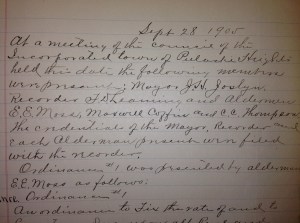
Pul Heights CC minutesOn September 28, 1905, the first meeting of the Pulaski Heights City Council took place.  The newly elected Mayor was J. H. Joslyn, the Recorder was F. D. Leaming, and new Alderman present were E. E. Moss, Maxwell Coffir and C. C. Thompson.  Pulaski Heights had been incorporated on August 1, 1905.  At that time its population was estimated at between 300 and 400.

The first ordinance, which was offered by E. E. Moss, was to set a tax rate and give the City the ability to levy taxes.  Next was a motion to establish a committee to establish rules and procedures for the council. The final business before the Council was to allow the Recorder to order stationary, a seal and a record book (that record book is now in the vault at Little Rock City Hall).

The next meeting would be October 28.  At that meeting, two other Aldermen are mentioned in the minutes (Fauble and Paul) but were absent from that meeting as well.  Mr. C. M. Fauble was present at the third meeting.  Mr. R. O. Paul did not appear until the fifth meeting (December 13, 1905).

Interestingly the Recorder had a vote in the Council meetings (which was not a practice in the City of Little Rock at the time).

The Council did not have a permanent meeting place until the third meeting.  At that point in time, they used space in the offices of Dr. Hockersmith.  They later met in a building which is now part of the Pulaski Heights Baptist Church campus.

Pulaski Heights was a separate City until January 1916.  On January 4, 1916, Little Rock voters approved the annexation of Pulaski Heights by a ten-to-one margin, and the suburb became the city’s ninth ward. This established a couple of precedents for the City of Little Rock which are in effect to this day.  The first is that Little Rock would not be a central city surrounded by a variety of small incorporated towns (in the manner that St. Louis and other cities are).  It was this thought process which has led the City to continue to annex properties.

In addition, this move to annex Pulaski Heights was the first time that the City grew toward the west.  Previous growth had been to the south.  By emphasizing western expansion, this has allowed Little Rock to continue to grow.

Little Rock Look Back: Roswell Beebe Given City of Little Rock

Map showing boundaries of original City of Little Rock

Map showing boundaries of original City of Little Rock

On September 25, 1839, businessman Roswell Beebe received title to all of the land in Little Rock.

Starting in the 1810s, there had been much dissension as to who had title to land in what would become Little Rock.  As the settlement developed into a town and city, these disagreements became greater. Often land speculators would sell land to settlers without having the right to do so.

Coming to Little Rock in 1835, Beebe was a witness to the continued uncertainty over land ownership.  In early 1839, he acquired 240 acres which had the only incontestable title in town. This acreage comprised most of Little Rock. He went to Washington DC in 1839 and, on September 25, received the original patent for the town of Little Rock, signed by President Martin Van Buren. It is recorded in the Pulaski county recorder’s office Book L, page 312.

Upon his return, Beebe gave all the people who had bought lots from a certain real estate developer, whom he considered to be fair and honest, title to their land for a dollar. In December 1839, he drew up a plan for Little Rock, laying off blocks and streets. He deeded the streets and alleys to the city for a dollar. He gave the state the title for the land on Markham Street, where the new capitol building (now the Old State House Museum) was located.  He also donated part of the land for Mount Holly Cemetery, the other portion came from his brother-in-law Chester Ashley.

Little Rock Look Back: 57 Years since 1957

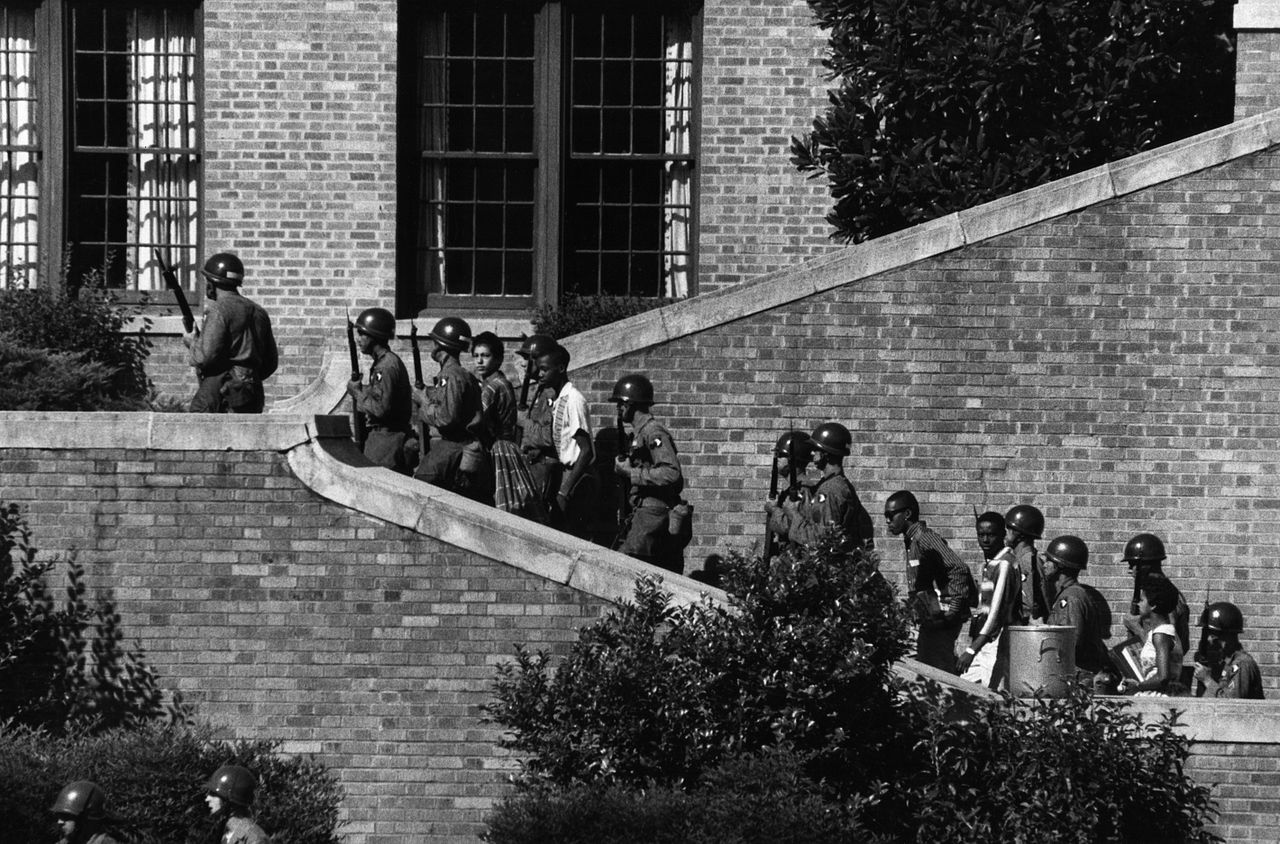
101st_Airborne_at_Little_Rock_Central_HighIt was 57 years ago today that the Little Rock Nine entered Central High School and stayed. On one hand, this brought to the end a nearly month long standoff between segregationists and those who wanted to obey the U.S. Supreme Court’s Brown v. Board decision.

In the bigger picture, the struggle did not end that day.  Throughout the remainder of the school year, the Little Rock Nine were subjected to threats, isolation and hostility.  Outside of the school, while the crowds may had dispersed after September 25, the raw feelings did not subside.

This was evidenced by the fact that the following year the high schools were closed to avoid having them integrated.

But September 25, 1957, was an historic day in the United States. Under guard of members of the 101st Airborne Division of the Army, the Little Rock Nine were escorted into Central High School. This action by President Dwight Eisenhower was the result of the intrusive efforts of Governor Orval Faubus who had used the Arkansas National Guard to keep the nine students out.

The City of Little Rock was largely a bystander in this issue. The form of government was changing from Mayor-Council to City Manager in November 1957. Therefore Mayor Woodrow Mann and the entire City Council were lame ducks. Mann, whose son was a senior at Central, tried to focus on keeping the peace in Little Rock. Most (if not all) of his Council members sided with the Governor.

Congressman Brooks Hays, a Little Rock resident, had tried to broker an agreement between the President and the Governor but was unsuccessful.  Following that, Mayor Mann was in discussions with the White House about the ability of the Little Rock Police Department to maintain order.  Finally, in the interest of public safety, the President federalized the National Guard and removed them. This paved the way for the Army to come in.

Though the school year was not easy, the nine youths who became known worldwide as the Little Rock Nine were finally in school.  They were Minnijean Brown, Elizabeth Eckford, Ernest Green, Thelma Mothershed, Melba Patillo, Gloria Ray, Terrence Roberts, Jefferson Thomas and Carlotta Walls.

In 1997, President Bill Clinton, Governor Mike Huckabee and Mayor Jim Dailey, famously held open the doors of Central High for the Little Rock Nine on the 40th anniversary.  Ten years later, Clinton, Huckabee and Dailey returned joined by current Governor Mike Beebe and Mayor Mark Stodola to host the 50th anniversary events.

Today the school is a National Historic Site, while still functioning as a high school.

Little Rock Look Back: City Hall Ceases Operation in 1863

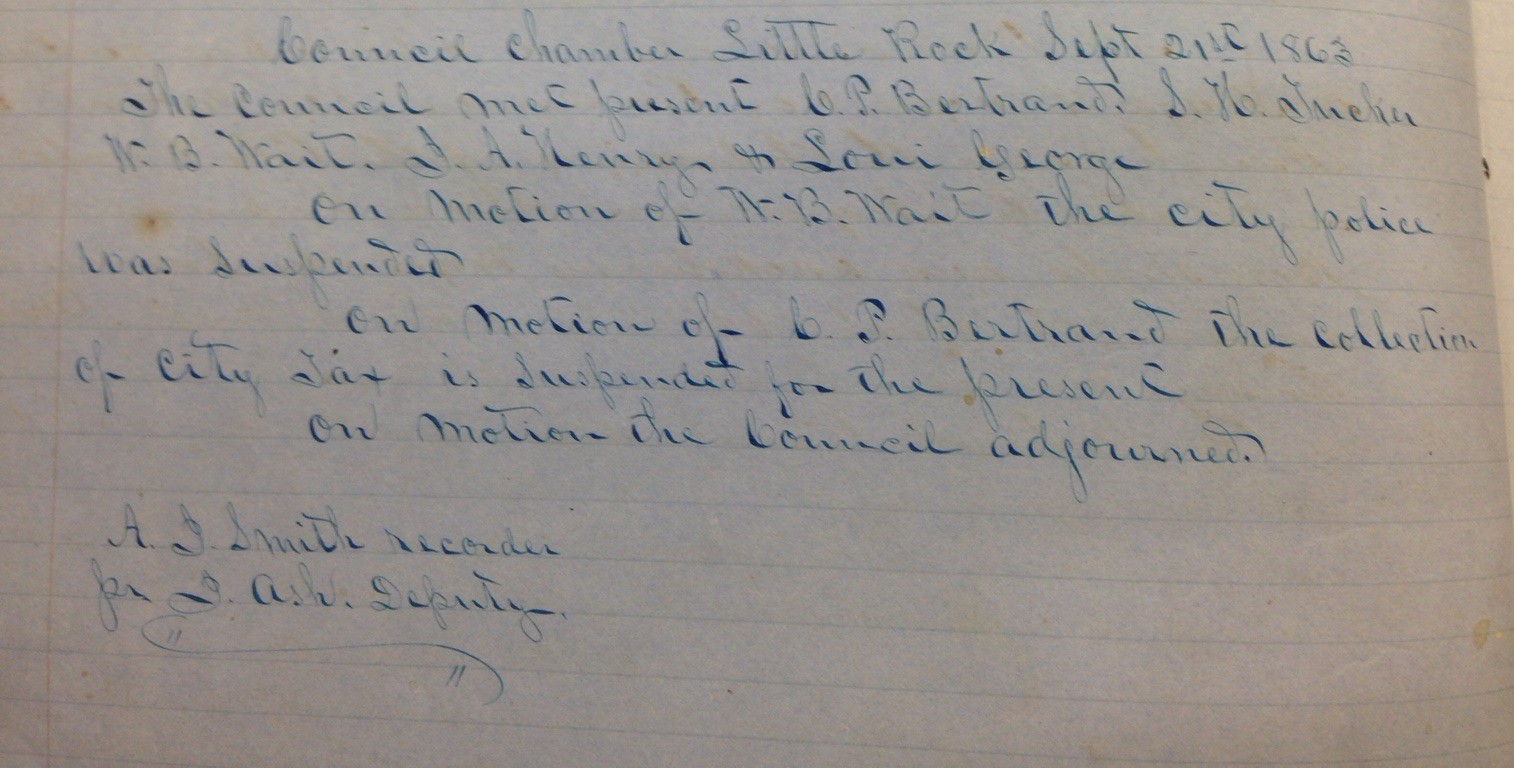
LR1863 minutes of closureFollowing the Battle of Little Rock, the City of Little Rock ceased operations on September 21, 1863.

Planning for this had started in August, which would suggest that civic leaders were none too confident in the ability of Confederate forces to hold on to the city.  At the August 24, 1863, City Council meeting it was reported that the City’s funds (presumably Confederate) had been “placed in the hands of a reliable party who is well known to the Council.”  The identity of this “reliable party” has never been disclosed.

On September 21, the Council met and took three votes.  The first was to suspend the operation of City police (which at the time was not an official police force, it was a constable and some volunteers). The second was to suspend the collection of City taxes.  The final vote was to adjourn.

There is no record of Mayor William Ashley being present at this meeting.  Recorder A. J. Smith (the equivalent of City Clerk today) was not present.  The minutes were signed by “J. Ash, Deputy.” Records do not indicate if that gentleman was officially Deputy Recorder or if he had simply been deputized to take minutes at the meeting.  The five City Council members present were C. P. Bertrand (a former mayor and step-son of Little Rock’s first Mayor, Matthew Cunningham), S. H. Tucker, W. B. Walt, I. A. Henry (would would also serve on the first City Council after the war in 1866), and Lou George.

Little Rock Look Back: John Elliott Knight, LR’s 18th Mayor

Jno E Knight sigOn September 20, 1816, future Little Rock Mayor John Elliott Knight was born in Newburyport, Massachusetts. In 1843 he married Hannah Donnell in New York, and came to Little Rock that same year.

Knight was editor of the Arkansas Democrat from 1846 to 1850. He was also associated with the Arkansas Gazette and published the short-lived Chronicle. In 1851, Knight served as Mayor of Little Rock. In 1855, he served as a member of the City Council.

In 1858 a song was published entitled “I Am Near to Thee” which featured music by Arkansan Benjamin Scull and lyrics by Knight.  The song was dedicated to Mary Woodruff.

During the Civil War, he served as a Colonel.  During the 1850, 1860 and 1880 census, he was listed as an attorney.

He had one daughter, Elizabeth Knight, who married James S. Pollock, a banker in Little Rock. Knight died in Little Rock, Arkansas, on October 28, 1901, and was buried in Mount Holly Cemetery. Elizabeth Knight Pollock died in 1910.

As an attorney and newspaper editor, John E. Knight collected documents about the settlement of Little Rock. Those papers are now part of a collection at the Arkansas History Commission.  The majority of these papers are from William Russell to Chester Ashley, pertaining to pre-emption claims in and around Little Rock. Other material concerns the 1819-1822 dispute related to the the New Madrid Certificate and pre-emption claims of James Bryant, Stephen F. Austin, and William M. O’Hara.

Little Rock Look Back: Charles E. Taylor, LR’s 42nd Mayor

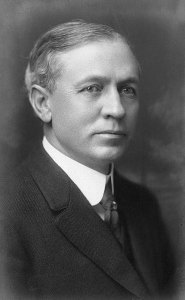
Mayor TaylorOn September 15, 1868, future Little Rock Mayor Charles E. Taylor was born in Austin, Mississippi.  After locating to eastern Arkansas, his family moved to Little Rock around 1880.

Taylor graduated from Scott Street High School in Little Rock and proceeded to work for various hardware stores and other businesses.  In 1895 he married Belle Blackwood, with whom he would have four children.

In 1910, Taylor announced his intention to run for Mayor of Little Rock.  Though he had never held elective office, he had been involved in several civic organizations.  Taylor was the main challenger to Alderman John Tuohey.  Seen as a reformer, Taylor initially lost to Tuohey.  But after an investigation of voter fraud and a subsequent runoff, Taylor was elected Mayor.

Upon taking office in August 1911, Mayor Taylor focused on improving health conditions in the city, upgrading the fire department and enhancing the overall moral tone of the city.

As a progressive of the era, he fought against gambling, drinking and prostitution.  He created a Health Department and enhanced the City Hospital.  His efforts led to a decrease in the death rate in Little Rock.  As Mayor, Taylor introduced motorized vehicles to the Fire Department.  He also led the City Council to establish building and electrical codes.  Mayor Taylor also oversaw the construction of the 1913 Beaux Arts Central Fire Stations (which today serves as the City Hall West Wing).

Under his leadership, the City of Little Rock annexed Pulaski Heights. One of the selling points to Pulaski Heights residents was Mayor Taylor’s ability to provide modern services such as paved streets, water mains, fire hydrants and street lights.

Though neither his 1911 Parks Master Plan nor his dreams for a civic auditorium came to fruition, they paved the way for future successes in both of those areas.

Funding for projects continued to be a problem throughout Mayor Taylor’s four terms in office.  He believed that one obstacle to city funding was the prohibition by the state constitution against cities issuing bonds.  Though that ban has since been lifted, Taylor tried three times unsuccessfully to get it changed while he was Mayor.

In April 1919, Taylor left office after having served eight years.  He was the longest serving Mayor of Little Rock until Jim Dailey served in the 1990s and 2000s.  Following several business ventures, Taylor moved to Pine Bluff and led their chamber of commerce from 1923 through 1930.

Mayor Charles E. Taylor died in Pine Bluff in 1932. He was buried at Oakland Cemetery in Little Rock.

During his time in office, Mayor Taylor was presented with an unofficial flag of Little Rock by a group of citizens.  During Mayor Dailey’s tenure, that flag was restored by some private citizens and presented to the City.  It is framed on the 2nd Floor of Little Rock City Hall.

Little Rock Look Back: H. L. Fletcher, LR’s 35th Mayor

Mayor H L FletcherOn September 15, 1833, future Little Rock Mayor Henry Lewis Fletcher was born in Saline County.  His parents were Henry Lewis and Mary Lindsey Fletcher.  One of his siblings was future Little Rock Mayor John Gould Fletcher.  The Fletcher brothers are the only set of siblings to serve as Mayors of Little Rock.

Though the life of John Gould Fletcher is fairly well documented, not much information is out there on his brother Henry Lewis (and some of what is out there is incorrect).  He married Susan Bricelin August 30, 1855, in Pulaski County.  During the Civil War, he served as a sergeant in the cavalry for the Confederate Army in Captain Ed Nowland’s Company.

As a civic leader, Fletcher oversaw Arkansas’ contribution to the Philadelphia Centennial Exposition in 1876. The building received as a prize a cast-iron fountain still standing in front of the Old State House Museum.

Fletcher served as Mayor of Little Rock from 1891 to 1893.  When Fletcher became Mayor he appointed a new Police Chief (as most Mayors did) and the entire police force was dismissed.  A new police force was hired by E. H. Sanders, who served as chief for 18 months.  Upon his resignation, Frank MacMahon (who had been dismissed from the force when Fletcher came to office), was appointed Chief by Mayor Fletcher.  He would serve from 1892 until 1905.

Mayor Fletcher died on June 30, 1896 and is buried at Oakland Cemetery next to his wife (who died in 1911).