

Ernest Green, Dr. King and Daisy Bates share a relaxed moment — which was probably rare for the three in 1958
Today is the Martin Luther King Jr. Holiday. It is an apt time to think about Dr. King and Little Rock.
A friend of L. C. and Daisy Bates, he attended the 1958 Central High School graduation to witness Ernest Green receiving a diploma. Each senior only received eight tickets to the ceremony at Quigley Stadium, and he was one of Green’s. Dr. King was in the state to address the Arkansas AM&N (now UAPB) graduation earlier in the day.
His attendance was briefly mentioned in the local press, but there was no media photo of him at the ceremony. The Little Rock School District limited the press to one Democrat and one Gazette photographer. Other press were limited to the press box.
There is a photo of Ernest Green with Daisy Bates and Dr. King (pictured on this entry).
In 1968, when Dr. King was assassinated, Little Rock did not see the unrest that many cities did. Part of that was probably due to quick action by Governor Winthrop Rockefeller. The Governor released a statement fairly quickly expressing his sorrow at the tragedy and calling for a day of mourning. He also made the State Capitol available for the NAACP to have a public memorial, as well as worked with a group of ministers to host an interdenominational service.
Little Rock Mayor Martin Borchert issued a statement as well:
We in Little Rock are disturbed about the incident in Memphis. We are disturbed regardless of where it had happened. Killing is not the Christian solution to any of our problems today.
In Little Rock, we feel we have come a long way in 10 years toward solving some of our problems of living and working together regardless of race, creed or color.
The city Board of Directors in Little Rock has pledged itself toward continuing efforts to make Little Rock a better place in which to live and work for all our citizens.
We feel the efforts of all thus far have proved we can live in harmony in Little Rock and are confident such an incident as has happened will not occur in Little Rock. We will continue our most earnest efforts toward the full needs of our citizens.
The day after Dr. King was assassinated, a group of Philander Smith College students undertook a spontaneous walk to the nearby State Capitol, sang “We Shall Overcome” and then walked back to the campus. President Ernest T. Dixon, Jr., of the college then hosted a 90 minute prayer service in the Wesley Chapel on the campus.
On the Sunday following Dr. King’s assassination, some churches featured messages about Dr. King. As it was part of Holy Week, the Catholic Bishop for the Diocese of Little Rock had instructed all priests to include messages about Dr. King in their homilies. Some protestant ministers did as well. The Arkansas Gazette noted that Dr. Dale Cowling of Second Baptist Church downtown (who had received many threats because of his pro-integration stance in 1957) had preached about Dr. King and his legacy that morning.
Later that day, Governor Rockefeller participated in a public memorial service on the front steps of the State Capitol. The crowd, which started at 1,000 and grew to 3,000 before it was over, was racially mixed. At the conclusion of the ceremony, Governor and Mrs. Rockefeller joined hands with African American ministers and sang “We Shall Overcome.”
That evening, Trinity Episcopal Cathedral was the site of an interdenominational service which featured Methodist Bishop Rev. Paul V. Galloway, Catholic Bishop Most Rev. Albert L. Fletcher, Episcopal Bishop Rt. Rev. Robert R. Brown, Rabbi E. E. Palnick of Temple B’Nai Israel, Gov. Rockefeller, Philander Smith President Dixon, and Rufus King Young of Bethel AME Church.
Earlier in the day, Mayor Borchert stated:
We are gathered this afternoon to memorialize and pay tribute to a great American….To achieve equality of opportunity for all will require men of compassion and understanding on the one hand and men of reason and desire on the other.
Mayor Borchert pledged City resources to strive for equality.
Another Little Rock Mayor, Sharon Priest, participated in a ceremony 24 years after Dr. King’s assassination to rename High Street for Dr. King in January 1992. The name change had been approved in March 1991 to take effect in January 1992 in conjunction with activities celebrating Dr. King’s life. At the ceremony, Daisy Bates and Annie Abrams joined with other civil rights leaders and city officials to commemorate the name change.
 On January 20, 1799, Elijah A. More was born in Kentucky. By the early 1830s, he was residing in Hempstead County and practicing law. Because of the court system being based in Little Rock, he spent a great deal of time in Pulaski County.
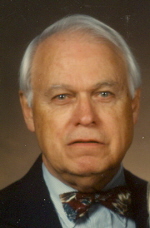 On January 16, 1916, future Little Rock Mayor Martin Borchert was born in Stuttgart. After graduating high school he moved to Little Rock. During World War II, he served as a bomber. He started work at ACME Brick and spent 21 years there before engaging in other business interests. Among these businesses were Martin Borchert Co., ASCO Hardware, Detection Systems Inc. and Component Systems Inc. In 2005 he was inducted into the Arkansas Construction Hall of Fame.
 On January 16, 1832, Mayor Matthew Cunningham MD presided over Little Rock’s first council meeting.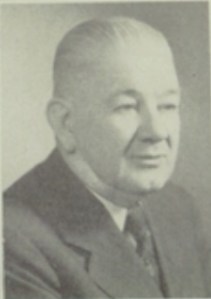
 103 years ago today, the Pulaski Heights City Council held its final meeting. Following the January 4 annexation election, Mayor L. H. Bradley convened the Pulaski Height City Council for the final time on January 10, 1916.
 On January 9, 1866, the new Little Rock City Council held its second meeting after the post-Civil War resumption of municipal government. At that meeting, a special committee was created to meet with Gen. Williams who was the military commander for Arkansas. Mayor J. J. McAlmont, Alderman I. A. Henry, and Alderman Henry Ashley were authorized to discuss the creation of a permanent police force in Little Rock.
 Little Rock Culture Vulture