Little Rock Look Back: 1959 Recall Election Day

The triumphant trio who were retained by Little Rock voters.

May 25, 1959, was not only the Recall Election Day, it was the last day of school for the Little Rock School District’s elementary and junior high students.  The results of that day’s vote would determine whether the ninth grade students would be in class come fall, or joining their older friends and neighbors in sitting out a school year.

While expectations that a new record of turnout would be set were off, over 25,000 of the 42,000 registered voters DID cast ballots in the May 25, 1959, Recall Election.

As the precinct results started coming in, some unexpected trends developed.  Some of the boxes in the more affluent, western neighborhoods which had been expected to be strongly in favor of keeping Everett Tucker, Russell Matson and Ted Lamb were not providing the anticipated overwhelming numbers.  Likewise, some of the more working class neighborhoods which had been projected to be strongly in favor of keeping Ed McKinley, Ben Rowland and Bob Laster were more receptive to keeping Tucker, Matson and Lamb.

As the night rolled onward, only Everett Tucker looked like a sure thing to be retained on the School Board.  At one point in the evening it appeared that the other five members would be recalled.  By the time they were down to four boxes still uncounted, the three CROSS-backed candidates were guaranteed to be recalled, but the status of Lamb and Matson was still undetermined.  Finally, with only two boxes remaining, there was a sufficient cushion to guarantee Matson and Lamb would continue as board members.

Two boxes from the Woodruff school were uncounted at the end of Monday. They had 611 votes between the two of them, which was not enough to change any outcomes.  They were being kept under lock and key to ensure there was no tampering with them.

Once it became apparent that Tucker, Lamb and Matson were retained, the STOP watch party erupted.  Six young men hoisted the triumphant three on their shoulders and paraded them through the crowd.  Dr. Drew Agar enthusiastically announced to the crowd, “Mission completely accomplished.”

At around 11:00 p.m. William S. Mitchell addressed the crowd.  “This is a great awakening of our home town…I have never seen such a wonderful demonstration of community spirit.”  He later went on to thank the thousands of people who volunteered in the effort.

At the CROSS headquarters, Ed McKinley and Rev. M. L. Moser were sequestered in a room poring over results.  When it appeared that 5 of the 6 might be recalled, McKinley issued what turned out to be a premature statement.

Back at the STOP party, the celebration continued.  While people knew that much work was still ahead, the men and women in attendance were enjoying a rare moment of joy after nearly two years of strife.
Little Rock Look Back: Sermons, TV Shows Dominate Final Day of 1959 Recall Campaign

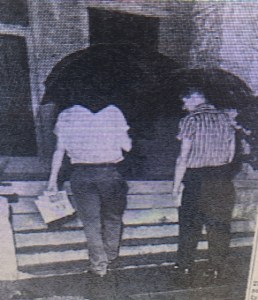
A rainy Sunday afternoon did not stop STOP canvassers on May 24, 1959.

Sunday, May 24, 1959, was election eve for the Recall Campaign.  As such, the election figured into some Sunday morning sermons.  Reverend M. L. Moser Jr. spoke from the pulpit of his church and described the issue of segregation as Biblical. As many had before him, and would after him, he used the story of Noah’s three sons as a way to justify segregation of the races.

(Supposedly one of the sons was the father of the white race, one the father of the African American race, and one the father of the Asian race.  In this narrative, no explanation is given for other variations such as Native Americans and other indigenous people or persons from the sub-continent of India.  Also excluded is the likely race of everyone in the story – those who live in the Middle East.)

At Trinity Episcopal Cathedral, Dean Charles A. Higgins prayed for the schools but did not tell his parishioners how to vote.  Rev. Aubrey G. Walton at First Methodist Church spoke about the schools needing to be free from politics and pressure groups.  (Though Rev. Walton did later appear that evening on a STOP sponsored TV show.)

Embattled School Board president Ed McKinley refused requests from the media and others to divulge his plans for the future of the Little Rock School District.  Earlier he had stated he had an idea on how the schools could be reopened and segregated, but still remain in compliance with the courts.  Across the river, segregationists were planning a rally in North Little Rock to head off any plans for future integration on the north side.  Congressman Alford had already agreed to speak at this rally.

In paid time on TV, Governor Faubus spoke at length in a criticism of the Arkansas Gazette. He called the fired teachers pawns in a larger game.  He noted in his remarks that he did not expect to sway any votes by this point.

Not to be outdone, STOP was on all three TV stations. Sometimes the program was aired on more than one station simultaneously.  In an appearance sponsored by STOP, William S. Mitchell noted that May 24 was coincidentally Children’s Day.  He noted that never before in Little Rock history had so many people volunteered for a cause as those who had worked on STOP and with STOP.  The Women’s Emergency Committee, PTA Council, labor unions, and numerous other organizations had come together to raise money, knock on doors, and otherwise get the word out.

Finally, it was all over but the voting.  Nineteen days of outrage, exasperation, and hyperbole was coming to an end.  When dawn broke, it would be election day.

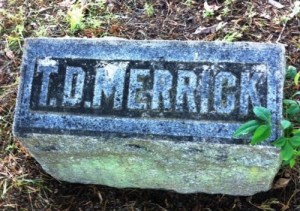
LR Look Back: Thomas D. Merrick – who nearly started the Civil War 2 months early

Thomas D. Merrick was born on 23 May, 1814, in Hampden County, Massachusetts. He later moved to Indianapolis IN and Louisville KY before ending up in Little Rock.
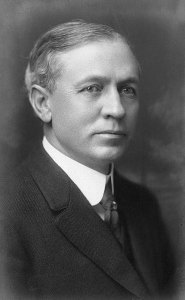
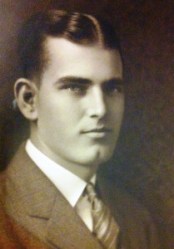
On January 17, 1841, he married Anna M. Adams of Kentucky at Christ Episcopal Church in Little Rock. They had seven children: George, Annie, Ellie, Mollie, Lillian, Dwight, and Thomas. Thomas died at age ten.

Merrick became a prominent member of the Little Rock business community, as a merchant and cotton broker. He was involved in Freemasonry, holding the position of Grand Secretary of the Grand Lodge of Arkansas in 1845.

In 1855 Merrick entered into a business partnership with future LR Mayor John Wassell. Merrick was also involved in city politics, serving on the city council and also as mayor from January 1854 to January 1855.

He saw active service during the Civil War. On February 6, 1861, Merrick delivered an ultimatum to Captain James Totten of the United States Arsenal at Little Rock, demanding the surrender of the federal troops.  This was more than two months before Fort Sumter was attached,.

Merrick also raised a regiment of Confederate Arkansas Militia, holding the rank of Colonel of Infantry at Camp Conway, near Springfield, Arkansas.  Following the Battle of Shiloh (April 1862), Merrick resigned his commission and returned to Little Rock.

Merrick died in his home in Little Rock on March 18, 1866.  He is buried in Mount Holly Cemetery.

Little Rock Look Back: A few municipal primary races of yore

Taylor

Today is primary day in Arkansas.  Though City of Little Rock municipal races are non-partisan and won’t be on the ballot until November, that has not always been the case.

Between 1874 and 1957, usually winning the Democratic Primary was tantamount to election. So the municipal general elections were usually boring. (The only exception would be the three elections in which Pratt Remmel was the GOP nominee for mayor facing off against the Democratic nominee.)

The real drama was in the primary races.

The 1911 primary pitted crusading businessman Charles Taylor against a firebrand attorney and Alderman John Tuohey, a grocer. Each of the three tried to position himself as an outsider, though Tuohey was least successful in accomplishing this considering he was an alderman and the candidate of choice of the retiring mayor.

Riffle logged insults at both Taylor and Tuohey. Taylor sought to position himself as not just the candidate of the businessmen. As a progressive, he borrowed Teddy Roosevelt’s Square Deal motto and offered “A Square Deal for Everyone.” A Baptist Sunday School superintendent, he also campaigned against vice. Tuohey offered his own solutions to city issues but was hampered in the campaign by illness.

After the January 12, 1911, primary election day, Tuohey had 1530 votes, Taylor had 1493 and Riffle had 506. Taylor alleged 323 illegal votes were cast and sought the poll tax records to try to prove it. After he saw the poll tax lists, he reduced his charges to 250 illegal votes.

On January 26, Tuohey and Taylor agreed to a new, two-man primary (essentially a run-off) in an attempt to resolve the matter. After that race, Taylor had 1874 votes and Tuohey had 1645. Taylor went on to be elected mayor in April 1911 and would subsequently serve four two-year terms.


Robinson

When he took office in April 1929 having just turned 29 a few weeks earlier, Mayor Pat L. Robinson seemed to be a rising star in the Democratic Party. Within a few months, however, he found himself at odds with the Little Rock City Council on a variety of issues.

Some of these appear to have been of his own doing, partially due to youthful arrogance, and part of these were probably rooted in entrenched resistance to change. With the onset of the Great Depression six months into his term, the City’s already tight financial shape became even tighter. The aldermen and city clerk gave him no quarter (though some may have wanted to draw and quarter him).

Knowlton

In November 1930, City Clerk Horace Knowlton squared off against Mayor Robinson (no relation to Joe T.) in the Democratic primary. It was a particularly raucous primary with charges and counter-charges of corruption, malfeasance and misfeasance. In describing Mayor Robinson’s handling of the City finances, Mr. Knowlton declared the mayor had undertaken an “orgy of spending.”

The results after the election were  Knowlton, 4,537; Robinson, 4,554; and 61 votes for a third candidate. Robinson was declared the nominee. But Knowlton protested and filed suit. There charges of illegal voting and persons whose ballots were not counted. After an exhaustive investigation (over 1,800 pages of testimony were taken), the court found that neither side had willingly engaged in voter fraud or vote tampering. The painstaking analysis further found that Knowlton had received ten more votes than Robinson.

In April 1931, Knowlton won the general election and was sworn in as Little Rock mayor. Robinson continued to pursue the case and appealed to the Arkansas Supreme Court. In June 1931 (in the third month of Knowlton’s mayoral term), the Arkansas Supreme Court upheld the circuit court ruling that Knowlton had indeed won the primary.


Sprick

A little more than a decade later, the state’s high court would again be called on to weigh in on Little Rock’s Democratic primary for mayor. In December 1944, Alderman Sam Wassell and former Alderman Dan Sprick faced off in a particularly nasty race.  As World War II was drawing to a close, there were charges leveled which questioned patriotism. With both men having service on the Little Rock City Council, there were also plenty of past votes on both sides which could become fodder for campaigns.

Wassell

The election was on December 5, 1944. Sprick received 3,923 votes and Wassell 3,805. A few days later, Wassell filed suit claiming that there were people who voted who were not on the poll tax rolls and another group of voters who did not live in the ward in which they voted. Sprick countersued making the same charges against Wassell.

The case eventually ended up at the Arkansas Supreme Court, which remanded it back to the lower court. On March 26, 1945, Wassell dropped his case. This was only eight (8) days before the municipal general election.

Two years later, Wassell would challenge Sprick in the primary and be triumphant. Wassell would serve from 1947 until 1951.  Sprick would later return to politics and serve a decade in the Arkansas State Senate.


There are many more interesting primary and election stories to tell. Stay tuned…

Little Rock Look Back: Moments in LRFD History

In the Western Christian tradition, today is Pentecost Sunday. It is the day when tongues of flames appeared over the heads of the apostles as they preached in a variety of native languages (granted an oversimplification of the description).

In keeping with the flame reference, today’s entry looks at some moments in the Little Rock Fire Department history.

As early as 1840, the City’s volunteer firefighters had a steam-operated fire engine which had been obtained from New York City. It weighed 5,000 pounds and supposedly required the services of 50 men to pull it to a fire.

There are very few records of any of the fire fighting records from those days.

By the post Civil War era, volunteer fire companies were being created. These were as much about fraternization and politics as they were about public safety.  Most of Little Rock’s political leadership during the 1860s through the 1880s were members of a volunteer fire company.

On May 2, 1867, the Pat Cleburne Steam Fire Company responded to a fire. In the more modern era of record-keeping with the advent of Reconstruction, this is the first recorded response to a fire.  The location was a corner at Markham and Scott Streets where the Fones Tire Shop was on ablaze.  The damage was estimated at $500. (The equivalent to $8,000 today.)  It appears to be the first case of arson in Little Rock history.

In 1893, the Little Rock Fire Department was established as a paid company.  It would hardly be considered professional by today’s standards, but it kept up with the latest technology and firefighting efforts of the day.

By 1910, the first motorized vehicle was incorporated into the fire fleet.  In 1912, the first motorized aerial apparatus was put into commission for the LRFD.

Another notable LRFD response in the month of May took place in 1952.  The Albert Pike Masonic Temple at 8th and Scott caught fire.  10,000 spectators jammed the streets to look at the fire.  30 Marines had to be deployed to help with crowd control so the LRFD could put out the fire, which caused $250,000 worth of damage (the equivalent of $2.35 million today).

Since 2018 marks the 125th year of the full-time Little Rock Fire Department, there will be other entries from time to time throughout the year looking at different aspects of the department.

Armed Forces Day in Little Rock – Birthday of the MacArthur Museum of Arkansas Military History

Today is Armed Forces Day.

The third Saturday of May is designated each year as a day to celebrate the men and women who serve in the various branches of the United States armed forces.

On Saturday, May 19, 2001 (which was Armed Services Day that year), the City of Little Rock opened the MacArthur Museum of Arkansas Military History.  Today, the museum celebrates its 17th birthday.  However, it is temporarily closed to the public for renovations.

Though the museum is only 17 years old, the building in which it is located, is 170 years old.  It is undergoing a much-needed renovation and restoration in order to continue to serve for at least 170 more years.

Visitors to MacArthur Park today can still interact with the various outdoor memorials and monuments which pay tribute to various phases of Arkansas’ military history.

Little Rock Look Back: Dan T. Sprick

Future Little Rock Mayor Dan T. Sprick was born on May 19, 1902.  He served three terms on the Little Rock City Council (from 1935 to 1941).  In 1945, he was elected Mayor of Little Rock and served one term. During his tenure on the City Council, he was the sole vote against locating Robinson Auditorium at Markham and Broadway.  He had favored another location.

He was not alone, however, in being held in contempt of court and spending part of the day in jail.  On Monday, December 4, a dozen of Little Rock’s aldermen (which included Sprick) reported to the county jail to serve sentences for contempt of court. The previous Monday, the twelve council members had voted against an ordinance which had been ordered by the judge in an improvement district matter. The other aldermen had either voted in the affirmative or had been absent. Because the twelve had refused to change their votes since that meeting, the judge ordered them jailed.  After the aldermen changed their votes later in the day, they were freed.

His tenure as Mayor was relatively quiet. He took office the same month that World War II ended. While in office, the Sprick administration was marked by growth in the city budget and in city positions. As a part of that growth, there were many more new purchases taking place which had prompted extra scrutiny of the City’s purchasing procedures. A thorough investigation toward the end of his tenure found no malfeasance or misfeasance, it did note that the city needed to do a better job of anticipating cash flow. Much of the City’s focus during the Sprick tenure was on growth and keeping up infrastructure needs.

Sprick later served for ten years in the Arkansas State Senate (from 1961 to 1970).  During his tenure in the Senate, Sprick was closely aligned with Gov. Orval Faubus.  When the Little Rock high schools had been closed a year to ensure segregation, Sprick had served on the board of a private school set up by some of the leaders of the segregation movement.

His time in the Senate was also marked by controversy.  He was one of three Senators to opposed Muhammad Ali’s speaking at the University of Arkansas at Fayetteville.  After an Arkansas Gazette editorial lambasted him, Sprick sued the paper for libel. The Gazette settled with him out of court because his health was poor.

One of the landmark pieces of legislation he guided through the Arkansas General Assembly allowed cities to collect advertising and promotion taxes.  The 1972 and 1973 upgrades to Robinson Center were funded by this tax (as have some subsequent upgrades). So the building he voted against while on the LR City Council benefited from legislation he championed while in the General Assembly.

Sprick died in January 1972.