
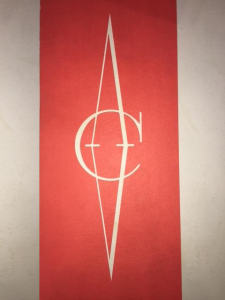
AAC Logo in 1963
An arts organization in financial crisis.
Programming abandoned
Summer education programming for students
Staff laid off
A challenge grant from donors
A community fundraising drive
Sound familiar?
In January 1968, the Arkansas Arts Center made the decision to cease operating a degree-granting education program effective May 31 of that year. Sixteen faculty members lost their jobs, though a couple were retained for other positions within the organization.
After opening in May 1963 and beginning the degree-granting program in September 1964, the Arkansas Arts Center found itself operating at a deficit each year. While Jeannette and Winthrop Rockefeller made up the deficits, it was not a sustainable model. (Mrs. Rockefeller had been the president of the AAC board for several years after she and her husband played leadership roles in the statewide fundraising efforts to establish the AAC.)
Though the degree-granting programs were bringing national recognition to the AAC, they had essentially taken over the entire facility. The theatre was rarely available for children’s programming or community groups. The galleries were given over largely to the displaying the works of the students and faculty. What had been envisioned as a facility melding world-class arts with community arts, was not functioning that way.
As such, the statewide membership program was suffering. Without the creation of programming in Little Rock, it was difficult to take any substantial arts offerings out to the membership clusters throughout the state. This resulted in the decline of memberships being purchased.
Following the announcement of the cessation of the degree-granting program, the AAC Board sought ways to more fully engage the public. Part of this was due to the fact that the Arts Center had a deficit of $295,216 (the equivalent of $2.15 million today). The only profitable part of the AAC operation was the gift shop. With that level of deficit, the permanent closure of the AAC was certainly a possibility on people’s minds.
A committee studying the future of the AAC decided to focus on five (5) areas. (And of course, AAC founding mother Jeane Hamilton was part of this effort.) The areas were Education (community classes for children and adults), Exhibits (a return to a mix of permanent and traveling exhibitions), Theatre (partnerships with Community Theatre of Little Rock and the creation of children and teen theatre productions), State Services (refocusing the Artmobile to include educational instruction), and Membership. This would result in a net budget of $260,000.
In April 1968, a fund drive was announced led by former Little Rock Mayor Byron Morse. The goal was $130,000, to be matched dollar-for-dollar by the Rockefellers. As of May of that year, it had raised $108,731.
There are many parallels between the AAC in 1968 and the Arkansas Repertory Theatre’s current predicament. While the causes of the financial woes may be different, the cures are very much the same.
Then, as now, the citizens of Little Rock and Arkansas had to step up and financially support an arts organization in financial crisis. Whereas the Rockefellers were matching gifts in 1968, the Windgate Foundation is matching gifts now. Just as the Arts Center renewed its focus on the community and redefined the way it did business, the Rep is now facing these same processes and predicaments.
What the future Rep will look like in terms of numbers and types of productions remains to be seen. But the core leadership team is touting a mantra of Professional, Affordable, and Sustainable. All of these are laudable. All are attainable. But all will require continued community commitment year in and year out.
An interesting side note: a key Arts Center Board member in 1968 was William Rector, the father of longtime Rep Board member Bill Rector who is currently part of the interim leadership team at the Rep. Let’s hope Bill has the same success in his endeavor as his father did.
Viva Center Artium
Repertorium Praeter Theatrum
 101 years ago today, John Fitzgerald Kennedy was born to Joe and Rose Kennedy, the second of nine children. Groomed for leadership by his parents, he was thrust even more into the path of political greatness following the World War II death of his elder brother Joe Jr. A war hero himself, following his leadership after the attack of PT-109, he was first elected to Congress from Massachusetts in 1946. He would be re-elected in 1948 and 1950. In 1952, he challenged incumbent Senator Henry Cabot Lodge and beat him. He was re-elected to the Senate in 1958.
 Another historic high school graduation took place on May 28, 1958. It was the first graduation ceremony for Little Rock Hall High School.
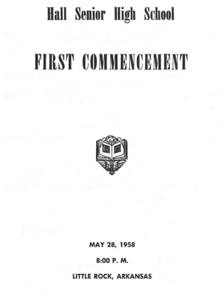 Principal Terrell E. Powell (who would be tapped as superintendent of the district in a few months) presided over the ceremonies. Superintendent Virgil Blossom (whose daughter had graduated from Central High the day before) spoke briefly to introduce the School Board members. One of them, R. A. Lile, presented the students with their diplomas.
 On May 27, 1955, on the stage of Robinson Auditorium, the Dunbar High School senior class graduated. This academic year marked not only the 25th anniversary of Dunbar’s opening, but it was the last year that the school building would offer junior high through junior college classes.
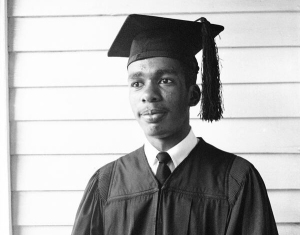 Last week, the Class of 2018 graduated from Little Rock Central High School. Perhaps the most famous graduation ceremony in the long-storied history of Little Rock Central High took place on May 27, 1958. It was on that date that Ernest Green became the first African American to graduate from the formerly all-white school.
 The day after the recall election, there was still uncertainty. The results were not uncertain – even the two boxes from Woodruff Elementary which were not counted until the the day after did not change the outcome.

