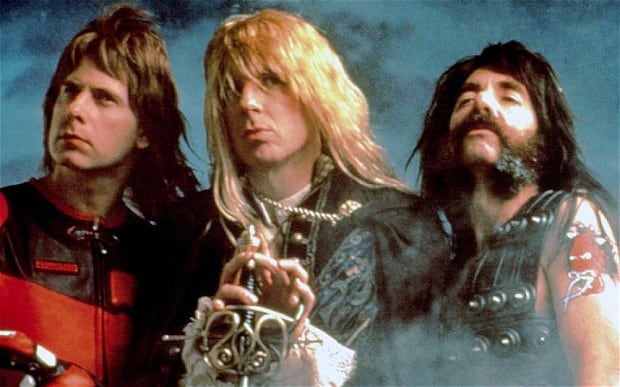
Go Up to 11 as CALS Ron Robinson Theater shows THIS IS SPINAL TAP tonight

This is Spinal Tap (1984, R)

“We’ve got, you know, armadillos in our trousers.”  And the CALS Ron Robinson Theater is the place to see them tonight when they screen This Is Spinal Tap.

Spinal Tap is the loudest band in England and they’re making a comeback with a North American tour promoting their new album Smell the Glove. Marty DiBergi (Rob Reiner) sets out to make a documentary of the legendary rock band’s exploits on the road, featuring front men Nigel Tufnel (Christopher Guest) and David St. Hubbins (Michael McKean) and bassist Derek Smalls (Harry Shearer), bearing witness to the highs and lows of what makes a musician into a rock star.

Doors open at 6:00 p.m. Film starts at 7:00 p.m. Beer, wine, and concessions will be available!

Join the ASO for 2nd Friday Art Night

Image may contain: text

The Arkansas Symphony Orchestra will be participating in 2nd Friday Art Night!

They are setting up shop in The Bookstore at Library Square where they will have a Instrument Petting Zoo and information about the upcoming Beethoven and Blue Jeans Concert!

Come say hello and maybe try an instrument out for the first time!

5pm to 8pm.

Florence Price focus of Mosaic Templars “Lunch and Learn” program today at 12 noon

Take a break from your work day for a Midday Music Moment at Mosaic Templars Cultural Center!  The program begins at 12 noon today (November 7).
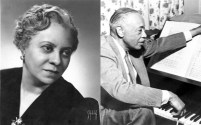
They are partnering with the Arkansas Symphony Orchestra to bring a special lunchtime presentation and performance by pianist/composer Karen Walwyn.

Karen will talk about one of Arkansas’s most renowned classical composers, Florence Price, and play snippets of her work. Karen will also lead discussion about the barriers that Price and other African American classical musicians have faced.

This is a free event.

Arkansas composers Florence Price and William Grant Still topic of noon Clinton School program today

In advance of the Beethoven & Blue Jeans concert, join conductor Andrew Grams and Linda Holzer, professor of music at University of Arkansas at Little Rock, on a discussion about the music of Arkansas composers William Grant Still and Florence Price.

It will take place at 12 noon at the Clinton School of Public Service.

American conductor Andrew Grams has steadily built a reputation for his dynamic concerts, ability to connect with audiences, and long-term orchestra building. He’s the winner of 2015 Conductor of the Year from the Illinois Council of Orchestras and has led orchestras throughout the United States. Now in his 7th ESO season, Andrew Grams became music director of the Elgin Symphony Orchestra after an international search.

Florence Price was the first African-American female composer to have a symphonic composition performed by a major American symphony orchestra. Born in Little Rock in 1887, she was valedictorian of her class at Little Rock’s Capitol Hill School.  After college, she returned to Little Rock, was married, and established a music studio, taught piano lessons, and wrote short pieces for piano.

The Prices moved to Chicago, Illinois, in 1927. There, Price seemed to have more professional opportunity for growth despite the breakdown and eventual dissolution of her marriage.  In 1928, G. Schirmer, a major publishing firm, accepted for publication Price’s “At the Cotton Gin.” After winning several composition awards, she had a piece premiere with the Chicago Symphony Orchestra on June 15, 1933.

Price’s art songs and spiritual arrangements were frequently performed by well-known artists of the day. For example, contralto Marian Anderson featured Price’s spiritual arrangement “My Soul’s Been Anchored in the Lord” in her famous performance on the steps of the Lincoln Memorial in Washington DC on Easter Sunday, April 9, 1939. European orchestras later played Price’s works.

William Grant Still was long known as the Dean of African American composers. Though not born in Little Rock, he spent much of his youth in the city.

Dr. Still, who wrote more than 150 compositions ranging from operas to arrangements of folk themes, is best known as a pioneer. He was the first African-American in the United States to have a symphonic composition performed by a major orchestra.

He was the first African American to conduct a major symphony orchestra in the US; the first to conduct a major symphony in the south; first to conduct a white radio orchestra in New York City; first to have an opera produced by a major company. Dr. Still was also the first African-American to have an opera televised over a national network


One final chance to see SOUVENIR with Christine Donahue and Timothy Smith presented by Opera in the Rock

Image may contain: 1 person, text and outdoor

Opera in the Rock presents the Tony-nominated play Souvenir: a Fantasia on the Life of Florence Foster Jenkins as a one-night only benefit encore performance of their smash hit!

The performance starts at 7:30pm on the Arkansas Repertory Theatre stage.

1964: Greenwich Village. Cosmé McMoon flashes back to the musical career of Florence Foster Jenkins, a wealthy New York socialite with an infamous prestige for singing out of tune. In 1932, she met McMoon and the two teamed up to foster Jenkins’ love for singing in the hopes of achieving success. Over the next dozen years, their bizarre partnership yielded hilariously off-key recitals that became the talk of the town and earned them cultish fame.

Christine Donahue and Timothy Smith take on these two spectacular characters for the last time one night only as a benefit performance for Opera In The Rock at The Rep.

Christine Donahue, soprano, has performed with numerous opera companies throughout the United States, Canada and abroad including New York City Opera, Cleveland Opera and Houston Grand Opera. She is presently Assistant Professor of Voice at University of Central Arkansas.

Mr. Smith is a professor of piano and music theory at Arkansas Tech University and has performed in numerous community musicals throughout the country. As an accomplished pianist, he has also played in orchestras for shows including Anything Goes, West Side Story, The King and I, and South Pacific.

Dedication of the Little Rock High School Auditorium on October 31, 1927

The stage and front seating area of the Central High Auditorium in September 2017.

On October 31, 1927, a recital took place in the auditorium of the new Little Rock High School which served as a dedication ceremony for the new high school auditorium.  The school had been serving students for several weeks by the time the recital took place.  The first day of school was Wednesday, September 14, 1927.

The star of the recital was Mary Lewis, a Little Rock High School graduate (from the previous location on Scott Street) who had made her Metropolitan Opera debut and become a toast of New York City.

The evening started with remarks from former Arkansas Governor Charles Brough, who had made a name for himself as an advocate for education before, during and after his stint in the statehouse.  He was followed by Miss Lewis, who sang over a dozen arias and musical selections.  For her final number she was supposed to sing “Home Sweet Home.”  After several attempts to sing it, she was so overcome with emotion that she had to abandon the effort.

For more on the opening event, read Jay Jennings’ excellent book Carry the Rock: Race, Football, and the Soul of an American City.

The 1927 schoolbuilding replaced one built in 1905 at 14th and Scott Streets (with an auditorium completed a few years later at 14th and Cumberland).  This new building was located in the western edges of Little Rock on what had been city parkland.  The former West End Park was now site to Little Rock High School.  The adjoining Kavanaugh Field was a baseball field on which Earl Quigley’s football Tigers also played their games.

Architects John Parks Almand, Lawson L. Delony, George R. Mann, Eugene John Stern, and George H. Wittenberg (virtually all of Little Rock’s full-time working architects at the time) designed the $1.5 million structure, which the New York Times dubbed the most expensive school ever built in the United States at that time.

Featuring a combination of Collegiate Gothic and Art Deco architecture, Central High spans two city blocks, comprising over 150,000 square feet of floor space, upon its completion. Requiring 36 million pounds of concrete and 370 tons of steel, the finished product consisted of 100 classrooms (accommodating over 1,800 students), a fireproof 2,000-seat auditorium, a gymnasium, and a greenhouse.

The six-story structure (counting the bell tower and basement) features a middle section containing the auditorium with four classroom wings (two per side) flanking a reflection pool in the foreground of the building. Faced with brick, the building’s highlights include pilasters and colonnades of cut stone, double-hung window frames with twelve lights per sash, and a main entry terrace supported by a colonnade of five masonry arches rising above Corinthian columns of stone.