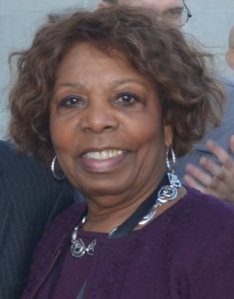
RobinsoNovember: Lawrence Hamilton

LawrenceHamiltonAnother notable former Little Rock performing artist who is memorialized at Robinson Center is Lawrence Hamilton.

The son of the Dr. Oscar and Mae Dell Hamilton, he was born in the small southwest Arkansas town of Foreman With an interest in music stemming from childhood, Hamilton earned a music scholarship to attend Henderson State University in Arkadelphia where he studied piano and voice He graduated in 1976 with a bachelor’s degree in music education.

From Arkansas, Hamilton traveled to Florida to work as a performer at Walt Disney World in Orlando, Florida where he would meet talent manager, Tommy Molinaro. This fateful meeting would prove to be a life-changing encounter, as Molinaro would invite Hamilton to come to New York to audition for the famed actor/director Geoffrey Holder. This marked the beginning of Hamilton’s bold and creative career in the performing arts, leading to performances on Broadway and on tours in Sophisticated Ladies, The Wiz,Uptown – Its Hot, Porgy and Bess, Big River, Play On!, and Jelly’s Last Jam among others. Perhaps his crowning achievement was starring in Ragtime.

Hamilton has been a member of the Southern Ballet Theater, Brooklyn Dance Theater, Ballet Tap USA, and the Arkansas Opera Theater He has performed in concert with the legendary Lena Horne at the White House for President and Mrs. Ronald Reagan, and at the Vatican for Pope John Paul II. Hamilton’s career also led to a stint as musical director for the renowned opera legend Jessye Norman, as well as vocal coach/arranger for the pop group New Kids on the Block

Upon his return to Arkansas, Hamilton served for several years as director of choral music at Philander Smith College. He also appeared in several plays at the Arkansas Repertory Theatre.  In addition, he performed at countless concerts, benefits and galas throughout Arkansas.  In 2003, he was inducted into the Arkansas Black Hall of Fame.  In 2008, he was appointed to the Little Rock Mayor’s Task Force on Tourism.

Hamilton died in New York in April 2014 due to complications from surgery.  Just weeks prior to the surgery, he had appeared in August Wilson’s The Piano Lesson in Cape Fear, North Carolina.  He had also starred in that play at Arkansas Rep a few years earlier.
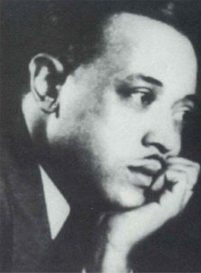
RobinsoNovember: Dr. William Grant Still

bhm StillLast night, the Arkansas Symphony Orchestra’s Opus Ball was the first public event in the William Grant Still Ballroom of Robinson Center.  This afternoon at 3pm, the Arkansas Symphony Youth Orchestra is playing a Still composition in a performance with Ballet Arkansas at the Albert Pike Memorial Temple on Scott Street.

Dr. William Grant Still was a legend in his own lifetime.  Dr. Still, who wrote more than 150 compositions ranging from operas to arrangements of folk themes, is best known as a pioneer. He was the first African-American in the United States to have a symphonic composition performed by a major orchestra. He was the first to conduct a major symphony orchestra in the US; the first to conduct a major symphony in the south; first to conduct a white radio orchestra in New York City; first to have an opera produced by a major company. Dr. Still was also the first African-American to have an opera televised over a national network

Dr. Still was born May 11, 1895 in Woodville, Mississippi to parents who were teachers and musicians. When Dr. Still was only a few months old, his father died and his mother took him to Little Rock. Inspired by RCA Red Seal operatic recordings, his musical education began with violin lessons.

After his studies at Wilberforce University and the Oberlin Conservatory of Music, he played in orchestras and orchestrated for various employers including the great W. C. Handy. For several years he arranged and conducted the “Deep River Hour” over CBS and WOR.

In the 1920’s, Still made his first appearances as a serious composer in New York. Several fellowships and commissions followed. In 1994, his “Festive Overture” captured the Jubilee prize of the Cincinnati Symphony orchestra. In 1953, he won a Freedoms Foundation Award for “To You, America!” which honored West Point’s Sesquicentennial Celebration. In 1961, he received honors for this orchestral work, “The Peaceful Land”. Dr. Still also received numerous honorary degrees from various colleges and universities, as well as various awards and a citation from Arkansas Governor Dale Bumpers in 1972.

In 1939, Dr. Still married journalist and concert pianist Verna Avery, who became his principal collaborator. They remained together until Dr. Still’s death in 1978.  In a proclamation marking the centennial of Dr. Still’s birth, President Bill Clinton praised the composer for creating “works of such beauty and passion that they pierced the artificial barriers of race, nationality and time.”

In 1995, Dr. Still was posthumously inducted into the Arkansas Black Hall of Fame.

Little Rock Look Back: William Grant Still

bhm StillLong known as the Dean of African American composers, Dr. William Grant Still was a legend in his own lifetime.

Dr. Still, who wrote more than 150 compositions ranging from operas to arrangements of folk themes, is best known as a pioneer. He was the first African-American in the United States to have a symphonic composition performed by a major orchestra. He was the first to conduct a major symphony orchestra in the US; the first to conduct a major symphony in the south; first to conduct a white radio orchestra in New York City; first to have an opera produced by a major company. Dr. Still was also the first African-American to have an opera televised over a national network

Dr. Still was born May 11, 1895 in Woodville, Mississippi to parents who were teachers and musicians. When Dr. Still was only a few months old, his father died and his mother took him to Little Rock. Inspired by RCA Red Seal operatic recordings, his musical education began with violin lessons.  He graduated from Gibbs High School in Little Rock.

After his studies at Wilberforce University and the Oberlin Conservatory of Music, he played in orchestras and orchestrated for various employers including the great W. C. Handy. For several years he arranged and conducted the “Deep River Hour” over CBS and WOR.  He also played in the orchestra for the 1921 musical Shuffle Along, which was the first Broadway musical to feature an all African-American cast and writing team.  A musical is currently on Broadway about the creation of that musical, but Still is not a character in it.

In the 1920’s, Still made his first appearances as a serious composer in New York. Several fellowships and commissions followed. In 1994, his “Festive Overture” captured the Jubilee prize of the Cincinnati Symphony orchestra. In 1953, he won a Freedoms Foundation Award for “To You, America!” which honored West Point’s Sesquicentennial Celebration. In 1961, he received honors for this orchestral work, “The Peaceful Land”. Dr. Still also received numerous honorary degrees from various colleges and universities, as well as various awards and a citation from Arkansas Governor Dale Bumpers in 1972.

In 1939, Dr. Still married journalist and concert pianist Verna Avery, who became his principal collaborator. They remained together until Dr. Still’s death in 1978.  In a proclamation marking the centennial of Dr. Still’s birth, President Bill Clinton praised the composer for creating “works of such beauty and passion that they pierced the artificial barriers of race, nationality and time.”

In 1995, Dr. Still was posthumously inducted into the Arkansas Black Hall of Fame.

Little Rock Look Back: Lottie Shackelford

Lottie at Civil RightsWhile this headline may say “Little Rock Look Back,” Lottie Shackelford is still very much focused on the present and the future!

On April 30, 1941, future Little Rock Mayor Lottie Shackelford was born. Throughout her career in public service she has been a trailblazer.

Active in community activities and politics, she ran for the City Board in 1974 and lost.  But she was appointed to the Little Rock City Board in September 1978 to fill a vacancy.  This made her the first African American woman to serve on he City Board, and indeed on any governing board for the City (during Reconstruction, there were at least three African Americans on the City Council, but they were all men.) She was subsequently elected to a full-term on the City Board in 1980 winning 55% of the vote over three male candidates.

She was subsequently re-elected in 1984 (unopposed) and in 1988 (with 60% of the vote).

In January 1987, Shackelford became the first female mayor of Little Rock when she was chosen by her colleagues on the City Board to serve in that position. She was Mayor until December 1988.

From 1982 until 1992, she served as Executive Director of the Arkansas Regional Minority Purchasing Council.  She left that position to serve as Deputy Campaign Manager of Clinton for President.  She subsequently served on the Clinton/Gore transition team. She later served on the Overseas Private Investment Corporation from 1993 to 2003. She was the first African American to be in that position.

A graduate of Philander Smith College, she has also studied at the Arkansas Institute of Politics at Hendrix College and the Kennedy School of Government at Harvard University.

Mayor Shackelford has also served on numerous boards including the Little Rock Airport Commission, Philander Smith College, Chapman Funds (Maryland) and Medicis Pharmaceutical Corporation (Arizona).  She has been the longest serving Vice-Chair of the Democratic National Committee.

Mayor Shackelford was in the first class of inductees for the Arkansas Black Hall of Fame.  In 2015, she was inducted into the Arkansas Civil Rights Heritage Trail.

The Honorable Timothy C. Evans delivers 2016 Arkansas Black Hall of Fame Laureate Lecture tonight at Mosaic Templars Cultural Center

ABHOF TCE 2012The Arkansas Black Hall of Fame and the Mosaic Templars Cultural Center tonight present the The Honorable Timothy C. Evans as the Distinguished Laureate Lecture tonight (February 25) at 6pm.  Doors open at 5:30.

Native Arkansan, The Honorable Timothy C. Evans, is the Chief Judge of one of the largest circuit court systems in the world. He is the first African American to be elected to this position where he oversees 400 judges and more than 2,700 non-judicial employees. He is the recipient of the prestigious William H. Rehnquist Award for Judicial Excellence, presented annually by the Chief Justice of the United States Supreme Court. Judge Evans is returning to Arkansas to share his experiences as Chief Judge and his insight on:

  • Social and racial Justice in America
  • Alternative sentencing for juveniles and nonviolent offenders
  • Criminal justice system reform
  • Interpretations of the laws governing Grand Jury decisions

The discussion of these and other topics from the perspective of an award winning judge, tasked with leading one of the largest judicial systems in the world, will provide additional insight as Little Rock and Arkansas address similar challenges.   Chicago has garnered national media attention with increased incidences of crime, violence and police shooting incidents in minority communities. This discussion is sure to evoke community conversations that will allow Arkansas to seek solutions for social and racial justice issues in our state, cities and communities.

To RSVP, click here.


Black History Month Spotlight – Mosaic Templars Cultural Center

The new Arkansas Civil Rights History Audio Tour was launched in November 2015. Produced by the City of Little Rock and the University of Arkansas at Little Rock allows the many places and stories of the City’s Civil Rights history to come to life an interactive tour.  This month, during Black History Month, the Culture Vulture looks at some of the stops on this tour which focus on African American history.
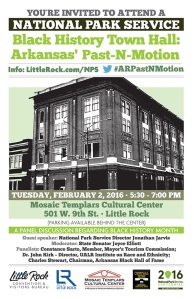
The Mosaic Templars Cultural Center and Museum collects, preserves, interprets and celebrates Arkansas’s unique African American political, economic, and social achievement from 1865 to 1950. The Center resides in the footprint of the original Mosaic Templars of America National Headquarters and Annex Buildings.

The permanent museum exhibits depict historic West Ninth Street as a thriving commercial and social hub, focusing on the black entrepreneurship, Templars organization, and the legacy of black legislators. Between 1868 and 1893, eighty-five African Americans served in the Arkansas General Assembly. The majority served in the House, with nine in the Senate. Election laws passed in 1891, together with a poll tax in 1832, ended the election of African Americans to the legislature. No black person served again until the General Assembly in 1973.

In addition to community educational programs, the Center offers a genealogy research room, an art collection created by local talent, and a well-stocked store. The Center’s third floor features a replica of the original Headquarters Building auditorium and the Arkansas Black Hall of Fame galleries.

The Center is a museum of the Department of Arkansas Heritage and admission is free.

The app, funded by a generous grant from the Arkansas Humanities Council, was a collaboration among UALR’s Institute on Race and Ethnicity, the City of Little Rock, the Mayor’s Tourism Commission, and KUAR, UALR’s public radio station, with assistance from the Little Rock Convention and Visitors Bureau.

National Park Service Director, Local Leaders to Speak at Black History Month Town Hall Meeting

Feb 2 NPS eventLittle Rock Central High School National Historic Site in partnership with Little Rock Convention & Visitors Bureau, Mosaic Templars Cultural Center and the City of Little Rock, invite the public to join them for a Black History Month Town Hall Meeting entitled Arkansas’s Past-N-Motion to be held at Mosaic Templars Cultural Center at 5:30pm on February 2, 2016.

National Park Service Agency Director Jonathan Jarvis will serve as the guest speaker, and will discuss the National Parks Centennial Celebration, his tour to several of our nation’s civil rights-related historic sites and parks, and the importance of the National Park Service’s role in preserving and sharing our country’s history for future generations.  After his remarks, a panel discussion with local individuals will discuss several local institutions, and their roles and recent initiatives in preserving and sharing our city’s African American history, and its unique place in our nation’s civil rights movement.  This discussion will feature State Senator Joyce Elliott as moderator, and feature local panelists: Constance Sarto, Member, Mayor’s Tourism Commission; Dr. John Kirk – Director, UALR Institute on Race and Ethnicity; and Charles Stewart, Chairman, Arkansas Black Hall of Fame.

This Town Hall Meeting will highlight the resources of Civil Right institutions both from a national and local perspective, and the role of the National Park Service as the nation’s storyteller as it prepares to embark upon its Centennial 100th Birthday celebration on August 25, 2016.

During Director Jarvis’ time in Arkansas, he plans to visit Little Rock Central High School National Historic Site, engage Youth Leadership Academy members from Central High School as well as elementary students around the new White House youth initiative to get all 4th graders and their families to experience the places that are home to our country’s natural treasures, rich history, and vibrant culture FREE OF CHARGE! His visit to Arkansas will mark the start of Director Jarvis’ month-long endeavor to promote Civil Rights Sites during Black History Month.

They have also created the hashtag #ARPastNMotion to encourage local community groups to share information regarding any upcoming events relating to Black History Month.

For more information, please contact Enimini Ekong at (501) 396-3006 or Enimini_Ekong@nps.gov, or visit www.LittleRock.com/NPS.

Little Rock Central High School National Historic Site is located at 2120 Daisy L. Gatson Bates Drive, diagonally across the street from Central High School. The visitor center is open from 9:00 a.m. – 4:30 p.m. Monday through Sunday.  Admission is free. For more information call (501) 374-1957 or email chsc_visitor_center@nps.gov.