2015 In Memoriam – Ozell Sutton

1515 Sutton

In these final days of 2015, we pause to look back at 15 who influenced Little Rock’s cultural scene who left us in 2015.

Ozell Sutton was a writer and eyewitness to history, while making some of his own too.

Born in Gould, he moved with his family to Little Rock and graduate from Dunbar High School and Philander Smith College. In 1950, he became the Arkansas Democrat‘s first African American reporter.

He was at Central High when the Little a Rock Nine integrated, marched with Dr Martin Luther King Jr. in Washington in 1963 and was with Dr King when he was assassinated in 1968.

He served as an aide to Gov. Winthrop Rockefeller from 1968 to 1970. From 1972 to 2003 he work for the U.S. Department of Justice Community Relations Service in Atlanta. In that capacity he was often on the forefront in efforts to diffuse racially tense situations.

In 1962, he received an honorary doctorate from Philander Smith in recognition of his political activism in the civil rights movement. He was awarded the Distinguished Service Award by the Department of Justice in 1994.  He also was awarded the Medallion of Freedom by the National Association for the Advancement of Colored People (NAACP).

In 2012, he was presented with the Congressional Gold Medal in recognition for his being one of the first African Americans to serve in the Marine Corps. His book “From Yonder to Here:” A Memoir of Dr. Ozell Sutton was published in 2009.  In 2013, he was honored by inclusion on the Arkansas Civil Rights Heritage This designation came for his work in 1963 to desegregate downtown Little Rock’s businesses.

Ozell Sutton was inducted into the Arkansas Black Hall of Fame in 2001.

Little Rock Look Back: LR Mayor Charles Bussey

Mayor Bussey BWFuture Little Rock Mayor Charles Bussey was born on December 18 in 1918.  Throughout his life he was a trailblazer.  He was the first African American Sheriff’s Deputy in Pulaski County and expanded the Junior Deputy program into the African American community.

In 1968 he became the first African American elected to the Little Rock City Board of Directors. He was not the first African American to run for the City Board, but he was the first to win a race.  Mr. Bussey sought support not just from the African American community, but from all sectors of Little Rock.  Apparently, while campaigning in 1968, he deliberately went into the Arkansas headquarters of segregationist presidential candidate George Wallace to see about leaving campaign literature.  A hulking man with a broad smile, he shocked the young receptionist. He was undoubtedly the first (and probably last) African American to enter that campaign headquarters.

He served from 1969-1977 and again from 1979 through 1991.  In 1981 he was selected by his fellow City Directors to serve as Little Rock’s Mayor, which made him the first African American Mayor of Little Rock.  He served as Vice Mayor of Little Rock for a total of 8.5 years which is the longest of anyone in the City’s history.

Throughout his lifetime Mayor Bussey championed youth outreach efforts.  He also was active in the Arkansas Municipal League, National League of Cities, West Little Rock Rotary Club, Elks, Shriners and many other organizations.

In 2006 he was posthumously inducted into the Arkansas Black Hall of Fame.  The previous year, 20th Street in Little Rock was renamed in his honor. In 2015 he was included in the Arkansas Civil Rights Heritage Trail.

Creative Class of 2015: Sericia Cole

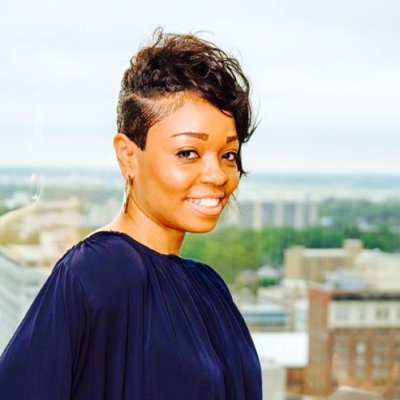
sericiaSericia Cole has quietly and quickly transformed the Mosaic Templars Cultural Center.  She was named interim director in July 2012 and permanently took the post in November of that year.  Since then, she has expanded programming and outreach efforts of the museum.

Under her leadership, Mosaic Templars has started lunchtime lecture series and has expanded its exhibition schedule.  She has also worked to ensure that special events take place year-round at the museum.  In addition to exhibits on a variety of aspects of African American history in Arkansas, the museum is the permanent home of the Arkansas Black Hall of Fame.

A Little Rock native and UALR graduate, she has previously worked for Governor Mike Beebe, Philander Smith College, Wildwood Park for the Arts, and KATV.


Little Rock Look Back: Mayor Lottie Shackelford

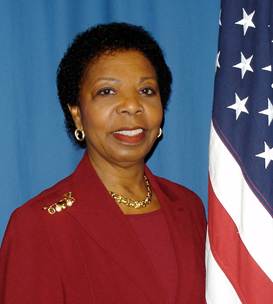
Mayor Lottie_ShackelfordOn April 30, 1941, future Little Rock Mayor Lottie Shackelford was born. Throughout her career in public service she has been a trailblazer.

Active in community activities and politics, she ran for the City Board in 1974 and lost.  But she was appointed to the Little Rock City Board in September 1978 to fill a vacancy.  This made her the first African American woman to serve on he City Board, and indeed on any governing board for the City (during Reconstruction, there were at least three African Americans on the City Council, but they were all men.) She was subsequently elected to a full-term on the City Board in 1980 winning 55% of the vote over three male candidates.

She was subsequently re-elected in 1984 (unopposed) and in 1988 (with 60% of the vote).

In January 1987, Shackelford became the first female mayor of Little Rock when she was chosen by her colleagues on the City Board to serve in that position. She was Mayor until December 1988.

From 1982 until 1992, she served as Executive Director of the Arkansas Regional Minority Purchasing Council.  She left that position to serve as Deputy Campaign Manager of Clinton for President.  She subsequently served on the Clinton/Gore transition team. She later served on the Overseas Private Investment Corporation from 1993 to 2003. She was the first African American to be in that position.

A graduate of Philander Smith College, she has also studied at the Arkansas Institute of Politics at Hendrix College and the Kennedy School of Government at Harvard University.

Mayor Shackelford has also served on numerous boards including the Little Rock Airport Commission, Philander Smith College, Chapman Funds (Maryland) and Medicis Pharmaceutical Corporation (Arizona).  She has been the longest serving Vice-Chair of the Democratic National Committee.

Mayor Shackelford was in the first class of inductees for the Arkansas Black Hall of Fame.

Black History Month Spotlight: Lenny Williams


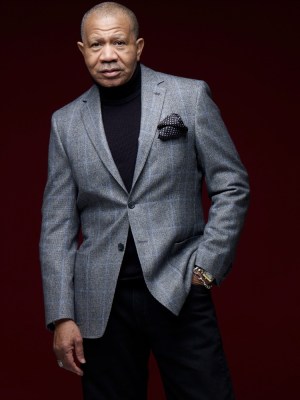
Lenny Williams possesses one of the most distinctive voices in contemporary music. 

Leonard Charles “Lenny” Williams was born February 16, 1945 in Little Rock, Arkansas. At a young age he moved to Oakland, California.

His interest in music was initially fueled when he learned to play the trumpet in elementary school, and his skills as a vocalist were nurtured by singing in gospel choirs and groups around the Bay Area. Lenny participated in numerous talent contests and after winning several, he signed his first recording contract with Fantasy Records. He cut two singles for the label including “Lisa’s Gone” and “Feelin’ Blue.”

In 1972, Lenny joined the emerging funk band Tower of Power. A string of hits followed. During his time with Tower of Power the group also recorded three albums: Back To Oakland, Urban Renewal and the gold LP Tower Of Power. Lenny and Tower of Power toured throughout the United States, Europe and Asia.

At the end of 1975, Lenny returned to his solo projects. Initially signing with Motown Records, he later moved to ABC Records in 1977 (later purchased by MCA Records). Over the next four years he scored ten chart hits, including “Shoo Doo FuFu Ooh,” “Choosing You,” “You Got Me Running,” “Love Hurt Me Love Healed Me,” and “Midnight Girl”. Lenny recorded four more albums from 1977 to 1980: Choosing You, his first gold LP; Spark Of Love; Love Current; and Let’s Do It Today.

Over the past few years, Lenny has continued his solo career, touring the US, Europe and South Africa. Lenny Williams’ style has transcended into the new millennium, influencing many of today’s newest R & B and Pop vocalists. He has recently shared stages with such notables as Aretha Franklin, The Whispers, Rick James, Boney James, Bobby Womack, Ohio Players, Al Green, Usher, K-Ci & JoJo, Alicia Keys, Anthony Hamilton and Frankie Beverly and Maze. Lenny has also expanded his multidimensional career to include acting, starring in several stages plays including “Love On Lay Away,” “What Men Don’t Tell” and “When A Woman’s Fed Up.”

He continues making music today. In 2012 he was inducted into the Arkansas Black Hall of Fame.  To learn more about Lenny Willams and other inductees, visit the exhibit at the Mosaic Templars Cultural Center. That museum is an agency of the Department of Arkansas Heritage.  

Black History Month Spotlight: Sheryl Underwood

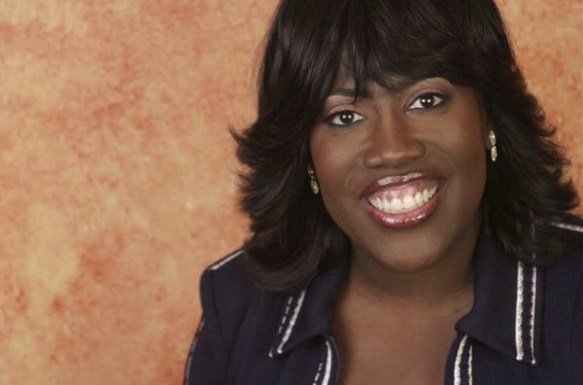
Sheryl Underwood was born in Little Rock in 1963. After graduating from college, she served in the military. In 1989 she became the first female finalist in the Miller Lite Comedy Search.  Today, she is a panelist on CBS Daytime’s hit show “The Talk.”

In addition to her TV appearances, she is an entrepreneur, entertainer, studio executive and  International President of her beloved Zeta Phi Beta Sorority, Inc.

Named one of today’s hardest working comediennes, Underwood has starred in such films as “Bullworth,” “I Got the Hook Up” and “Beauty Shop,” starring Queen Latifah. In addition, Underwood was the host of Black Entertainment Television’s (BET’s) “Comic View” and “Holla,” a talk show she created and produced which was loosely based on Bill Maher’s “Politically Incorrect.”

She is a weekly contributor on the “Steve Harvey Morning Show,” also serving as guest host, and appears on “The Steve Harvey Project,” the television version of the show airing on TV-ONE. Underwood also hosts “The Sheryl Underwood Show” on Jamie Foxx’s “The Foxxhole,” airing on Sirius 106/XM 149, where she provides a mix of political satire, comedy and music.

In 2007, she was inducted into the Arkansas Black Hall of Fame.  To learn more about Sheryl Underwood and other inductees, visit the exhibit at the Mosaic Templars Cultural Center. that museum is an agency of the Department of Arkansas Heritage.

Noted African American Scholar to speak tonight at Clinton Library


The Clinton Foundation in conjunction with the City of Little Rock and the Arkansas Black Hall of Fame presents a Black History  Month program this evening.  This year’s featured speaker is Dr. Robert L. Williams II. 

Dr. Williams is a Professor Emeritus of Psychology and African and Afro-American Studies at the Washington University in St. Louis and a prominent figure in the history of African-American Psychology. 

He is well known as the stalwart critic of racial and cultural biases in IQ testing, for coining the word “Ebonics” in 1973. He has published more than 60 professional articles and several books. 

He was a founding member of the Association of Black Psychologists. Dr. Williams was a 2011 inductee into the Arkansas Black Hall of Fame. 

The program will begin at 6pm at the Clinton Center in the Great Hall. A reception will follow.