Little Rock Look Back: 19th Century Mardi Gras in LR

In the era immediately after the Civil War, Mardi Gras was a major event in Little Rock.  By the 1870s, newspapers would have stories for several days about preparations for parties and parades which would be followed by coverage summarizing the events.

For instance, the Ash Wednesday 1877 edition of the Arkansas Gazette carried a front page story that discussed Mardi Gras in New Orleans and Memphis.  Inside the paper there were a series of stories about the downtown Little Rock Mardi Gras parade.  It started at Markham and Rock Streets.  Because of the crowd assembled for it, organizers had to reroute the parade that afternoon.

Among the entries were the Fat Men’s Club, Butchers’ Benevolent Association (which rode on horses), the Mystic Krewe, and several trade groups.  In addition there were many people who marched along in masks.  The unnamed writer bemoaned the fact that the masked revelers’ clothing had no theme.

On Thursday, February 15, 1877, there were stories about some of the Mardi Gras balls which had taken place two nights earlier.  The paper’s deadline probably was earlier than the parties ended, which is why they were not in the paper until two days later.  Among the various events were the Knights of Pythian Ball at the Grand Opera House, the aforementioned Fat Men at a special pavilion set up in the Main Street Cotton Shed, the Mystic Krewe at O’Haras Hall, and the Cosmopolitans at Concordia Hall.  There were other events that the writer was not able to attend due to lack of time.

Some of the venues also played host to balls in advance of Mardi Gras.  The February 10 Gazette previews some events set for Friday and Saturday night.

By the start of the 20th Century, Mardi Gras was no longer a major social event in Little Rock.  But while it lasted, it was quite the production.  It appealed to all classes and races of Little Rock’s citizenry. Though most of the events were segregated, the parade did allow for African Americans to participate as well as the white revelers.

Newspaper man, Sheriff, County Judge, Senator and Baseball promoter: WILLIAM MARMADUKE KAVANAUGH

On March 3, 1866, William Marmaduke Kavanaugh was born in Alabama. He later moved with his family to Kentucky before coming to Little Rock as a newspaper reporter.

Kavanaugh served as editor and manager of the Arkansas Gazette before entering politics.  From 1896 until 1900, he served as Pulaski County Sheriff, which at the time also included the duties of tax collector.

From 1900 until 1904, he was County Judge of Pulaski County.  In that capacity he helped wrangle several cities, railroads and trolley lines to create a compromise which lead to the completion of the Third Street Viaduct which connected Little Rock with Pulaski Heights. It is still in use today.

After leaving his post as County Judge, he had a varied career in banking and business interests.

When Senator Jeff Davis died in early January 1913, he left the last few weeks of his term incomplete as well as the new term he was set to start in March 1913.  There was much interest in who would fill the remainder of Davis’ current term, because that person might be the frontrunner to also fill out the new term.  (This was at the time that the U.S. Senators were still selected by state legislatures.) Defeated Governor George Donaghey appointed J. N. Heiskell to fill out the term. But once the Arkansas General Assembly convened in mid-January, they overrode Donaghey’s appointment and replaced Heiskell with Kavanaugh.

Kavanaugh served in the Senate from January 29, 1913 until March 3, 1913.  He was succeeded by Joseph T. Robinson who had only recently taken office as Governor.  Speculation was that Kavanaugh would not want the full six year term, so that he was acceptable choice to all of the politicians jockeying for the full appointment.  From 1912 until 1915, he was an Arkansas member of the Democratic National Committee.

Another interest of Kavanaugh’s was baseball.  He served as president of the Southern Association minor league starting in 1903.  The baseball field in Little Rock situated at West End Park was named Kavanaugh Field in his honor.  It stood until the 1930s when it was replaced by what is now known as Quigley Stadium.  (In 1927, Little Rock High School had opened on the land which had been West End Park.)

Kavanaugh died on February 2, 1915 at the age of 48.  He is buried in Oakland Cemetery.

Prospect Road was renamed Kavanaugh Boulevard in his memory.

Little Rock Look Back: SCOTUS decision in BATES v LITTLE ROCK case

On February 23, 1960, the U. S. Supreme Court handed down a decision in the case of Daisy BATES et al., Petitioners, v. CITY OF LITTLE ROCK et al.  This case had been argued before the Court in November 1959.

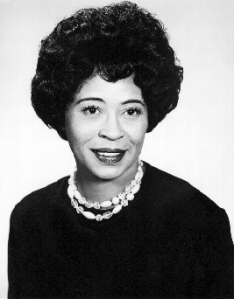
Daisy Bates of Little Rock and Birdie Williams of North Little Rock were the petitioners.  Each had been convicted of violating an identical ordinance of an Arkansas municipality by refusing a demand to furnish city officials with a list of the names of the members of a local branch of the National Association for the Advancement of Colored People. The question for decision was whether these convictions can stand under the Due Process Clause of the Fourteenth Amendment to the United States Constitution.

The Little Rock ordinance (10,638) was passed on October 14, 1957. It charged that certain non-profits were actually functioning as businesses and using non-profit status to skirt the law. Therefore it required the non-profits to disclose their members and sources of dues.  North Little Rock passed an identical ordinance.

(Mayor Woodrow Mann was not present at the meeting of the LR Council when the ordinance was passed. But he signed all of the resolutions and ordinances approved that night.  Ordinance 10,638 was the only legislation that night which had also been signed by Acting Mayor Franklin Loy.  Mayor Mann crossed through Loy’s name and signed his own.)

Mrs. Bates and Mrs. Williams as keepers of the records for their respective chapters of the NAACP refused to comply with the law.  While they provided most of the information requested, they contended they did not have to provide the membership rosters and dues paid.

After refusing upon further demand to submit the names of the members of her organization, each was tried, convicted, and fined for a violation of the ordinance of her respective municipality. At the Bates trial evidence was offered to show that many former members of the local organization had declined to renew their membership because of the existence of the ordinance in question. Similar evidence was received in the Williams trial, as well as evidence that those who had been publicly identified in the community as members of the National Association for the Advancement of Colored People had been subjected to harassment and threats of bodily harm.

Each woman was convicted in the court of Pulaski Circuit Court, First Division, William J. KirbyJudge. They were fined $25 a person.  On appeal the cases were consolidated in the Supreme Court of Arkansas in 1958. The convictions were upheld by five justices with George Rose Smith and J. Seaborn Holt dissenting.

Mrs. Bates and Mrs. Williams then appealed to the U. S. Supreme Court.  The pair’s legal team included Robert L. Carter and George Howard, Jr. (who would later become a federal judge).  Little Rock City Attorney Joseph Kemp argued the case for the City.  The arguments before the U. S. Supreme Court were heard on November 18, 1959.

The SCOTUS decision was written by Associate Justice Potter Stewart.  He was joined by Chief Justice Earl Warren and Associate Justices Felix Frankfurter, Tom C. Clark, John M. Harlan II, William J. Brennan and Charles E. Whittaker.  Justices Hugo Black and William O. Douglas wrote a concurring opinion.

The U. S. Supreme Court reversed the lower courts.

In sum, there is a complete failure in this record to show (1) that the organizations were engaged in any occupation for which a license would be required, even if the occupation were conducted for a profit; (2) that the cities have ever asserted a claim against the organizations for payment of an occupation license tax; (3) that the organizations have ever asserted exemption from a tax imposed by the municipalities, either because of their alleged nonprofit character or for any other reason.

We conclude that the municipalities have failed to demonstrate a controlling justification for the deterrence of free association which compulsory disclosure of the membership lists would cause. The petitioners cannot be punished for refusing to produce information which the municipalities could not constitutionally require. The judgments cannot stand.

In their concurring opinion, Justices Black and Douglas wrote that they felt the facts not only violated freedom of speech and assembly from the First Amendment, but also aspects of the Fourteenth Amendment. They wrote that the freedom of assembly (including freedom of association) was a principle to be applied “to all people under our Constitution irrespective of their race, color, politics, or religion. That is, for us, the essence of the present opinion of the Court.”

Neither the Gazette or Democrat carried any reaction from City leaders. There was a City Board meeting the evening of the decision. If it was mentioned, the minutes from the meeting do not reflect it.

Arkansas Attorney General Bruce Bennett, on the other hand, was very vocal in his outrage. The city laws were known as Bennett Laws because they had been drafted by him as ways to intimidate African Americans and others he viewed as agitators.

In 1960 Bennett was challenging Governor Orval Faubus for the Democratic gubernatorial nomination.  In reaction to the to the Supreme Court he vowed that, if elected Governor, he would “de-integrate” (a term he proudly took credit for coining) the state.

For his part, and not to be outdone by the AG, Faubus fretted that the Court’s decision meant that Communists would be able to give money to the NAACP.

SELMA on CALS Ron Robinson Theatre screen tonight as part of “Movies of a Movement” series

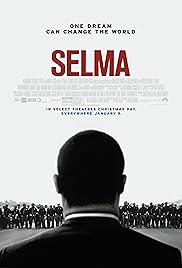
Selma PosterTonight (February 21) at the CALS Ron Robinson Theater, there is the chance to view SELMA, the 2014 movie about Dr. Martin Luther King, Jr.’s campaign to secure equal voting rights via an epic march from Selma to Montgomery, Alabama, in 1965.. The screening starts at 6:30.  Admission is $5.00

This movie is a part of the CALS Movies of a Movement: the Civil Rights & Social Change Collection.

The unforgettable true story chronicles the tumultuous three-month period in 1965, when Dr. Martin Luther King, Jr. led a dangerous campaign to secure equal voting rights in the face of violent opposition. The epic march from Selma to Montgomery culminated in President Johnson signing the Voting Rights Act of 1965, one of the most significant victories for the civil rights movement.

Direced by Ava DuVernay, it stars David Oyelowo as Dr. King and Carmen Ejogo as Coretta Scott King. Others in the cast include Tom Wilkinson, Giovanni Ribisi, Andre Holland, Ruben Santiago-Hudson, Colman Domingo, Common, Lorraine Toussaint, Dylan Baker, Niecy Nash, Tim Roth, and Stephen Root.  John Lavelle plays former Arkansas Gazette reporter Roy Reed who covered Selma for The New York Times.

Rock the Oscars 2019: Roy Reed

It is possible that journalist extraordinaire Roy Reed appears in archival footage of the Oscar winning documentary “Nine from Little Rock” (Documentary, Short-1964) and Oscar nominated Eyes on the Prize: Bridge to Freedom 1965 (Documentary, Feature-1988).  First for the Arkansas Gazette and then for The New York Times, Reed was an eyewitness to history being made.  What is not in doubt is that he is a character in the Oscar winning film Selma.  In that movie, he was played by actor John Lavelle.

Roy Reed was born on February 14, 1930, in Hot Springs and grew up in Garland County. After attending Ouachita Baptist College and the University of Missouri (from which he would receive a Bachelor’s and a Master’s in Journalism), Reed worked for a newspaper in Joplin and served in the US Army.  In 1956, he returned to Arkansas to work for the Arkansas Gazette.

While he did not specifically cover the integration of Little Rock Central High in 1957, he was part of the paper’s coverage of civil rights. He later was assigned to cover the Faubus administration.  In 1965, he was hired by The New York Times and covered the South. He covered the historic Freedom March to the state Capitol in Montgomery in March 1965.  After spending 1965 and 1966 in the South, he was assigned to the Times’ Washington DC bureau.  In 1969, he moved to New Orleans to open a Southern bureau for the paper.  He remained in the Crescent City until 1976, when he was transferred to the London bureau.

After retiring in 1978, he moved to Northwest Arkansas and taught journalism at the University of Arkansas until 1995.  Reed continued to write essays and books including Faubus: The Life and Times of an American Prodigal (1997),  Looking Back at the Arkansas Gazette: An Oral History (2009) and Beware of Limbo Dancers: A Correspondent’s Adventures with the New York Times (2012).  Reed died in December 2017.

Rock the Oscars 2019: TRUE GRIT (both versions)

In 1969, Arkansan Charles Portis’ novel True Grit was made into a movie starring John Wayne and Arkansan Glen Campbell.  Kim Darby, Robert Duvall, Dennis Hopper, Jeff Corey and Strother Martin are also in the cast.

The movie was directed by Henry Hathaway, produced by Hal B. Wallis, and written by Marguerite Roberts.  Wilford Brimley and Jay Silverheels are uncredited actors in the movie.

Though set in Arkansas and Oklahoma, the movie was filmed in Colorado.  Elvis Presley was the first choice for the part Campbell would play. But when his manager demanded top billing (over Wayne), he was bypassed and the part went to Campbell.

The movie was nominated for two Oscars: Wayne for Best Actor and composer Elmer Bernstein and lyricist Don Black for the song “True Grit.”  The latter had been sung by Campbell in the movie.

Wayne won the Oscar that night, his only win.  He would reprise the character of Rooster Cogburn in the eponymously named sequel in 1975. This film, in which he co-starred with Katharine Hepburn, was his penultimate film.

In 1970, Campbell teamed up with Kim Darby again in a film written by Roberts based on a Portis book. This time it was Norwood.  It also starred Joe Namath, Carol Lynley, Meredith MacRae, and Dom DeLuise.  It did not repeat the success of the earlier Portis based movie.

In 2010, the Coen Brothers released a new version of Charles Portis’ True Grit.  Co-written and co-directed by Ethan and Joel Coen, it starred Jeff Bridges, Matt Damon, Hailee Steinfeld, Josh Brolin, Barry Pepper, Domhnall Gleeson and Elizabeth Marvel.  Unlike the original film, which was filmed in Colorado, this film was actually filmed partially in Arkansas, where  several scenes takes place.  Filming also took place in Texas.  Many Arkansas actors appeared in the film, but at the risk of omitting some, there will not be an attempt to name them.

The film received ten Oscar nominations: Best Picture, Adapted Screenplay, Directing, Leading Actor (Bridges), Supporting Actress (Steinfeld), Cinematography, Costume Design, Sound Mixing, Sound Editing, and Art Direction.  Sadly, the film went home empty handed.

Little Rock Look Back: First night of first TABRIZ

After over a decade of the Beaux Arts Bal (it was spelled the French way with only one “L”), a change was afoot in 1971. Because of the need to raise more money for the Arkansas Arts Center, the Fine Arts Club decided to replace their evening of dining and dancing with an auction event.

While there had undoubtedly been thrift sales and small-scale bidding on items to raise money in Little Rock, this effort would be the first large-scale endeavor to use an auction as part of a fundraiser.   In order to maximize the fundraising potential, it was decided this would be a two-night event. The first night (Friday, February 12) would be casual with a silent auction while the second (Saturday, February 13) would be formal.

There were two major reasons the Fine Arts Club needed to raise more money.  The National Endowment for the Arts had issued the Arts Center a challenge grant which required a $10,000 match. In addition, the Arkansas Arts Center was trying to build up an endowment for future purchases.  (This was less than three years after the facility had been faced with closing its doors.)

The name Tabriz was chosen because it was the name of a cultural city in the Mideast known for its marketplace.  The first edition had the tagline of “A Persian Market of All Things.”

The logo was designed by Jim Johnson of the firm then-known as Cranford/Johnson Associates. The decorations echoed the exotic theme employing palm trees, ferns, ceramic elephants, paisley fabric swaths, and turbans.

Among those working on the first Tabriz were Jane McGehee Wilson, Betty Mitchell, Betty Terry, Frances Cranford, Feetie Hurst, Tina Poe, Annette Connaway, Willie Oates, Phyllis Brandon, Jane Wolfe, and Mary Worthen.

Over 650 people attended the Friday night event. Admission of $5 provided sandwiches (conflicting newspaper accounts indicate either coldcut sandwiches or hot dogs) and beer.  Mixed drinks were an additional $1.

Newspaper coverage indicated that men wore “sports outfits,” suits without ties, or colorful parkas. It attracted men with “longhair and beards” and “conventional haircuts.” (Depending on who the writer was, “longhair” could have meant anything over one inch.)  The women that Friday favored maxi or midi skirts. There were no mini skirts on hand, but a Gazette reporter noted that some women were wearing hot pants which might make a mini skirt look long.

Music was provided by the trio of Tom, Jerry, and Barbara.

Because a Silent Auction was such a new thing, newspaper coverage pointed out that the rooms were actually quite full of sound as people chatted with each other both about bidding on the items and socializing in general.

To give people a preview of the auction items, the Arts Center galleries had been opened for viewing on the Sunday and Monday prior to the Friday and Saturday events.  An auction catalog was also available for pickup in advance of Friday.

Among the items up for bid were tennis and golf lessons, visits to beauty salons, credit at a pharmacy, a tour of the Municipal Courts building and lunch with city prisoners, a tour of the Little Rock Zoo, jewelry, artwork, tickets to Razorback games, a football jersey worn by Lance Alworth, a week in Las Vegas (one of only three items with a minimum bid), and a subscription to an answering service.

When all was said and done, the evening raised $9,500 for the Arkansas Arts Center.