Little Rock Look Back: War Memorial Stadium formally approved

On March 18, 1947, Governor Ben T. Laney signed the bill into law which authorized the construction of War Memorial Stadium.

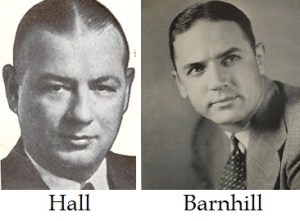
The plans for the stadium were the brainchild of Arkansas Secretary of State C.G. “Crip” Hall and University of Arkansas Athletic Director John Barnhill.

Apparently the Southwest Conference was threatening to kick Arkansas out because of an inadequate football facility. Since the University did not have the funds to build a new one on its campus, Barnhill and Hall decided that the state should build one. Many other states were building War Memorial facilities of a variety of natures. The duo decided that the new football facility could be a War Memorial Stadium to pay tribute to the men who died in the recently concluded World War II.  While the stadium was touted as being of use to all colleges in the state and a variety of other types of activities, it was very much designed to be a home for the Arkansas Razorbacks.

Getting the stadium through the Arkansas General Assembly was not easy.  The bill to create the stadium commission sailed through both houses. But even some who voted for it said they would oppose any funding bills.  When time came to vote for the funding, the bill fell far short of the three-quarters vote that was needed in the House for an appropriation bill.

WWII veterans were on both sides of the issue.  Some felt it was an appropriate way to honor those who died.  Others felt it was a gimmick to get the stadium approved.  Some of the opponents felt that a new state hospital for UAMS would be the more appropriate way to honor those who died during the war.  The debates were often heated and personal.

Overnight a new bill was created. It would pay for the stadium through the issuing of bonds. In addition to the state issuing bonds, any city which wished to bid for it would have to put up money for it as well as provide land.  This new bill would require only 51 votes to pass the House.  It was able to pass that threshold.  The Senate made a few amendments (mostly dealing with the composition of the stadium commission and the amount of dollars that the host city had to pledge).  Finally the House agreed to the Senate amendments and it went to Governor Laney.

The next hurdle for the stadium was choosing a location. That process would occupy stadium proponents throughout the spring and summer of 1947.

 

Women’s History Month – Irma Hunter Brown, African American woman elected to Arkansas General Assembly

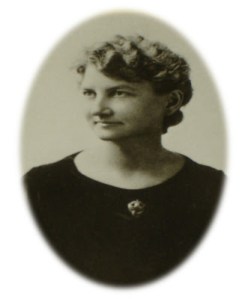
glass-brownFirst African American woman to be elected to the Arkansas General Assembly: Irma Hunter Brown

Mrs. Brown served in the House of Representatives from January 1981 until January 2003.  She was the first African American woman to be elected to the Arkansas General Assembly in either house.

In 2003, she was sworn in as a State Senator, becoming the first African American woman in that body, as well.  In recognition of these achievements and her service in the Arkansas General Assembly from 1981 until 2009.

In 2015, she was included in the Arkansas Civil Rights Heritage Trail.  Other honors include recipient of the Distinguished Citizen award, Philander Smith College, Little Rock, 1981; fellow, Institute Politics, 1975.

Women’s History Month – Erle Chambers, first woman sworn-in to Arkansas House of Representatives

rep-erle-chambersFirst woman sworn in as a member of the Arkansas General Assembly: Erle Chambers

Miss Chambers of Little Rock was elected in 1922 at the same time as Frances Hunt of Pine Bluff. But because members were sworn in based on their last names, she was actually sworn in first.

She had trained as an attorney at both the University of Arkansas and the University of Chicago, but never practiced law.  She served as Pulaski County probation officer from 1913 until 1917. At that time, she went to work for the Tuberculosis Association, where she would work until her death in 1941.

Miss Chambers served in the Arkansas General Assembly from 1923 until 1926.

Black History Month – Art Porter, Jr. and Robinson Center

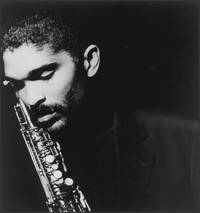
bhm art jr.Like his father, Art Porter Jr. is recognized with a space named in his memory in the new Robinson Center.

Arthur Lee (Art) Porter Jr. was born in Little Rock on August 3, 1961. Porter began his music career under the tutelage of his father, legendary jazz musician, Arthur Porter, Sr. who surrounded him with everything musical. He performed proficiently on drums, saxophone and piano. He was classically trained but his performances ranged across jazz, rhythm and blues, funk, and ballads.

During high school, under the supervision of Sterling Ingram, private teacher and band director at Parkview High School, Art Jr. was selected to be a member of the Arkansas All-State Band for three consecutive years.  At age 16, he was awarded the “Most Talented Young Jazz Artist in America” by the National Association for Jazz Education.

During Porter’s youth, his playing while underage in venues where liquor was sold proved controversial. Bill Clinton, then attorney general, established a framework for the legislature that would allow minors to work in such venues with parental supervision. Act 321 known as The “Art Porter Bill” became Arkansas law.

Porter graduated from Northeastern University in Chicago, Illinois, in 1986 with a BA degree in music education and performance.

Art burst on the music scene with his debut album, Pocket City (1992), followed by Straight to the Point (1993). In 1994, his third album, Undercover, placed Porter solidly on the “wave” radio charts with R&B artists as well as “cool jazz” artists. During this same year, he performed at Carnegie Hall for the Polygram Anniversary Celebration. His final album, Lay Your Hands on Me (1996), contained the radio favorite “Lake Shore Drive.”

Porter traveled the world with performances but no matter where his music would carry him, he always returned to his beloved hometown of Little Rock. He conducted workshops for music students at his alma maters, Dunbar Magnet Junior High School and Parkview Arts and Science Magnet School. Porter died on November 23, 1996, in a boating accident in Thailand. He had just completed a performance at the Thailand International Golden Jubilee Jazz Festival commemorating the fiftieth anniversary of King Bhumibol Adulyadej’s reign.  In 2013, he was posthumously inducted into the Arkansas Black Hall of Fame.

Little Rock Look Back: Boxing Day remembrance of Muhammad Ali vs. Dan Sprick

Ali SprickDan T. Sprick was a Little Rock Mayor for two years in the 1940s after having previously served on the City Council.  From 1961 until 1970, he served as a State Senator from Little Rock and was a reliable ally for Governor Orval Faubus. Once Faubus left office and was replaced by Governor Winthrop Rockefeller, Sprick continued to wave the banner of segregation and agitation.  One of his new focuses was boxer Muhammad Ali.

In 1969, the University of Arkansas announced that Ali would be one of the speakers for its public appearance series.  After refusing to be drafted and go to Vietnam, Ali was barred from earning a living as a professional boxer and so was making a living giving lectures.  His refusal to submit to the draft was based on his religious beliefs as a recent convert to the Nation of Islam.

Opposition to Ali’s appearance rose almost immediately, and from Little Rock not Fayetteville. The Pulaski Businessman’s Association sent a letter to UA president David Mullins asking him to bar Ali from speaking. President Mullins insisted that he had the right to speak on campus. When that didn’t work, Senator Sprick and his cohorts in the state’s upper chamber went to work. A resolution calling for Ali to be barred from speaking failed on a voice vote after much debate.

While there were certainly some racial overtones to Sprick’s opposition, he and others seemed to be more concerned over the former Cassius Clay’s conversion to Islam plus his ensuing refusal to be drafted.  Senator Sprick declared that if President Nixon would draft him now he would go to serve in Vietnam.  (Sprick was in his late 60s at the time.)

Ali’s speech on the campus actually caused some controversy on its own.  One of the things he advocated for segregation. He praised Alabama Governor George Wallace.  The Arkansas Gazette which had been following the saga in both news stories and editorials, noted that remarks like that should have endeared Ali to Dan Sprick and others.

Ali, of course, resumed his boxing career and defined that sport in the 1970s with his talent in the ring and his showmanship.

Based on an editorial, Sprick sued the Gazette for libel. The paper settled with him out of court because his health was poor. Sprick died in 1972.

RobinsoNovember: Art Porter Jr.

bhm art jr.Like his father, Art Porter Jr. is recognized with a space named in his memory in the new Robinson Center.  Today marks the 20th anniversary of his tragic death.

Arthur Lee (Art) Porter Jr. was born in Little Rock on August 3, 1961. Porter began his music career under the tutelage of his father, legendary jazz musician, Arthur Porter, Sr. who surrounded him with everything musical. He performed proficiently on drums, saxophone and piano. He was classically trained but his performances ranged across jazz, rhythm and blues, funk, and ballads.

During high school, under the supervision of Sterling Ingram, private teacher and band director at Parkview High School, Art Jr. was selected to be a member of the Arkansas All-State Band for three consecutive years.  At age 16, he was awarded the “Most Talented Young Jazz Artist in America” by the National Association for Jazz Education.

During Porter’s youth, his playing while underage in venues where liquor was sold proved controversial. Bill Clinton, then attorney general, established a framework for the legislature that would allow minors to work in such venues with parental supervision. Act 321 known as The “Art Porter Bill” became Arkansas law.

Porter graduated from Northeastern University in Chicago, Illinois, in 1986 with a BA degree in music education and performance.

Art burst on the music scene with his debut album, Pocket City (1992), followed by Straight to the Point (1993). In 1994, his third album, Undercover, placed Porter solidly on the “wave” radio charts with R&B artists as well as “cool jazz” artists. During this same year, he performed at Carnegie Hall for the Polygram Anniversary Celebration. His final album, Lay Your Hands on Me (1996), contained the radio favorite “Lake Shore Drive.”

Porter traveled the world with performances but no matter where his music would carry him, he always returned to his beloved hometown of Little Rock. He conducted workshops for music students at his alma maters, Dunbar Magnet Junior High School and Parkview Arts and Science Magnet School. Porter died on November 23, 1996, in a boating accident in Thailand. He had just completed a performance at the Thailand International Golden Jubilee Jazz Festival commemorating the fiftieth anniversary of King Bhumibol Adulyadej’s reign.  In 2013, he was posthumously inducted into the Arkansas Black Hall of Fame.

Little Rock Look Back: Razorback Football Launches War Memorial Stadium

wms1948-first-gameIn honor of the Arkansas Razorbacks taking on Alcorn State today in Little Rock, a look back at the first football game (or event of any kind) at War Memorial Stadium.

On September 18, 1948, the Hogs took on Abilene Christian and won the game by a score of 40 to 6.  It was the first game of the season, and the Razorbacks went into the game ranked #13. They maintained that ranking for four weeks before falling out of national standings.  The team ended up with a season record of five wins and five losses. Playing four of their games at War Memorial that season, they were two and two in Little Rock. They were one and two in Fayetteville and amassed a 2-1 record on the road.

Dedication ceremony in 1948. Photo courtesy of the War Memorial Stadium Commission.

Dedication ceremony in 1948. Photo courtesy of the War Memorial Stadium Commission.

Prior to the game, the stadium was dedicated to the veterans of World War I and World War II in a ceremony led by former Razorback standout and Medal of Honor recipient Maurice “Footsie” Britt.  Though he would later be known for entering politics and becoming Arkansas’ first Republican Lieutenant Governor, in his college days he was known statewide as an outstanding Razorback football and baseball athlete.  During World War II, his bravery and courage allowed him to become first person in American history to earn all the army’s top awards, including the Medal of Honor, while fighting in a single war.

Also participating in the opening ceremony were a mass of high school marching bands from across the state. Reports indicate up to forty bands were on the field to play the National Anthem as part of the event.

The construction of the stadium had been a dream of Governor Ben T. Laney. He had encouraged the Arkansas General Assembly to create the stadium during the 1947 session.  In August of 1947, Little Rock was chosen as the location over Hot Springs and North Little Rock. West Memphis had abandoned its bid when it was unable to secure the necessary financial pledges.  Construction started in 1947 and continued up until opening day.  On the day of the game, newspaper photos showed heavy equipment grading the parking lot prior to paving.  Though it had been Laney’s dream, with the passing of the guard, a newspaper photo on the day after the dedication focused on the incoming governor, Sid McMath.  Because Arkansas was such a Democratic heavy state, the paper referred to him as Governor-designate even though it was six weeks prior to the 1948 General Election when he would face off against C. R. Black.  McMath won the race with 89.4% of the vote.