Little Rock Look Back: President Truman dedicates War Memorial Park

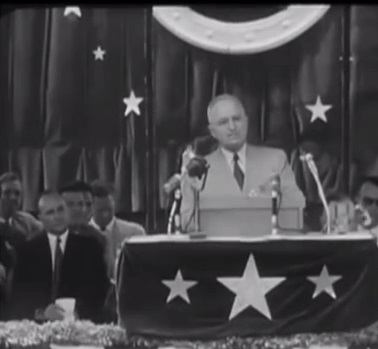
HST in LR2Though President Truman was in Little Rock for a military reunion, he did conduct some official business while here.  In his Presidential role, he spoke at the dedication of War Memorial Park on June 11.  (It is sometimes erroneously reported that he dedicated the stadium.  That took place at a Razorback game with former Razorback player and future Lt. Governor Maurice “Footsie” Britt delivering the keynote.)
President Truman’s address took place inside War Memorial Stadium at 2:30 p.m..   It was not a brief dedicatory speech, but instead was a lengthy treatise on foreign affairs.  The address was carried on nationwide radio.  The text of his address can be found here.

The stadium was by no means full.  A major reason for that was that many thousand individuals had turned out to witness a parade downtown in which President Truman marched along side Governor Sid McMath.  The parade was in conjunction with the military reunion.  Given the June heat in Arkansas (in which parade spectators had been standing for several hours) and the difficulty of getting from the parade route to the stadium, most (if not all) parade spectators opted for skipping the presidential address.

Before the parade, President Truman (who was still riding high from his upset victory in the 1948 election) was asked by a local reporter if he would run in 1952. He refused to answer stating that the national media would think he had planted the question with a local member of the press.

Prior to the name War Memorial Park, the land had been known as Fair Park.  It was a former location of the State Fair.  In the 1930s, it had briefly been known as Overman Park in honor of then-Mayor R. E. Overman.  The City Council had named it for him as a tribute to his work on a variety of projects. When he displeased them, they reversed their decision and renamed it to Fair Park.


Black History Month – Dave Chappelle at Robinson Center

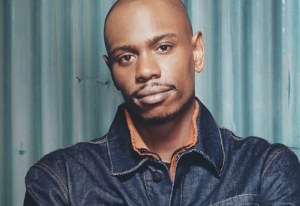
davechappelleOn June 13, 2012, comedian Dave Chappelle appeared at Robinson Center as he was just starting to emerge from a several year self-imposed hiatus.  The night before the Little Rock stint, he had appeared in Memphis.

Lindsey Millar wrote a review of Chappelle’s show which is available here (and has been referenced elsewhere as others scratched their heads from his appearances at other places).  A YouTube video shows Chappelle reacting to the crowd at Robinson calling the Hogs.  He was amused/confused.

Born in Washington DC to two academics, he was raised in Maryland.  He graduated from Washington’s Duke Ellington School of the Arts, where he studied theatre.  He then moved to New York City to pursue a career as a comedian.  He also started acting in movies and toured as an opening act for Aretha Franklin.  As his profile rose, he started making appearances in TV shows and movies in addition to performing stand up.

In 2003, he launched the “Chappelle’s Show” on Comedy Central.  After two successful seasons, he walked off the set during planning for a third season, which cost him a $50 million contract.

From 2006 to 2013, he made a few appearances in stand-up shows and gave a few interviews.  But most of the time he kept a low profile.  Since 2013, he has slowly started making more appearances. In 2014, he appeared on TV programs to promote a Radio City Music Hall appearance.  He also acted in the 2015 film Chi-Raq.  In November 2016, he hosted “Saturday Night Live.”


1969 Turkey Day Football in LR: Hogs, Tigers, Warriors, Rockets, and Bearcats

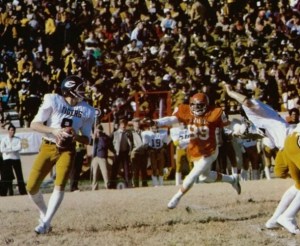
The Hogs stop Texas Tech at War Memorial Stadium

The Hogs stop Texas Tech at War Memorial Stadium


Thanksgiving 1969 marked not only the Culture Vulture’s first foray into the holiday, it saw three high schools and the University of Arkansas all playing football games in Central Arkansas.  November 27 was a day for football in the Rock!  It appears this was the only time this feat happened.

It was a cool and misty day which seems to have made balls slippery and grass fields sloppy. But the precipitation seemed to be more an annoyance than a barrier for the players and fans.  

The Arkansas Razorbacks, ranked number 2 in the nation, played host to the Texas Tech Red Raiders at War Memorial Stadium.  The two teams played before a crowd of 35,287.  This was the smallest crowd in LR that season, likely due to it being Thanksgiving and the presence of the Central/Hall football game the same day.  It would have been hard to fit in two football games, Thanksgiving meals, and a possible church service all within one day.  

The Hogs were 16 point favorites for the game with a 1:50 kickoff.  It was broadcast on ABC, and fans were encouraged to wear red to show up well on the color telecast.  

The Hogs beat the Red Raiders by a score of 33 to 0 in their penultimate regular season game.  Turnovers were the key with the Hogs recovering a fumble and intercepting five passes.  (The final Hogs regular season game was the shootout against Texas in Fayetteville on December 6.)

Little Rock Catholic took on NLRHS north of the river with a 10am kick off. The Rockets, under head coach George Loss, were 9-2 heading into the game. The Wildcats (coached by Ken Stephens) were 5-4 and had won four in a row. At the end of the game, NLR was triumphant by a score of 21 to 12.  

Later that day, Jones High hosted Horace Mann at the same stadium. This game, with a 2pm kickoff, would be the final game between Jones and Mann. Jones was being closed at the end of the year.  
The teams had met earlier in the season with Mann triumphing 13 to 8. Mann had a record of 2-8, playing in the larger AAAA classification. Jones, with a record of 4-6, played in the AA classification. It is notable that by 1969 the teams were in Arkansas Activities Association classifications and playing integrated schools.  

Jones scored an upset victory over the Bearcats by a score of 19-8. 

Quigley Stadium was less than three miles from War Memorial Stadium. With a 10am kickoff before a sold out crowd, people who had wanted to go to both the Hogs game and Hall/Central game also had the option of listening to the high school gridiron competition on KARK radio. 
Prior to the game, Hall had captured the AAAA State Championship. CW Keopple was the Warriors’ coach, while Gene Hall was the Tigers’ mentor.  The damp field and high stakes of the game turned it into a defensive slugfest.  Hall had 2 fumbles while Central fumbled four times.  

At the end of the fourth quarter the scoreboard showed a 0 to 0 tie. And that one went into the record books.  Hall’s season record was 9-0-1, while Central’s was 6-2-2.  It was the best season record Hall had amassed in its 13 years of football. 

Four football games within a few miles of each other were a peek into Little Rock life: 

  • The Hogs were riding the crest of their 1960s football superiority in the Southwest Conference.  
  • The final Thanksgiving football game in Arkansas between two segregated public schools. 
  • Continued alternating dominance by Hall and Central in the state’s largest school sports classification.  Soon, Parkview would be added to the mix. Throughout the 1970s, all three Little Rock public high schools would rotate winning state championships. 

Turkey Day Football in LR – An Overview

thanks-grid-lrc-lrh102 years ago, Little Rock High School (then located on Scott Street) kicked off a 69-year tradition of playing football on Thanksgiving Day.  (Though the date of Thanksgiving floats anywhere from the 22nd to the 28th, Thanksgiving Day 1914 was on November 26.)

From 1914 until 1933, the Little Rock High School Tigers played a variety of different schools.  Then from 1934 until 1957, they played North Little Rock. From 1958 until 1982, the Little Rock Central Tigers took on the Warriors of Little Rock Hall.

Thanksgiving Day football was a tradition not just for high schools in Little Rock but also all levels throughout the state and country.  The Friday after Thanksgiving, newspapers carried stories and scores for professional, college and high school football.  It was probably the only day of the year to see all three levels of football covered in the paper, and often high school games received the most ink.  This mix of football continued for decades.  In 1969, there were four football games played in Pulaski County on Thanksgiving Day: Little Rock Hall vs. Little Rock Central, Little Rock Catholic vs. North Little Rock, Horace Mann vs. Scipio Jones, and the Arkansas Razorbacks vs. Texas Tech.

By the 1970s, both high school and college football games on Thanksgiving were on the wane.  While college games on Turkey Day have regained some popularity, they are nowhere near approaching the level they once had.  High school football on Thanksgiving disappeared in Arkansas following the 1982 game between Hall and Central.  That rivalry had been the final series on Turkey Day to still be played.

While they lasted, Thanksgiving Day high school football games were civic focal points. They were about bragging rights.  For students who had grown up attending the games, the chance to play or cheer in a Turkey Day classic was a rite of passage.  Alumni home from college or visiting the family for Thanksgiving would descend on the stadium ensuring the largest attendance of the season.

High school football on Thanksgiving Day in Little Rock tells the tale of not just football; it reflects changes in the city and society.  What started out as two small high schools from neighboring cities changed as both schools grew. The addition of a second Little Rock high school reflected the city’s growth.  (Indeed the 1954 Little Rock High School yearbook, in discussing the school’s new designation as Central High, mentions vaguely that the second high school would be built at some yet to be determined location in “west” Little Rock.)

The presence of segregated high schools in separate but unequal football rivalries (lasting nearly two decades after the Supreme Court’s Brown v. Board decision) is an indictment of an unjust parallel education system.  As Little Rock continued to grow and diversify, the two high schools playing on Thanksgiving were no longer always the predominant schools in football – or other activities.  With state championships once again on the line, the last few years of the Hall and Central Thanksgiving rivalry were, in a way, a return to the halcyon days of the early faceoffs (though this time, thankfully, with fully integrated teams). In addition to trading the top spots in football, the two schools were piling accolades. In fact, all three Little Rock public high schools had achieved a stasis that inadvertently rotated areas of excellence academically, athletically and artistically fairly equally among the three.

There were undercurrents at work that hinted at future instabilities to come.  Indeed by 1982, the same year of the final game, Little Rock had filed suit against the North Little Rock and the Pulaski County Special School Districts claiming the schools in those neighboring districts were siphoning off white students from the Little Rock schools. The ensuing realignment of schools and districts would probably have brought an end to Central vs. Hall games even if athletic reclassification had not.

Central is now much larger than Hall, Parkview is a magnet school, two formerly county high schools (and several elementary schools and junior highs) were brought into the LR school district in the late 1980s.  Where once the Little Rock high schools were roughly equal in enrollment, they now are so varied they play in three different classifications.

It is up to the alternative historians to envision what continued Turkey Day classics would have looked like after 1982. Little Rock has grown and diversified. There are six public high schools and five private high schools playing football within the Little Rock city limits each season. With all these competing interests it is unlikely to envision the same citywide level of interest in one football game.

But back in the day…

Little Rock Look Back: Miss America comes to Little Rock

miss america axumToday, Miss America 2017 Savvy Shields comes to Little Rock as part of her official homecoming to Arkansas after winning the crown.  In honor of that, we take a look back to the first visit to Arkansas by Donna Axum, who was the first Miss Arkansas to win the title of Miss America.

A native of El Dorado and a student at the University of Arkansas, during her reign as Miss America Miss Axum (or simply Donna as the newspaper headlines referred to her) made four public visits to Little Rock.  As the first Miss Arkansas to become Miss America, the state’s Capitol City was very interested in giving her a warm welcome.

After being crowned on September 7, 1963, her first visit to Arkansas was November 1 through 3.  In addition to stops in Hot Springs and El Dorado, she appeared in Little Rock to attend events including an Arkansas Razorback football game at War Memorial Stadium.  Her entourage included the top four runners up from the Miss America pageant.

In February 1964, she made a brief appearance in Little Rock which included a press conference.

Donna Axum spent nearly two weeks in Arkansas in May 1964 attending several pageants as well as spending time with family.  During that visit she appeared in Little Rock twice.  The second time she headlined a concert with the Arkansas Symphony (not related to the current Arkansas Symphony Orchestra) and the Arkansas Choral Society. It took place at Robinson Auditorium.

Little Rock Look Back: Razorback Football Launches War Memorial Stadium

wms1948-first-gameIn honor of the Arkansas Razorbacks taking on Alcorn State today in Little Rock, a look back at the first football game (or event of any kind) at War Memorial Stadium.

On September 18, 1948, the Hogs took on Abilene Christian and won the game by a score of 40 to 6.  It was the first game of the season, and the Razorbacks went into the game ranked #13. They maintained that ranking for four weeks before falling out of national standings.  The team ended up with a season record of five wins and five losses. Playing four of their games at War Memorial that season, they were two and two in Little Rock. They were one and two in Fayetteville and amassed a 2-1 record on the road.

Dedication ceremony in 1948. Photo courtesy of the War Memorial Stadium Commission.

Dedication ceremony in 1948. Photo courtesy of the War Memorial Stadium Commission.

Prior to the game, the stadium was dedicated to the veterans of World War I and World War II in a ceremony led by former Razorback standout and Medal of Honor recipient Maurice “Footsie” Britt.  Though he would later be known for entering politics and becoming Arkansas’ first Republican Lieutenant Governor, in his college days he was known statewide as an outstanding Razorback football and baseball athlete.  During World War II, his bravery and courage allowed him to become first person in American history to earn all the army’s top awards, including the Medal of Honor, while fighting in a single war.

Also participating in the opening ceremony were a mass of high school marching bands from across the state. Reports indicate up to forty bands were on the field to play the National Anthem as part of the event.

The construction of the stadium had been a dream of Governor Ben T. Laney. He had encouraged the Arkansas General Assembly to create the stadium during the 1947 session.  In August of 1947, Little Rock was chosen as the location over Hot Springs and North Little Rock. West Memphis had abandoned its bid when it was unable to secure the necessary financial pledges.  Construction started in 1947 and continued up until opening day.  On the day of the game, newspaper photos showed heavy equipment grading the parking lot prior to paving.  Though it had been Laney’s dream, with the passing of the guard, a newspaper photo on the day after the dedication focused on the incoming governor, Sid McMath.  Because Arkansas was such a Democratic heavy state, the paper referred to him as Governor-designate even though it was six weeks prior to the 1948 General Election when he would face off against C. R. Black.  McMath won the race with 89.4% of the vote.

Little Rock Look Back: Central & Hall Football at 2-0

lrchs-lrhhsAfter two weeks of prep gridiron (that is high school football to those who don’t write like a 1950s inky wretch), Little Rock Central and Little Rock Hall are both posting records of 2 wins and 0 losses.  This feat has not been achieved in quite a while.

How long?  37 seasons!  It was 1979, the last time that the Tigers and Warriors were both out of the gate at 2-0.

1979

Jimmy Carter was in the White House. Bill Clinton was in his first term as Governor. First Lady Hillary Rodham was several months pregnant with Chelsea. Hall High and Razorback standout Webb Hubbell was Mayor of Little Rock.  The City’s population was in the 150,000s (it would be 159,151 after the 1980 census).  Little Rock had an area of approximately 80 square miles.  (Today it is approximately 200,000 citizens over 122 square miles.)

Lou Holtz was coaching the Arkansas Razorbacks in the Southwest Conference.  Harry Hall was in his first season as Commissioner of the Arkansas Intercollegiate Conference.  Rex Nelson was a student at Ouachita.  Paul Eells was in his second year with KATV, while Dave Woodman was finishing his first decade at KARK.  Gary Hogan was anchoring sports for KTHV.  Hogs football games were broadcast on KAAY radio.  While Bob Buice and Jim Elder were ruling the airwaves at KARN, Craig O’Neill was dominating mornings at KLAZ.

Orville Henry, Jim Bailey, and Wadie Moore covered college and high school sports for the Arkansas Gazette.  The Arkansas Democrat had switched to morning delivery and hired John Robert Starr as editor.  Both papers carried ads for Kempners, Golds, M.M. Cohn, Skaggs Albertsons, Minute Man, Union National Bank, Commercial National Bank, Worthen National Bank, and First National Bank.

Metrocentre Mall existed with bricked over streets on Main and Capitol. The Grady Manning Hotel and Hotel Marion still stood (though in their twilight days before their February 1980 date with demolition.)

So a lot has changed since Central and Hall previously achieved this.  In the interval, Central has been 2-0 a dozen times and Hall has achieved that a brace. But the schools never managed it during the same season.  Three times the schools both managed 1-1 seasons and seven times they each started at 0-2.

The 1979 Warriors were helmed by C. W. Keopple, who would lead the team from the 1960s into the 1980s winning four conference/state titles. (When your conference is statewide, winning one got you the other.)  Bernie Cox was in his fifth season as the Tigers’ mentor, with two state championships already under his belt, five more would be in his future.

The teams stayed tied through the fourth week. But in the fifth week, while Central won, Hall lost to Parkview by a score of 7-0.  The following week, the Warriors rebounded, while the Tigers settled for a 0 to 0 tie with Ole Main.  Weeks seven through ten saw both teams notching another win each week.  This set up a Thanksgiving Day classic with the state’s top two teams facing off.  Central was slightly favored, but season records seldom carried any weight when the two cross-town rivals played on Thanksgiving afternoon.  In an upset, Hall bested Central by a score of 17 to 0.

From 1987 to 1990, the second game of the season was the Hall-Central matchup, which meant that it would have been impossible to both start with a 2-0 record.  This second week matchup was made necessary by the fact that not only could the two teams no longer face off on Thanksgiving after 1982, but the two schools were not in the same conference from 1983 through 2000. So the faceoff was early in the season, during the non-conference portion.

Due to subsequent restructurings by the Arkansas Activities Association, the two schools have not played a football game since 2005.  The bell from the “Battle of the Bell” which was supposed to replace the pageantry and intense rivalry of the Thanksgiving Day matchups, sat forlornly and largely forgotten in the trophy case at Central following the 2005 edition which Central won by a score of 24 to 7.  (That season Central started at 0-2 on the way to a 5-5 record and Hall started at 1-1 on the way to a 3-7 record.)  UPDATE: As noted in a comment on this piece, the Bell has now been refurbished and sits proudly at Quigley Stadium.  Thank you Belinda Stilwell for the information!

Who knows how the 2016 season will turn out for these two teams?  In the past 2-0 has led both to State Championships and to a 6-4 record.  But for two schools that have struggled in the past few seasons, to start with a 2-0 record is quite an accomplishment. For both to start with that record is remarkable.


While the blog hiatus and a restructuring continue, this was a bit of history that needed mentioning.