Rock the Oscars: A SOLDIER’S STORY

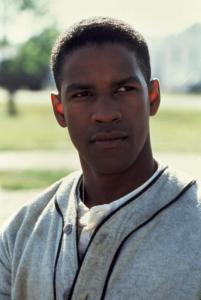
A SOLDIER’S STORY, Denzel Washington, 1984

In September and October of 1983, Norman Jewison and the cast of A Soldier’s Story filmed the movie at various locations in Arkansas.  Little Rock’s Lamar Porter Field was the site for the baseball scenes.  Adolph Caesar would receive an Oscar nomination for his performance in this movie.  Howard Rollins had recently been an Oscar nominee for his performance in Ragtime.  Future Oscar winner Denzel Washington was also featured in the cast.

Based on Charles Fuller’s Pulitzer Prize winning A Soldier’s Play, the movie was directed by Jewison from a script adapted by Fuller.  The film was nominated for three Oscars: Best Picture, Caesar in the Best Supporting Actor category and Fuller in the Best Adapted Screenplay category.

While the movie was filming in Arkansas, Governor Bill Clinton visited the set.  He had also been instrumental in making the Arkansas National Guard and some of the military facilities in the state available.  In addition to filming at Lamar Porter, scenes were shot in Fort Smith and at Fort Chaffee.

Rock the Oscars: William Grant Still

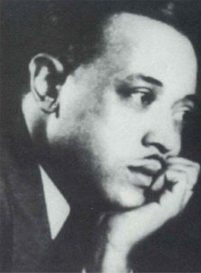
Long known as the Dean of African American composers, Dr. William Grant Still was a legend in his own lifetime.  As a prolific composer and arranger, his work was featured in numerous movies in the 1930s and 1940s including Oscar winning films The Awful Truth and Lost Horizon.

Dr. Still, who wrote more than 150 compositions ranging from operas to arrangements of folk themes, is best known as a pioneer. He was the first African-American in the United States to have a symphonic composition performed by a major orchestra. He was the first to conduct a major symphony orchestra in the US; the first to conduct a major symphony in the south; first to conduct a white radio orchestra in New York City; first to have an opera produced by a major company. Dr. Still was also the first African-American to have an opera televised over a national network

Dr. Still was born May 11, 1895 in Woodville, Mississippi to parents who were teachers and musicians. When Dr. Still was only a few months old, his father died and his mother took him to Little Rock. Inspired by RCA Red Seal operatic recordings, his musical education began with violin lessons.  He graduated from Gibbs High School in Little Rock.

After his studies at Wilberforce University and the Oberlin Conservatory of Music, he played in orchestras and orchestrated for various employers including the great W. C. Handy. For several years he arranged and conducted the “Deep River Hour” over CBS and WOR.  He also played in the orchestra for the 1921 musical Shuffle Along, which was the first Broadway musical to feature an all African-American cast and writing team.

In the 1920’s, Still made his first appearances as a serious composer in New York. Several fellowships and commissions followed. In 1994, his “Festive Overture” captured the Jubilee prize of the Cincinnati Symphony orchestra. In 1953, he won a Freedoms Foundation Award for “To You, America!” which honored West Point’s Sesquicentennial Celebration. In 1961, he received honors for this orchestral work, “The Peaceful Land”. Dr. Still also received numerous honorary degrees from various colleges and universities, as well as various awards and a citation from Arkansas Governor Dale Bumpers in 1972.

In 1939, Dr. Still married journalist and concert pianist Verna Avery, who became his principal collaborator. They remained together until Dr. Still’s death in 1978.  In a proclamation marking the centennial of Dr. Still’s birth, President Bill Clinton praised the composer for creating “works of such beauty and passion that they pierced the artificial barriers of race, nationality and time.”

In 1995, Dr. Still was posthumously inducted into the Arkansas Black Hall of Fame.  In 2016, the ballroom at Robinson Center was named in his honor.

Rock the Oscars: Carol Channing

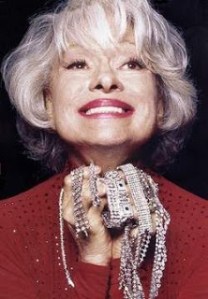
On January 31, 1921, future “Little Girl from Little Rock” and Oscar nominee Carol Channing was born. Alas it was in Seattle.

After gaining the notice of New York critics and audiences in the musical revue, Lend an Ear, Channing achieved Broadway stardom playing fictional Little Rock native Lorelei Lee (the creation of Anita Loos) in Gentlemen Prefer Blondes.  In this show, which opened in December 1949, she introduced the Leo Robin-Jule Styne songs “Little Girl from Little Rock” and “Diamonds Are a Girl’s Best Friend.”   In 1964, she won the Actress in a Musical Tony for her second signature role playing the title character in Hello, Dolly!  Channing also earned a special Tony in 1968 for Dolly when it became the longest-running Broadway musical.

On November 15, 1966, Carol Channing opened a six day stint in HELLO, DOLLY! at Robinson Auditorium.  She would play 8 sold out shows over those six days.  She had just wrapped filming THOROUGHLY MODERN MILLIE (for which she would receive an Oscar nomination). She had specifically requested that Little Rock be added to the tour.

While in Little Rock, Channing was entertained at the Arkansas Governor’s Mansion and feted at parties.  She was made an honorary citizen of Little Rock, as well.  But she was here to perform. And perform she did. She was rarely known to miss a performance and always gave her utmost.  Bill Lewis, in his review in the ARKANSAS GAZETTE, stated “To hear Channing sing ‘Hello, Dolly!’ Is one of the great experiences of all musical theater to date…”

In 1993, she spent her birthday in Washington DC at a White House dinner for the National Governors’ Association.  This was the Clintons’ first official White House dinner after moving in to the residence eleven days prior.  President Bill Clinton led the crowd in singing “Happy Birthday” to her.  She remarked to the President that she was Christian Scientist and didn’t celebrate birthdays, which meant she didn’t get any older.  He replied that it meant the night was her first birthday (it was her 72nd in actuality).

Rock the Oscars: THE WAR ROOM showcases Little Rock’s role in national political scene

This Oscar-nominated 1993 American documentary film follows Bill Clinton’s campaign for President of the United States, during the 1992 presidential election.  At the start of the 1992 Democratic primaries, husband and wife filmmakers D.A. Pennebaker and Chris Hegedus requested permission from the Campaign to film its progression. The Clinton Campaign agreed, and Pennebaker and Hegedus were allowed to film Communications Director George Stephanopoulos as well as Lead Strategist James Carville; they were given limited access to Bill Clinton.

At the start of filming, the film team was embedded with the Clinton Campaign in New Hampshire for that state’s Democratic primary. During the onset of the campaign, the film crew traveled around the state with the Clinton campaign.

After the surprise Clinton second place finish in the New Hampshire primary, the crew filmed mostly in Little Rock, home to the Clinton campaign’s national headquarters. As the film focused in on Carville and Stephanopoulos, the film crew saw no need to travel outside of Little Rock as both were present in the city for much if not all of the primary and general election campaigns.

Because of the time spent in Little Rock, numerous buildings and backgrounds familiar to the capital city residents appear throughout the film. Jason D. Williams’ song “Get Back to Little Rock” is featured in the film’s soundtrack.

Though Stephanopoulos and Carville were the film’s main figures, many other prominent figures in the campaign were featured, including Paul Begala, Dee Dee Myers, Mandy Grunwald, Bob Boorstin, Stan Greenberg, Mickey Kantor, Harold Ickes, and Bush deputy campaign manager Mary Matalin, who later married Carville.  Also featured in footage are rivals George H. W. Bush, Ross Perot and Jerry Brown.

Though the film did not win the Oscar for Feature Documentary, Pennebaker would receive an Honorary Oscar in 2013. (Another winner that night was Arkansan Hal Needham.)

Rock the Oscars: Mikhail Baryshnikov

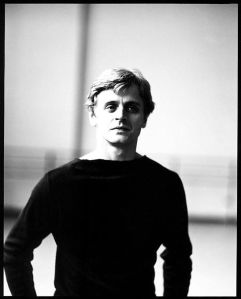
On July 24, 1983, Mikhail Baryshnikov danced on the stage of Robinson Center under the auspices of Ballet Arkansas.   Nearing the end of his dancing career with American Ballet Theatre, he was leading a summer tour of the Southeast and Midwest US.

In the early spring of 1983, Ballet Arkansas was contacted to see if they would be interested in having him perform in Little Rock.  (The $60,000 sponsorship was paid completely by the ARKANSAS DEMOCRAT.) The performance was announced in April with tickets going on sale shortly thereafter.

Following Baryshnikov’s performance, he and his fellow dancers attended a reception at the Old State House Museum which was hosted by Governor and Mrs. Bill Clinton.

After dancing with the Mariinsky Ballet for several years, he defected to Canada while the ballet was performing there in 1974. He later came to the US to dance with American Ballet Theatre and later New York City Ballet. He returned to ABT in 1980 to take on the role of Artistic Director and continue dancing.  It was in this capacity that he visited Little Rock.

He received a 1977 Oscar nomination for Best Supporting Actor for his role in the ballet-themed film The Turning Point.

Baryshnikov would later be welcomed by the Clintons to the White House when he received a 2000 Kennedy Center Honors.

Little Rock Look Back: Clinton Center opens in 2004

wjc library openingIt has been thirteen years since the Clinton Presidential Center opened on a wet, cold Thursday.

The days leading up to it has been glorious.  And while the weather may have literally dampened spirits a bit, it was still an important day for Little Rock and Arkansas.

The events leading up to the opening included a concert by Aretha Franklin with the Arkansas Symphony Orchestra and an appearance by Senator John Glenn at the Museum of Discovery.  Events were hosted by the Arkansas Arts Center, Arkansas Repertory Theatre, Historic Arkansas Museum, and Old State House Museum.  There were scores of receptions and parties as Hollywood, New York, and DC descended on Little Rock.

November 18 dawned rainy and cool.  As the day continued on the precipitation continued while the temperature did not warm up.  Years of planning for a grand opening ceremony came down to this.  But at the appointed time, festivities began.

On the site of an abandoned warehouse district and unofficial dump which had previously been a train station, many leaders of the free world were gathered.  They rubbed shoulders with thousands of Arkansans from probably every county in the state.

It had been seven years and eleven days since Bill Clinton had announced the site of his presidential library.  It had been five years since artifacts and articles started arriving from Washington DC in Little Rock.  There had been lawsuits, threats of lawsuits, the threat of a Counter-Clinton Library, and countless meetings.

After speeches from Presidents Carter, Bush 41 and Bush 43, remarks from President Clinton and then-Senator Clinton (who was made even wetter by water pouring off an ill-placed umbrella), and even a musical performance by Bono and The Edge, Chelsea Clinton turned over the ceremonial key from the Clinton Foundation to the National Archives to officially open the Clinton Presidential Center.

In his capacity leading the Clinton Foundation, Skip Rutherford oversaw the planning for the Clinton Library and the grand opening festivities.  He, along with the foundation’s Executive Director Stephanie Streett, oversaw a phalanx of volunteers and staff to anticipate every detail.  The 1,000 days countdown sign that had been on the construction site (the brainchild of Tyler Denton) finally reached 0.

Isabelle Rodriguez, Shannon Butler, Mariah Hatta, Jordan Johnson, Lucas Hargraves, and Ben Beaumont — among others — had been putting in twelve plus hour days for months on end to get ready for the opening.  City Manager Bruce T. Moore led a team of City officials who had assisted on the planning and execution of the site preparation and making sure Little Rock was ready to welcome the world.  Moore and City Director Dean Kumpuris had been appointed by Little Rock Mayor Jim Dailey to lead Little Rock’s efforts to land the library.  After Clinton’s announcement of the site, Dailey, Kumpuris and Moore continued to work together to ensure the library would be successful.

While the weather on November 18, 2004, may have been a disappointment, the people who were gathered knew they were witnesses to history.  And thirteen years later, is a day people still talk about.

Little Rock Look Back: Bill Clinton announces LR as site for his library

Refuse on the site where the Clinton Center would be built

On November 7, 1997, President Bill Clinton announced his intentions to locate his presidential library in Little Rock at the end of a warehouse district.

The Little Rock City Board met in a special meeting that day to rename part of Markham Street, which would lead to the site, as President Clinton Avenue.

While the announcement was met with excitement in many quarters, there were still some skeptics who had a hard time envisioning a presidential library and park in the middle of a wasteland worthy of a T. S. Eliot poem.

There would be many hurdles between the November 1997 announcement to the December 2001 groundbreaking. But for the moment, City of Little Rock leaders, celebrated the achievement.  Then Mayor Jim Dailey had appointed City Director Dean Kumpuris and City employee Bruce T. Moore to lead the City’s efforts.  Moore and Kumpuris worked with Skip Rutherford and others to narrow the potential sites.

In September 1997, the Clintons were in town for the 40th anniversary of the integration of Central High School.  They surprised Kumpuris and Moore with a decision for a Sunday afternoon visit to the warehouse district proposed site. Secret Service would not let the limousine drive in part of the property, so the Clintons, Moore, Kumpuris, and Rutherford walked up a path to the roof of the abandoned Arkansas Book Depository.  It was there that the Clintons could see the Little Rock skyline which would be visible from the library.

Of course by the time the library had opened in November 2004, the Little Rock skyline was different. Spurred on by the library, several new highrises had been constructed in downtown.