LR Look Back: Mayor Dan T. Sprick

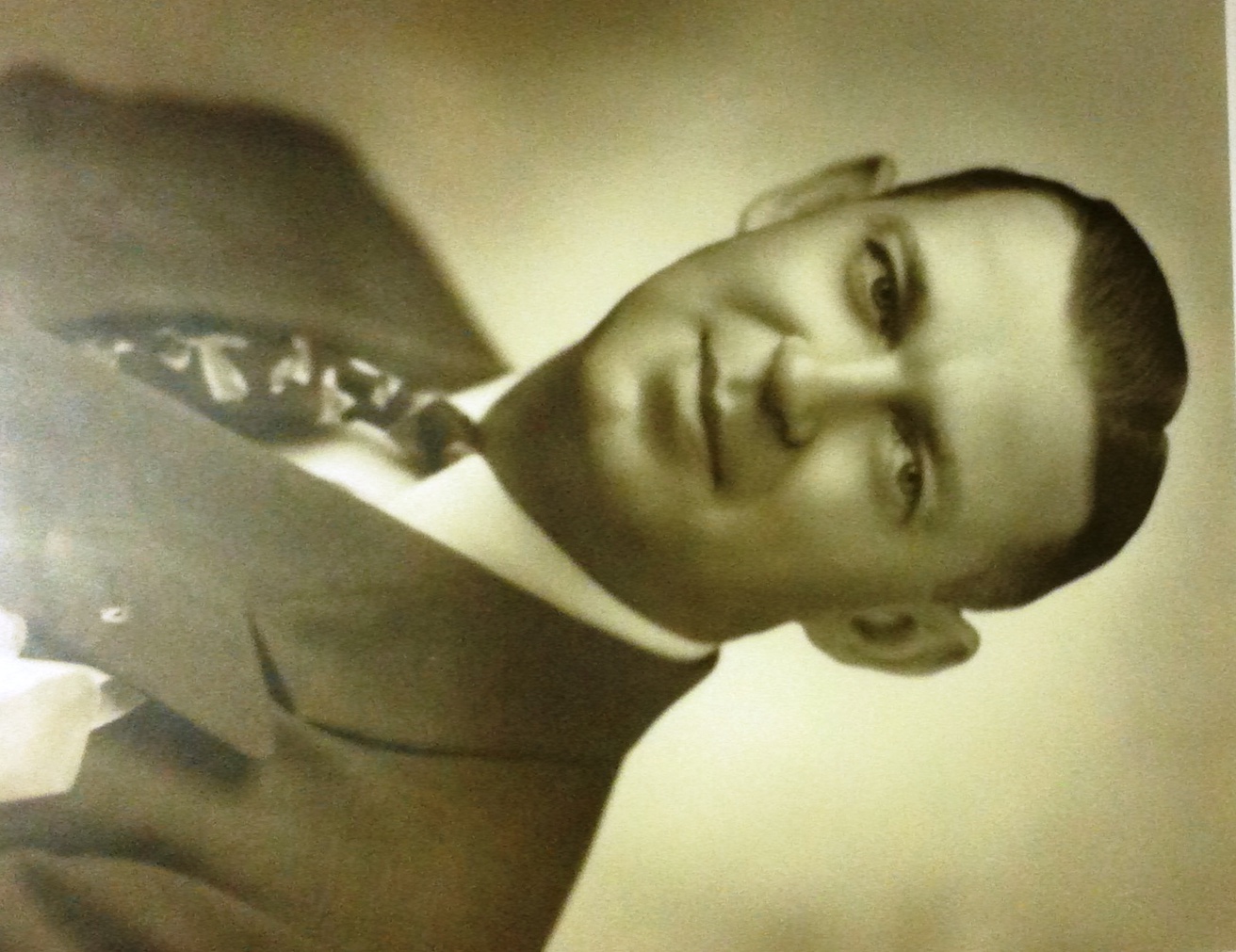
SprickFuture Little Rock Mayor Dan T. Sprick was born on May 19, 1902.  He served three terms on the Little Rock City Council (from 1935 to 1941).  In 1945, he was elected Mayor of Little Rock and served one term.

Sprick later served for ten years in the Arkansas State Senate (from 1961 to 1970).  During his tenure in the Senate, Sprick was closely aligned with Gov. Orval Faubus.  When the Little Rock high schools had been closed a year to ensure segregation, Sprick had served on the board of a private school set up by some of the leaders of the segregation movement.

His time in the Senate was also marked by controversy.  He was one of three Senators to opposed Muhammad Ali’s speaking at the University of Arkansas at Fayetteville.  After an Arkansas Gazette editorial lambasted him, Sprick sued the paper for libel. The Gazette settled with him out of court because his health was poor.

Sprick died in January 1972.


Military History Museum Hosts Author Today

1368546527-enduringlegacyOn Saturday, May 18, the MacArthur Museum of Arkansas Military History will host author and professor, Dr. Stuart Towns, as he tours to promote his new book Enduring Legacy: Rhetoric and Ritual of the Lost Cause (University of Alabama Press, 2012).  Dr. Towns will speak at 2pm at the museum in MacArthur Park.

Enduring Legacy explores the vital place of ceremonial oratory in the oral tradition in the South. It analyzes how rituals such as Confederate Memorial Day, Confederate veteran reunions, and dedication of Confederate monuments have contributed to creating and sustaining a Lost Cause paradigm for southern identity. Towns studies in detail post—Civil War southern speeches and how they laid the groundwork for future generations, from southern responses to the civil rights movement and beyond. The Lost Cause orators that came after the Civil War, Towns argues, helped to shape a lasting mythology of the brave Confederate martyrs and of the southern positions for why the Confederacy lost and who was to blame.

W. Stuart Towns is recently retired from Professor and Chairman of the Department of Communication Studies at Southeast Missouri State University. Before that he was Professor and Chair of Department of Communication at Appalachian State University and the University of West Florida. After spending over 30 years in the Active Army Reserves, Stuart retired as a Colonel. While in the Reserves, he served with the 361st Civil Affairs Brigade, and was a member of the Consulting Faculty Program at the U. S. Army Command and General Staff College at Fort Leavenworth, Kansas.

The MacArthur Museum of Arkansas Military History relates the military heritage of Arkansas and its citizens to a diverse and widespread audience. Located in the historic Arsenal Building in MacArthur Park—one of Central Arkansas’s oldest surviving structures and the birthplace of one of this country’s foremost military heroes—the museum collects, preserves, and interprets our state’s rich military past from its territorial period to the present.

LRFF 2013 – Day 3

IMG_5408A documentary by acclaimed sitcom creator Linda Bloodworth-Thomason is one of the highlights of the third day of the Little Rock Film Festival.

Throughout the day at a variety of venues, shorts and features of both the narrative and documentary variety will be screened in downtown Little Rock and North Little Rock.

In contention for the Golden Rock Narrative Award are Wajma-an Afghan Love Story by Barmak Akram,  Hide Your Smiling Faces by Daniel Patrick Carbone, Coldwater by Vincent Grashaw, Zero Charisma by Katie Graham and Andrew Matthews, Junk by Kevin Hamedani, The Discoverers by Justin Schwarz and This Is Where We Live by Josh Barrett, Marc Menchaca.

Films screening today in contention for the Golden Rock Documentary Award are Village at the End of the World by Sarah Gavron and David Katznelson; Muscle Shoals by Greg ‘Freddy’ Camalier; William and The Windmill by Ben Nabors; Gideon’s Army by Dawn Porter; The Kill Team by Dan Krauss; The Death of Kevin Carter by Dan Krauss; Blood Brother by Steve Hoover; Bayou Maharajah by Lily Keber; After Tiller by Lana Wilson and Martha Shane; Spies of Mississippi  by Rick Powers and Dawn Porter; These Birds Walk by Omar Mullick and Bassam Tariq; and Bridegroom by Bloodworth-Thomason.

Two films shown today are part of the Made in Arkansas competition.  They are Pamela Uzzell’s  Unearthing the Dream and Juli Jackson’s 45RPM.

Arkansas Shorts: “Battles” including “Sky Begins to Storm” by Ron Walter, “The Van” by Nathan Willis and “December 1982” by Lyle Arnett. “Consequences” features “Twinkletown” by Scott McEntire, “Soul Winner” by Jennifer Gerber, “Blood Brothers” by Jason Miller and Seth Savoy, and “Diamond John” by Travis Mosler.

World Shorts: “American Dreams” includes “The Commitment,” “Sweet, Sweet Country,” “Kalifornija,” “The Acting Lesson,” and “An American Mosque.” “Some Times” featuring “When We Lived in Miami,” “Off Season,” “Black Metal,” “Ojala,” “Sleep” and “113 Degrees.”

Among the special events today are a Producers Forum featuring Courtney Pledger and a Little Rock Horror Picture Show Spotlight Screening Motivational Growth.

There will also be parties on Friday evening including the Junction Bridge Party and the Argenta Arts Rooftop Party for Gold Pass holders.

LR Look Back: 50th Anniversary of Arkansas Arts Center opening

IMG_5262Fifty years ago today, the Arkansas Arts Center officially opened in Little Rock’s MacArthur Park.  The project, which dates back to the early days of the Fine Arts Club, was formally authorized by the Little Rock City Board of Directors in September 1960 following a successful fundraising drive by supporters.  Future Governor Winthrop Rockefeller was a vital force in raising money and establishing the vision which transformed a small municipal art museum (the Museum of Fine Arts) into a comprehensive art center serving the entire state.

Since that day in May 1963, the physical plant of the Arkansas Arts Center has expanded several times. The programming has also grown. Though the degree-granting graduate school was abandoned in the late 1960s (because it nearly bankrupted the AAC), the Arkansas Arts Center now boasts an extensive and expansive Museum School offering classes in a variety of art forms to students of all ages.

Likewise the cutting-edge theatre company which was once in residence at the AAC is long-gone. After a few other programming attempts, the theatre space has been home to the Arkansas Arts Center Children’s Theatre since 1975.

The changes mentioned above and the expansions were shepherded by longtime Director and Chief Curator Townsend Wolfe.  Pictured above is a look at the main entrance to the facility, which has served in this capacity since an expansion which opened in February 2000.

Dr. Todd Herman is the current Executive Director of the Arkansas Arts Center. He joined the museum in the summer of 2011.


May 16 Architeaser: Mosaic Templars Cultural Center

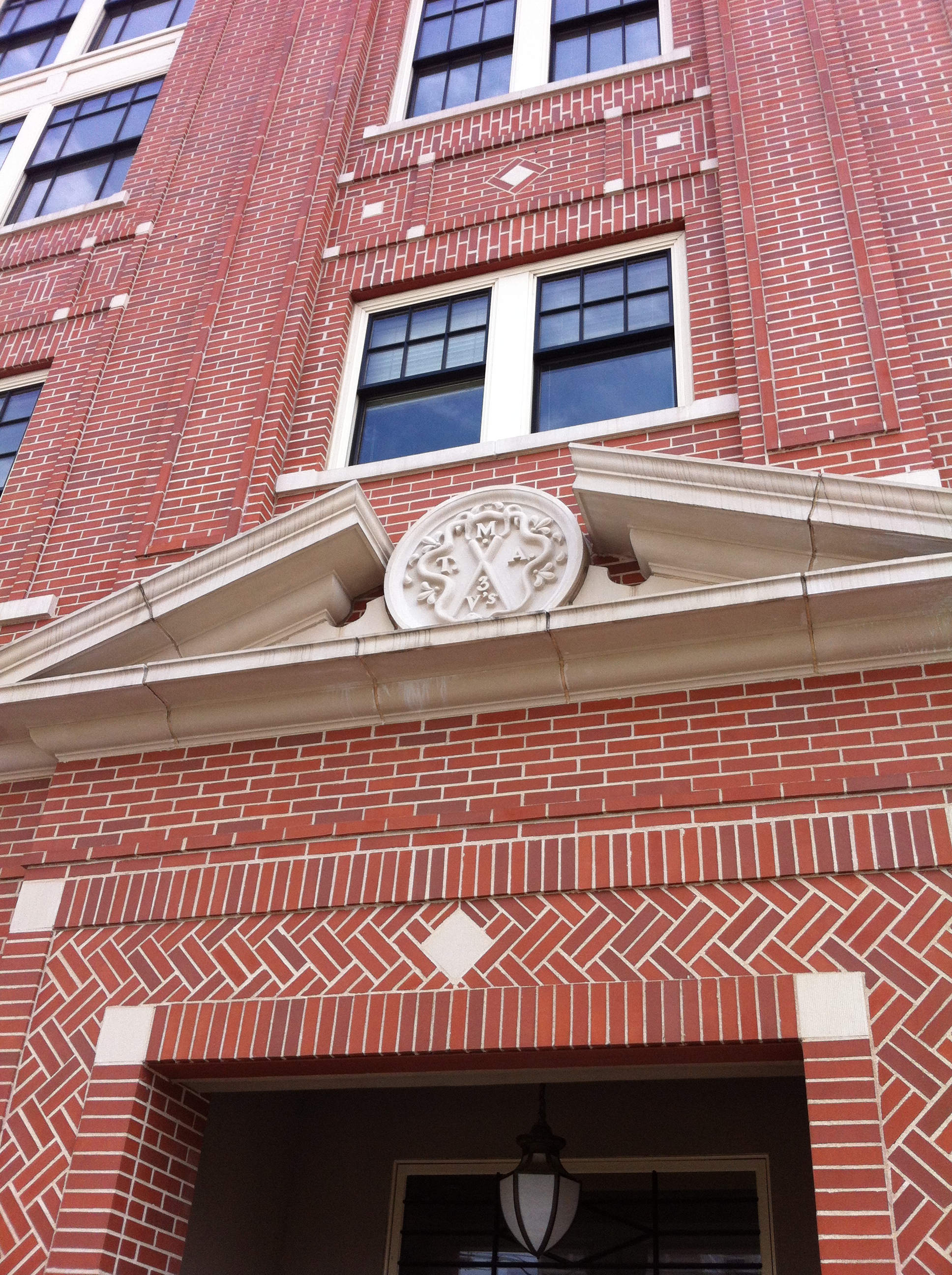
IMG_5421As part of Arkansas Heritage Month, today’s Architeaser focuses on the cornice over the entrance to the Mosaic Templars Cultural Center.

The Mosaic Templars Cultural Center began as a dream by community leaders who had grown up attending events at the Mosaic Templars of American National Grand Temple. This had been a centerpiece of African American life not just for Little Rock but for the mid-south.

In 1992, the building was slated for demolition so that a fast-food restaurant could be built on the lot. In late 1993, the City of Little Rock purchased the building for $110,000  to save it from demolition as organizers were raising funds for the restoration.  In 2001, the City transferred ownership to the State of Arkansas for the establishment of the Mosaic Templars Cultural Center.

Originally, the Center planned to restore the 1913 Mosaic Templars of America National Grand Temple, but the original building was destroyed by fire in March 2005. The new 35,000 square feet interior is a state-of-the-art museum complex with exhibits, classroom, staff offices, and an Auditorium that seats 400 people. The façade of the new structure is a facsimile of the 1913 building complete with the Annex building façade, which burned in 1984.

The cornice which is featured today is a copy of the original cornice.  The original cornice, as well as the cornerstone, are some of the few things which survived the 2005 fire.  The original cornice is on display.

A museum of the Department of Arkansas Heritage, the Mosaic Templars Cultural Center is dedicated to collecting, preserving, interpreting, and celebrating African American history, culture and community in Arkansas from 1870 to the present, and informs and educates the public about black achievements – especially in business, politics and the arts.

Through special events, education programs, ongoing research and exhibits such as the Arkansas Black Hall of Fame, the museum celebrates Arkansas’s African American heritage. Tours of the museum provide a detailed look at the history of African Americans in Little Rock and Arkansas.


LR Look Back: Mayor J. V. Satterfield Jr.

SatterfieldOn May 14, 1902, future Little Rock Mayor John Vines Satterfield, Jr. was born in Marion.   He grew up in Little Rock and Earle. J.V. was a star quarterback for the Earle football team and is ostensibly featured in a painting of that team by respected painter Carroll Cloar.

Following high school, J.V. taught and coached and sold Fords.  He then moved to Little Rock and sold insurance and later securities.  In 1931 he opened his own business; that same year he built a house at 40 Beverly Place in Little Rock, which would serve as his home until his death.

J. V. Satterfield was elected to serve as Mayor of Little Rock in 1939 and served one term, until 1941.  He was credited with saving the City from bankruptcy because of his fiscal policies. Among his efficiencies were the creation of a central purchasing office and using grass moved from the airport to feed the Zoo animals.

Satterfield was a staunch supporter of the airport and worked to expand it.  He would serve as the chair of the first Municipal Airport Commission.  He also established the Little Rock Housing Authority (on which he would later serve on the board) and oversaw the bonds needed to finish constructing Robinson Auditorium.  He was mayor when the building opened.  Mayor Satterfield also served as President of the Arkansas Municipal League in 1941.

Following the outbreak of World War II, Satterfield enlisted in the Army and was given the rank of a Major. He later was promoted to a Colonel and worked in the Pentagon during its early days.

In the late 1940s Satterfield became president of a small Little Rock bank called People’s Bank.  The bank changed its named to First National Bank when it moved into new offices at 3rd and Louisiana in 1953.  By focusing on smaller customers and courting corporate customers, Satterfield grew the bank into one of the state’s largest banks.  He maintained his desk in the lobby of the bank so he could interact with the customers and ensure they were having a positive experience.

Due to some health issues, Satterfield retired from the bank in 1964. He died in March 1966.

May 2 Architeaser

IMG_5151In keeping with this week’s focus on Arkansas Arts Center entrances, today’s Architeaser focuses on the front portico of the Pike-Fletcher-Terry House. The iconic ionic columns are constructed of brick. They date from the early days of this often-modified house.

The original construction of this edifice started in 1840 by Albert Pike.  After uses as a residence and a women’s college, former Mayor John G. Fletcher took ownership of the property in 1889.  From 1889 to 1977 it was in the Fletcher family, first Mayor Fletcher and then his three children – Pulitzer Prize winning poet John Gould Fletcher, Mary Fletcher Drennan and Adolphine Fletcher Terry.

Mrs. Terry and her husband Congressman David D. Terry raised their five children in the house.  The house was also a base for Mrs. Terry’s community interests.  Most notably, the Women’s Emergency Committee was founded in the house.  This group of Little Rock area women focused on reopening the Little Rock public schools after they had been shut in response to the desegregation of Little Rock Central High.  The list of members of this group was kept secret for 40 years.  In 1997, the list was made public and the names were etched in the glass of the conservatory on the east facade of the building.

In 1963, the two remaining heirs of Mayor Fletcher – Mrs. Terry and Mrs. Drennan – announced that they were deeding the house to the City of Little Rock for use by the new Arkansas Arts Center. This transfer would go into effect upon the death of both sisters.  Following Mrs. Terry’s death, Mrs. Drennan (who lived out of state) went ahead and transferred the property in 1977.

From 1985 to 2003, the building was known as the Arkansas Arts Center Decorative Art Museum and housed the AAC’s decorative art and contemporary craft collection.  Because of expansion of the main campus in MacArthur Park, that collection was moved to the main building.  Since 2004, the building has been home to a variety of community art exhibits in conjunction with the Arts Center.

Since 1977, the building has long been a favorite site for special events and weddings. That tradition continues today. Tomorrow night, Our House will host its annual Dinner on the Grounds at the Arkansas Arts Center’s Pike-Fletcher-Terry House.