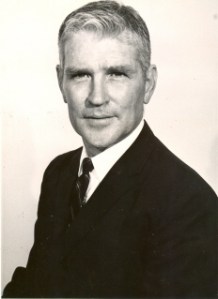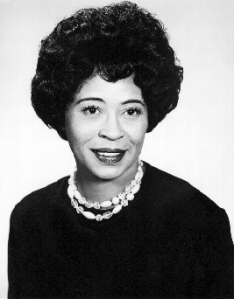
Women Making History – LR City Council member Carolyn Craig

Carolyn Conner was elected to the Little Rock City Council in April 1931. She was initially elected to fill out the remaining year of her husband’s term on the Little Rock City Council. She received 551 votes, or 61.6% besting two male candidates.

She was not the first woman to run for City Council.  In 1924, Mrs. George M. Waller challenged Charles M. Connor (no relation to Carolyn Conner).

In 1932, Carolyn Conner was reelected and would continue to serve on the council until April 1942, winning a total of six elections.  Mrs. Conner was the first woman to be elected to any City of Little Rock office.  She was also the first to chair a council committee, leading the Civic Affairs Committee from 1933 to 1935. On October 16, 1933, she was chosen as Acting Mayor becoming the first woman to lead the City of Little Rock and preside at a council meeting.

In December 1939, she also became the first female alderman to be arrested for contempt of court along with eleven of her male colleagues.  The judge did not send her to jail, though he did the male aldermen.  At the end of the day their sentences were suspended.

In April 1941, Mildred Craig joined Mrs. Conner on the Council after being elected to finish out her husband’s term.  Their service marked the first time there were two women on the City Council.

Little Rock Look Back: A. M. “Sandy” Keith

On March 4, 1924, Alexander M. “Sandy” Keith was born.  He would serve as Little Rock’s sixty-third mayor in 1979.

Growing up in Little Rock, he graduated from Little Rock Catholic High and the Wharton School of the University of Pennsylvania. He served in World War II as Lieutenant (jg) United States Naval Reserve.

Keith was a certified public accountant, who during his career worked mainly with the firm, Keith, Allen & Pickering. In addition, Keith spent more than a dozen years in public service in Little Rock. Elected to the Little Rock City Board of Directors in 1971, Keith served three consecutive terms.

He was elected Mayor in 1979, wishing to serve only six months in the post, when the ordinary term of office for the Mayor was two years. So he resigned the position after six months. (His grandfather, also known as Alexander M. Keith, served two terms on the Little Rock City Council in the 1800s.)

Following his twelve years on the Little Rock City Board of Directors, Keith was appointed to the Pulaski County Board of Equalization.

During his career, Keith also served as president of the Arkansas Society of Certified Public Accountants, and was a member of the American Institute of Certified Public Accountants Council. He also served on the Arkansas Board of Accountancy. In addition to these, Keith served as Chairman of the St. Vincent’s Infirmary Facilities Board, and as a director of the Benton Savings and Loan. He was a member of the Economic Opportunity Agency, Pulaski County Board, and the Little Rock Advertising and Promotion Committee.

At his death in 2008, he was survived by his wife, Leah, three children and six grandchildren.

Newspaper man, Sheriff, County Judge, Senator and Baseball promoter: WILLIAM MARMADUKE KAVANAUGH

On March 3, 1866, William Marmaduke Kavanaugh was born in Alabama. He later moved with his family to Kentucky before coming to Little Rock as a newspaper reporter.

Kavanaugh served as editor and manager of the Arkansas Gazette before entering politics.  From 1896 until 1900, he served as Pulaski County Sheriff, which at the time also included the duties of tax collector.

From 1900 until 1904, he was County Judge of Pulaski County.  In that capacity he helped wrangle several cities, railroads and trolley lines to create a compromise which lead to the completion of the Third Street Viaduct which connected Little Rock with Pulaski Heights. It is still in use today.

After leaving his post as County Judge, he had a varied career in banking and business interests.

When Senator Jeff Davis died in early January 1913, he left the last few weeks of his term incomplete as well as the new term he was set to start in March 1913.  There was much interest in who would fill the remainder of Davis’ current term, because that person might be the frontrunner to also fill out the new term.  (This was at the time that the U.S. Senators were still selected by state legislatures.) Defeated Governor George Donaghey appointed J. N. Heiskell to fill out the term. But once the Arkansas General Assembly convened in mid-January, they overrode Donaghey’s appointment and replaced Heiskell with Kavanaugh.

Kavanaugh served in the Senate from January 29, 1913 until March 3, 1913.  He was succeeded by Joseph T. Robinson who had only recently taken office as Governor.  Speculation was that Kavanaugh would not want the full six year term, so that he was acceptable choice to all of the politicians jockeying for the full appointment.  From 1912 until 1915, he was an Arkansas member of the Democratic National Committee.

Another interest of Kavanaugh’s was baseball.  He served as president of the Southern Association minor league starting in 1903.  The baseball field in Little Rock situated at West End Park was named Kavanaugh Field in his honor.  It stood until the 1930s when it was replaced by what is now known as Quigley Stadium.  (In 1927, Little Rock High School had opened on the land which had been West End Park.)

Kavanaugh died on February 2, 1915 at the age of 48.  He is buried in Oakland Cemetery.

Prospect Road was renamed Kavanaugh Boulevard in his memory.

Little Rock Look Back: Byron Morse

On February 23, 1917, future Little Rock Mayor Byron R. Morse was born.

A founder of the real estate firm of Rector-Phillips- Morse, he was long active in civic affairs of Little Rock.

Mayor Morse was first elected to the City Board of Directors in November 1960. In 1963, he was chosen as Little Rock Mayor. After serving two years as Mayor, he chose to not seek re-election to the City Board. Long active in civic affairs, in 1968 he chaired the fundraising drive to keep the Arkansas Arts Center’s doors open.

In 1980, he was appointed to the City Board to fill out an unexpired term. He was later asked to fill another unexpired term but declined.  In 1983, he was elected national president of the Society of Industrial and Office Realtors. Mayor Morse also served as president of the Little Rock Chamber of Commerce, the Little Rock United Way, the Little Rock Red Cross, and was a member of the Board of Directors of the Little Rock Boy’s Club. He was a member of the Fifty for the Future.

On July 25, 2001, Mayor Morse died.

Little Rock Look Back: SCOTUS decision in BATES v LITTLE ROCK case

On February 23, 1960, the U. S. Supreme Court handed down a decision in the case of Daisy BATES et al., Petitioners, v. CITY OF LITTLE ROCK et al.  This case had been argued before the Court in November 1959.

Daisy Bates of Little Rock and Birdie Williams of North Little Rock were the petitioners.  Each had been convicted of violating an identical ordinance of an Arkansas municipality by refusing a demand to furnish city officials with a list of the names of the members of a local branch of the National Association for the Advancement of Colored People. The question for decision was whether these convictions can stand under the Due Process Clause of the Fourteenth Amendment to the United States Constitution.

The Little Rock ordinance (10,638) was passed on October 14, 1957. It charged that certain non-profits were actually functioning as businesses and using non-profit status to skirt the law. Therefore it required the non-profits to disclose their members and sources of dues.  North Little Rock passed an identical ordinance.

(Mayor Woodrow Mann was not present at the meeting of the LR Council when the ordinance was passed. But he signed all of the resolutions and ordinances approved that night.  Ordinance 10,638 was the only legislation that night which had also been signed by Acting Mayor Franklin Loy.  Mayor Mann crossed through Loy’s name and signed his own.)

Mrs. Bates and Mrs. Williams as keepers of the records for their respective chapters of the NAACP refused to comply with the law.  While they provided most of the information requested, they contended they did not have to provide the membership rosters and dues paid.

After refusing upon further demand to submit the names of the members of her organization, each was tried, convicted, and fined for a violation of the ordinance of her respective municipality. At the Bates trial evidence was offered to show that many former members of the local organization had declined to renew their membership because of the existence of the ordinance in question. Similar evidence was received in the Williams trial, as well as evidence that those who had been publicly identified in the community as members of the National Association for the Advancement of Colored People had been subjected to harassment and threats of bodily harm.

Each woman was convicted in the court of Pulaski Circuit Court, First Division, William J. KirbyJudge. They were fined $25 a person.  On appeal the cases were consolidated in the Supreme Court of Arkansas in 1958. The convictions were upheld by five justices with George Rose Smith and J. Seaborn Holt dissenting.

Mrs. Bates and Mrs. Williams then appealed to the U. S. Supreme Court.  The pair’s legal team included Robert L. Carter and George Howard, Jr. (who would later become a federal judge).  Little Rock City Attorney Joseph Kemp argued the case for the City.  The arguments before the U. S. Supreme Court were heard on November 18, 1959.

The SCOTUS decision was written by Associate Justice Potter Stewart.  He was joined by Chief Justice Earl Warren and Associate Justices Felix Frankfurter, Tom C. Clark, John M. Harlan II, William J. Brennan and Charles E. Whittaker.  Justices Hugo Black and William O. Douglas wrote a concurring opinion.

The U. S. Supreme Court reversed the lower courts.

In sum, there is a complete failure in this record to show (1) that the organizations were engaged in any occupation for which a license would be required, even if the occupation were conducted for a profit; (2) that the cities have ever asserted a claim against the organizations for payment of an occupation license tax; (3) that the organizations have ever asserted exemption from a tax imposed by the municipalities, either because of their alleged nonprofit character or for any other reason.

We conclude that the municipalities have failed to demonstrate a controlling justification for the deterrence of free association which compulsory disclosure of the membership lists would cause. The petitioners cannot be punished for refusing to produce information which the municipalities could not constitutionally require. The judgments cannot stand.

In their concurring opinion, Justices Black and Douglas wrote that they felt the facts not only violated freedom of speech and assembly from the First Amendment, but also aspects of the Fourteenth Amendment. They wrote that the freedom of assembly (including freedom of association) was a principle to be applied “to all people under our Constitution irrespective of their race, color, politics, or religion. That is, for us, the essence of the present opinion of the Court.”

Neither the Gazette or Democrat carried any reaction from City leaders. There was a City Board meeting the evening of the decision. If it was mentioned, the minutes from the meeting do not reflect it.

Arkansas Attorney General Bruce Bennett, on the other hand, was very vocal in his outrage. The city laws were known as Bennett Laws because they had been drafted by him as ways to intimidate African Americans and others he viewed as agitators.

In 1960 Bennett was challenging Governor Orval Faubus for the Democratic gubernatorial nomination.  In reaction to the to the Supreme Court he vowed that, if elected Governor, he would “de-integrate” (a term he proudly took credit for coining) the state.

For his part, and not to be outdone by the AG, Faubus fretted that the Court’s decision meant that Communists would be able to give money to the NAACP.

Little Rock Look Back: Implosion of the Grady Manning and the Marion

On February 17, 1980, a cold and clear Sunday morning, over seven decades of Arkansas history came tumbling down as the Hotel Marion and Grady Manning Hotel were imploded.
Thousands of people watched from places in downtown Little Rock and along the Arkansas River.  Many more were able to watch from live coverage carried on KATV, KARK and KTHV.  Those that missed it were able to see the replays multiple times on the news.

It was the first large-scale implosion in Little Rock’s history.  (It was likely the first implosion, but there could have been a small one that is not known.)  The two hotels were torn down to make way for the construction of the Excelsior Hotel and the Statehouse Convention Center.

The Hotel Marion, named after the builder Herman Kahn for his wife, opened in 1907. For four years it was Arkansas’ tallest structure.  It was the largest and grandest hotel in the City. For decades it would be the host to many dignitaries, conventions, and gala celebrations.

The Grady Manning Hotel was originally known as the Hotel Ben McGhee when it opened in 1930.   Manning was the head of the company which owned both the Marion and Ben McGhee properties.  Upon his untimely death by drowning in September 1939, the property was subsequently renamed in his memory.

The Manning Hotel, though taller, was never as grand a hotel as the Marion.  It was more of a mid-range property in pricing.

By the 1970s, both hotels were suffering from neglect and disinterest.  Changes in the lodging industry combined with a decline in downtown Little Rock had left both facilities with little business.

When Little Rock civic and government leaders decided to construct a larger convention center downtown with an adjacent hotel, it was decided that neither of these facilities could be properly renovated to be part of the project.  Instead, the land on which they stood (and the space in between) would be prime for the new hotel and center.

So, on the cold Sunday morning, the explosives were detonated, and the buildings came down.   Sunday morning was chosen because it would have the least impact on traffic flows since it would cause numerous streets to be closed for safety reasons.  The blast was delayed due to a rumor that someone might be in one of the buildings.  After checking both sites and finding them empty, the charges were set off.

And the Marion and Grady Manning became as much a memory as the long gone people who had once populated them.

The University of Arkansas’ Pryor Center for Oral and Visual History has a video of the implosion.

Little Rock Look Back: John Wassell

Future Little Rock Mayor John Wassell was born on February 15, 1813 in Kidderminster, England.

In 1829, he came to the United States.  He learned carpentry and construction in Ohio and ended up in Little Rock.  One of his jobs was as the finishing contractor on the State Capitol building, now known as the Old State House.

He later gave up carpentry and became an attorney.  (It is said that he did so after becoming embroiled in a legal dispute arising from one of his construction jobs.) Wassell also served as a judge.

In 1868, he was appointed Mayor of Little Rock by President Andrew Johnson.  He is Little Rock’s only Mayor to have served through a military appointment.  Mayor Wassell died in January 1881 and is buried at Mount Holly Cemetery along with his wife and other family members.  One of his grandsons, Samuel M. Wassell also served as Mayor of Little Rock. Another one, Dr. Corydon Wassell, was the subject of the Hollywood film The Story of Dr. Wassell.