RobinsoNovember: Ribbon Cuttings at Robinson Center

j-v-and-ewilda

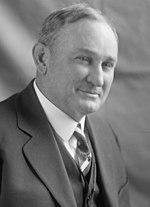
In this ARKANSAS GAZETTE photo, Mayor Satterfield looks on as Mrs. Robinson cuts the ribbon to open Robinson Auditorium.

Today (Thursday, November 10) at 10am, the ribbon will be cut on the newly restored Robinson Center.  It seems like a good chance to look back at two prior ribbon cuttings for the building.

The original ribbon cutting was supposed to be outside on the evening of Friday, February 16, 1940.  It was moved indoors due to rain and cold temperatures.  The ribbon was originally to be stretched across the front columns, but instead was stretched across the front curtain.  The white satin ribbon stood out against the royal blue velvet curtains.

Four people participated in the ribbon cutting:  Little Rock Mayor J. V. Satterfield, Mrs. Ewilda Robinson – widow of Senator Robinson, Mrs. Emily Miller – sister-in-law of Senator Robinson and a member of the auditorium commission, and a D. Hodson Lewis of the Little Rock Chamber of Commerce.  Mr. Lewis emceed the brief program, which was was broadcast live on a Little Rock radio station.  It consisted of Mr. Lewis introducing Mayor Satterfield, Mrs. Robinson and Mrs. Miller.  Mrs. Robinson chose not to make remarks.  Mayor Satterfield spoke briefly (a whopping twenty-nine words).  Then Mrs. Robinson cut the ribbon.  It took a couple of tries for her to get the scissors through the fabric on the ribbon.

Following that the building was officially opened.

In the late 1960s, City leaders started making plans for a renovation and expansion of Robinson Auditorium into a convention center.  In September 1973, a second ribbon cutting was held to celebrate the opening of the renovated space.  That ribbon was bright red and stretched from Ashley Street along Markham, wrapped into the side doors, and then back outside across the front of the building.  At the ceremony, Advertising and Promotion Commission Chairman Warren “Bud” Baldwin joked that they were having the longest ribbon and the shortest ceremony.

While the ribbon may have been long, the ceremony was not short.  Well, perhaps by ribbon cutting standards it was short, but it was certainly longer than the 1940 edition.  Among those participating in the ribbon cutting were Governor Dale Bumpers, Little Rock Mayor Bill Walters, and Miss Little Rock Risa McLemore.  The ribbon was cut by Miss McLemore and Ken Johnson of the Central States Shrine Association.  Over 14,000 Shriners were the first large convention in the new space.
Little Rock Look Back: William Grant Still

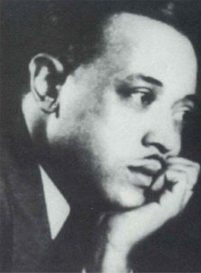
bhm StillLong known as the Dean of African American composers, Dr. William Grant Still was a legend in his own lifetime.

Dr. Still, who wrote more than 150 compositions ranging from operas to arrangements of folk themes, is best known as a pioneer. He was the first African-American in the United States to have a symphonic composition performed by a major orchestra. He was the first to conduct a major symphony orchestra in the US; the first to conduct a major symphony in the south; first to conduct a white radio orchestra in New York City; first to have an opera produced by a major company. Dr. Still was also the first African-American to have an opera televised over a national network

Dr. Still was born May 11, 1895 in Woodville, Mississippi to parents who were teachers and musicians. When Dr. Still was only a few months old, his father died and his mother took him to Little Rock. Inspired by RCA Red Seal operatic recordings, his musical education began with violin lessons.  He graduated from Gibbs High School in Little Rock.

After his studies at Wilberforce University and the Oberlin Conservatory of Music, he played in orchestras and orchestrated for various employers including the great W. C. Handy. For several years he arranged and conducted the “Deep River Hour” over CBS and WOR.  He also played in the orchestra for the 1921 musical Shuffle Along, which was the first Broadway musical to feature an all African-American cast and writing team.  A musical is currently on Broadway about the creation of that musical, but Still is not a character in it.

In the 1920’s, Still made his first appearances as a serious composer in New York. Several fellowships and commissions followed. In 1994, his “Festive Overture” captured the Jubilee prize of the Cincinnati Symphony orchestra. In 1953, he won a Freedoms Foundation Award for “To You, America!” which honored West Point’s Sesquicentennial Celebration. In 1961, he received honors for this orchestral work, “The Peaceful Land”. Dr. Still also received numerous honorary degrees from various colleges and universities, as well as various awards and a citation from Arkansas Governor Dale Bumpers in 1972.

In 1939, Dr. Still married journalist and concert pianist Verna Avery, who became his principal collaborator. They remained together until Dr. Still’s death in 1978.  In a proclamation marking the centennial of Dr. Still’s birth, President Bill Clinton praised the composer for creating “works of such beauty and passion that they pierced the artificial barriers of race, nationality and time.”

In 1995, Dr. Still was posthumously inducted into the Arkansas Black Hall of Fame.

Little Rock Look Back: Senator Joseph T. Robinson Funeral at Little Rock First Methodist

Senator Joseph Taylor Robinson

Today, Arkansas political icon and longtime United States Senator Dale Bumpers is being remembered in a memorial service at Little Rock’s First United Methodist Church.

On another Sunday afternoon, this time in July 1937, another United States Senator and former Arkansas Governor was also remembered in a service in the same church.  That man was Joseph Taylor Robinson.

Unlike Senator Bumpers, Senator Robinson died in office. Both men, however, shared many of the same qualities. Both were recognized as leaders within their parties and within the Senate. Both were counselors to Presidents. Senator Robinson was usually President Franklin Roosevelt’s point person to shepherd legislation on Capitol Hill.  Senator Bumpers worked closely with Presidents Carter and Clinton.  Both men flirted with national politics. Robinson was the Vice Presidential nominee of the Democratic Party in 1928. Bumpers seriously contemplated a run for the White House on more than one occasion.

It seems fitting that Senator Bumpers would be memorialized at a place of worship which had also been the site of the final rites for another Arkansas lion of the Senate.

Senator Robinson died in Washington D.C. on July 14, 1937.  His wife was in Little Rock making preparations for a trip the couple was to take. Following his demise, Mrs. Robinson went to Washington to accompany her husband’s body back to Arkansas.

The Senator was honored with a memorial service in the Senate chambers on Friday, July 17.  President Roosevelt and the cabinet joined members of the senate on the floor in what was described as a state funeral without pomp.  Mrs. Robinson sat with her brothers and two nephews as well as Bernard Baruch and Arkansas Power & Light’s Harvey Couch, who were Senator Robinson’s closest friends.  Eleanor Roosevelt was one of the many crowded in the senate galleries observing the service.  Following the service his body remained in the chambers until it was transferred to a train to make the journey to Little Rock.

The funeral train bore his body, his family, 50 senators and over twenty congressmen. It reached Little Rock around 8am on Sunday the 19th.  From there, Senator Robinson’s body was taken to his house on Broadway Street until noon.  It subsequently lay in state at the Arkansas State Capitol until being escorted by military to First Methodist Church.

1,500 people packed the church a half hour before the service began. The sun shone through the windows onto the flag-draped coffin as Rev. H. Bascom Watts led the service. Among the pallbearers was former Vice President Charles G. Dawes. Governor Carl Bailey of Arkansas was joined by Governors Richard Leche of Louisiana and E.W. Marland of Oklahoma.

As the funeral procession reached Roselawn Cemetery, thunder echoed. The skies which had alternated between sun and rain that day, returned to rain. A deluge greeted the end of the service and sent visitors hurrying for shelter at the end.


Senator David Pryor in conversation with Skip Rutherford at today’s Legacies & Lunch

CALS PryorLegacies & Lunch: Senator David Pryor
Senator David Pryor, founding dean of the University of Arkansas Clinton School of Public Service, will be interviewed by Skip Rutherford, current dean of the Clinton School. Topics will include Pryor’s interest in history including his founding of the Pryor Center at the University of Arkansas, his life in politics, and his work at the Kennedy School’s Institute of Politics at Harvard and at the Clinton School.  Senator Pryor will also discuss his late colleague Senator Dale Bumpers.

The conversation will take place today, January 6, at 12 noon at the CALS Ron Robinson Theater.

Pryor is the only person in Arkansas political history to have served in the Arkansas State Legislature, the United States House of Representatives, as governor of Arkansas, and in the U.S. Senate.
As a student at the University of Arkansas, Rutherford supported Pryor in his 1972 U.S. Senate campaign against Senator John McClellan. When Pryor was elected to the U.S. Senate in 1978, Rutherford joined his staff and served there for almost six years. When Pryor stepped down as dean of the Clinton School in 2006, Rutherford succeeded him.
Legacies & Lunch is free, open to the public, and sponsored in part by the Arkansas Humanities Council. Bring a sack lunch; drinks and dessert are provided.
They are expecting a large turnout for Legacies & Lunch . Parking at the CALS Main Library campus, where the Ron Robinson Theater is located, is very limited. Please plan to arrive early to allow ample time for parking and walking to the theater. Attendees may park for $2/hour per vehicle at the River Market Parking Deck, 500 East 2nd Street, which is operated by the City of Little Rock. This is the closest paid parking option. Attendees may also park for free at the Clinton School of Public Service and walk to the theater (approx. 0.5 mile, 10-15 min. walking distance).

Women’s History Month Throwback Thursday: The Little Rock Musical Coterie


In 1893 Mrs. Elizabeth Pierce Lyman (pictured at left), Mrs. Susie Pierce Stephens, and Mrs. Effie Miller Williams were invited to the home of Mrs. Cora Cross Marshall for tea and the express purpose of forming a music club. From this grew the organization now known as the Little Rock Musical Coterie.

Meetings of the Little Rock Musical Coterie were first held in members’ homes, and by January 1904, the organization had become well enough established to be featured in Arkansas Life magazine in an article marking its first decade as `a notable institution for the promotion of musical talent and higher culture * * * the leading organization of its kind in the Southeast.’

Meetings, with concerts, were held monthly from September through May, and from members’ homes moved to various city locations, including the Masonic Temple, the Christian Temple at Tenth and Louisiana, the Hotel Marion, Robinson Auditorium, and the Arkansas Arts Center.

From its modest beginnings, the coterie was more than just an opportunity for like-minded individuals to get together to make music. Perhaps because the membership has always included a good percentage of music teachers, the main interest and concern has been to foster musical talent in the young and provide financial support wherever possible.

In 1898 similar music clubs around the Nation formed the National Federation of Music Clubs [NFMC], which Arkansas joined in 1915, becoming one of the first States to affiliate with the national organization.

In 1904 the coterie voted to send $25 to the NFMC convention toward prize money for an American composition contest, the first such contribution recorded in the history of American music clubs.

In 1973 the coterie was incorporated as a nonprofit corporation and received tax-exempt status. Over the years, the Little Rock Musical Coterie has been in the forefront of movements that later resulted in the formation of the Arkansas Symphony Orchestra, the Arkansas Choral Society, the Arkansas Opera Theatre, and the Community Concerts organization.

Annually, the coterie sponsors or promotes competitions and awards designed to encourage young musicians. The Hildegard Smith Award, in the amount of $1,000, is given each year to a university student. The Crusade for Strings competition, part of a national program of the same name, is open to elementary and secondary school students, winners receiving cash prizes and an opportunity to perform on a coterie program.

Programs for young musicians are organized and promoted through 11 junior music clubs and junior festivals are held in February.

The coterie contributes to the Butterfield Endowment Fund, which provides scholarships to the opera workshop and festival at Inspiration Point in Eureka Springs, presents the Stillman-Kelly Scholarship quadrennially, and the Wendell Irish Viola Award.

In the of cutbacks and budget constraints, organizations like the Little Rock Musical Coterie fill the void in school music curricula, as well as touch many other areas of the community through its actions in the cause of music.

On the occasion of the 100th anniversary, Senator Dale Bumpers delivered an address on the floor of the Senate extolling the virtues of the LR Musical Coterie. 

Black History Month Spotlight: William Grant Still

bhm StillLong known as the Dean of African American composers, Dr. William Grant Still was a legend in his own lifetime.

Dr. Still, who wrote more than 150 compositions ranging from operas to arrangements of folk themes, is best known as a pioneer. He was the first African-American in the United States to have a symphonic composition performed by a major orchestra. He was the first to conduct a major symphony orchestra in the US; the first to conduct a major symphony in the south; first to conduct a white radio orchestra in New York City; first to have an opera produced by a major company. Dr. Still was also the first African-American to have an opera televised over a national network

Dr. Still was born May 11, 1895 in Woodville, Mississippi to parents who were teachers and musicians. When Dr. Still was only a few months old, his father died and his mother took him to Little Rock. Inspired by RCA Red Seal operatic recordings, his musical education began with violin lessons.

After his studies at Wilberforce University and the Oberlin Conservatory of Music, he played in orchestras and orchestrated for various employers including the great W. C. Handy. For several years he arranged and conducted the “Deep River Hour” over CBS and WOR.

In the 1920’s, Still made his first appearances as a serious composer in New York. Several fellowships and commissions followed. In 1994, his “Festive Overture” captured the Jubilee prize of the Cincinnati Symphony orchestra. In 1953, he won a Freedoms Foundation Award for “To You, America!” which honored West Point’s Sesquicentennial Celebration. In 1961, he received honors for this orchestral work, “The Peaceful Land”. Dr. Still also received numerous honorary degrees from various colleges and universities, as well as various awards and a citation from Arkansas Governor Dale Bumpers in 1972.

In 1939, Dr. Still married journalist and concert pianist Verna Avery, who became his principal collaborator. They remained together until Dr. Still’s death in 1978.  In a proclamation marking the centennial of Dr. Still’s birth, President Bill Clinton praised the composer for creating “works of such beauty and passion that they pierced the artificial barriers of race, nationality and time.”

In 1995, Dr. Still was posthumously inducted into the Arkansas Black Hall of Fame.  For more on William Grant Still and other inductees into the Arkansas Black Hall of Fame, visit the permanent exhibit at the Mosaic Templars Cultural Center. That museum is an agency of the Department of Arkansas Heritage.


Little Rock Look Back: Mayor Buddy Benafield

BenafieldFuture Little Rock Mayor James Weldon “Buddy” Benafield was born on July 5, 1927 in Coy, Arkansas.  As a child he spent part of his time chopping cotton.  He graduated from England High School and then served in the U.S. Navy.  Following his stint in the military, he enrolled in Arkansas State Teachers College (now the University of Central Arkansas).

After college he returned to England.  From 1967 to 1974 he served as Mayor of England.  While in England, he also worked to establish a hospital there. While he was Mayor, Benafield also served as a legislative aide to Governor Dale Bumpers.

After moving to Little Rock, Benafield served as legislative aide to Governor Frank White.  He had been a donor to former Governor Bill Clinton, who had been defeated by White. Though a staunch Democrat, he remarked to the media at the time that he had been a friend of White’s and never declined a Governor’s request for help.

Long active in Democratic politics, he had served as Secretary of the State Democratic Party.  (One of his daughters, Dawne Benafield Vandiver has carried on the family tradition serving in several leadership positions in the State Democratic Party.  Most recently she was Executive Director of the party.)

In January 1982, Benafield was appointed to fill a vacancy on the Little Rock City Board of Directors. He ran for election to a full term in November 1982 and was reelected in November 1986.  From January 1983 to December 1984, Benafield served as Mayor of Little Rock.

After leaving the Little Rock City Board in January 1991, he has remained engaged in civic matters.  He served a term on the Arkansas Highway and Transportation Commission.  He was first appointed in January 1993 by Gov. Jim Guy Tucker to fill out the remainder of Rodney Slater’s term. Slater had resigned to to take a job in the Clinton Administration in Washington DC.  In 1995, he was reappointed, this time to a full ten year term.  This was only the second time a member of the Highway Commission had been reappointed.

He continues to be involved in farming and a variety of business ventures and has maintained his interest in politics.