
Black History Month Spotlight – First Missionary Baptist Church

The new Arkansas Civil Rights History Audio Tour was launched in November 2015. Produced by the City of Little Rock and the University of Arkansas at Little Rock allows the many places and stories of the City’s Civil Rights history to come to life an interactive tour.  This month, during Black History Month, the Culture Vulture looks at some of the stops on this tour which focus on African American history.

Established in 1845, First Missionary Baptist Church is one of the oldest black congregations in Arkansas. The first church building was completed by 1847, with the current Gothic Revival building constructed in 1882.

In 1891, more than 600 blacks gathered here to protest the state’s recently enacted Separate Coach Law that required racial separation in passenger cars and separate waiting rooms in train stations. They marched from the church to the then state capitol, now the Old State House., to dispute laws that denied black people their constitutional rights. Historians cite that black boycotts in Little Rock, Pine Bluff, and Hot Springs on May 27, 1903, the first day of the streetcar law, caused a 90 percent drop in black patrons on Little Rock streetcars.

In May 1958, Dr. Martin Luther King, Jr., traveled to Little Rock here to attend the graduation ceremony of Ernest Green, the first African American to graduate from Central High School. In 1963, four months before the famous “I Have a Dream” speech, Dr. King visited Little Rock to provide the First Missionary Baptist Church’s 118th anniversary sermon.

The app, funded by a generous grant from the Arkansas Humanities Council, was a collaboration among UALR’s Institute on Race and Ethnicity, the City of Little Rock, the Mayor’s Tourism Commission, and KUAR, UALR’s public radio station, with assistance from the Little Rock Convention and Visitors Bureau.

Black History Month Spotlight – Mosaic Templars Cultural Center

The new Arkansas Civil Rights History Audio Tour was launched in November 2015. Produced by the City of Little Rock and the University of Arkansas at Little Rock allows the many places and stories of the City’s Civil Rights history to come to life an interactive tour.  This month, during Black History Month, the Culture Vulture looks at some of the stops on this tour which focus on African American history.

The Mosaic Templars Cultural Center and Museum collects, preserves, interprets and celebrates Arkansas’s unique African American political, economic, and social achievement from 1865 to 1950. The Center resides in the footprint of the original Mosaic Templars of America National Headquarters and Annex Buildings.

The permanent museum exhibits depict historic West Ninth Street as a thriving commercial and social hub, focusing on the black entrepreneurship, Templars organization, and the legacy of black legislators. Between 1868 and 1893, eighty-five African Americans served in the Arkansas General Assembly. The majority served in the House, with nine in the Senate. Election laws passed in 1891, together with a poll tax in 1832, ended the election of African Americans to the legislature. No black person served again until the General Assembly in 1973.

In addition to community educational programs, the Center offers a genealogy research room, an art collection created by local talent, and a well-stocked store. The Center’s third floor features a replica of the original Headquarters Building auditorium and the Arkansas Black Hall of Fame galleries.

The Center is a museum of the Department of Arkansas Heritage and admission is free.

The app, funded by a generous grant from the Arkansas Humanities Council, was a collaboration among UALR’s Institute on Race and Ethnicity, the City of Little Rock, the Mayor’s Tourism Commission, and KUAR, UALR’s public radio station, with assistance from the Little Rock Convention and Visitors Bureau.

Black History Month Spotlight – Mosaic Templars of America

The new Arkansas Civil Rights History Audio Tour was launched in November 2015. Produced by the City of Little Rock and the University of Arkansas at Little Rock allows the many places and stories of the City’s Civil Rights history to come to life an interactive tour.  This month, during Black History Month, the Culture Vulture looks at some of the stops on this tour which focus on African American history.

The Mosaic Templars of America was formed as a business in the late 1870s by Arkansas freedmen John E. Bush and Chester W. Keatts to provide insurance and other services to black people, and was incorporated as a fraternal organization in 1882. The Mosaic Templars name was derived from the biblical Moses who led his people out of bondage and relates to black America’s journey out of slavery.

By the 1920s the Templars’ organization extended to 26 states and six Caribbean nations. At the time, as one of the largest black-owned business enterprises in the world, Templars’ holdings included the original insurance company, a building and loan association, a publishing company, a business college, a nursing school and a hospital. For more than 40 years, the Templars Headquarters Building and the adjoining Annex and State Temple buildings on Broadway anchored the city’s black business district on West Ninth Street. Like many businesses, black and white, the Templars did not survive the era of the Great Depression.

Though the original Headquarters building burned in 2005, the Mosaic Templars Cultural Center is modeled on the original design. Exhibits highlight black business and self-achievement from Reconstruction to the 1950s in Arkansas and the nation.

The app, funded by a generous grant from the Arkansas Humanities Council, was a collaboration among UALR’s Institute on Race and Ethnicity, the City of Little Rock, the Mayor’s Tourism Commission, and KUAR, UALR’s public radio station, with assistance from the Little Rock Convention and Visitors Bureau.


Black History Month Spotlight – West Ninth Street

BHM16 W9thThe new Arkansas Civil Rights History Audio Tour was launched in November 2015. Produced by the City of Little Rock and the University of Arkansas at Little Rock allows the many places and stories of the City’s Civil Rights history to come to life an interactive tour.  This month, during Black History Month, the Culture Vulture looks at some of the stops on this tour which focus on African American history.
As early as the 1840s and reaching 1880, the businesses of both black and white races existed in what is now known as Downtown Little Rock. In the last years of the 1800s, a prolific business broker and social center for African Americans dominated West Ninth Street.

In 1898, D. B. Gaines, a local black doctor who also served as pastor of the Mt. Pleasant Baptist Church, wrote a book called Racial Possibilities as Indicated by the Negroes of Arkansas. The last chapter, “Colored Business Directory of Little Rock,” documents the existence of a vibrant commercial center with almost twenty churches and hundreds of dealers of black people.

The black district was home to doctors, dentists, lawyers and entrepreneurs such as restaurant owners, newspaper editors, pharmacists, barbers, tailors, and merchants.

This city within a city, met the needs of the black community since the early 1880 to the 1950s. West Ninth Street saw its peak between 1870 and 1950. Since the 1960s, a number of factors including desegregation, urbanization, urban renewal and the construction of I-630 caused its decline.

The app, funded by a generous grant from the Arkansas Humanities Council, was a collaboration among UALR’s Institute on Race and Ethnicity, the City of Little Rock, the Mayor’s Tourism Commission, and KUAR, UALR’s public radio station, with assistance from the Little Rock Convention and Visitors Bureau.

Flying Solo is focus of final LR 2015 Tales from the South, tonight at the Arkansas Arts Center

talesfromthesouthThe saying goes “It takes a village,” but at times one can find herself “Flying Solo.” Tonight, Tales originates at Best Impressions at the Arkansas Arts Center. The storytellers exploring the theme for this edition are Lennie Dusek, Sherry Rankins-Robinson, and Deborah Carroll.

Music is by The Salty Dogs.

“Tales From the South” is a radio show created and produced by Paula Martin Morell, who is also the show’s host. The show is taped live. The night is a cross between a house concert and a reading/show, with incredible food and great company. Tickets must be purchased before the show, as shows are usually standing-room only.

“Tales from the South” is a showcase of writers reading their own true stories. While the show itself is unrehearsed, the literary memoirs have been worked on for weeks leading up to the readings. Stories range from funny to touching, from everyday occurrences to life-altering tragedies.

Dinner is served from 5pm to 6:30pm, the show starts at 7pm.  Admission is $15.  Dinner can be purchased separately.

You MUST purchase your ticket before the show.

Previous episodes of “Tales from the South” air on KUAR Public Radio.

New Public Radio Network in Arkansas launched

natural state newsThe Corporation for Public Broadcasting (CPB) awarded a $278,300 grant to four Arkansas public radio stations to support the creation of a statewide multimedia journalism collaboration based at the University of Arkansas at Little Rock.  Natural State News will be a statewide news service focusing on reaching rural areas of the state.

KUAR, UALR’S public radio station, will be the lead station for the project, joined by Fayetteville’s KUAF, Jonesboro’s KASU, and Texarkana’s KTXK. Ben Fry, general manager of KUAR and classical station KLRE, will coordinate the collaboration to create and broadcast thematically unified content relevant to the interests and needs of Arkansans.

Though the stations have often collaborated, the radio news service marks their first official joint venture. Together, the stations’ staff members at the stations will report stories centered on three themes:

  • Education
  • Health
  • Energy

NSN will report breaking news as well as produce related special interest stories. The resulting multimedia content will be published online and heard on local and national public radio programs such as NPR’s Morning Edition, All Things Considered, and Here and Now.

“CPB is pleased to support this historic collaboration of Arkansas public media stations,” said Bruce Theriault, senior vice president of journalism and radio, CPB. “The Natural State News collaboration is an example of increased media integration and a pathway for stations to work together to maximize resources while expanding their high-quality journalism.”

The grant will help fund four new positions: a managing editor, two additional reporters, and a partner manager, who will raise additional funds for the project. Three of the new positions will be based in Little Rock, with one reporter to work out of Jonesboro.

Natural State News plans to break new ground with in-depth multimedia reporting to reach extensively into rural Arkansas to tell unfolding stories about wealth, poverty, race, and decision-making in education, healthcare, and the environment. Little-told stories from the region will give a distinctive vantage point for understanding larger national experiences.

NSN will partner with the UALR Institute on Race and Ethnicity, the Butler Center for Arkansas Studies, Arkansas Educational Television Network (AETN), and the print publication El Latino to provide and promote its diverse, nuanced content. All stories will be available in both Spanish and English, and NSN is committed to supporting diversity in its staff, student interns, and stories.

For more information on the partner stations, go to their websites: KLRE/KUARKUAFKASU and KTXK.


As part of Oxford American Jazz Series, Aaron Diehl headlines at South on Main tonight

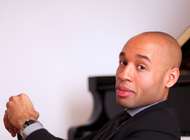
som diehlJazz returns to Main Street tonight at 8:00 PM!  The Oxford American magazine welcomes Aaron Diehl to Little Rock as the second show in its 2015 – 2016 Jazz Series!

Doors open at 6:00 PM, with dinner and drinks available for purchase at that time. This series is made possible by presenting sponsor, the UCA College of Fine Arts & Communication. Additional partners include The Summer FoundationArkansas Arts CouncilCapital HotelPiano KraftRosen Music Company, and FM-89.1 KUAR.

Tickets are $20 (General Admission), $30 (Reserved), and $32 (Premium Reserved).

In an era revolving around celebrity hype and mediocre entertainment, Columbus, Ohio native Aaron Diehl seeks to stand out as an artist in his generation that exemplifies excellence, sophistication, and a fluency in the American musical vernacular. The 2011 Cole Porter Fellow of the American Pianists Association, Diehl has been hailed by the New York Times as “a smart young pianist with a fastidious grasp of Jazz traditions.” He is committed to unearthing the treasures of a musical aesthetic through collaborative efforts with musicians across generations.

Born in 1985, Diehl grew up in a nurturing musical environment with his grandfather, Arthur Baskerville, who often played piano at local establishments in Columbus and sang in the church choir. Aaron began studying classically at age seven, and he discovered his passion for jazz music when attending the Interlochen Summer Camp. There he met piano prodigy Eldar Djangirov, who made a lasting impression on Diehl through his enthusiasm for Oscar Peterson and Art Tatum.

Diehl is the Artistic Director of the Catskill Jazz Factory, an organization dedicated to enhancing community development by means of America’s original art form.