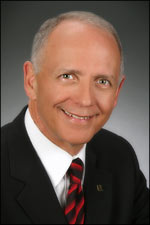
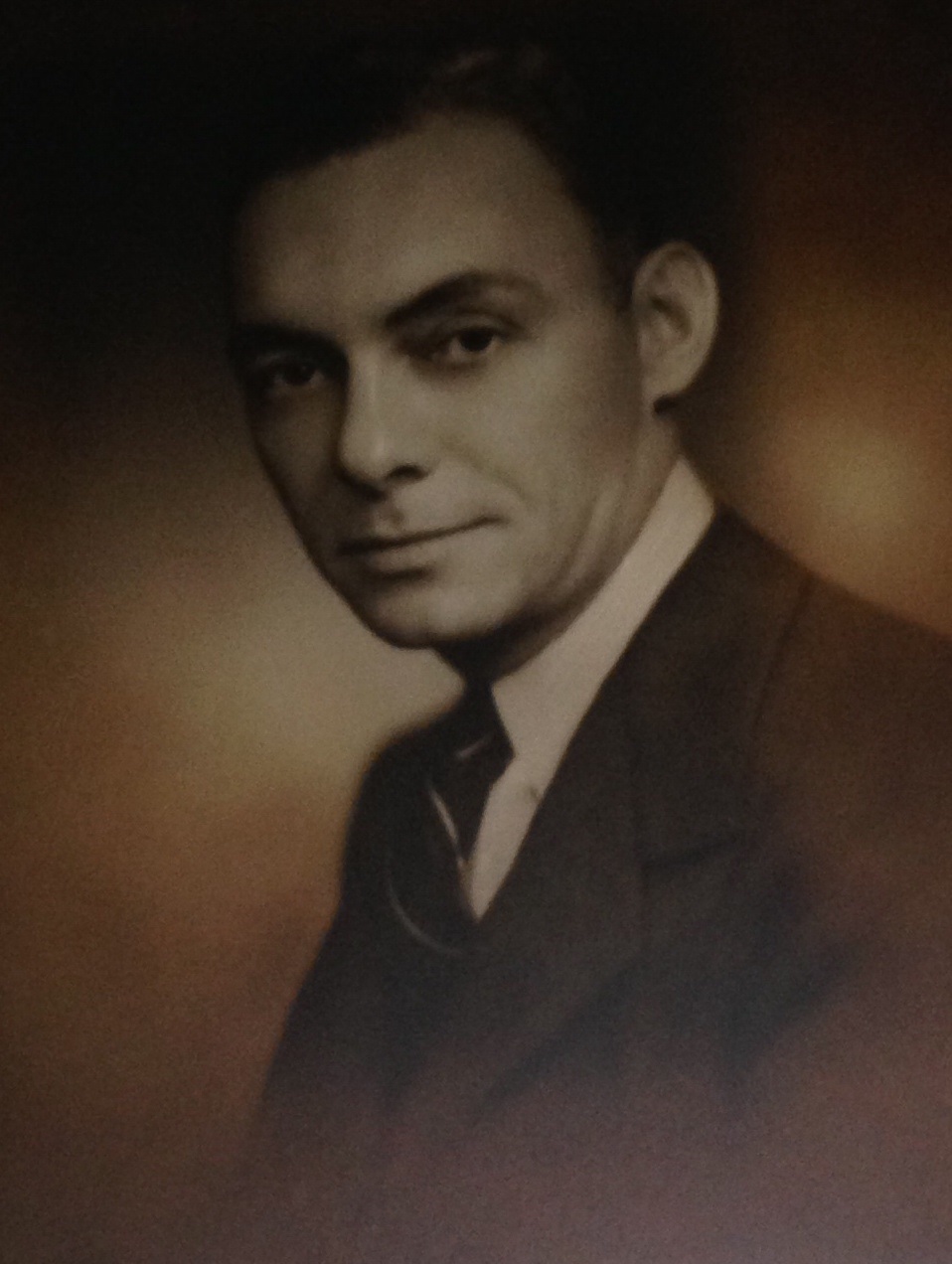
Little Rock Look Back: Mayor J. V. Satterfield

SatterfieldOn May 14, 1902, future Little Rock Mayor John Vines Satterfield, Jr. was born in Marion.   He grew up in Little Rock and Earle. J.V. was a star quarterback for the Earle football team and is featured in a painting of that team by respected painter Carroll Cloar.

Following high school, J.V. taught (including, much to his family’s amusement, a course in penmanship) and coached and sold Fords.  He then moved to Little Rock and sold insurance and later securities.  In 1931 he opened his own business; that same year he built a house at 40 Beverly Place in Little Rock, which would serve as his home until his death.

J. V. Satterfield was elected to serve as Mayor of Little Rock in 1939 and served one term, until 1941.  He was credited with saving the City from bankruptcy because of his fiscal policies. Among his efficiencies were the creation of a central purchasing office and using grass moved from the airport to feed the Zoo animals.  Though as a private citizen he had voted against the creation of a municipal auditorium in 1937, Mayor Satterfield fought valiantly to ensure that Robinson Auditorium opened to the public once he took office.  Shortly after he became Mayor, it was discovered that there were not sufficient funds to finish the construction. After the federal government refused to put in more money, he was able to negotiate with some of the contractors to arrange for the building to be completed. He also oversaw a successful special election to raise the money to finish the project.

Satterfield was a staunch supporter of the airport and worked to expand it.  He would serve as the chair of the first Municipal Airport Commission.  He also established the Little Rock Housing Authority (on which he would later serve on the board).  Mayor Satterfield also served as President of the Arkansas Municipal League in 1941.

Following the outbreak of World War II, Satterfield enlisted in the Army and was given the rank of a Major. He later was promoted to a Colonel and worked in the Pentagon during its early days.

In the late 1940s Satterfield became president of a small Little Rock bank called People’s Bank.  The bank changed its named to First National Bank when it moved into new offices at 3rd and Louisiana in 1953.  By focusing on smaller customers and courting corporate customers, Satterfield grew the bank into one of the state’s largest banks.  He maintained his desk in the lobby of the bank so he could interact with the customers and ensure they were having a positive experience.

Due to chronic health issues, Satterfield retired from the bank in 1964. He died in March 1966.
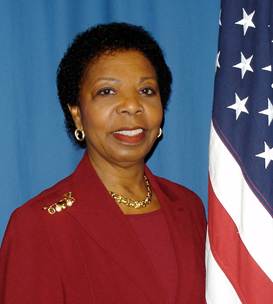
Little Rock Look Back: Mayor Lottie Shackelford

Mayor Lottie_ShackelfordOn April 30, 1941, future Little Rock Mayor Lottie Shackelford was born. Throughout her career in public service she has been a trailblazer.

Active in community activities and politics, she ran for the City Board in 1974 and lost.  But she was appointed to the Little Rock City Board in September 1978 to fill a vacancy.  This made her the first African American woman to serve on he City Board, and indeed on any governing board for the City (during Reconstruction, there were at least three African Americans on the City Council, but they were all men.) She was subsequently elected to a full-term on the City Board in 1980 winning 55% of the vote over three male candidates.

She was subsequently re-elected in 1984 (unopposed) and in 1988 (with 60% of the vote).

In January 1987, Shackelford became the first female mayor of Little Rock when she was chosen by her colleagues on the City Board to serve in that position. She was Mayor until December 1988.

From 1982 until 1992, she served as Executive Director of the Arkansas Regional Minority Purchasing Council.  She left that position to serve as Deputy Campaign Manager of Clinton for President.  She subsequently served on the Clinton/Gore transition team. She later served on the Overseas Private Investment Corporation from 1993 to 2003. She was the first African American to be in that position.

A graduate of Philander Smith College, she has also studied at the Arkansas Institute of Politics at Hendrix College and the Kennedy School of Government at Harvard University.

Mayor Shackelford has also served on numerous boards including the Little Rock Airport Commission, Philander Smith College, Chapman Funds (Maryland) and Medicis Pharmaceutical Corporation (Arizona).  She has been the longest serving Vice-Chair of the Democratic National Committee.

Mayor Shackelford was in the first class of inductees for the Arkansas Black Hall of Fame.

Little Rock Look Back: Haco Boyd, LR’s 58th Mayor

BoydOn July 6, 1902, future Little Rock Mayor Haco O. Boyd was born in Leslie, Arkansas.  At the age of four, his family moved to Little Rock; he graduated from the Little Rock public schools.  He attended and graduated from Hendrix College.

In World War II, he was in the Army Air Corps.  He was a very decorated soldier earning two Purple Hearts, a Legion of Merit, and a Bronze star among other designations from the United States.  He also received high military honors from numerous European governments.  Boyd would remain in the Air National Guard and retired with the rank of Colonel in 1964.

As a businessman, he was a founder of Rebsamen Ford and then state manager of Benjamin Moore for Arkansas.  In 1952, he joined Union Life Insurance.  Throughout his career, he received most any recognition and honor and designation that the field of life insurance offered.

In November 1968, he won a three-candidate race for the Little Rock City Board of Directors. One of the candidates he defeated was former (and future) Director and Mayor Byron Morse.  In January 1969, he was selected to serve as Mayor of Little Rock.

Later in 1969, Mayor Boyd and 70 others were on an Eastern Airlines plane headed for a life insurance convention in  Nassau, departing from Miami.  A passenger hijacked it and the plane was diverted to Cuba.   The next morning the passengers were returned to Miami and then sent to Nassau without incident. Once the media found out that one of the passengers was the Mayor of Little Rock, he was interviewed by numerous newspapers.

In other civic involvement, Boyd served on the Little Rock Airport Commission, including a term as chair.  He was also honored for his involvement with the Boy Scouts of America and Easter Seals.

In September 1923, Boyd married Mary Josephine “Polly” Goodrum.  They were married until her death in February 1977.  Haco Boyd died on March 27, 1988.  The couple are buried at Roselawn Cemetery.  They had two children and four grandchildren.

Little Rock Look Back: Ark Municipal League 2002/2003 President Jim Dailey

cityoflr_img_board_dailyToday is the final day of the Arkansas Municipal League’s 80th convention. It is taking place at the Statehouse Convention Center (which is on the site of the Hotel Marion – location of the first AML meeting). Little Rock Mayor Mark Stodola will be installed as president today. He is the sixth Little Rock official to hold this position.

Today’s feature is on the fifth Little Rock official – Jim Dailey, who was Little Rock’s 71st Mayor.  He served as the 2002/2003 AML President. Not only was he Little Rock’s 71st Mayor, he was the AML’s 71st President.

Jim Dailey was first elected to the City Board of Directors in 1974 and served one term. From January 1977 to December 1978, he was Vice Mayor.  After taking a decade off to focus on the family business (and continue to be involved in civic affairs including serving as founding chair of Leadership Greater Little Rock), he returned to the City Board in January 1989.  In 1991 and 1992, he again served as Vice Mayor. He was re-elected to the Board in 1992 and was named Mayor in January 1993.  In November 1994, he was elected as the first popularly-elected Mayor of Little Rock under the City Manager form of government.

He was re-elected in 1998 and 2002.  His fourteen years as Mayor of Little Rock set a longevity record.  Upon his retirement the City’s fitness center was renamed the Jim Dailey Fitness and Aquatic Center.  This was in recognition of his lifelong interest in wellness activities.

As Mayor, he served as Chair of the Intergovernmental Advisory Committee of the Federal Communications Commission. He was also a member of the United States Conference of Mayor’s Communications Task Force.  He was appointed to the National League of Cities Board of Directors and the Municipalities in Transition on Public Finance.He also served as president of the Arkansas Municipal League in 2002 and 2003.

Since leaving office, he has continued his civic involvement by serving as a member of the Little Rock Airport Commission which oversees the Bill and Hillary Clinton National Airport.  He is also involved in commercial real estate.

Little Rock Look Back: Ark Municipal League 1941 President J. V. Satterfield, Jr.

SatterfieldThe Arkansas Municipal League is having the 2014 convention and celebrating its 80th anniversary this week here in Little Rock.  The first meeting took place in 1934 at the Hotel Marion.

Each day this week will feature a look at a previous Little Rock leader who led AML.

Mayor J. V. Satterfield, Jr., was the seventh president of the Arkansas Municipal League serving in 1941.  Because he did not seek re-election as Mayor and left office during his tenure as AML leader, he did not serve an entire year in the AML presidency.

J. V. Satterfield was elected to serve as Mayor of Little Rock in 1939 and served one term, until 1941.  He was credited with saving the City from bankruptcy because of his fiscal policies. Among his efficiencies were the creation of a central purchasing office and using grass moved from the airport to feed the Zoo animals.

Though as a private citizen he had voted against the creation of a municipal auditorium in 1937, Mayor Satterfield fought valiantly to ensure that Robinson Auditorium opened to the public once he took office.  Shortly after he became Mayor, it was discovered that there were not sufficient funds to finish the construction. After the federal government refused to put in more money, he was able to negotiate with some of the contractors to arrange for the building to be completed. He also oversaw a successful special election to raise the money to finish the project.

Satterfield was a staunch supporter of the airport and worked to expand it.  He would serve as the chair of the first Municipal Airport Commission.  He also established the Little Rock Housing Authority (on which he would later serve on the board).

Following the outbreak of World War II, Satterfield enlisted in the Army and was given the rank of a Major. He later was promoted to a Colonel and worked in the Pentagon during its early days.

In the late 1940s Satterfield became president of a small Little Rock bank called People’s Bank.  The bank changed its named to First National Bank when it moved into new offices at 3rd and Louisiana in 1953.  Under his leadership it grew into one of the state’s largest banks.

Mayor Satterfield lived in Little Rock until his March 1966 death.


Little Rock Look Back: Mark Stodola, LR’s 72nd Mayor

colr_mayor_mark_stodolaToday, May 18, is the birthday of current Little Rock Mayor Mark Stodola.

Mark Stodola was elected as Mayor for the City of Little Rock, beginning his term in January 2007 and re-elected to a 2nd term beginning in 2011.  Mayor Stodola has been key in promoting the revitalization of Little Rock’s Main Street, resulting in the City having been awarded a “Greening of America’s Capitals Grant” from the Environmental Protection Agency and an “Our Town Grant” from the National Endowment for the Arts for the creation of an Arts District in the heart of the downtown core.  The UA’s Community Design Center, which includes faculty and staff members from the school, won a 2014 Honor Award from the American Institute of Architects for its work on the Creative Corridor, on which it collaborated with Marlon Blackwell Architect of Fayetteville.

Prior to becoming Mayor, he served as a senior partner in the Little Rock Law Firm Catlett & Stodola, PLC.  While at that firm, he served as General Counsel to the Little Rock Airport Commission.   Having previously served the City of Little Rock as its City Attorney for six (6) years, he was elected as Prosecuting Attorney for the 6th District in 1990 and was re-elected again in 1992 and 1994.   Mayor Stodola is Past President of the Arkansas Prosecuting Attorneys Association and the Arkansas City Attorneys Association, as well as Past Chair of the Municipal Operations Section of the International Municipal Lawyers Association.  In addition, he is a member of various State, regional and national legal and professional associations.

Mayor Stodola is a graduate of Leadership Greater Little Rock, and served as Chair of Class 16 for that program. In addition, he is a member of the Heights Neighborhood Association and serves as Co-Chair of the Downtown Partnership’s Main Street Task Force.  Mayor Stodola has served on the Board of the Arkansas Repertory Theatre (for which he was the attorney who incorporated the Rep) and is Past-President of the Quapaw Quarter Association and the Historic Preservation Alliance of Arkansas.  He has worked with the Big Brothers/Big Sisters Program and is currently a member of the Rotary Club of Little Rock.

Mayor Stodola graduated from the University of Iowa with a double major in Political Science and Journalism, and received his law degree from the University of Arkansas School of Law in Fayetteville.  Mayor Stodola is married to Jo Ellen and has three (3) children:  a daughter, Allison; and twin sons, Robert and John Mark.

Little Rock Look Back: J. V. Satterfield Jr., LR’s 48th Mayor

SatterfieldOn May 14, 1902, future Little Rock Mayor John Vines Satterfield, Jr. was born in Marion.   He grew up in Little Rock and Earle. J.V. was a star quarterback for the Earle football team and is featured in a painting of that team by respected painter Carroll Cloar.  That painting is currently on display through June 1 at the Arkansas Arts Center as part of their exhibit of the works of Carroll Cloar.

Following high school, J.V. taught and coached and sold Fords.  He then moved to Little Rock and sold insurance and later securities.  In 1931 he opened his own business; that same year he built a house at 40 Beverly Place in Little Rock, which would serve as his home until his death.

J. V. Satterfield was elected to serve as Mayor of Little Rock in 1939 and served one term, until 1941.  He was credited with saving the City from bankruptcy because of his fiscal policies. Among his efficiencies were the creation of a central purchasing office and using grass moved from the airport to feed the Zoo animals.  Though as a private citizen he had voted against the creation of a municipal auditorium in 1937, Mayor Satterfield fought valiantly to ensure that Robinson Auditorium opened to the public once he took office.  Shortly after he became Mayor, it was discovered that there were not sufficient funds to finish the construction. After the federal government refused to put in more money, he was able to negotiate with some of the contractors to arrange for the building to be completed. He also oversaw a successful special election to raise the money to finish the project.

Satterfield was a staunch supporter of the airport and worked to expand it.  He would serve as the chair of the first Municipal Airport Commission.  He also established the Little Rock Housing Authority (on which he would later serve on the board).  Mayor Satterfield also served as President of the Arkansas Municipal League in 1941.

Following the outbreak of World War II, Satterfield enlisted in the Army and was given the rank of a Major. He later was promoted to a Colonel and worked in the Pentagon during its early days.

In the late 1940s Satterfield became president of a small Little Rock bank called People’s Bank.  The bank changed its named to First National Bank when it moved into new offices at 3rd and Louisiana in 1953.  By focusing on smaller customers and courting corporate customers, Satterfield grew the bank into one of the state’s largest banks.  He maintained his desk in the lobby of the bank so he could interact with the customers and ensure they were having a positive experience.

Due to chronic health issues, Satterfield retired from the bank in 1964. He died in March 1966.